
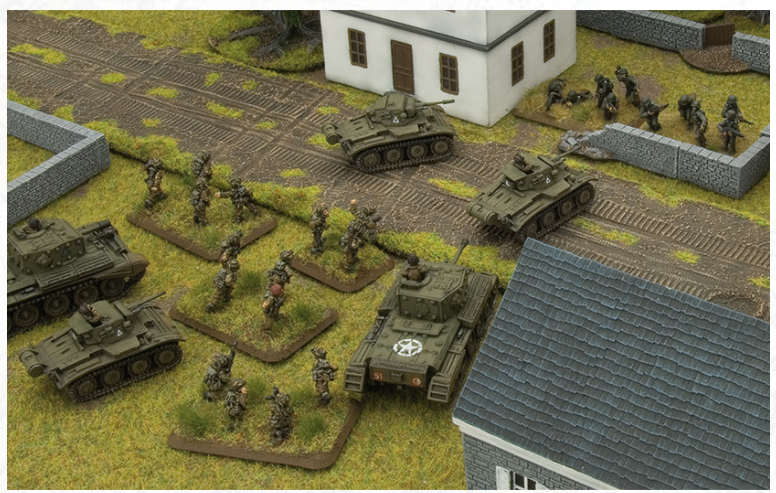
The 6th Airborne Armoured Recce Regiment makes airborne gaming instantly more interesting. Instead of only parachutes, rifles, and heroic bridge fights, you get light tanks arriving by glider.
That gives Normandy scenarios a different texture. However, the story behind those Tetrarchs is just as good as the tabletop hook. This is a summary of a Battlefront Community article you can find here.
Tetrarchs, Hamilcars, and the Airborne Bridgehead
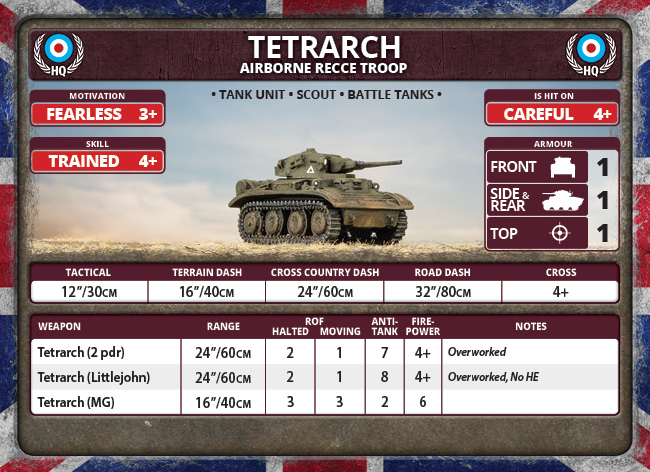
The unit began in July 1941 as C Special Service Squadron, Royal Armoured Corps, drawing volunteers from the 5th Lancers and 10th Hussars. It started with 60 men and six Tetrarch light tanks, then moved to Freetown in case Spain entered the war. In 1942, part of the squadron fought in Madagascar with Valentines and Tetrarchs under B Special Service Squadron.
That force suffered heavy casualties and lost nearly all its tanks. Captain Peter Llewellyn-Palmer later received a posthumous Military Cross. Meanwhile, the squadron’s HQ was forming in Britain as the Airborne Light Tank Squadron, built around the Hamilcar glider. By early 1944, it had expanded into the 6th Airborne Armoured Reconnaissance Regiment. Attached to Richard Gale’s 6th Airborne Division, it went to Normandy with a useful mixed structure. A Squadron held the tanks, while B Squadron ran carriers, jeeps, and motorcycles.
Meanwhile, the support squadron brought mortars, machine guns, and motorcyclists. On D-Day, twenty Hamilcars delivered 18 to 20 Tetrarchs, including 3-inch howitzer close-support tanks. More gliders brought recce carriers, mortar carriers, a slave battery carrier, and a jeep. Although myths often inflate the regiment’s landing losses, the serious early blow was the destroyed parachuted Harbour Party. Once the rest arrived by sea, the regiment fought as a unit inside the airborne bridgehead. By late July, some light tank troops received Cromwell IVs, and A Squadron eventually reached twelve Cromwells. That shift makes sense, because the breakout demanded more punch than worn Tetrarchs could reliably provide. During Operation Paddle, the regiment supported the expanded 6th Airborne Division and 49th Division with reconnaissance and close armored backing.
It also temporarily controlled four Centaurs and a command Sherman. The Centaurs broke down often, but they still worked as artillery or assault guns when needed. From 20 August, the 1st Belgian Armoured Car Squadron briefly joined with mixed armored cars. After reaching the Seine, the regiment returned to Britain on 5 September. The Tetrarch was replaced by the M22 Locust.
Summary and Final Thoughts
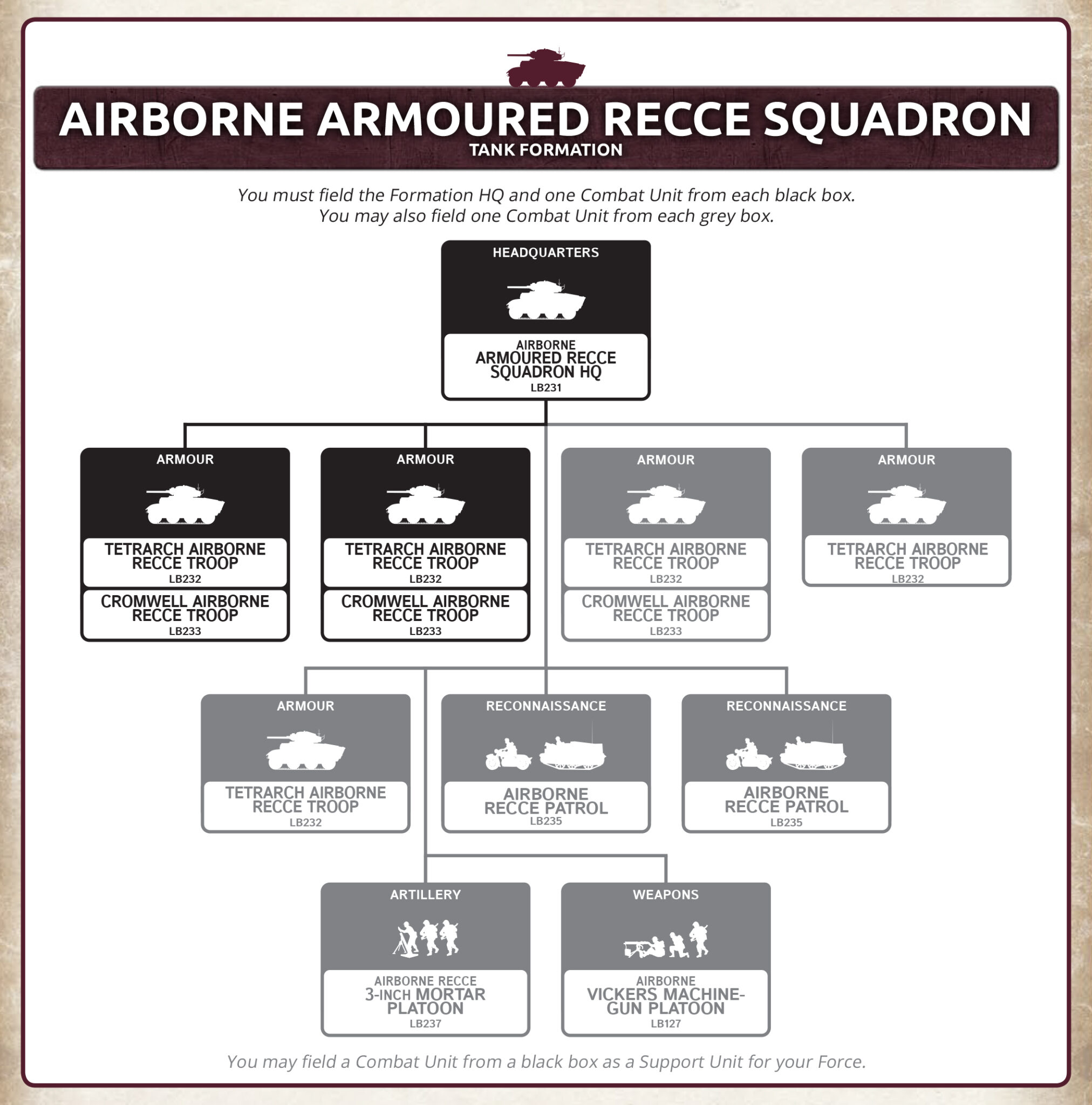
Overall, this is a slice of Normandy history for gamers. The regiment mixes fragile tanks, bold deployment, and battlefield usefulness. Also, the free PDF lets players field the British Airborne Armoured Recce Squadron with Tetrarchs, formation diagrams, units, and points.