
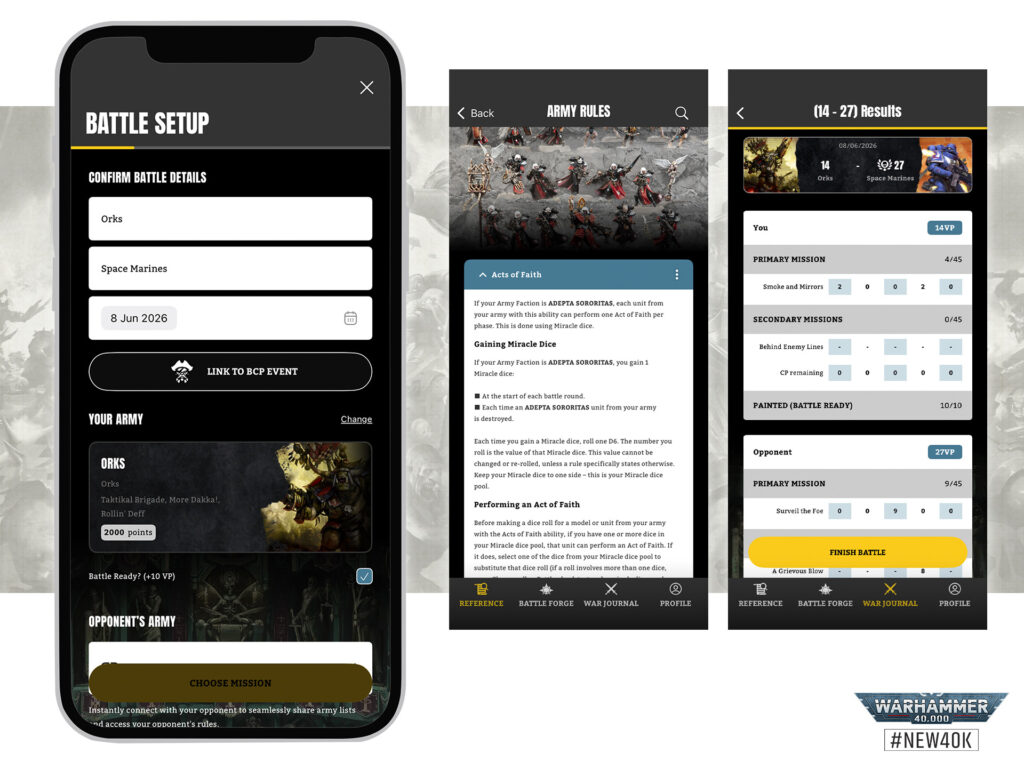
Warhammer 40,000 is getting a practical cleanup pass, and players should pay attention.
This update appears to be hidden in the app as there hasn’t been a proper announcement. These changes touch transports, reserves, terrain, objectives, and several nasty edge cases. Meanwhile, fresh pricing data has shown up on the GW site in a retailer notification. This suggests the hobby side is getting a little more expensive too. So, this update feels like cleaner gameplay arriving alongside tighter wallets.
Core Rules Updates That Actually Matter
The rules changes mostly focus on moments that cause table arguments. That might sound dull, but experienced players know these are the fixes that matter during real games. Nobody wants a close match decided by a weird transport loophole or messy end-of-phase timing. Also, several changes clearly target interactions that became awkward once more abilities started stacking across units, characters, weapons, and mission rules.
- Revived and added models now respect transport capacity.
- A returned model joining an embarked unit is destroyed if the transport lacks enough remaining capacity.
- Destroyed models from that situation do not trigger rules that normally happen when a model is destroyed.
- Table quarters are now defined by imaginary 1mm center lines across the battlefield.
- That definition should make mission scoring cleaner when units sit near quarter boundaries.
- Modifiers now use tighter language around characteristic changes unless another rule says otherwise.
- Healing and regaining lost wounds now better clarifies how destroyed models return to damaged units.
- That returning-model language specifically excludes Character models from the relevant clause.
- Large non-Aircraft models arriving from Strategic Reserves can touch the battlefield edge if they cannot physically fit.
- That large-model setup fix still carries restrictions, so it should not become free movement tech.
- Attack pools must split when hit or wound roll values create different attack effects.
- Those split attack pools are resolved one at a time before moving to the next pool.
- Desperate Escape tests are now clearly treated as hazard rolls during a desperate Fall Back move.
- Modifiers that affect Desperate Escape tests now modify those hazard rolls.
- Forced Desperate Escape effects require one hazard roll per model and then a Battle-shock roll.
- Objective Consolidation now requires the unit to be unengaged and within range of the selected objective.
- Gone to Ground now depends on hidden models being obscured by intervening dense and solid terrain.
- Objective control is checked at the end of a phase or turn before other end-step rules resolve.
- Dedicated Transports without embarked units can be destroyed without triggering destroyed-model rules.
- Units left in Strategic Reserves at the end of the final turn are also destroyed without death triggers.
- Precision attacks with Devastating Wounds apply mortal wounds first to the selected Character group.
- Torrent weapons cannot have Indirect Fire or Precision.
Overall, this rules pass feels like maintenance rather than renovation. However, that is not a bad thing. The game works best when players spend less time debating sequencing and more time making hard battlefield choices. In that sense, these changes should help games feel cleaner, especially in competitive or rules-dense environments.
Pricing Update Adds the Real Hobby Context
The pricing data reviewed alongside these rules changes covers 1,625 products with old and new US retail prices. Across those listed products, the average increase is about 3.8%, while the median increase is 4%. That means the change is not built around a handful of dramatic outliers. Instead, it looks like a broad, steady increase across much of the range.
Most increases fall between 3% and 5%. The most common increase is 4%, appearing on 742 listed products. Meanwhile, 381 products show a 3% increase, and 331 show a 5% increase. That pattern matters because it frames the change as predictable, but still noticeable. A few dollars here and there might not hurt on one box. However, those increases add up quickly across a new army, Crusade project, or seasonal hobby backlog.
The largest listed dollar increase is Sons of Behemat: King Brodd, rising from $215 to $227.50. Several other large kits and boxed products rise by around $10, including bigger centerpiece models and army-scale boxes. That is where players will probably feel the change most. A small infantry increase is annoying, but a jump on a major kit can delay a purchase.
There is one important caveat: recommended retail prices are not binding on independent retailers. Therefore, local stores may charge lower, higher, or matching prices depending on their own pricing policies. Still, the overall direction is clear. Warhammer remains a premium hobby, and planning purchases carefully will matter even more.
Summary and Final Thoughts
Overall, this update has two very different messages. On the table, the rules are getting cleaner and less prone to strange arguments. Away from the table, the price increases remind everyone that collecting still has real cost pressure. However, neither point is shocking. Warhammer has always been a game of careful positioning and careful budgeting. This update just makes both sides more obvious.