
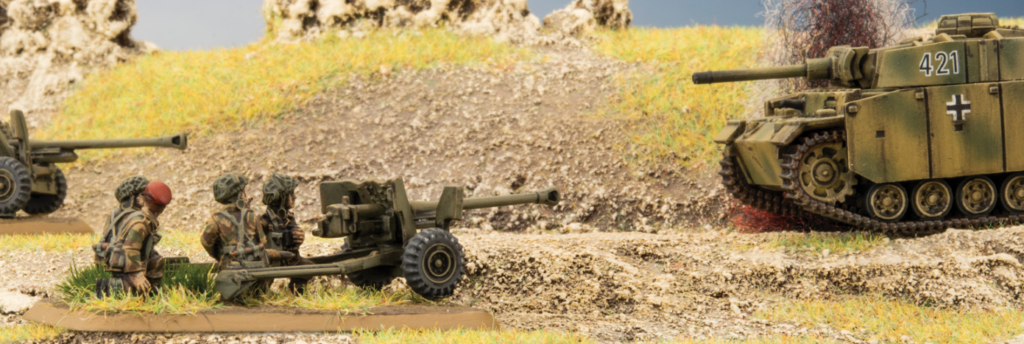
Operation Husky looked simple when the British Eighth Army arrived, but Sicily changed the rules. Recreate these battles with the new Flames of War Forces release!
Instead of desert movement, Montgomery’s troops faced mountains, marshes, mines, and dug-in German veterans. For Flames of War players, this Mid War PDF offers endurance, pressure, and ugly uphill fighting. This is a summary of the Battlefront Community post found here.
The Eighth Army’s Sicilian Slog Becomes a Mid War Force
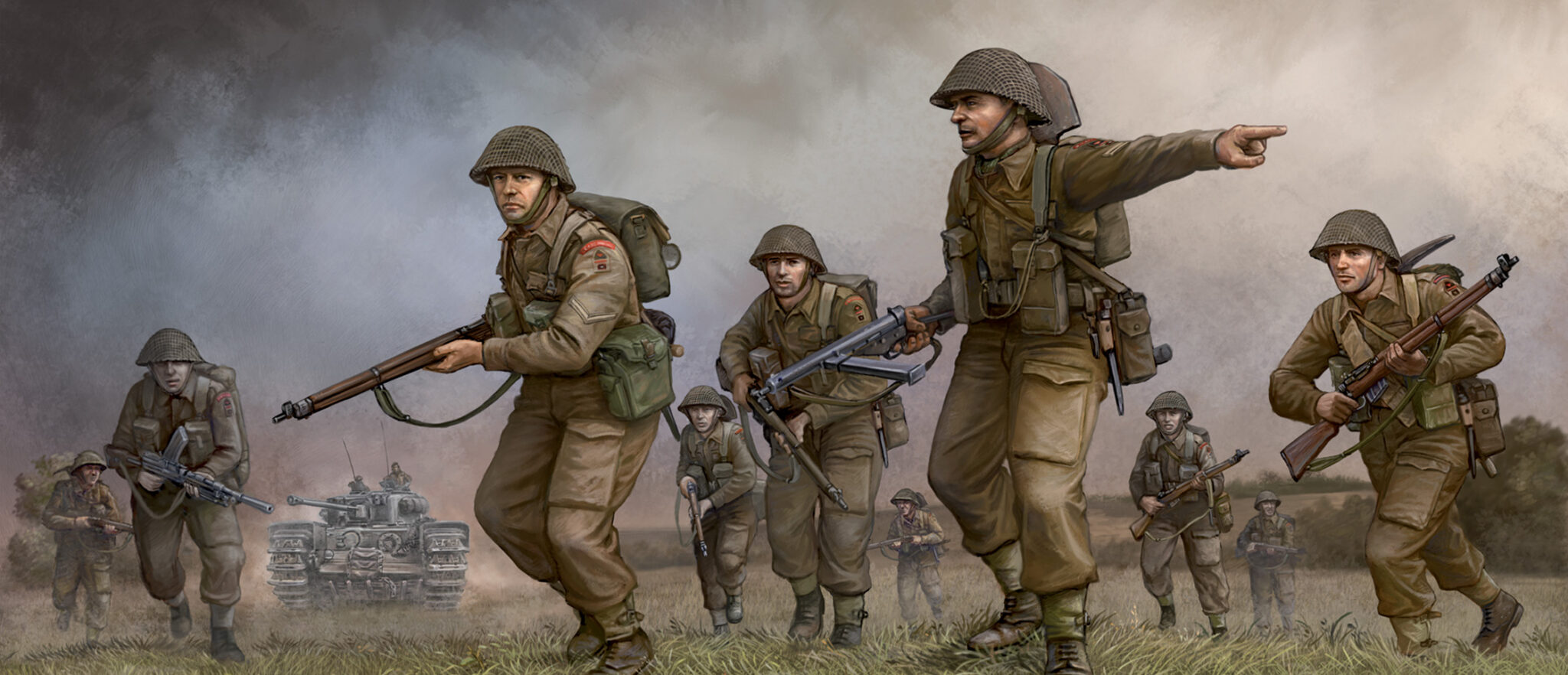
The campaign began on 10 July 1943 under Harold Alexander’s 15th Army Group. Montgomery’s Eighth Army landed in south-eastern Sicily with XIII Corps and XXX Corps. The force included the 5th, 50th, 51st Highland, and 1st Canadian Divisions. Although high winds scattered British airborne troops, the seaborne landings succeeded. Italian Coastal Divisions resisted weakly, and by 12 July the 5th Division had taken Syracuse. That mattered because supplies could flow into the bridgehead instead of crawling through beaches.
However, the fast march toward Messina soon became far nastier. Montgomery wanted Augusta, Catania, and then Messina, hoping to trap Axis forces before they escaped. Instead, the Hermann Göring Panzer Division and 1st Fallschirmjäger Division stiffened the eastern front. Mount Etna gave German artillery superb observation, while the coastal plain punished Allied delay. The fighting at Primosole Bridge showed the campaign in miniature. British paratroopers seized the Simeto River crossing, but German counterattacks turned relief into a brutal stalemate.
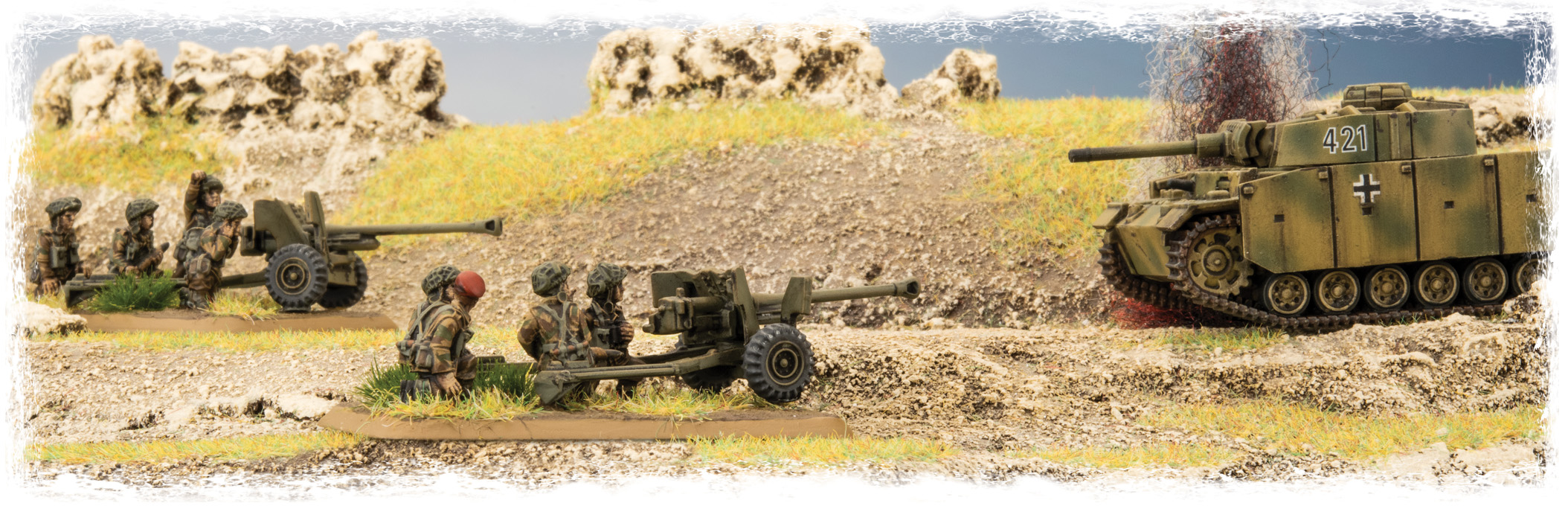
Even though the bridge fell, the delay helped lock down the Catania Plain. By late July, the Eighth Army was fighting the Etna Line in heat, disease, and miserable terrain. The Simeto marshes brought malaria, while German panzergrenadiers turned villages and vineyards into fortresses. Montgomery then swung XXX Corps and the Canadians inland, creating his famous left hook. Meanwhile, Patton’s Seventh Army advanced quickly through lighter opposition in the west. For the Canadians at Agira, and the British at Centuripe, this was mountain warfare at bayonet range.
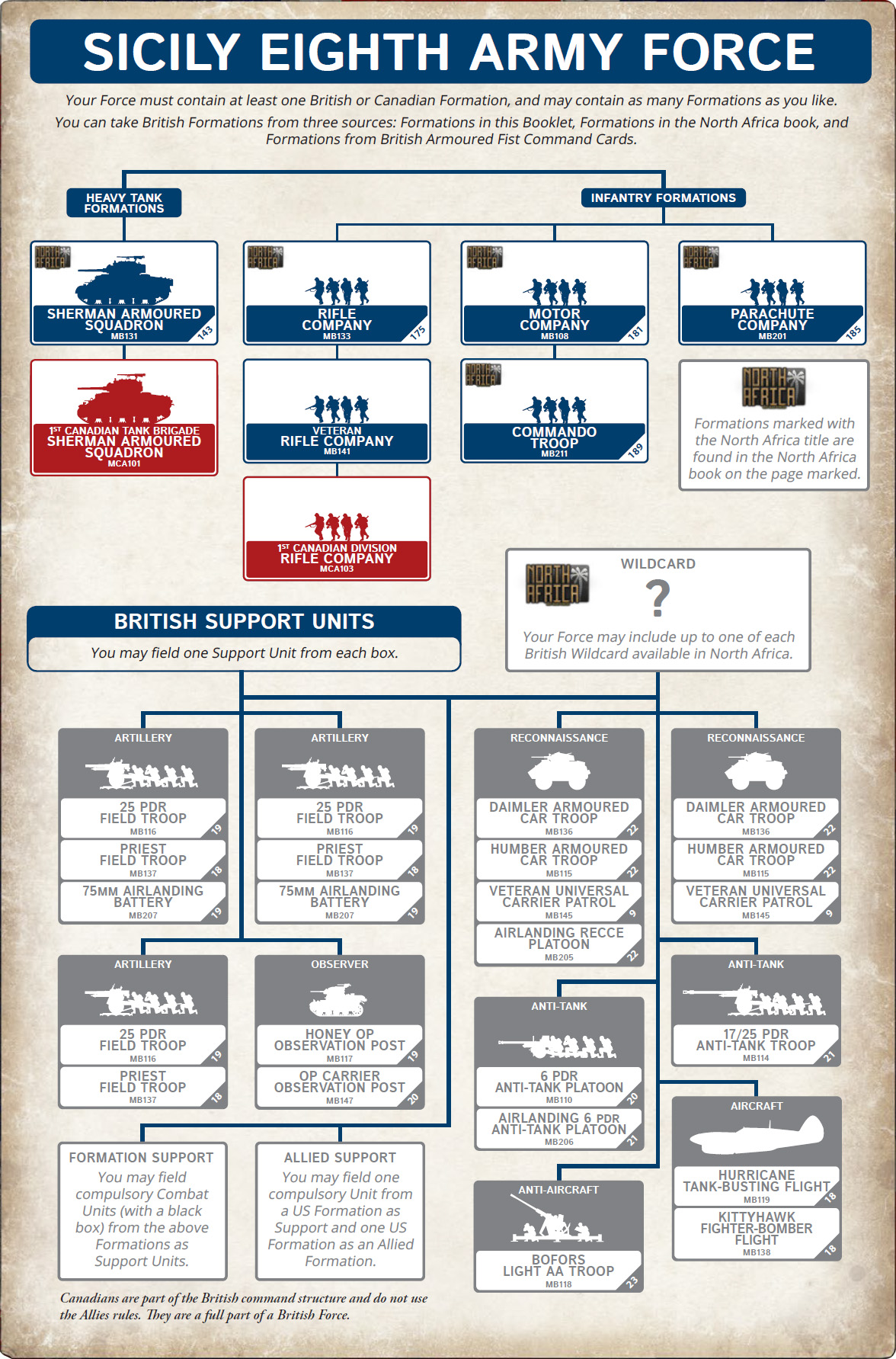
Eventually, Allied pressure forced the Germans out of Catania on 5 August. Yet the city was booby-trapped, and roads beyond were mined, demolished, or blown into the sea. General Hube then managed Operation Lehrgang, withdrawing through five delaying lines while evacuating troops across Messina. When British patrols entered Messina on 17 August, Patton’s Americans had arrived hours earlier. The result was victory, but not the sealed trap Montgomery wanted.
Summary and Final Thoughts
Overall, this gives British and Canadian players a gritty Mid War identity. The Eighth Army eliminated the Italian Sixth Army and pinned elite German formations. Also, it improved amphibious logistics that later mattered for D-Day. However, many German veterans escaped to Italy, so Sicily became victory with teeth.