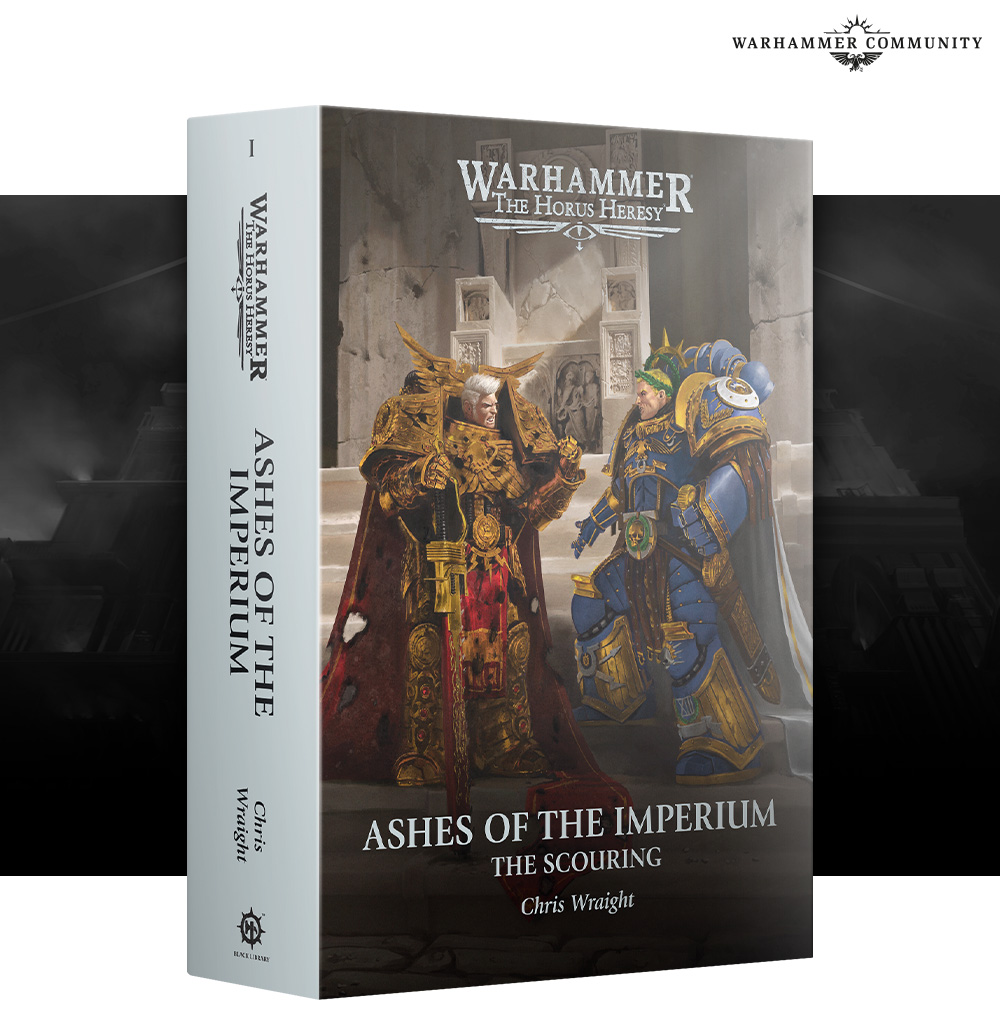
Ashes of the Imperium: The Scouring Book 1 works best when viewed as a coda to the Siege, not the grand opening of a revenge tour.
Chris Wraight picks up in the immediate wreckage, while the Imperium still barely understands what has happened. That is a smart angle, because the most interesting question is not whether Horus lost. It is whether anyone left behind can build something better, or only something more brittle. However, the book’s slower, scattered shape will not work for everyone, especially after the emotional thunder of The End and the Death.
Plot
The story follows several threads across the first messy phase after the Siege. The loyalists must decide whether to secure the Sol System, retake Luna, or pursue the fleeing Traitors before they vanish. That conflict matters because it splits the loyalist mindset immediately. Some characters want vengeance while the enemy is exposed. Others see Terra’s surviving government as too fragile to abandon. Meanwhile, the Traitor survivors are not triumphant monsters anymore. They are stranded, bickering, disoriented, and forced to confront a dreadful possibility: maybe Chaos has gone quiet because it used them up. That material gives the novel its strongest edge. However, the plot can feel more like a set of postwar briefings than a driving adventure. The Luna thread, in particular, has a strong premise but can feel less explosive than expected. Consequently, the book is more compelling as political aftermath than as military payoff.
Wraight does his best work with figures who feel spiritually drained. Dorn is the obvious anchor, and his grief has hardened into something more dangerous than simple sadness. He feels like a man keeping himself upright through discipline alone. Guilliman is equally interesting, though in a different way. He arrives with answers, systems, and authority, but that makes him look suspicious to those who actually endured Terra. Vulkan’s material also adds texture, especially because his endurance no longer feels like a blessing. On the Traitor side, the human dregs and defeated legionaries are often more interesting than the named power players. Their confusion gives the retreat a grim, pathetic quality. Still, some viewpoints blur together, and not every thread earns the same investment.
Narrative Feel
The book feels cold, reflective, and deliberately unsettled. Wraight uses a documentary texture, including chapter-opening fragments that make the aftermath feel investigated rather than merely narrated. That choice gives the novel a postwar-trial mood, almost as if the Heresy is already becoming contested history. The prose is strong, as expected from Wraight, but less lush than his best work. Instead, it is controlled, sombre, and often bureaucratic in a purposeful way. This is where the book succeeds and frustrates at once. The atmosphere is right, yet the restraint sometimes keeps the emotional impact at arm’s length.
As the first Scouring novel, it has a heavy job. It must continue the Horus Heresy, answer Siege fallout, and begin the road toward recognizable 40K. In that respect, it does useful groundwork. It shows the loyalists already distrusting one another, the Traitors already fracturing, and ordinary humanity already questioning the Legions. Therefore, it sets a strong tone for the new series: victory did not heal the Imperium. It merely changed the nature of the wound.
Summary and Verdict
Ashes of the Imperium: The Scouring Book 1 is thoughtful, ambitious, and sometimes frustrating. It has real insight into the poisoned aftermath of the Heresy, especially through Dorn, Guilliman, and the shattered Traitor remnants. However, its fragmented structure leaves some sections feeling underpowered. As a longtime Heresy reader, I respect the choice to start with uncertainty instead of spectacle. Still, I wanted a little more bite from several threads. Overall, it is a strong conceptual opener and a decent novel, but not a fully satisfying one. Its best achievement is clear: it makes the Scouring feel less like cleanup, and more like the birth of the Imperium’s next tragedy.