
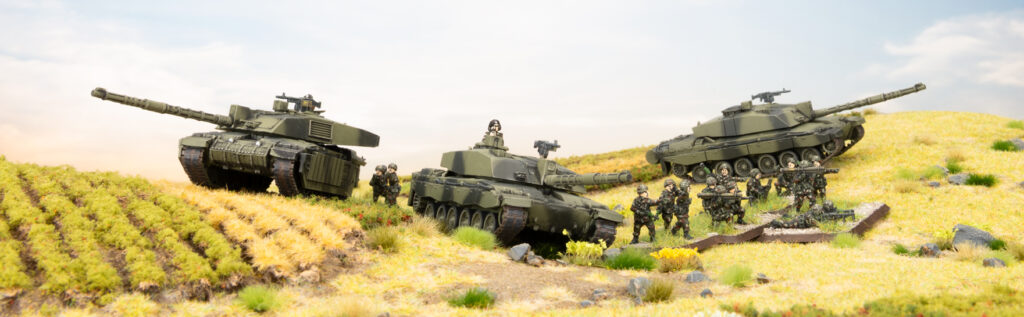
Team Yankee British tank tactics now offer three very different generations of main battle tank.
The Chieftain remains familiar, while Challenger 1 dramatically improves protection. However, Challenger 2 pushes British armour, mobility, and firepower into another league entirely. Choosing between them therefore comes down to battlefield role rather than simply taking the newest tank. This is a summary of a community post found here.
Chieftain, Challenger 1, and Challenger 2 Fill Very Different Roles
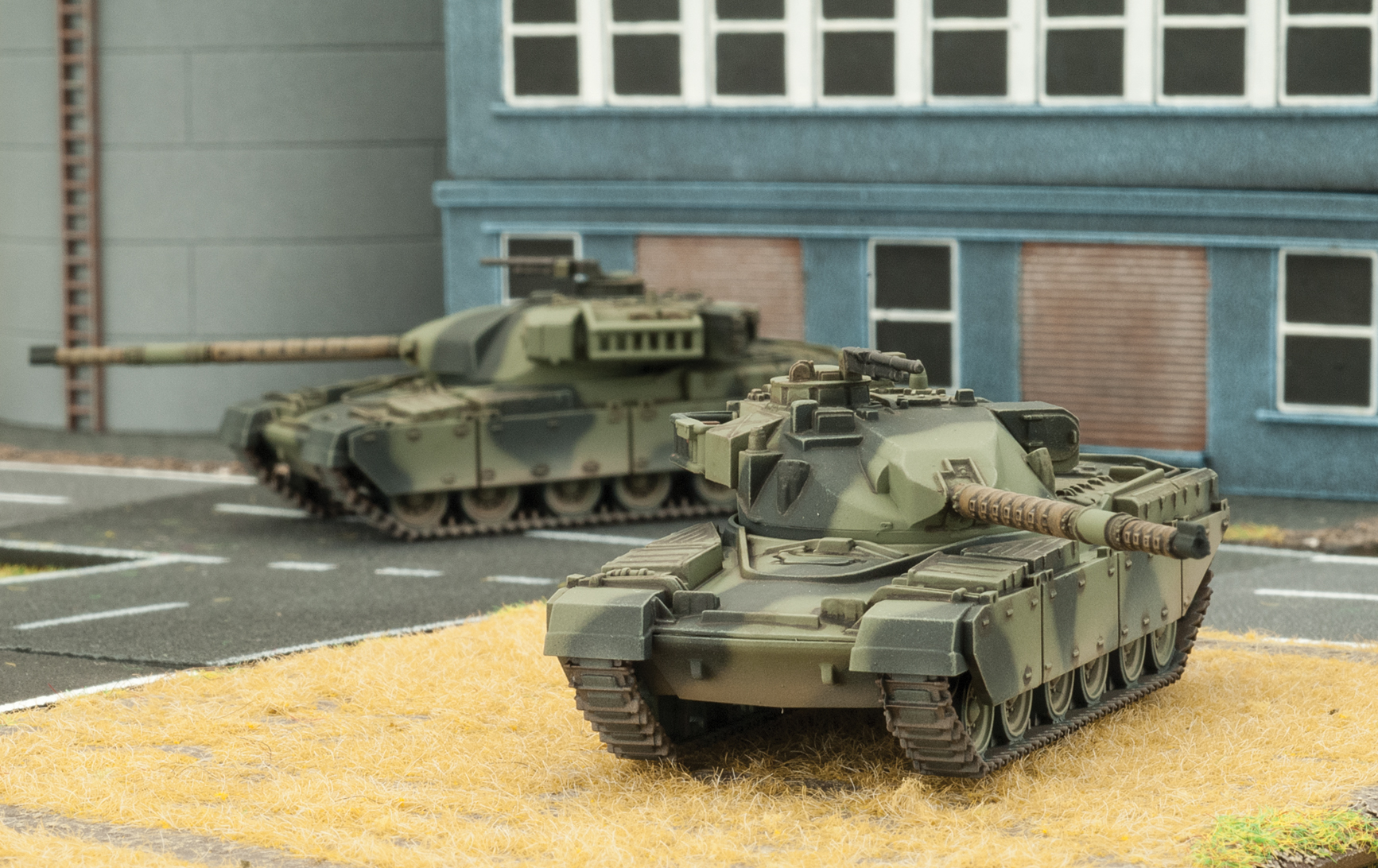
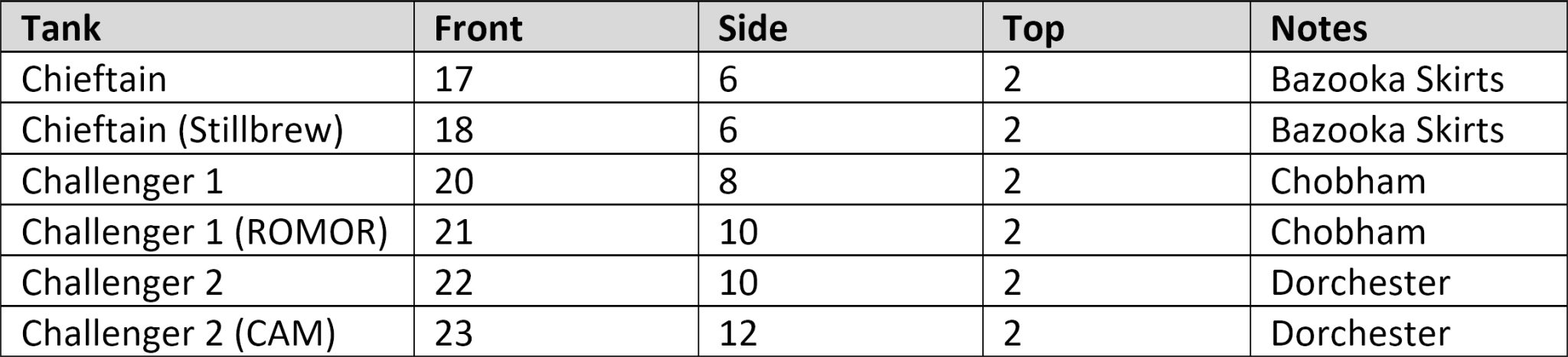
The Chieftain represents the original British heavy hitter and still brings respectable protection. Its standard armour reaches Front 17 and Side 6, while Bazooka Skirts improve Side armour against HEAT attacks. Stillbrew pushes Front armour to 18, although the added weight worsens its Cross-Country Check to 3+. Consequently, Chieftains remain tough gun tanks without becoming especially comfortable around difficult terrain.
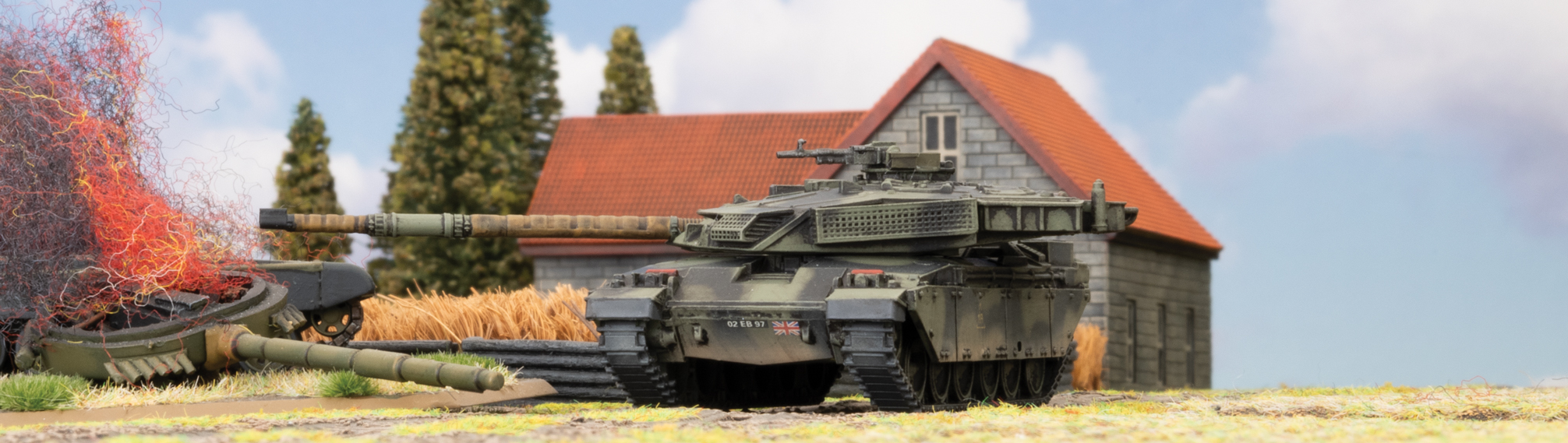
Challenger 1 marks a much larger defensive jump. Standard versions carry Front 20 and Side 8 armour, while Chobham raises protection against HEAT weapons to Side 16. That makes Challenger 1 remarkably resistant to most infantry anti-tank weapons. More importantly, it becomes a serious assault vehicle rather than simply a long-range tank hunter. ROMOR armour improves protection again to Front 21 and Side 10. However, that package also worsens Cross-Country performance to 3+.
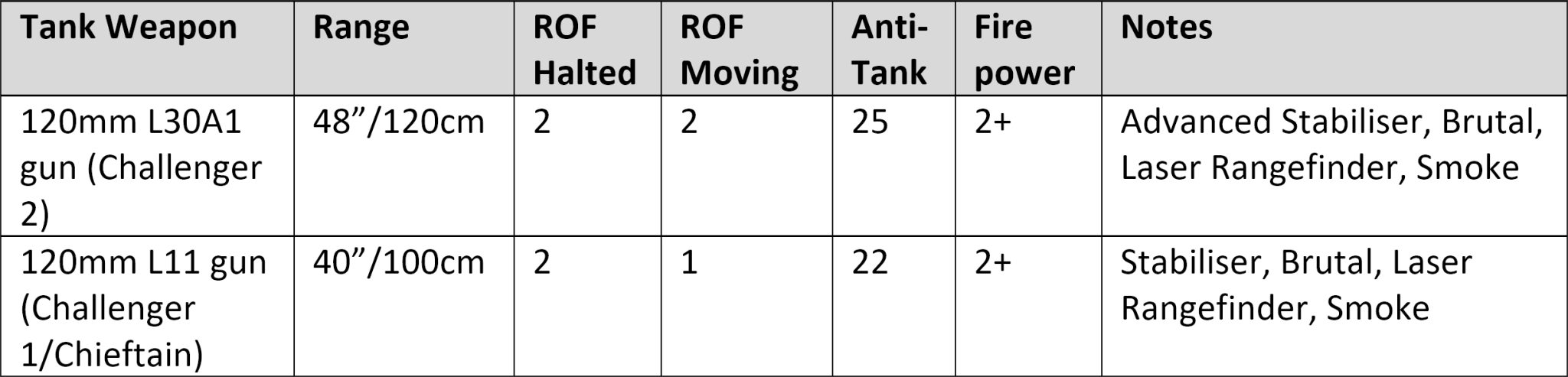
Both Chieftain and Challenger 1 use the same 120mm L11 gun. It brings Anti-tank 22, Firepower 2+, and a 40-inch range. Stationary tanks fire twice, while moving tanks normally fire once. Stabiliser allows a 14-inch move, although moving beyond ten inches adds a shooting penalty.
Therefore, the tank can threaten targets effectively across roughly 54 inches after movement. Laser Rangefinder removes the normal long-range accuracy penalty beyond 16 inches. Meanwhile, Brutal makes dug-in infantry reroll successful saves against direct fire. Smoke also gives commanders another useful tool for controlling enemy firing lanes.
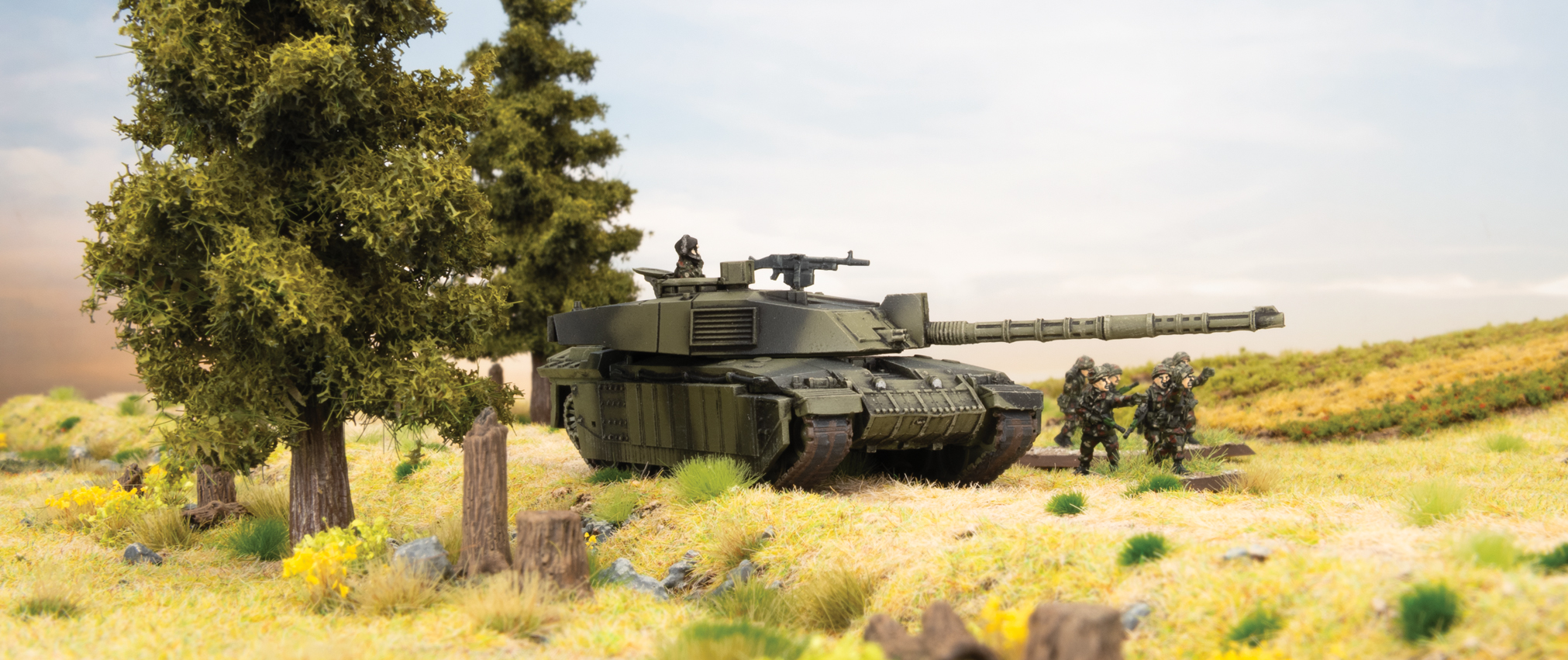
Challenger 2 changes the equation considerably. Dorchester armour gives it Front 22 and Side 10, while HEAT protection rises to Side 18. Consequently, very few infantry weapons can seriously threaten it during an assault. The upgraded CAM package raises protection again to Front 23 and Side 12. That durability comes with a serious terrain drawback because Challenger 2 has a 4+ Cross Check. Players therefore need to think carefully before sending such an expensive tank through woods or rough ground.
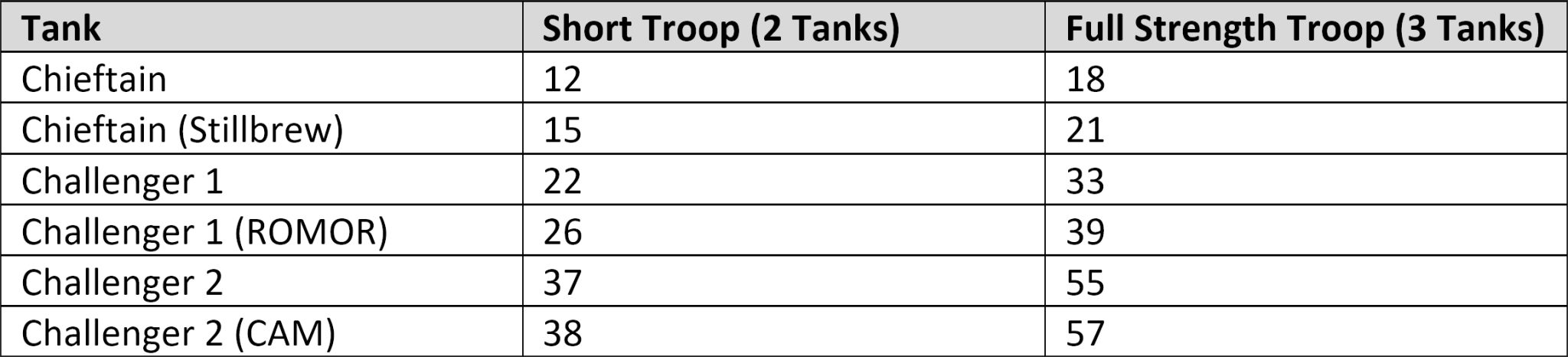
The biggest improvement may actually be the new gun. Challenger 2 carries an Anti-tank 25, Firepower 2+ weapon with a 48-inch range. Additionally, Advanced Stabiliser allows a 14-inch move while retaining full ROF 2 without the usual shooting penalty. That effectively creates a 62-inch threat envelope while maintaining both shots. For reserves, that is enormously useful. A Challenger 2 arriving from the table edge can immediately influence distant parts of the battlefield. It also retains Brutal, Laser Rangefinder, and Smoke, so the improved gun does not sacrifice familiar British utility.
Unsurprisingly, Challenger 2 offers the strongest overall combination of firepower, armour, and mobile shooting. However, that does not automatically make the older tanks obsolete. Chieftains can still provide heavy guns without committing as many resources to each vehicle.
Meanwhile, Challenger 1 occupies a useful middle ground with excellent HEAT protection and strong assault capability. Challenger 2 instead rewards players who want fewer tanks performing several jobs extremely well. Its mobility also makes it particularly attractive in missions involving reserves or rapid redeployment.

However, difficult terrain remains its obvious weakness. Ultimately, Team Yankee British tank tactics should start with the mission and the rest of the army. If infantry and support units already cover assaults, older tanks can concentrate on ranged fire. Conversely, Challenger 2 can operate as both a gun platform and an assault tank when points allow.
Final Thoughts
Overall, Team Yankee British tank tactics now involve a genuine choice rather than a simple upgrade path. Chieftain provides the traditional British gun-tank experience, while Challenger 1 adds much stronger protection. Meanwhile, Challenger 2 combines extreme armour with devastating firepower and excellent shooting on the move. The tradeoff is cost, smaller numbers, and poor Cross-Country reliability. Most importantly, each tank can still make sense when its strengths match the job your list actually needs.