
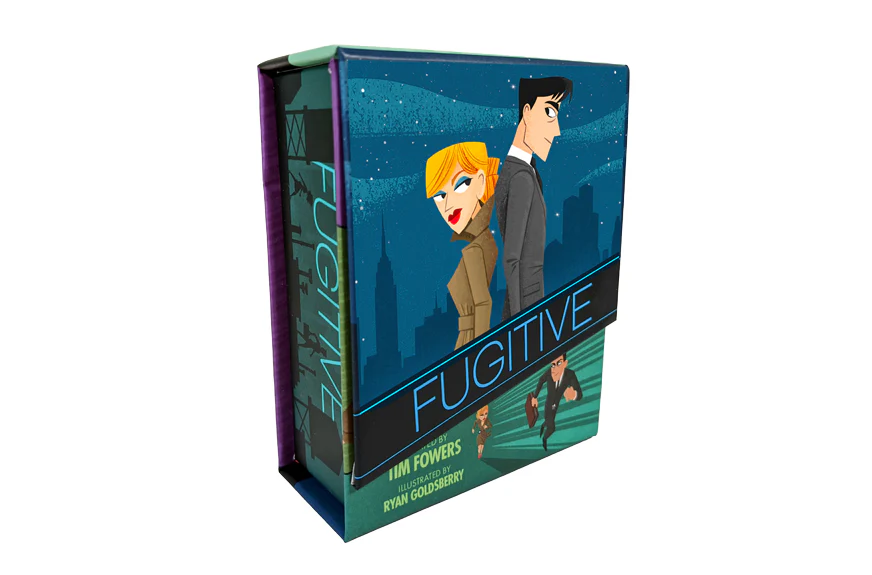
Fugitive is a compact two-player deduction game built around a tense pursuit.
One player becomes the Fugitive, while the other takes the Marshal role. However, the chase unfolds entirely through numbered cards. The Fugitive secretly plays hideouts while trying to reach card forty-two. Meanwhile, the Marshal studies those cards and attempts to uncover every location. The premise is simple, yet the game creates a convincing cat-and-mouse atmosphere. Each new hideout must remain near the previous location. However, extra cards can increase that movement range. Those cards help now, but they also reduce future options. Therefore, every escape route involves calculated risk.
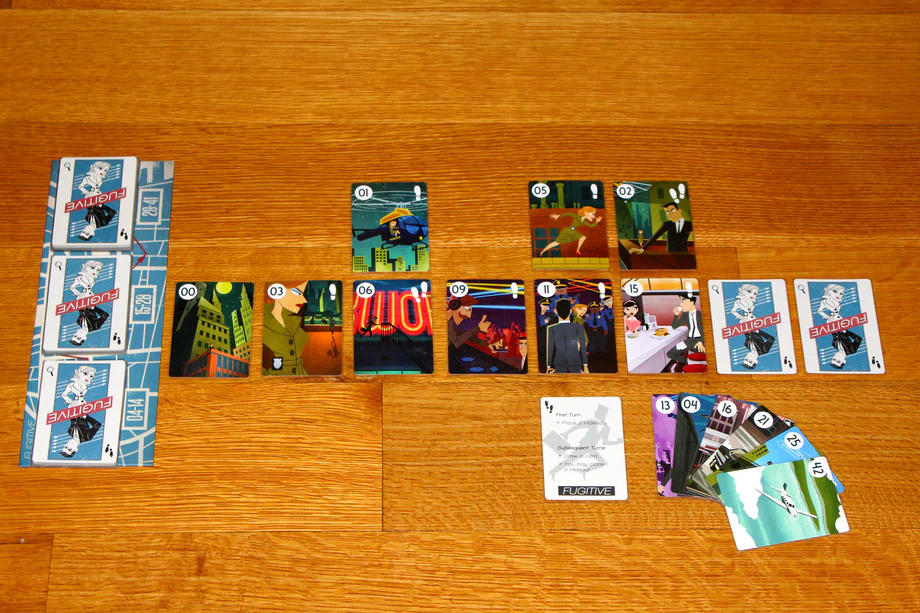
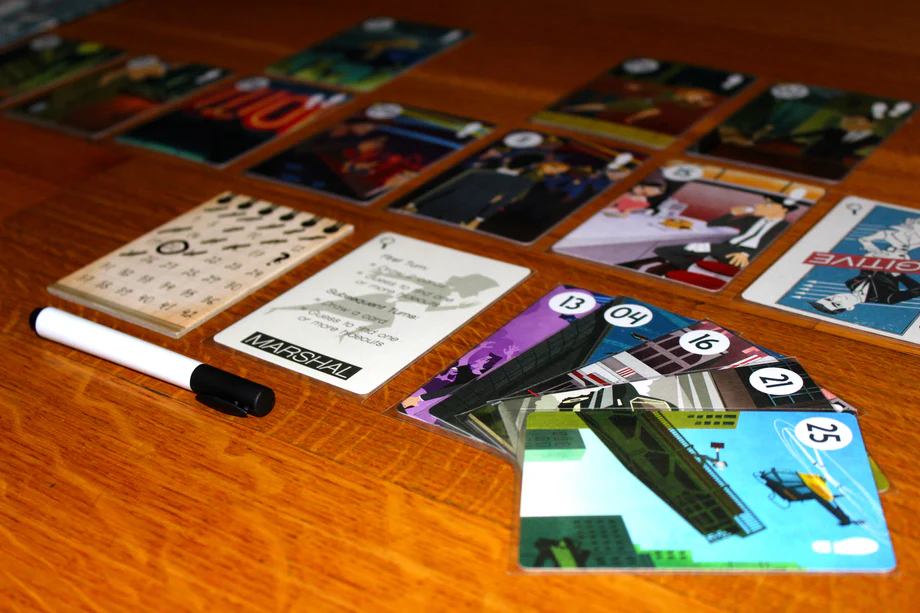
The Marshal works from incomplete evidence and gradually narrows the possibilities. On each turn, the Marshal guesses one or more hideout numbers. However, cautious guesses may give the Fugitive too much time. Bold guesses can reveal several locations, but failure creates breathing room. Because of that, the Marshal constantly balances logic against intuition.
The design focuses on bluffing, probability, and reading an opponent. There is no board to manage and little rules overhead. Still, each card changes the shape of the pursuit. The Fugitive must remain unpredictable without wasting useful cards. Meanwhile, the Marshal must separate real patterns from deliberate misdirection. However, the roles do not always feel equally exciting. The Fugitive gets the stronger narrative arc and visible pressure. By contrast, the Marshal sometimes feels like a mathematician checking answers. Still, uncovering a disguised route can be extremely satisfying.
Pros
- The rules are easy to teach, and most games finish quickly.
- The hidden route creates genuine tension from a small deck.
- Both roles reward different skills and improve through repeated play.
- The compact box travels easily and needs little table space.
- Bluffing and deduction remain closely connected throughout the chase.
Cons
- The Fugitive role often feels more exciting than the Marshal role.
- Some games depend heavily on the available card draws.
- Repeated play with one opponent can make habits predictable.
- The deduction may feel mechanical for players wanting stronger theme.
- The experience offers limited variety beyond the central chase.
Comparison to Similar Games

Compared with Scotland Yard, Fugitive offers the same pursuit idea with less setup. However, Scotland Yard supports larger groups and creates broader discussion. Fugitive is faster, more intimate, and more dependent on reading one opponent. Mr. Jack Pocket uses spatial deduction and visible movement. By contrast, Fugitive feels more abstract, although its bluffing is sharper. Raptor provides miniatures, positioning, and dramatic special actions. However, Fugitive is quicker and easier to teach. It also offers less mechanical variety.
Compared with Love Letter, Fugitive shares quick play and limited information. However, Love Letter depends more on card powers and group psychology. Fugitive creates a deeper head-to-head puzzle through its hidden trail.
Verdict
Overall, Fugitive is an elegant two-player game with a clear identity. It turns a numbered deck into a tense pursuit without unnecessary decoration. However, its narrow focus also limits its long-term variety. The game works best with partners who enjoy bluffing, inference, and quick rematches. Meanwhile, players wanting deeper tactics may find it too slight.
I would not choose Fugitive as my only two-player game. Still, it earns its place as a sharp filler. The rules disappear quickly, while the psychological contest remains. Therefore, it is easy to recommend within its intended weight.