
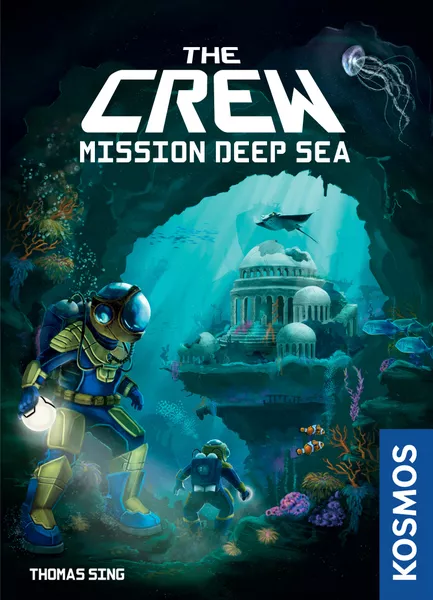
The Crew: Mission Deep Sea is one of the cleanest cooperative card games on the market. However, its underwater theme is more framing device than immersive setting.
You are a team of divers completing linked missions through trick-taking. Meanwhile, each scenario changes the win conditions in small but meaningful ways. That structure gives the game a strong sense of progression without adding much rules weight. As an experienced board game player, I admire how much tension it creates from such spare tools.
Theme and Focus
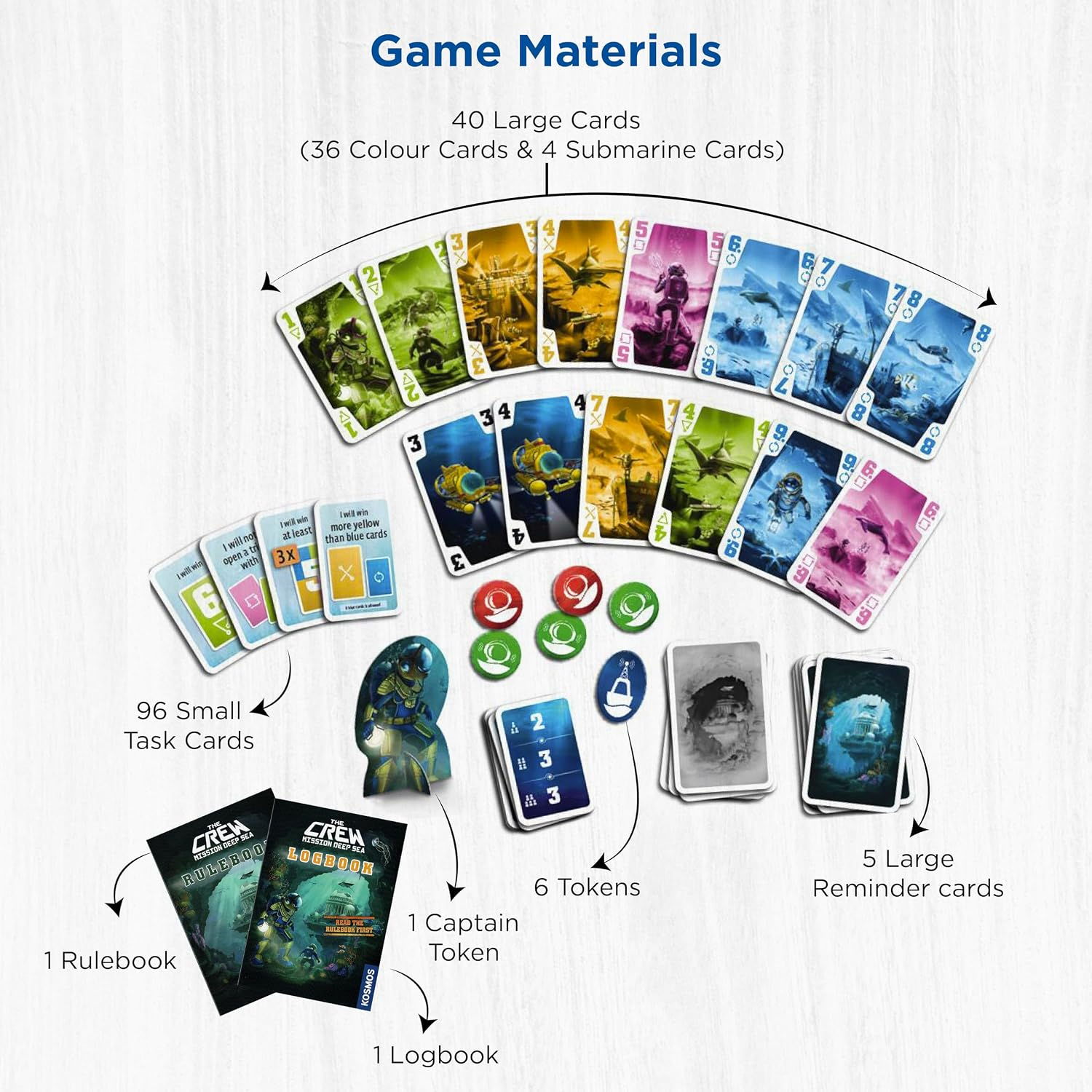
The theme is pleasant, but it is not the reason to play. Instead, the focus is silent coordination under heavy communication limits. You and your group must win specific cards, avoid others, and time tricks precisely. Meanwhile, every mission asks the same basic question in a different way. Can this group read each other well enough to solve the puzzle. Because of that, Mission Deep Sea feels less like a story game and more like a cooperative logic exercise. Still, the diving setup gives the missions enough identity to keep the package from feeling dry.
What makes it special is its discipline. The game never bloats itself with extra subsystems. Instead, it trusts the trick-taking foundation to do the work. That choice pays off because each hand feels tense from the opening lead. Also, the limited communication rule creates the right kind of frustration. You are rarely confused by the game itself. However, you are often desperate to say one more thing to your teammates. That emotional pressure is where the game really lives.
Pros
- Core rules are easy to teach, even to players new to trick-taking.
- The mission system adds variety without burying the table in exceptions.
- Rounds play quickly, so failure never feels like a huge setback.
- The communication limits create real tension and memorable table moments.
- It scales well across different skill levels, especially with the mission structure.
- Works as both a casual co-op and a serious challenge.
- Excellent replay value.
Cons
- The theme is thin once play begins.
- Some groups will also find the communication limits more frustrating than exciting.
- Repeated losses on one mission can stall the momentum.
- The experience depends heavily on group chemistry and shared patience.
- Because the system is so lean, small mistakes can feel brutal.
- It is elegant, yet it offers less narrative texture than many co-ops.
- Also, players who dislike trick-taking will not be converted by the theme alone.
Comparison to Similar Games
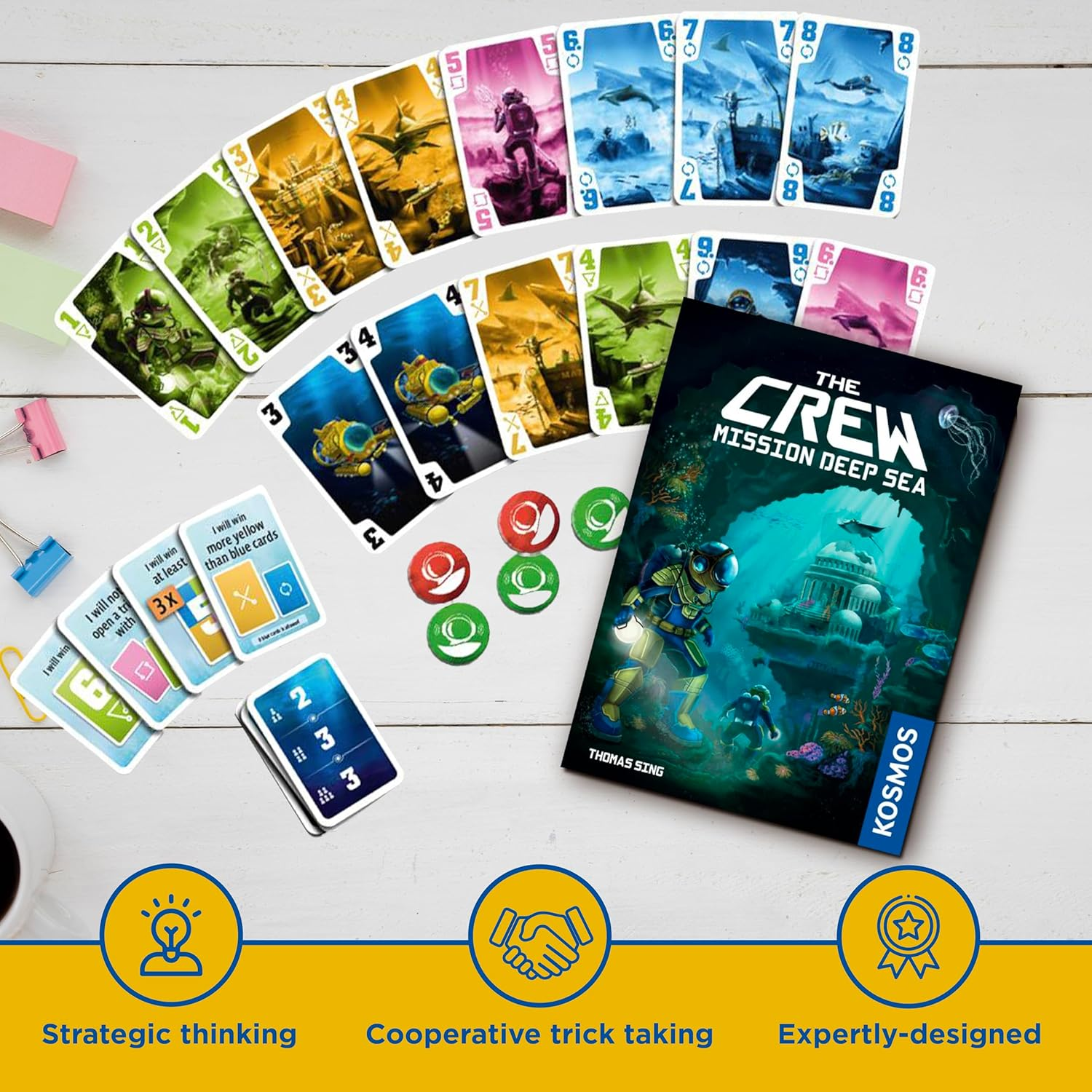
Compared with The Crew: The Quest for Planet Nine, Mission Deep Sea is the better design. The missions feel more flexible, and the challenge curve feels smoother. Meanwhile, Planet Nine has a slightly cleaner identity, but it now feels more rigid. If you own only one, I would choose Mission Deep Sea.
Compared with Hanabi, Mission Deep Sea is less abstractly cruel. However, both games live on limited communication and inferred intent. Hanabi feels sharper and more punishing. By contrast, Mission Deep Sea feels more inviting and more varied. Compared with Fox in the Forest: Duet, this game is broader and more mission-driven. However, Duet offers a more intimate two-player experience. Compared with Just One or other light co-ops, Mission Deep Sea asks much more from timing and card sense.
Verdict
Overall, The Crew: Mission Deep Sea is excellent, but not universally so. It works best with players who enjoy subtle teamwork and reading tiny signals. However, it is not a loud, story-rich, or emotionally expressive co-op. Instead, it is a precise cooperative puzzle dressed as an adventure. That may sound cold, yet the table tension is anything but. When a hard mission finally clicks, the game feels brilliant. So, for experienced players, I think it is one of the best modern cooperative card games. Still, for groups that want open discussion or stronger theme, it may feel too restrained.