The beautifully produced WarhammerTV 11th ed 40k bat rep had a slew of information about the upcoming edition of Warhammer 40,000. Let’s take a look at what we learned.
First of all, you can see the battle report for yourself, here. Now let’s dive in!
Missions, Force Disposition, Deployment
One of the first things we see is that the venerable Gladius Task Force is 3 Detachment Points and the force disposition is Priority Assets.
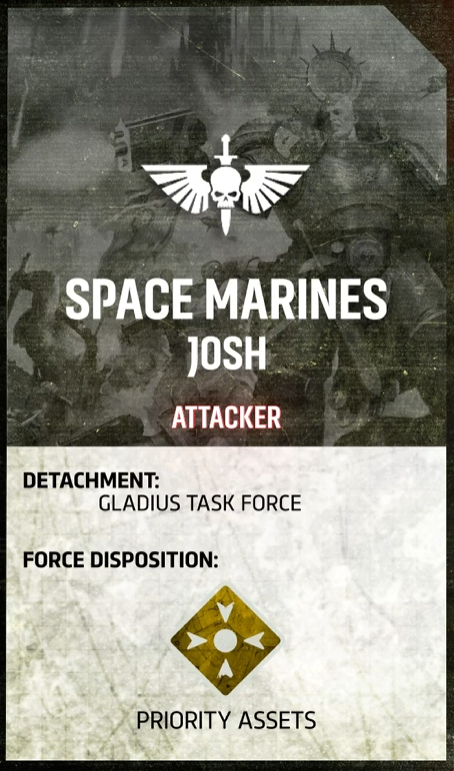
For the Orks the More Dakka and Dread Mob detachments come out to 3 detachment points and their disposition is Purge the Foe. Here is what we know about the dispositions so far:
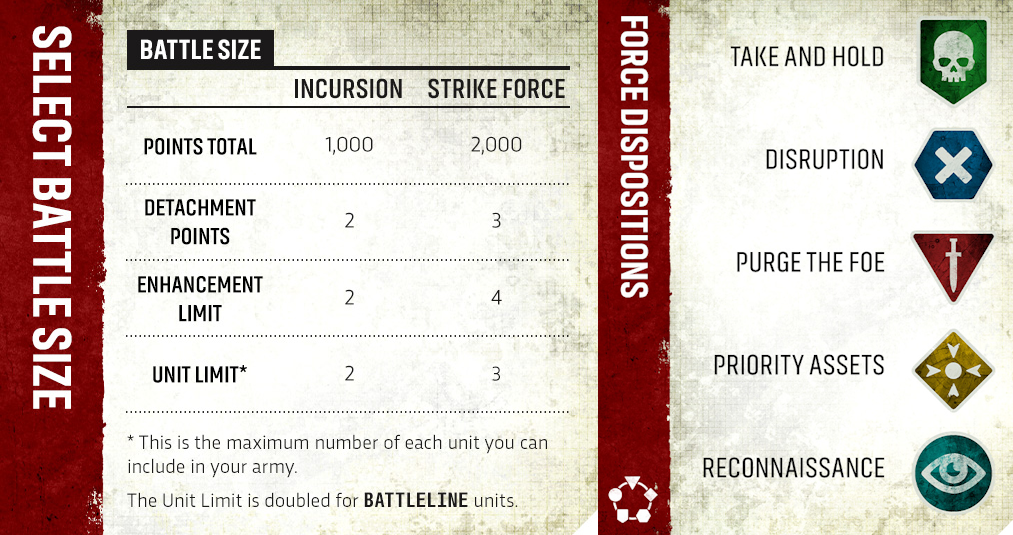
Take and Hold: Focuses on board control, claiming, and holding ground.
Purge the Foe: Rewards aggressive play, systematic lethality, and wiping enemy units.
Disruption: Centers on sabotaging enemy plans and performing actions in enemy territory.
Reconnaissance: Focuses on espionage, cloak-and-dagger maneuvers, and deep-table actions.
Priority Assets: Geared toward obtaining and recovering key battlefield elements
| Your Force Disposition | vs. Take and Hold | vs. Purge the Foe | vs. Disruption | vs. Reconn | vs. Priority Assets |
|---|---|---|---|---|---|
| Take and Hold | Symmetrical Control | Hold the Line vs. Slay | Secure Sector vs. Sabotage | Garrison vs. Infiltrate | Secure vs. Extract |
| Purge the Foe | Slay vs. Hold the Line | Symmetrical Elimination | Attrition vs. Raid | Hunt down vs. Escape | Exterminate vs. Salvage |
| Disruption | Sabotage vs. Secure Sector | Raid vs. Attrition | Symmetrical Chaos | Interference vs. Scout | Contaminate vs. Recover |
| Reconn | Infiltrate vs. Garrison | Escape vs. Hunt down | Scout vs. Interference | Symmetrical Intel | Spycraft vs. Secure Cache |
| Priority Assets | Extract vs. Secure | Salvage vs. Exterminate | Recover vs. Contaminate | Secure Cache vs. Spycraft | Symmetrical Priority |
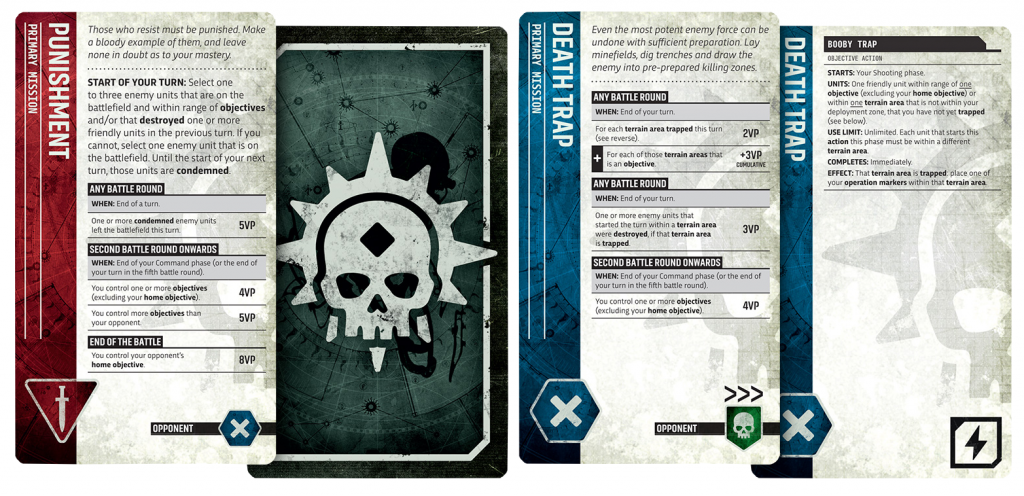
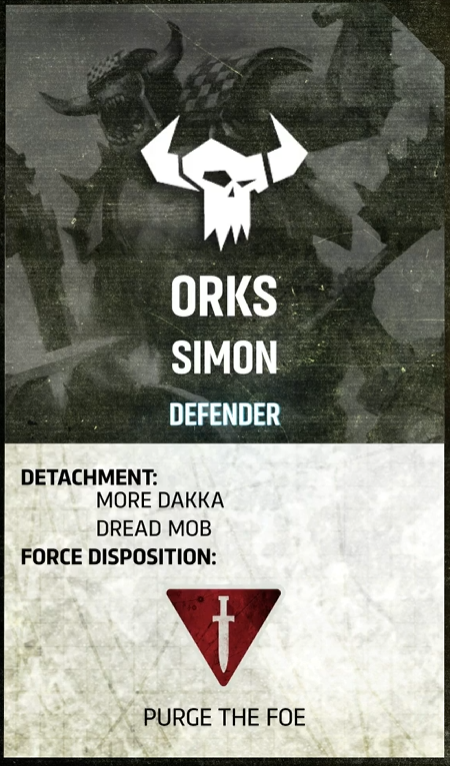
So then the interplay between these Force Dispositions means the Space Marines are playing Vital Link and the Orks are playing Destroyer’s Wrath. It seems so far, that for Matched Play you pick one of the Dispositions available to you from your detachments for your army and that is locked in.
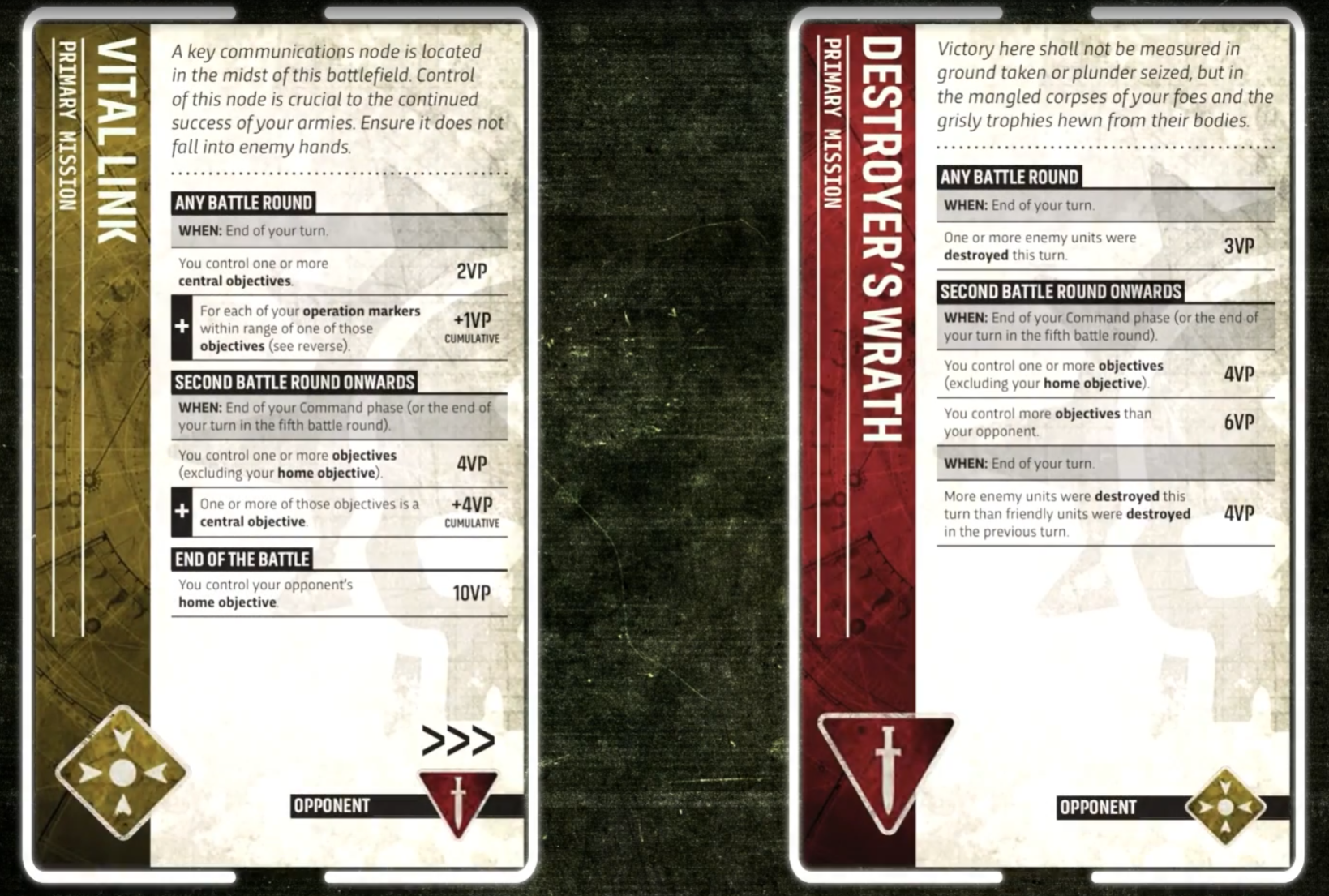
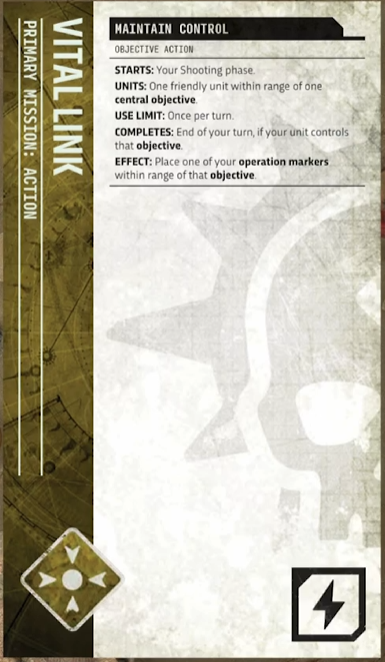
One would assume this means you have a card with the corresponding symbol for the other Force Dispositions you could match up with for your force disposition (including the mirror match).
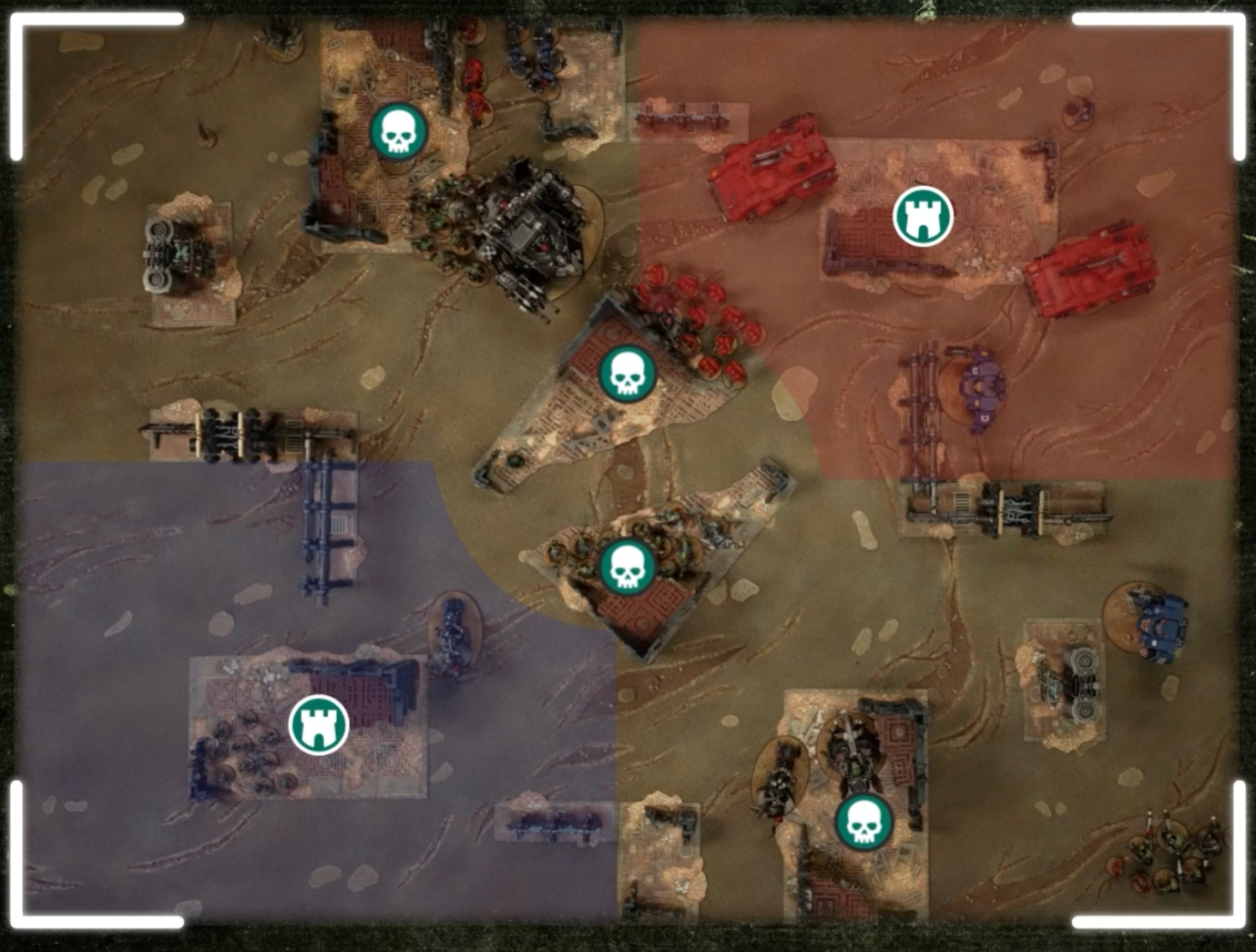
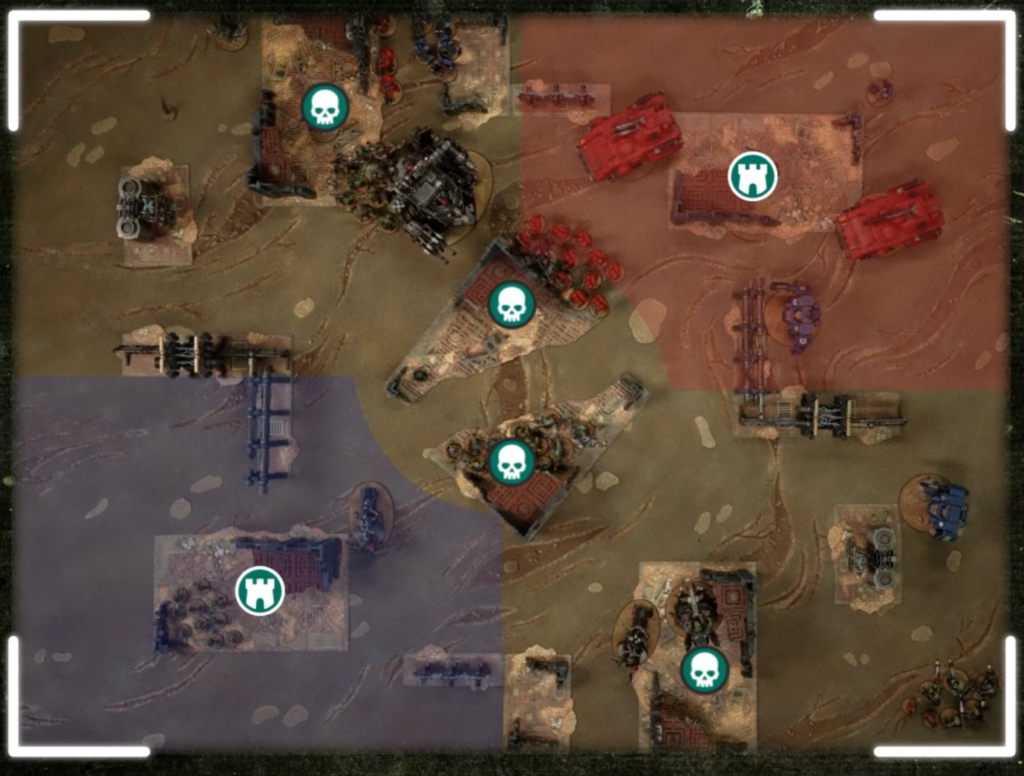
Finally, the deployment is then also determined by this interaction with 3 choices of maps, not sure yet exactly how this will be determined between the options. It is believed that the TO will pre-determine the choices in the player pack based on match-up but that remains to be seen.
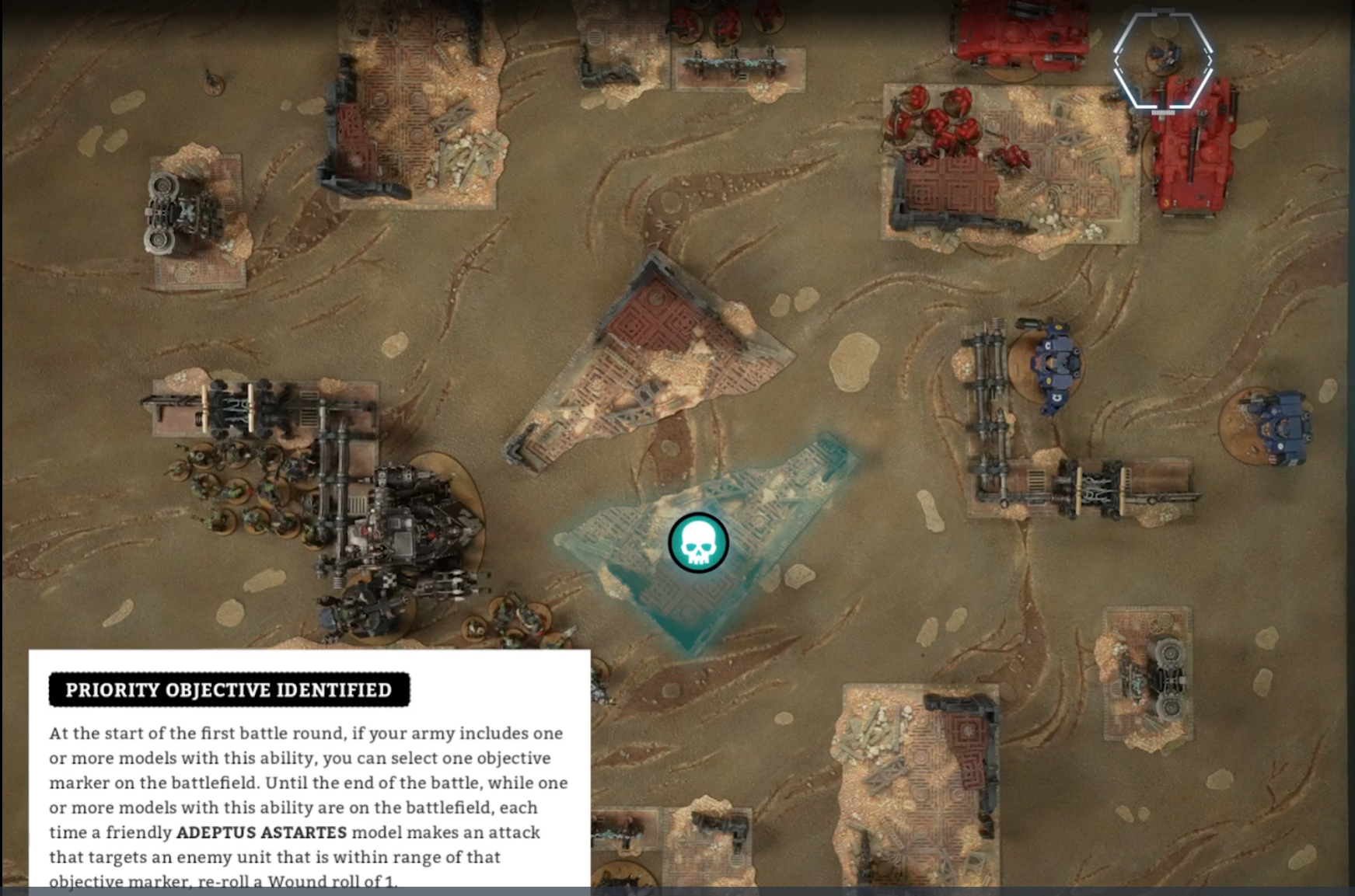
Then the Space Marine player’ Lt. with Combi-Weapon designates which terrain piece will be the Priority Objective which provides benefits to that player and interacts with the mission scoring.
General Rules
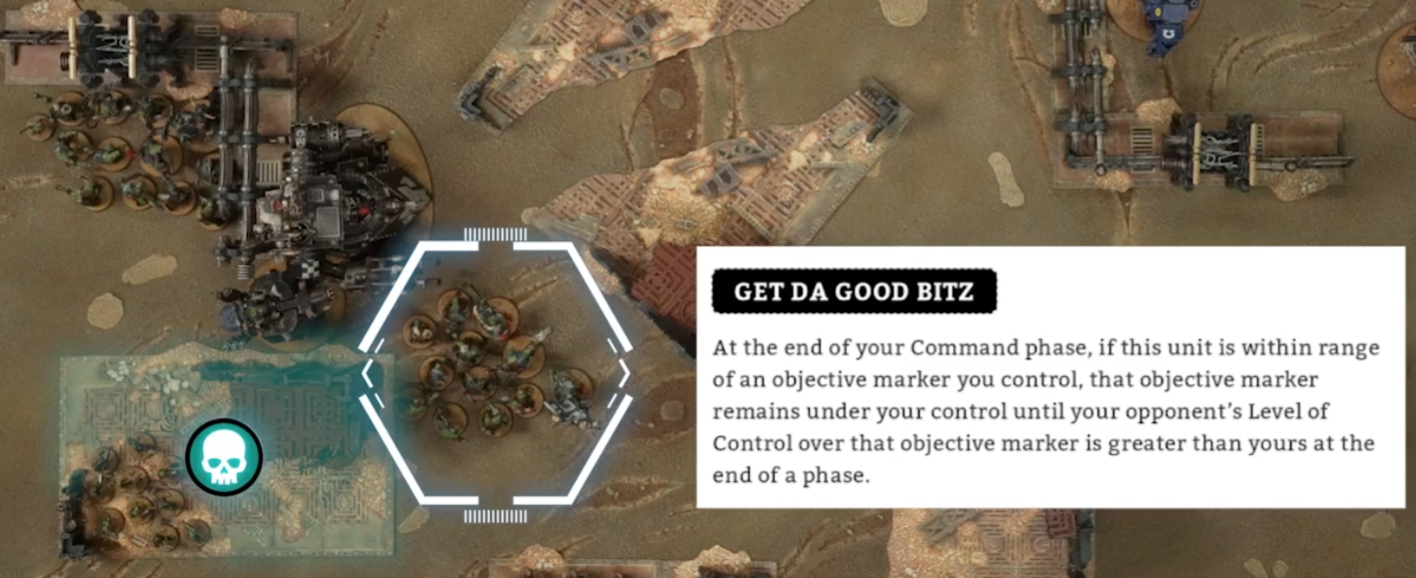
Looks like the rules for “sticky” on objectives remains unchanged.
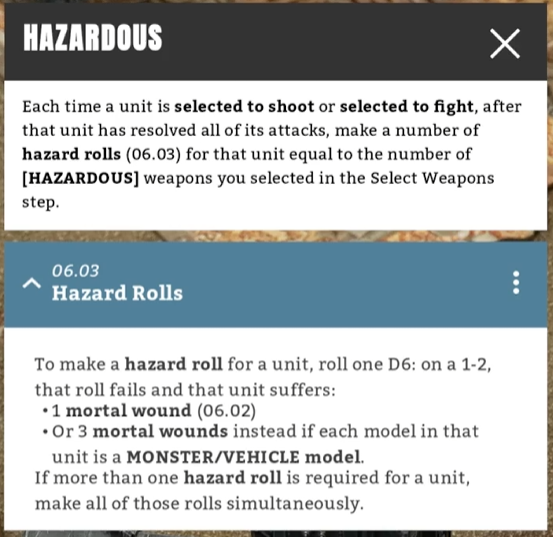
The Hazardous rule is now on a 1 or 2 but deals 1 wound unless you are a Monster or Vehicle in which case it is 3.
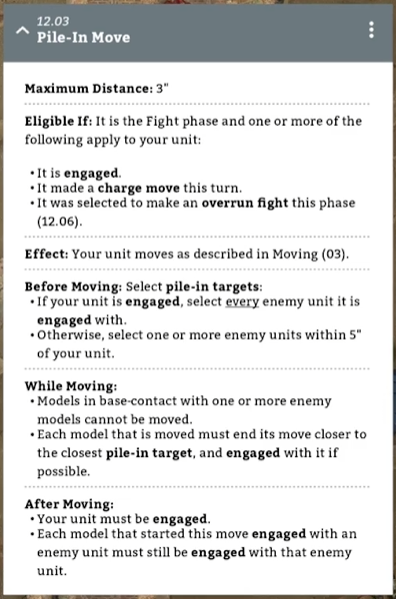
Pile-in works quite differently in 11th edition 40k, all models pile-in 3″ at the same time before fighting occurs, alternating players starting with the active player. I assume there will be a lot of room for shenanigans in this phase for higher level players to manipulate combats.
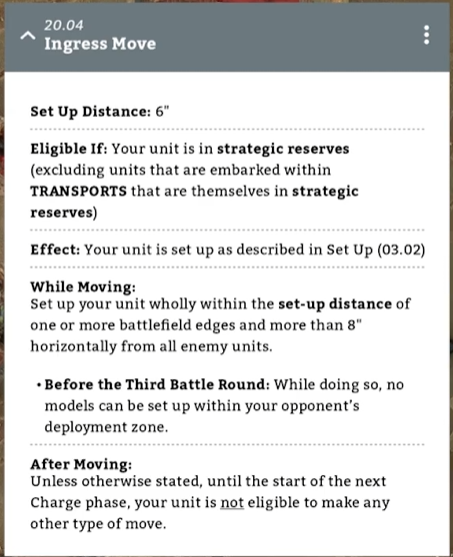
Ingress Move is the new reserves rule, simplified a bit and with the updated 8″ limitation on distance from enemy models.
Fast Dice Rolls were made a lot more clear in the video, and while at first it seemed a bit confusing in practice it is quite simple. You roll the units’ saves and then allocate them in the order you like (1s, 2s, etc.) and this means in practice by the time you get to the character in a unit, assuming they have a better or invulnerable save, you can allocate the successful rolls to that model. In effect this means you are more likely to survive with heroes.
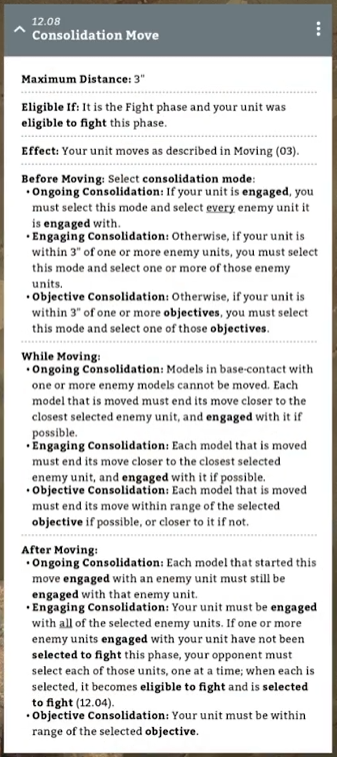
Consolidation likewise is different than it was but functions similar to the Pile-in phase where it all happens at the same time, after Fight Phase casualties are pulled. The Active player goes first then players alternate. There will be shenanigans here as well I am sure and if you pile in to a unit that did not fight yet, they then become eligible to fight it seems, so there can be some odd interactions here.
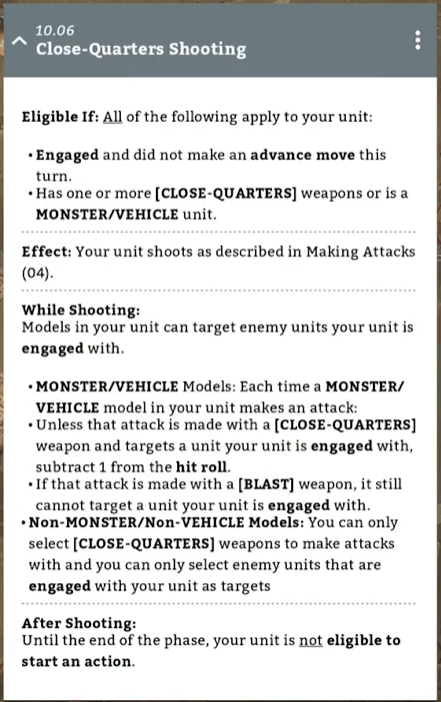
Close-Quarters Shooting covers all shooting actions while engaged, ie. Pistols or Monsters/Vehicles.
General Stratagems
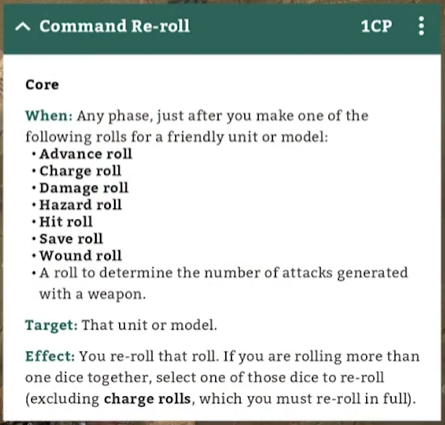
The Command Re-roll strat allows for re-rolls of Advance, Charge, Damage, Hazardous, Hits, Saves, Wounds and the number of Attacks for a weapon in 11th ed.
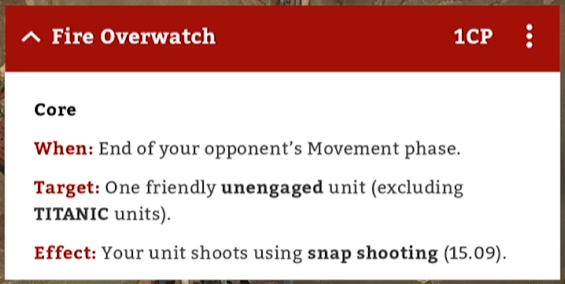
The Fire Overwatch stratagem now seems to allow you to simply shoot any unit you can see at the end of the opponent’s Movement Phase, so having a solid unit to get into a good position and Overwatch will be a common choice for lists. Torrent weapons will bypass the Snap Shooting penalties so I expect many players will be adding these types of units to their army.
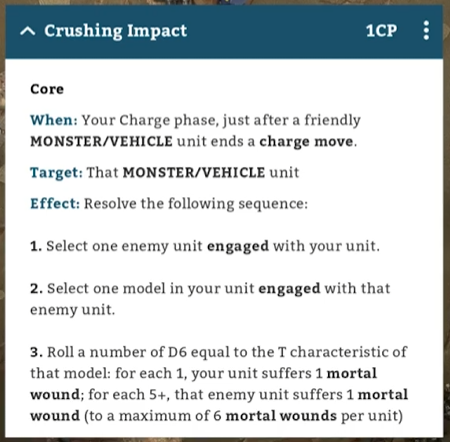
The Crushing Impact stratagem is the new Tank Shock it seems, and applies to Monsters and Vehicles which is a nice change. It now also deals damage to you which is a bit of a bummer but otherwise deals damage on a 5+, rolling a number of dice equal to the model’s Toughness.
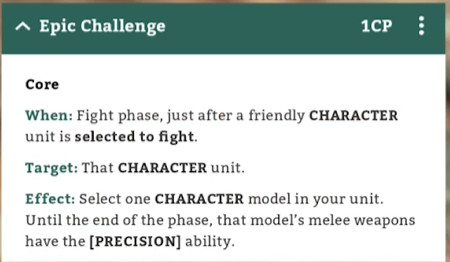
Epic Challenge grants precision which is quite a bit scarier this edition due to the way fast rolling works with saves, allowing you to allocate the dice roll results as opposed to your opponent.
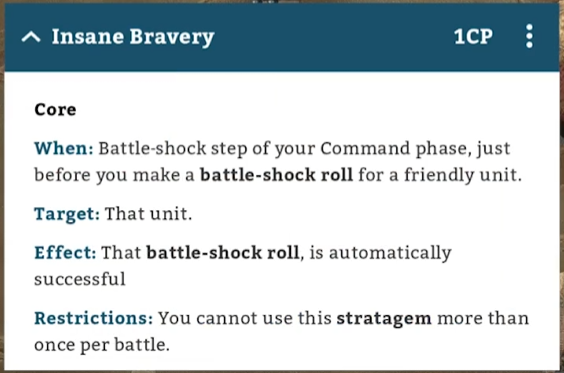
Insane Bravery remains unchanged in 11th, once per battle you auto-pass a Battle-shock before rolling.
Secondary Missions
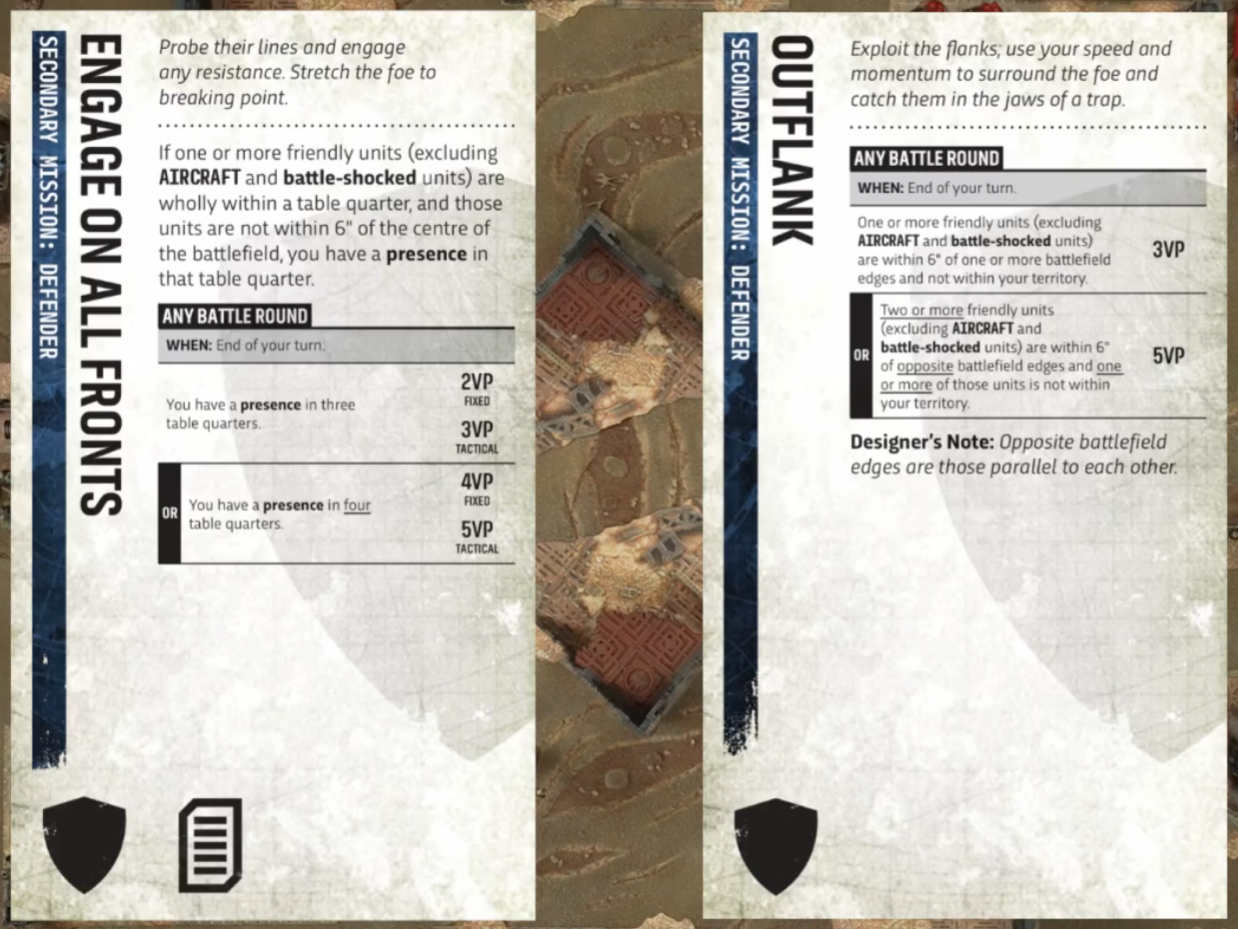
The secondaries look similar to what we are familiar with in 10th with some changes but broadly look fairly similar. Outflank requires a unit to be within 6″ of a board edge and not in your deployment zone, and if you have units on two edges you get 5 points over 3 for one.
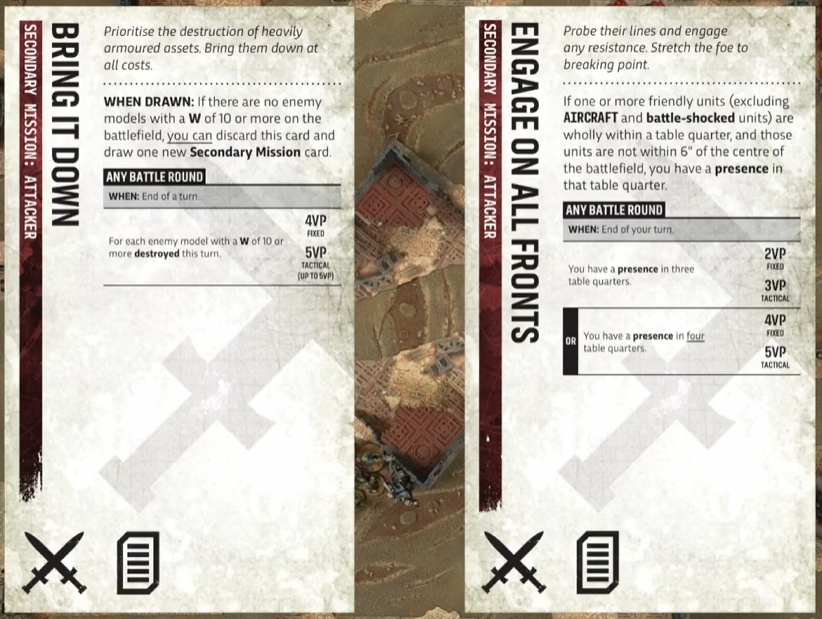
Bring it Down triggers for models with 10+ wounds, Engage on All Fronts remains largely the same with units in table quarters with a provision on being within 6″ of the center of the board.
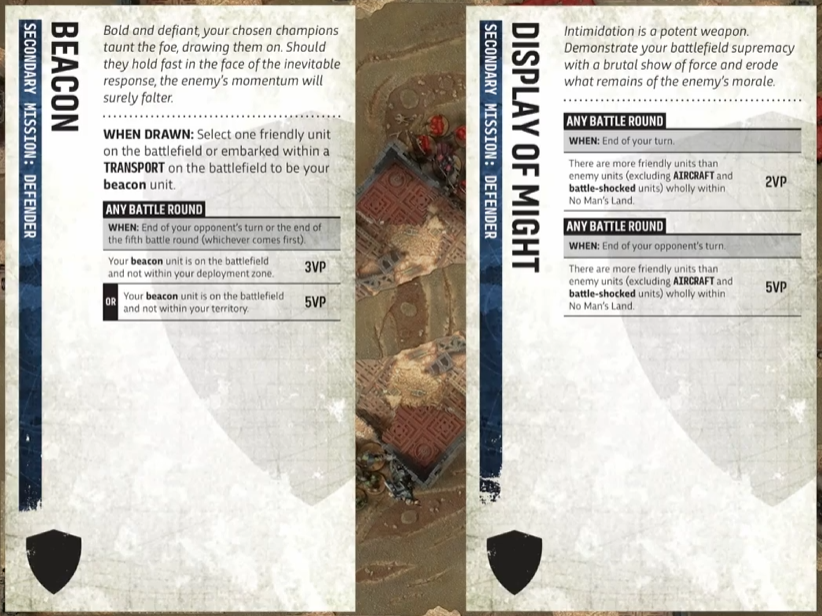
Beacon is an interesting secondary, apparently you just have to survive a turn with the unit you pick and be outside of your deployment zone. Display of Might remains largely the same with the caveat that it scores more at the end of your opponent’s turn in no-man’s land.
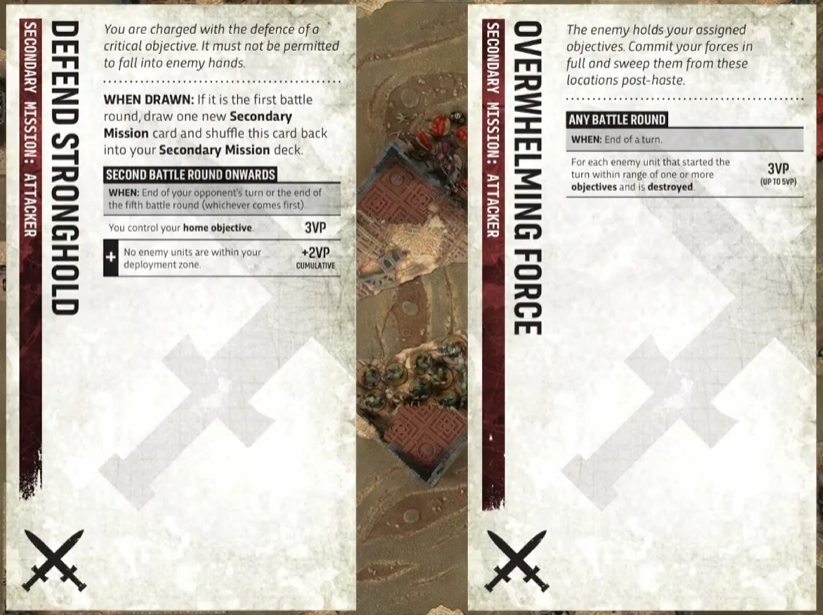
Defend Stronghold got updated to have a bumper condition if no enemy units are in your deployment zone in addition to holding your home objective. Overwhelming Force remains largely the same, granting up to 5 points for destroying enemy units that started the turn on objectives.
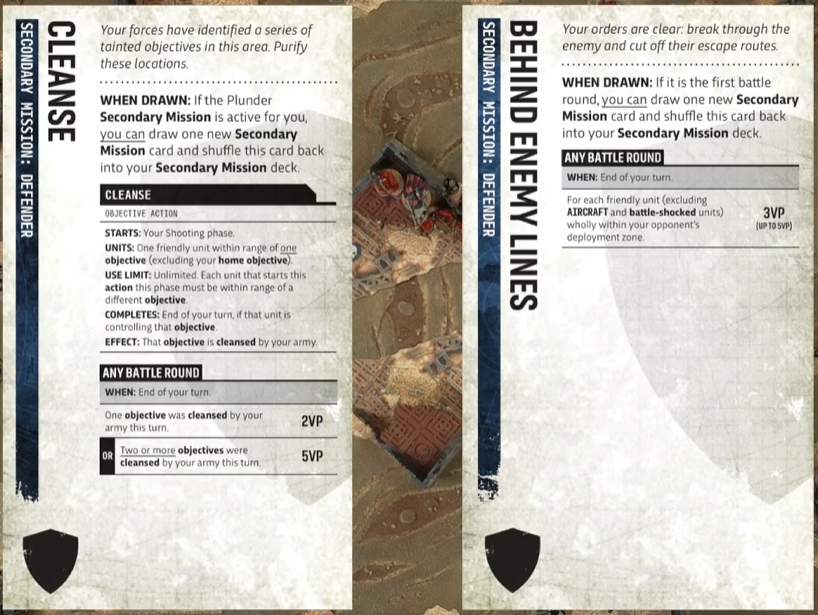
Cleanse remains similar, with 2 or 5 VP for cleansing 1 or 2+ objectives. At first it seemed odd to cleanse more than 2 but with ongoing combats and overwatch, it could make sense to try to cleanse more than you need to to hedge your bets. Behind Enemy lines scores up to 5 VP for being in the enemy deployment zone and as now, can be redrawn on turn 1.
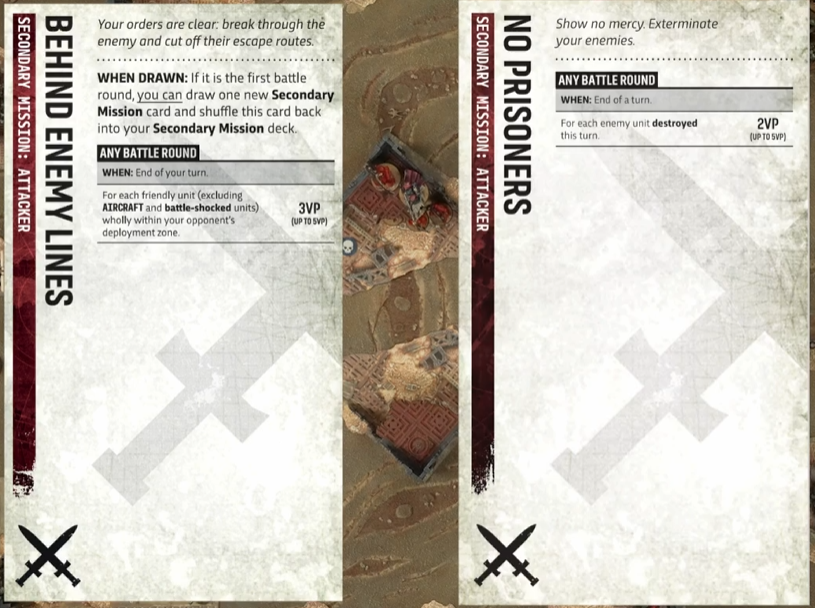
No Prisoners is a potential whopper of a card, it grants 2VP per unit destroyed up to 10!
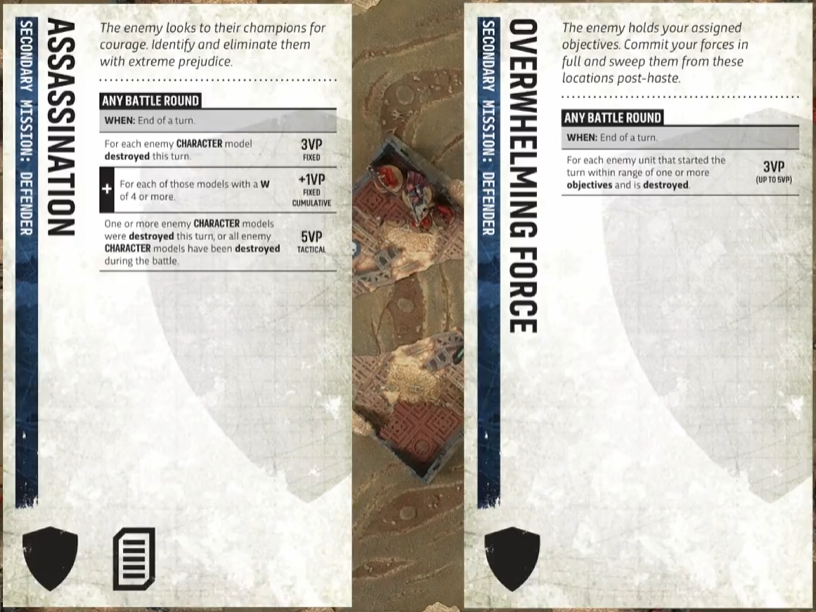
Assassination now grants a bumper point for characters with 4+ wounds and you can score up to 5VP for the secondary.
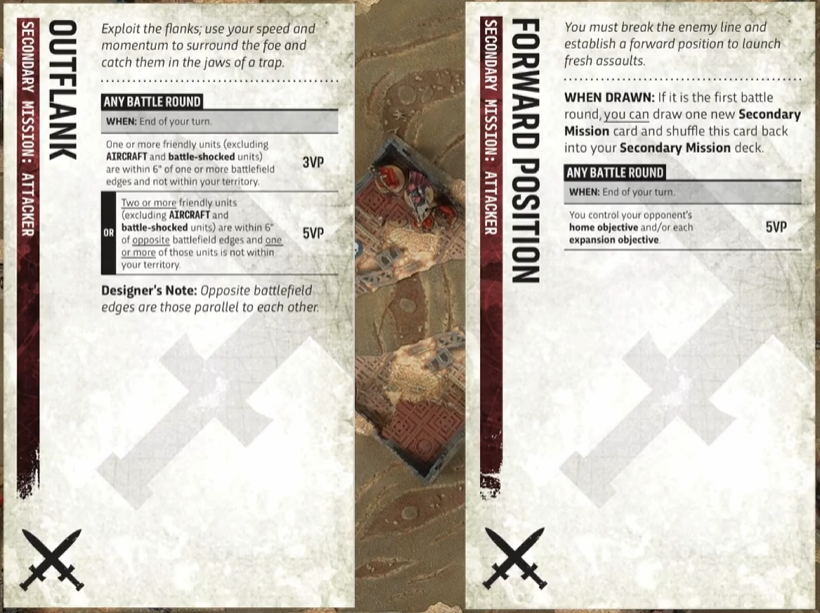
Forward Positions scores you 5 for holding your opponent’s home objective and/or both expansion objectives, and may be redrawn in the first battle round.
What else did you learn from that battle report?
Start Practicing For 11th Edition Today
The rules are shifting, and the new terrain mechanics are going to separate the top tables from the rest of the pack. Don’t wait until the official launch to learn the new board control strategies.
GET YOUR 11TH ED FOOTPRINTS