Late war Flames of War is usually strongest when it gets desperate and strange. So, these two pieces land in exactly that sweet spot.
One focuses on a patched-together infantry force built from German naval manpower. Meanwhile, the other brings back one of the war’s most dramatic support options, the BP44 armoured train. Altogether, both articles lean hard into those final-war formations that feel improvised, dangerous, and packed with hobby character. This is a quick summary of several articles from the Battlefront Community site, head there for more details.
German naval manpower becomes a stubborn, close-range infantry force
The Marine-Grenadier divisions are a classic late-war German stopgap, and that is what makes them interesting. By 1945, Germany was scraping manpower from the Kriegsmarine because the navy was overstaffed and less relevant.
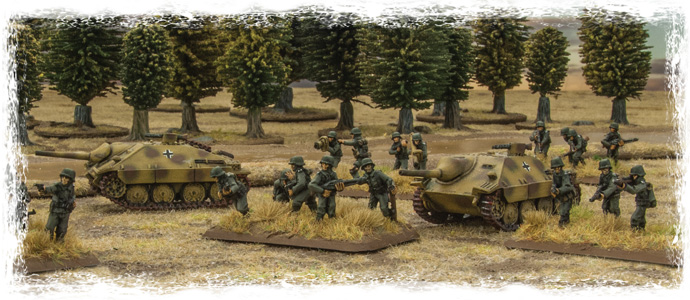
However, these were not specialist marines in the Allied sense. Instead, they were naval personnel reorganised into ersatz infantry formations under navy command. Their structure mirrored Volksgrenadiers, with three regiments of two battalions each. Moreover, their companies leaned into close-range firepower, with two StG 44 platoons and one rifle and MG42 platoon. They also carried plenty of Panzerfausts and Panzerschrecks, which mattered because heavy anti-tank assets were limited.
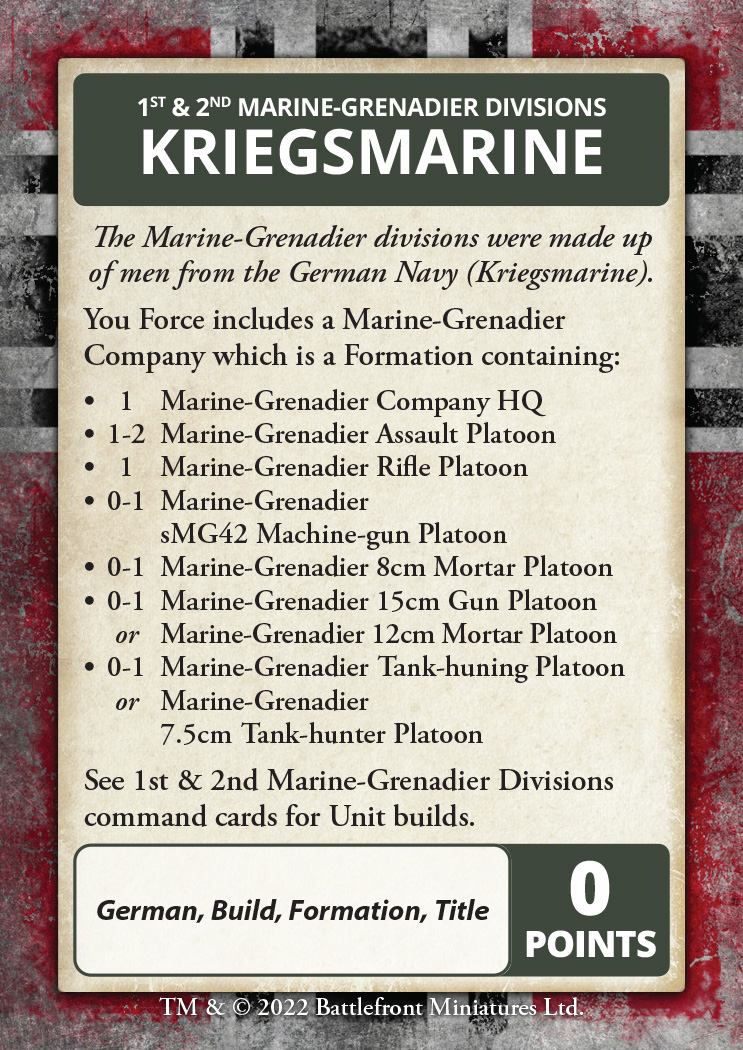
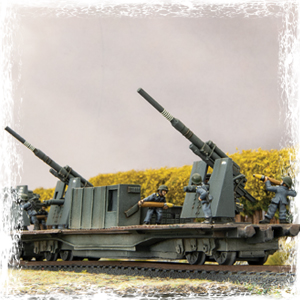
Historically, the 1st Marine-Grenadier Division fought north of Berlin on the Oder. Meanwhile, the 2nd fought the British on the Weser and Aller lines, backed by railway-mounted anti-aircraft guns. On the table, Battlefront represents them with a dedicated formation card and several command cards. That formation includes assault platoons, a rifle platoon, machine-guns, mortars, gun or heavy mortar support, and tank-hunting choices.
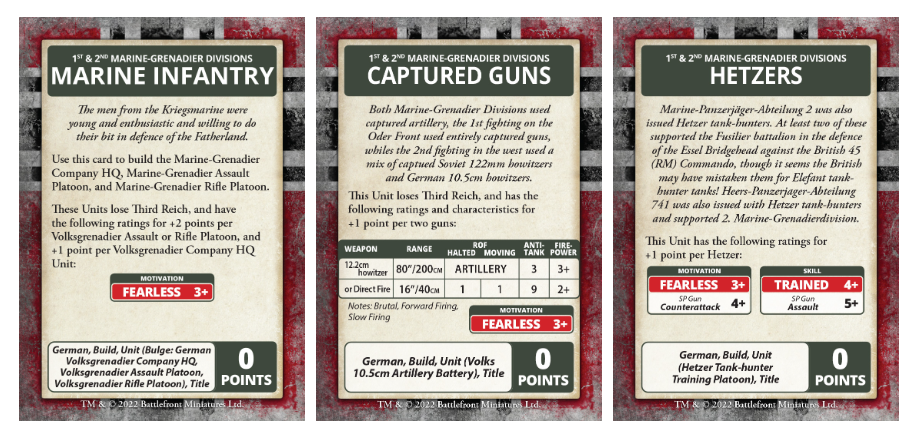
Compared to Volksgrenadiers, the Marine-Grenadiers trade Third Reich for Fearless 3+, which is a very real upgrade. So, they look much better at unpinning, counterattacking, and holding objectives under pressure. The article also highlights attached support like 10.5cm or captured 12.2cm guns, Hetzers, assault guns, and even Tigers in the 2nd Division example.
1st Marine Grenadier Division – Example List
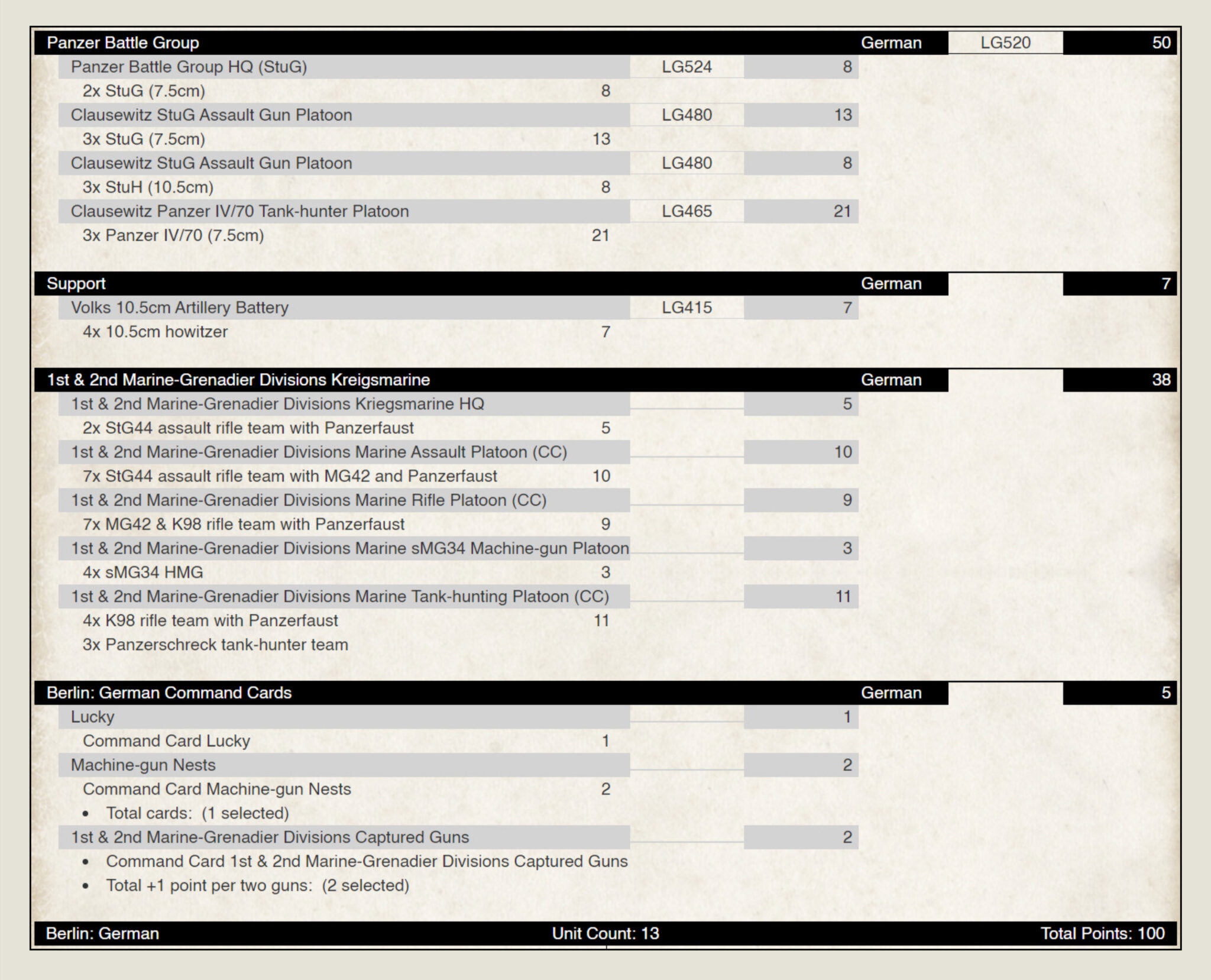
2nd Marine Grenadier Division – Example List
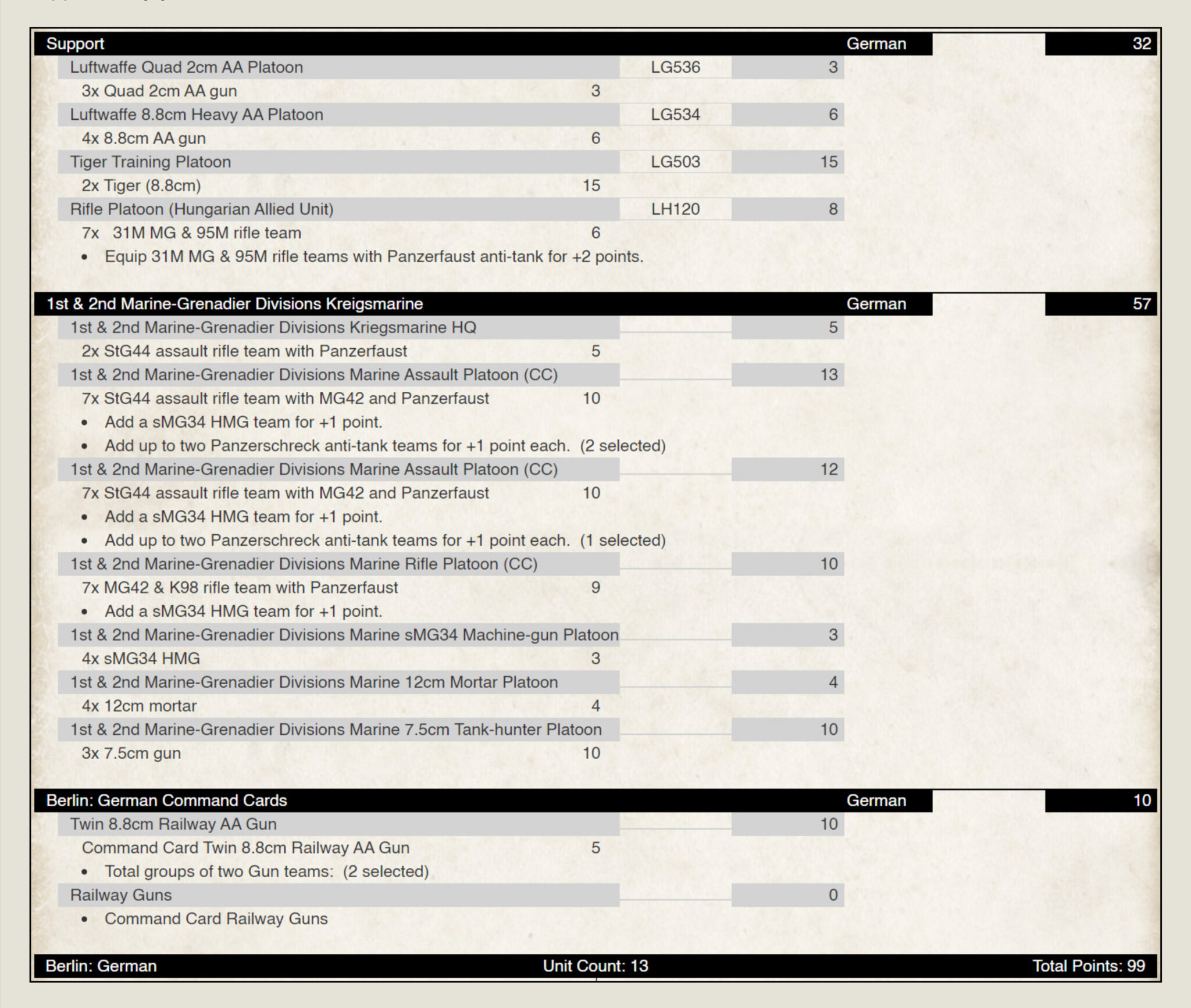
As a result, the list feels like a gritty defensive army with sharper morale than you might expect.
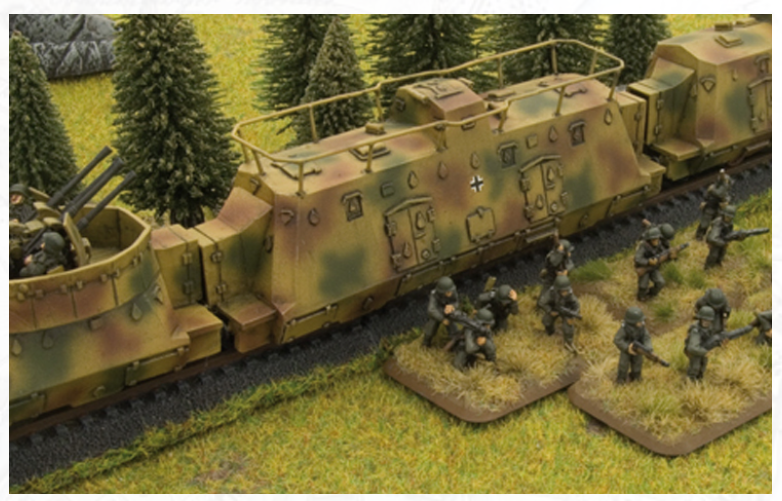
The BP44 armoured train turns artillery support into pure battlefield theatre
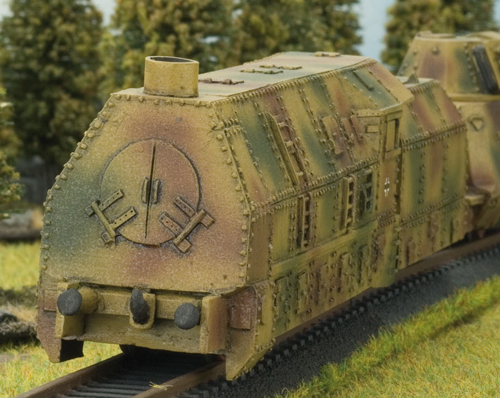
The armoured train piece hits an even more dramatic note, because nothing says Eastern Front chaos quite like a rolling fortress. The article explains that German trains began as improvised security tools. However, by 1943 and 1944 they were seeing more frontline fighting, which drove the BP42 and then BP44 designs.
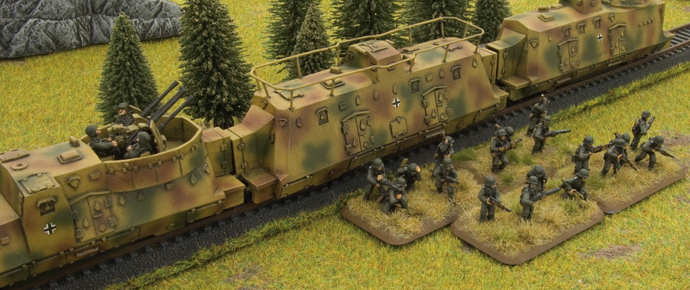
The BP44 improved on the earlier train by replacing older guns with 10.5cm leFH18/40 howitzers and adding tank-hunter cars mounting Panzer IV turrets. Meanwhile, the design kept infantry cars, anti-aircraft firepower, and dismountable tanks for local armour support. Armour remained relatively light at 30mm, but that was partly because simpler two-axle cars were easier to rerail.
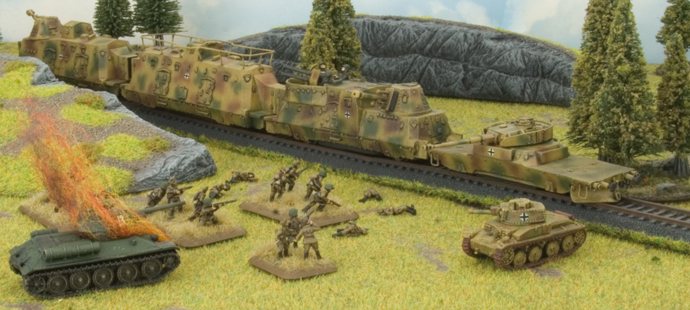
Historically, these trains fought across Army Groups North, Centre, and South. They supported pockets, protected rail lines, fought around Warsaw, covered retreats in Romania and Hungary, and sometimes died brutally fast. Train 74, for instance, lasted only four days in combat. In Flames of War, the BP44 works as a support choice rather than a whole army concept.
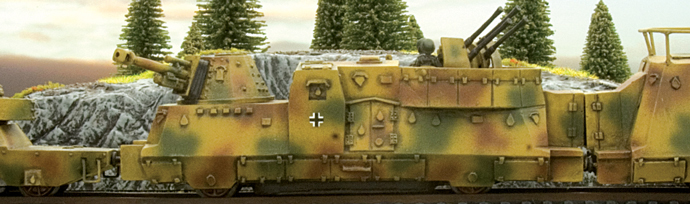
You can field a half train or a full train, and the artillery cars can combine into four or eight-gun bombardments. There is also an infantry car with Panzergrenadiers, an optional staff car for repeated bombardments, Panzer 38(t)s, and up to two Panzer IV turret tank-hunter cars. So, this thing is not subtle. It is mobile artillery, anti-air cover, local anti-tank insurance, and a huge visual centerpiece all at once. Taken together, these articles show Battlefront doing what it does best, which is turning late-war oddities into forces with real tabletop personality.