
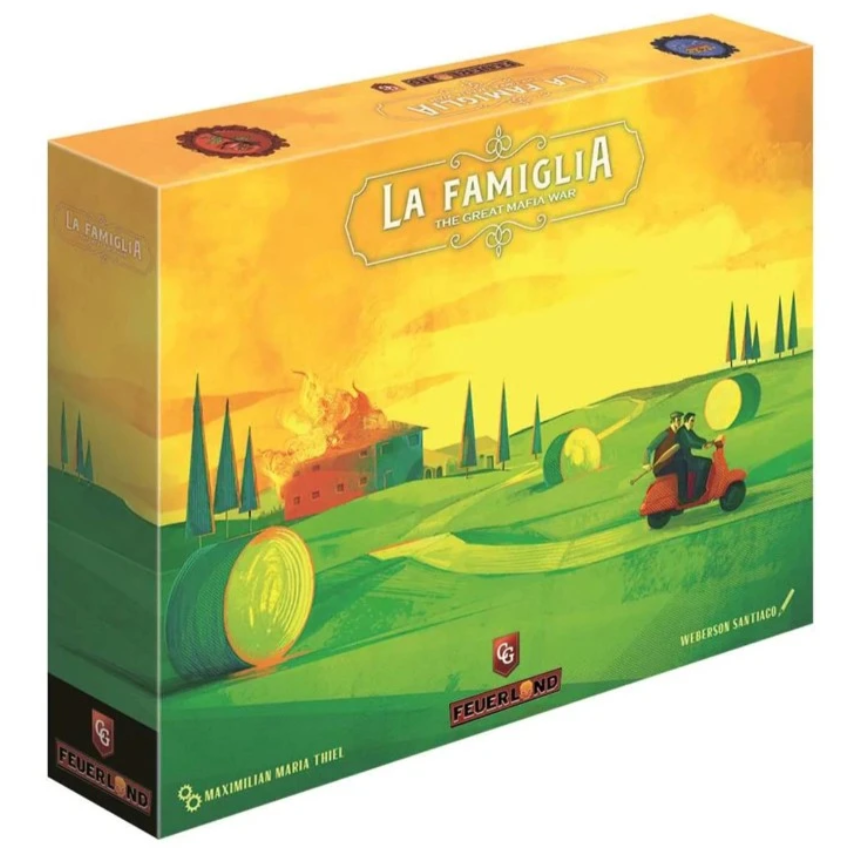
La Famiglia is a sharp, bruising team strategy game set during Sicily’s mafia conflicts of the 1980s. It is strictly a four-player game, split into fixed two-versus-two teams.
Each team controls paired families with asymmetric powers, shared goals, and hidden orders. Meanwhile, each round alternates between a planning phase and a combat phase. The focus is area control, tempo, and partner coordination, not cinematic storytelling.
Theme and Focus
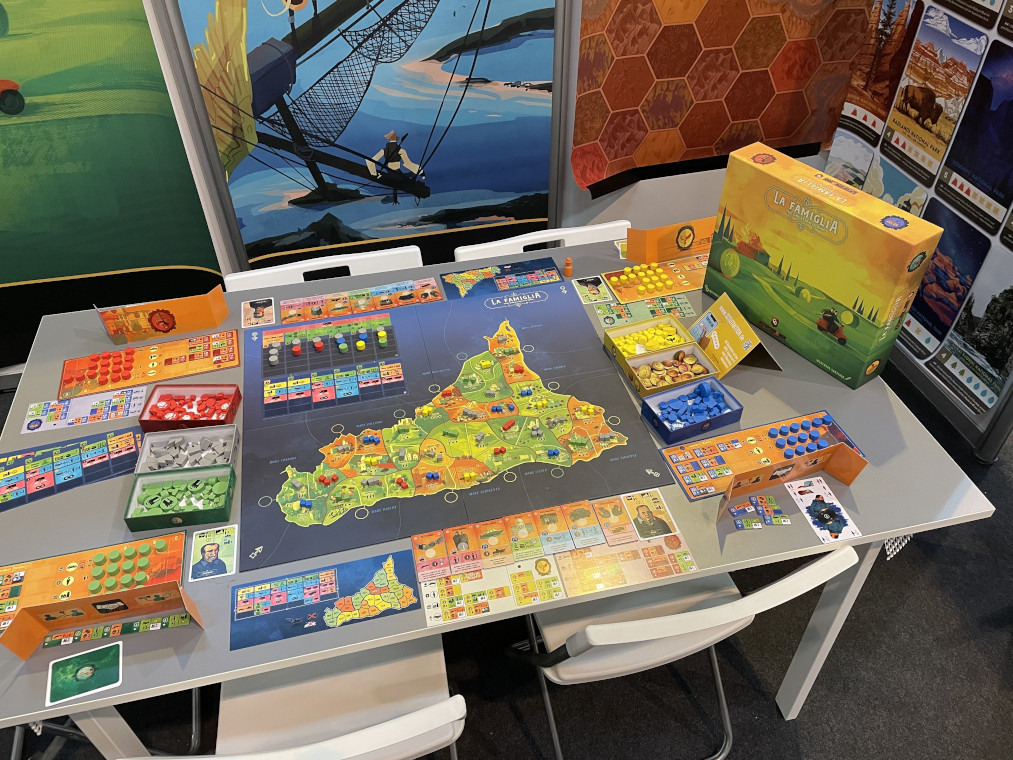
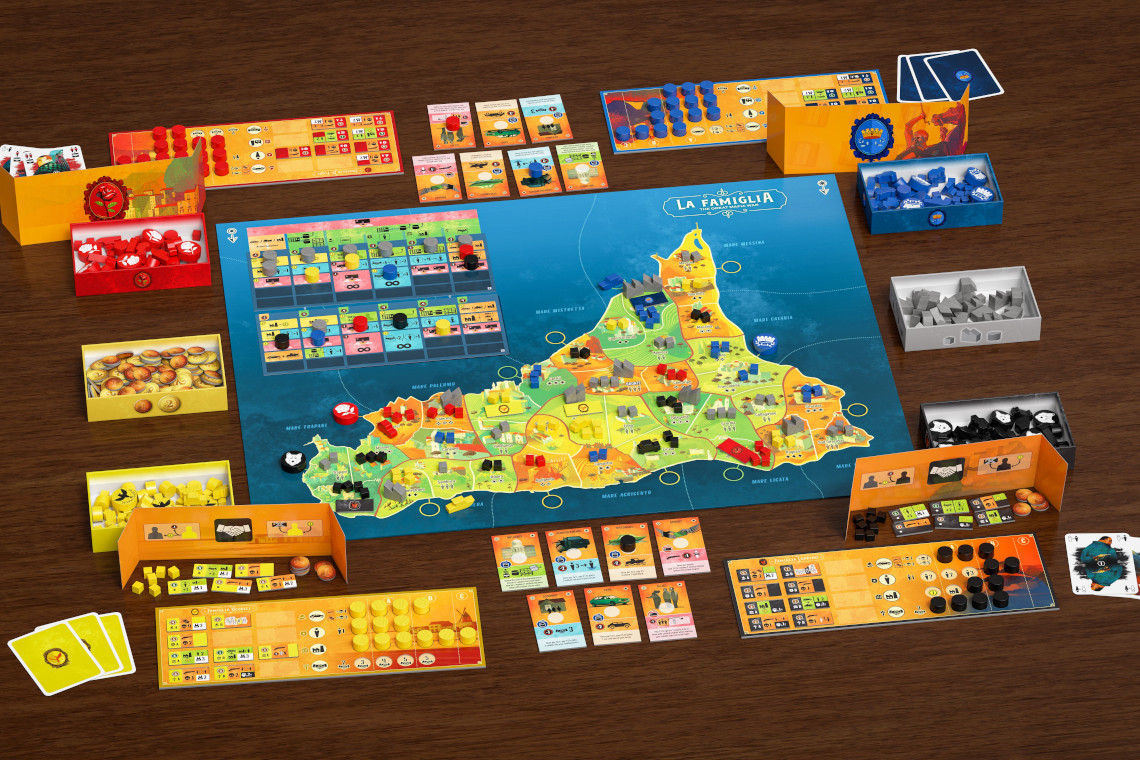
The theme is strong, but it is also uncomfortable by design. You are fighting over Sicily, placing fighters, building your economy, and setting secret attacks. However, the real appeal is the structure underneath the theme. La Famiglia blends worker placement, hidden orders, asymmetric factions, and team tactics into one demanding system. Because of that, the game rewards planning with your partner more than flashy improvisation. It feels closer to a coordinated war game than a typical Euro.
Pros
- Deep team play, and partner coordination matters every round.
- Asymmetric families create real replay value.
- Hidden orders make combat tense and satisfying.
- Also, the planning phase gives long-term texture.
- Interaction stays high, so downtime rarely feels empty.
Cons
- However, it only works at exactly four players.
- The rules load is significant, especially early.
- Also, some groups will dislike the subject matter.
- That theme also drew public criticism in Italy.
- Matches can run long, particularly with cautious teams.
- Because coordination matters so much, mismatched partners can hurt the experience.
Comparison to Similar Games
Compared with Root, La Famiglia is less improvisational and more jointly scripted. Meanwhile, it shares Game of Thrones’ regional pressure, but trims away negotiation and table chaos. It also reminds me of Maria or other partnership war games. However, La Famiglia is far easier to teach than those heavier historical designs. So, compared with most area-control euros, it feels unusually cooperative and unusually mean.
Verdict
Overall, I think it is excellent, but only for the right group. If your table loves partnership planning, it can be outstanding. However, if your group hates strict player counts, it becomes hard to recommend. Still, as a competitive team strategy game, it is one of the more distinctive recent designs.