
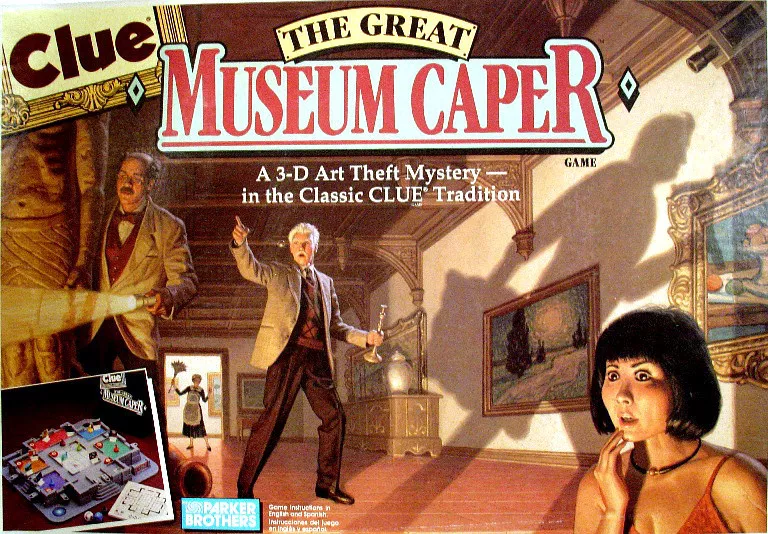
Clue: The Great Museum Caper barely feels like Clue, and that is mostly a compliment. Instead, it is an asymmetric hidden movement game about an art thief and museum guards.
One player moves secretly, while the others patrol, scan cameras, and check motion detectors. As a result, the game feels tenser and stranger than its brand suggests. It was released in 1991, and it remains one of Clue’s oddest spin-offs.
Theme and Focus
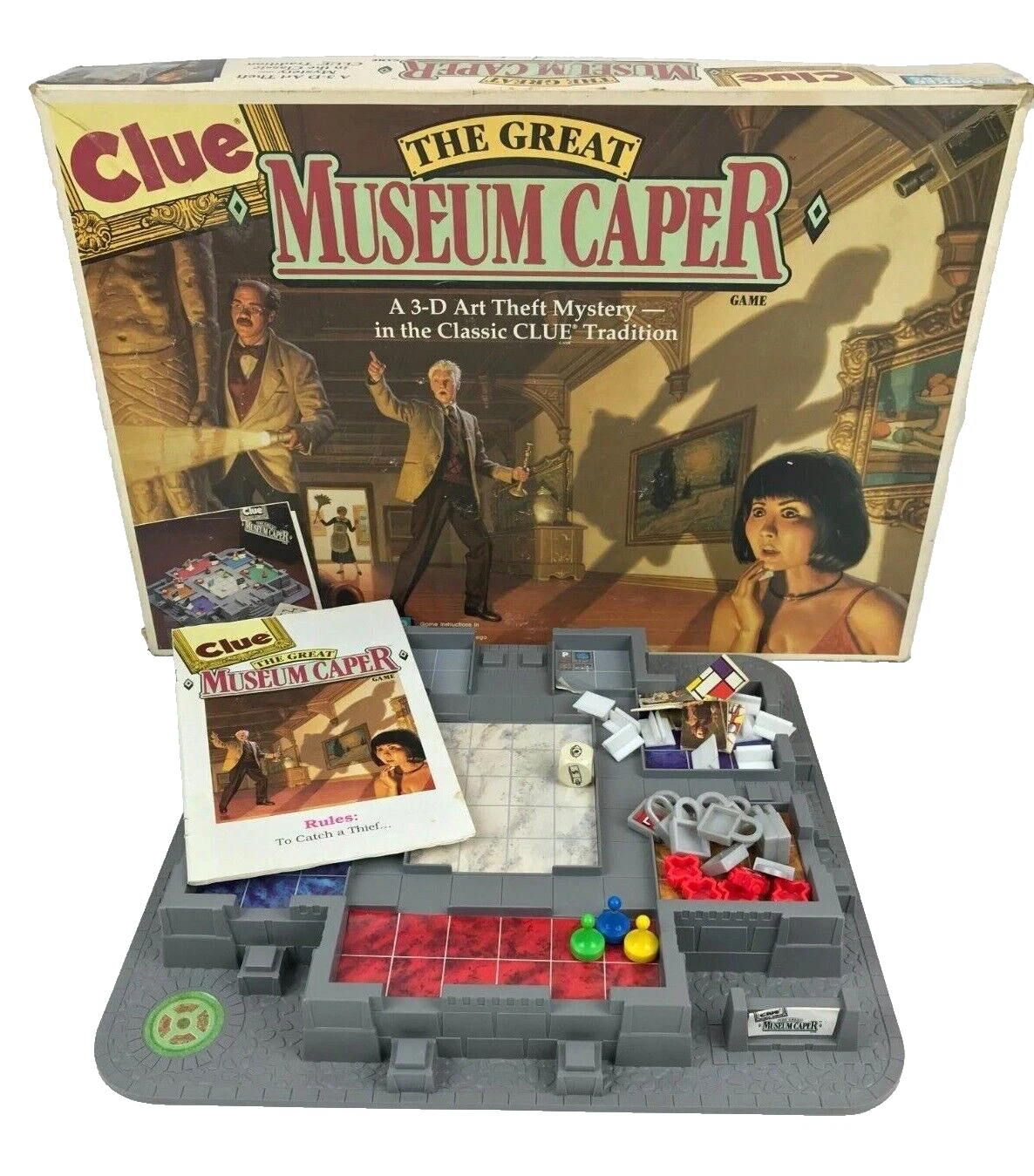
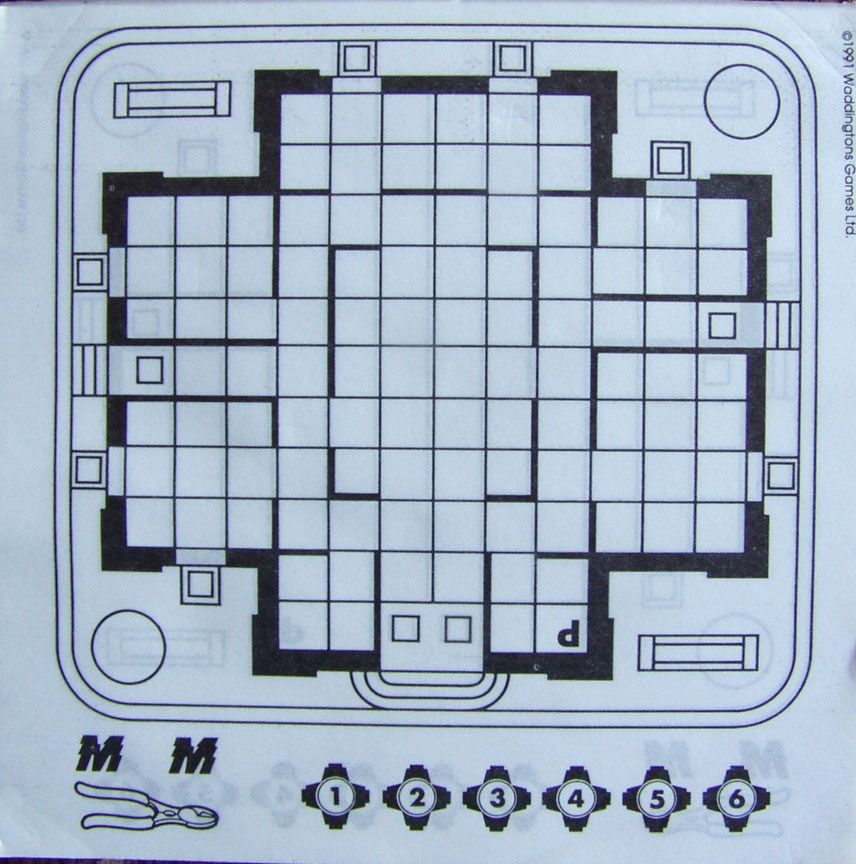
The theme is simple, yet it works very well at the table. Instead of solving a murder, the guards hunt a thief stealing paintings. Meanwhile, the thief tracks movement in secret and tries to escape the museum. Because of that, the real focus is cat-and-mouse tension, not deduction in the classic Clue sense. The cameras and motion detectors also give the guards just enough information to stay engaged.
Pros
- Strong hidden movement tension, especially for a mass-market game.
- Also, the thief role feels memorable and genuinely different.
- The museum setting supports the mechanics better than expected.
- Meanwhile, guard teamwork creates good table talk.
- Quick turns keep the suspense moving.
Cons
- However, the Clue branding sets the wrong expectations.
- The rules have some quirks that feel dated.
- Also, the guard side can feel reactive.
- Luck in security checks can swing momentum.
- Repeated plays may show the system’s limits.
Those strengths and weaknesses come from the game’s asymmetric roles and light security system. However, that same simplicity also keeps it accessible and fast.
Comparison to Similar Games
Compared with classic Clue, this is far less about deduction grids and far more about pursuit. Meanwhile, it sits closer to lighter hidden movement games than to mystery games. I would place it below Scotland Yard for polish and depth. However, it is more immediate and easier to teach. It also shares some old-school appeal with Stop Thief!, though Museum Caper feels more visual. Against modern hidden movement titles, it is thinner, yet still surprisingly charming. So, as an experienced board gamer, I see it as a clever curiosity. It is not a masterpiece, but it is far better than its branding suggests.