

Bus is a 1999 strategy game about building public transport across a growing city.
However, its cheerful premise hides a sharp competitive design. Players extend routes, add buses, develop neighborhoods, and move passengers between homes, offices, and pubs. Meanwhile, every action competes directly with someone else’s plans.
Bus Review – Theme and Focus
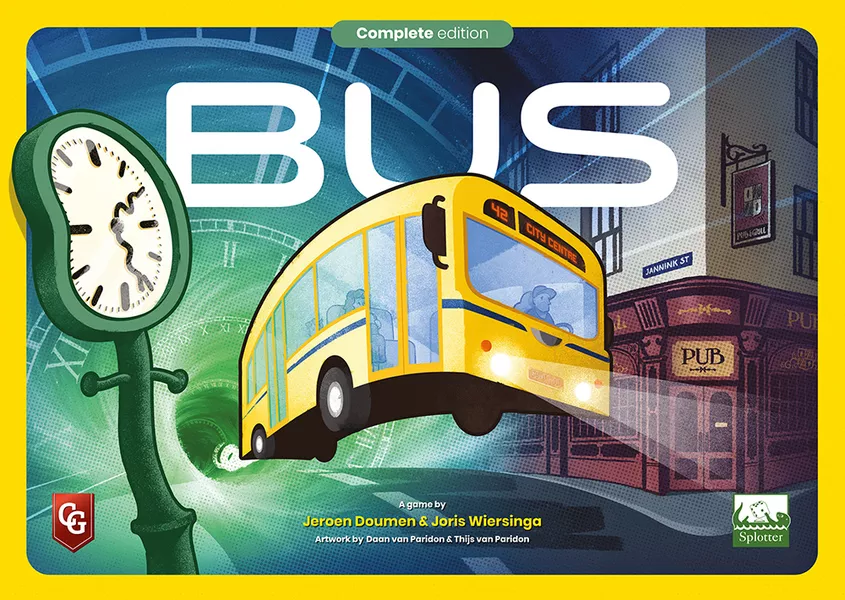
The theme is simple, yet it works extremely well. Passengers travel between homes, offices, and pubs as the clock advances. Therefore, route placement matters only when your network connects people to their destination.
Each round begins with action selection. However, your action markers are finite for the entire game. Spending too aggressively can leave you powerless later. Meanwhile, action order creates painful timing decisions. Some actions reward acting early, while others become stronger for players resolving later.
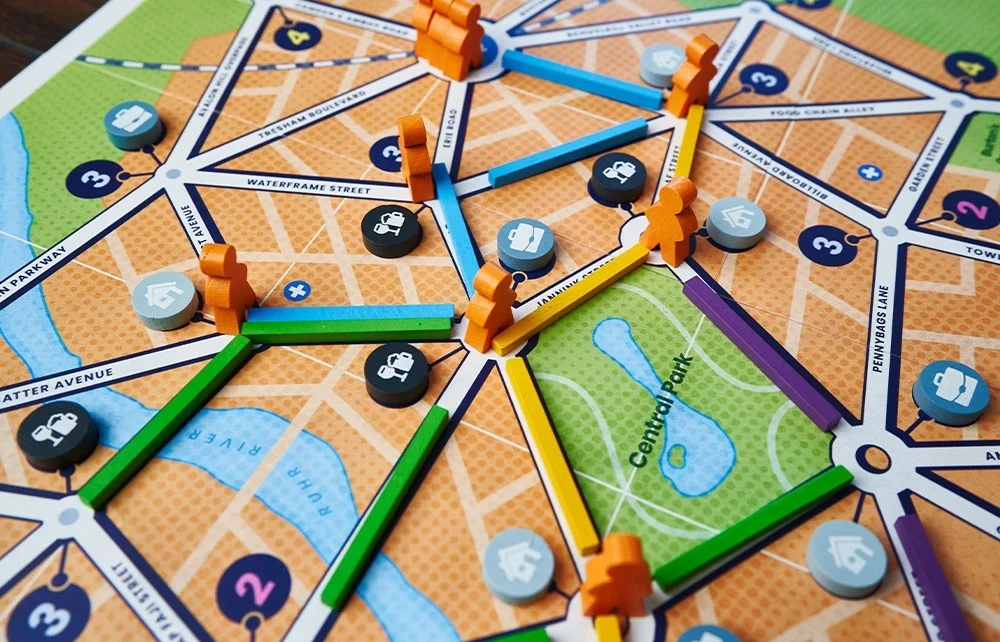
Route building is especially nasty. You want useful intersections, but opponents can extend routes into your best areas. Likewise, building placement can make rival routes less valuable. Because passengers may walk to nearby destinations, convenient buildings can actually hurt competitors.
Then there is the clock. Players can stop time, keeping the same destination active for another round. However, doing so costs points and risks ending the game through a collapsing time-space continuum. It is absurd thematically, yet brilliant mechanically.
Pros
- Player interaction is constant and meaningful.
- Finite action markers create excellent long-term tension.
- Route building rewards careful spatial planning.
- The clock mechanism creates memorable tactical swings.
- Scoring remains simple despite the strategic depth.

Cons
- Mistakes can punish inexperienced players for several rounds.
- The game can feel harsh when opponents disrupt a developing network.
- Player count matters significantly for board tension.
- The presentation is functional rather than luxurious.
- Analysis paralysis can slow action selection.
Comparison to Similar Games

Compared with Caylus, Bus feels more spatial and more openly hostile. However, both reward careful action timing and worker-placement discipline. Bus also predates many familiar worker-placement conventions.
Compared with Age of Steam, Bus is less economic but similarly unforgiving. Meanwhile, both turn route building into direct competition over shared geography. Age of Steam adds financial pressure, while Bus delivers cleaner action selection.
Food Chain Magnate is another useful comparison. However, that game offers broader economic development and harsher consequences. Bus is shorter, yet it shares Splotter’s taste for interaction and punishment.
Bus Review – Final Verdict
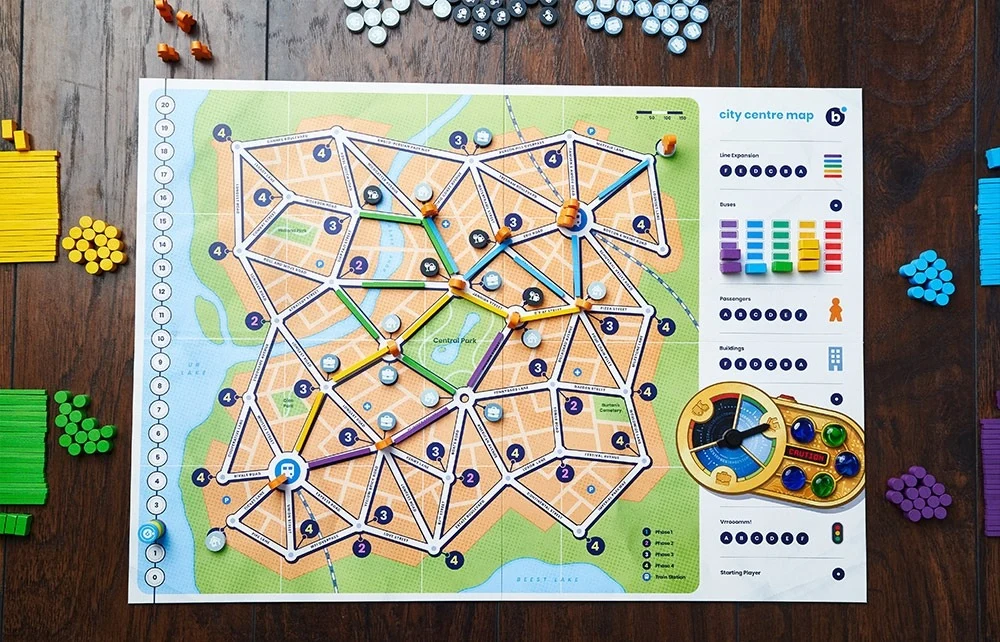
Overall, this Bus review finds a design that has aged remarkably well. However, it remains best for players who enjoy direct competition and irreversible decisions. The rules are manageable, yet the consequences are consistently sharp. Meanwhile, the clock gives the game a personality few worker-placement titles can match. Bus is demanding, mean, and often brilliant. For experienced Euro players, it remains a genuinely enjoyable classic.