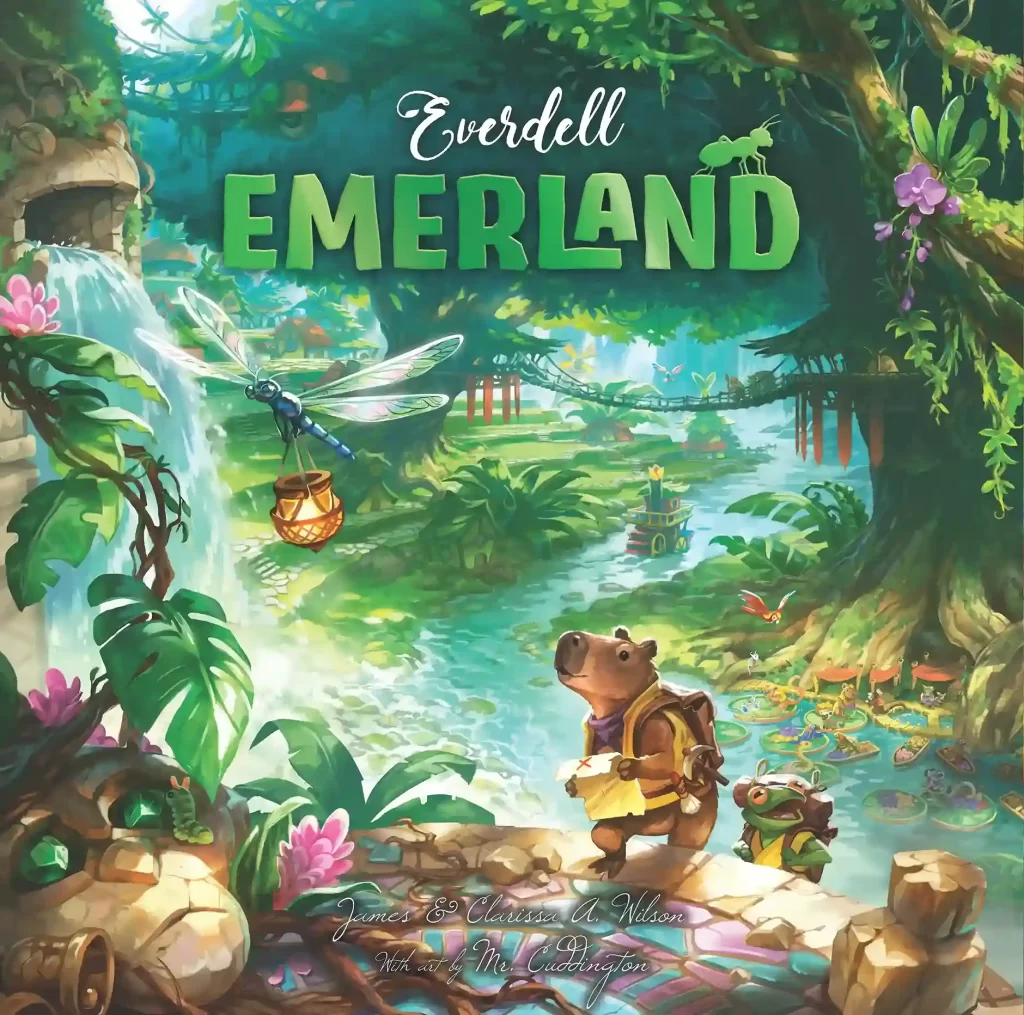
Emerland is a standalone evolution of Everdell set within a tropical jungle.
Players build cities using critters, constructions, resources, workers, and Helpers. However, Emerland changes enough familiar systems to feel like more than another themed variation. This Emerland review finds a richer, more flexible game that still preserves Everdell’s approachable core.
Theme and Focus
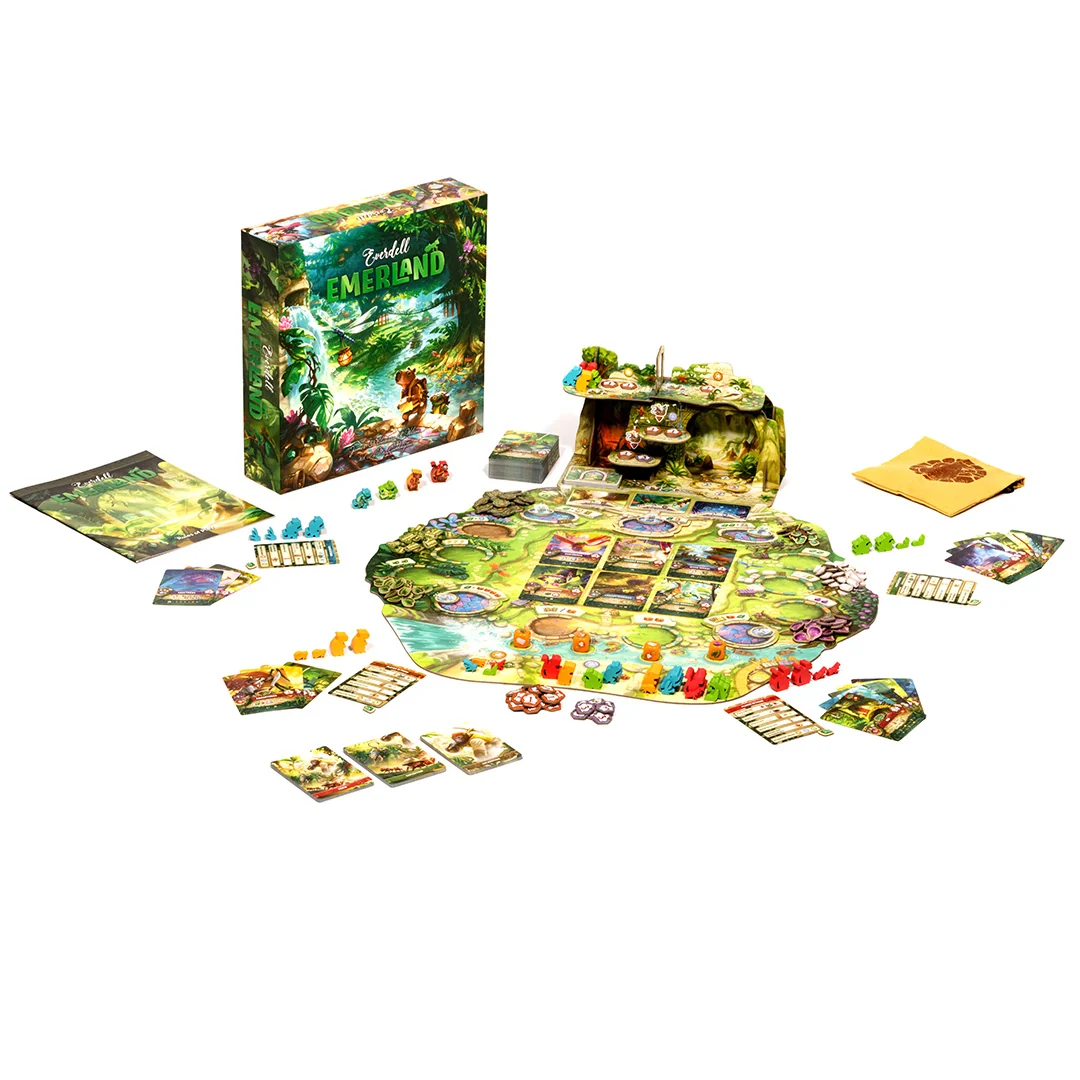
Emerland trades woodland charm for a vibrant region filled with insects, gems, ruins, and archaeological discoveries. However, the focus remains worker placement and tableau building across four seasons. Players gather resources, play cards, improve constructions, and develop productive cities. Meanwhile, Helpers can strengthen worker actions or provide access to occupied spaces. Therefore, blocking becomes less restrictive while still influencing decisions.
Card upgrades provide another layer. Most cards begin basic before effects allow them to become stronger versions. Meanwhile, Harps let upgraded constructions recruit critters without paying their normal resource cost. Artisans turn unwanted cards into useful actions through a dedicated tucking mechanism.
Archaeology offers another strategic route through the Lost City path. However, pursuing artifacts requires resources and discarded cards that could strengthen your city. Consequently, Emerland asks whether diversification is worth delaying your main engine.
Pros
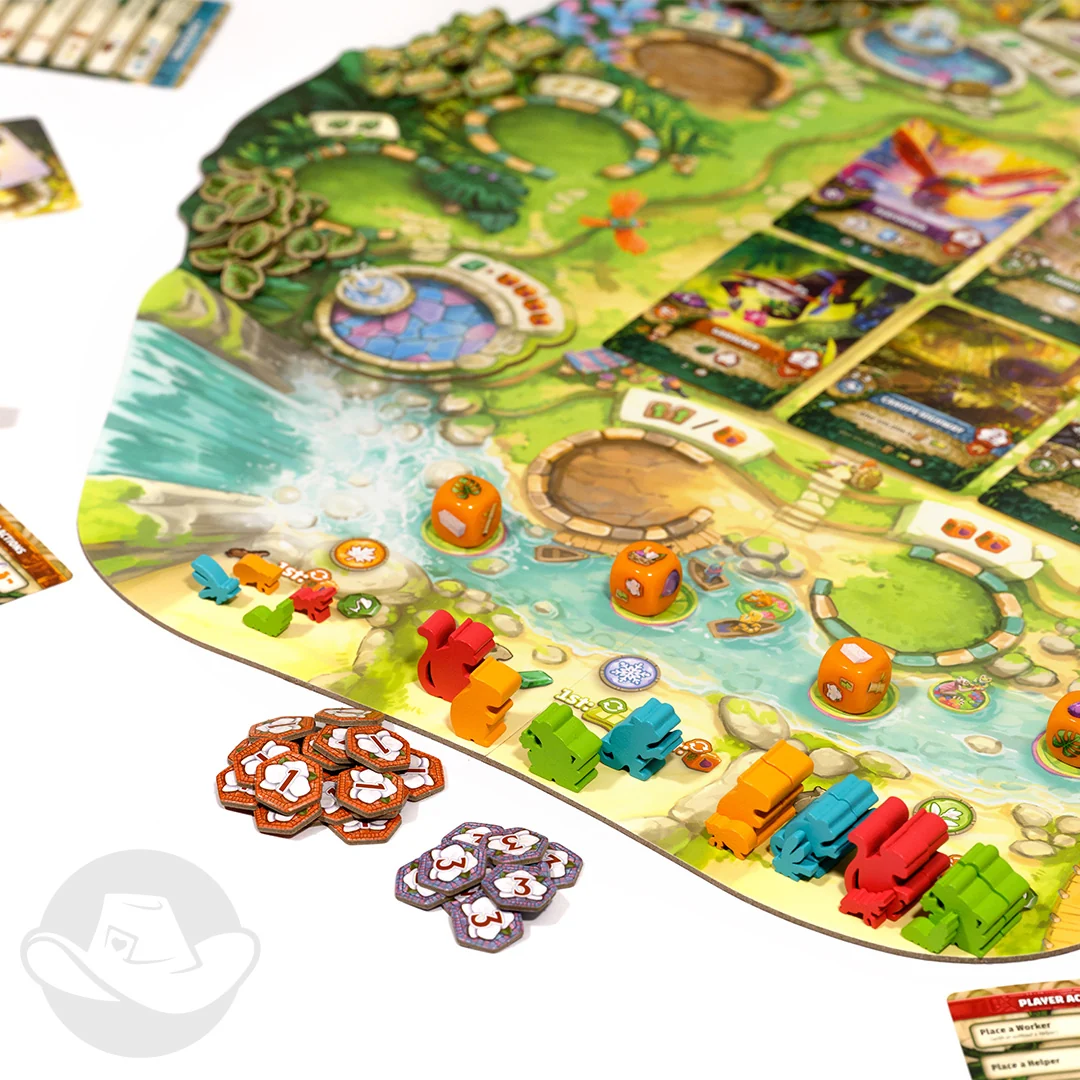
- Helpers create tactical choices without replacing traditional worker placement.
- Double-sided cards make city development feel more progressive.
- Archaeology provides a meaningful alternative scoring route.
- Harps reduce frustration from specific critter and construction pairings.
- The tropical presentation gives this version a distinct personality.
Cons
- Additional systems make Emerland more complicated than original Everdell.
- Helpers reduce some of the original game’s blocking tension.
- Card upgrading adds another layer of information to track.
- Archaeology can initially feel disconnected from city construction.
- Experienced players may still encounter card-market frustration.
Comparison to Similar Games

Compared with original Everdell, Emerland feels more flexible and mechanically ambitious. However, Everdell remains cleaner and easier to introduce. Emerland instead favors experienced players who enjoy combinations across several interconnected systems.
Compared with Farshore, Emerland offers more mechanisms and a busier strategic puzzle. Meanwhile, Farshore feels smoother and more streamlined. Silverfrost creates stronger environmental pressure, while Emerland emphasizes optimization and engine development.
Wingspan remains another obvious comparison. However, Emerland provides positional interaction through worker placement. Both games reward efficient card engines, although Emerland feels more tactical throughout.
Verdict
Overall, this Emerland review finds one of the ambitious standalone Everdell designs. The new systems provide meaningful choices rather than simple novelty. However, that added richness also makes Emerland less immediately welcoming than the original. Returning Everdell players should find plenty worth exploring. Meanwhile, newcomers seeking the cleanest introduction should probably begin with classic Everdell. Emerland succeeds best as a deeper, more flexible evolution of a proven formula.