
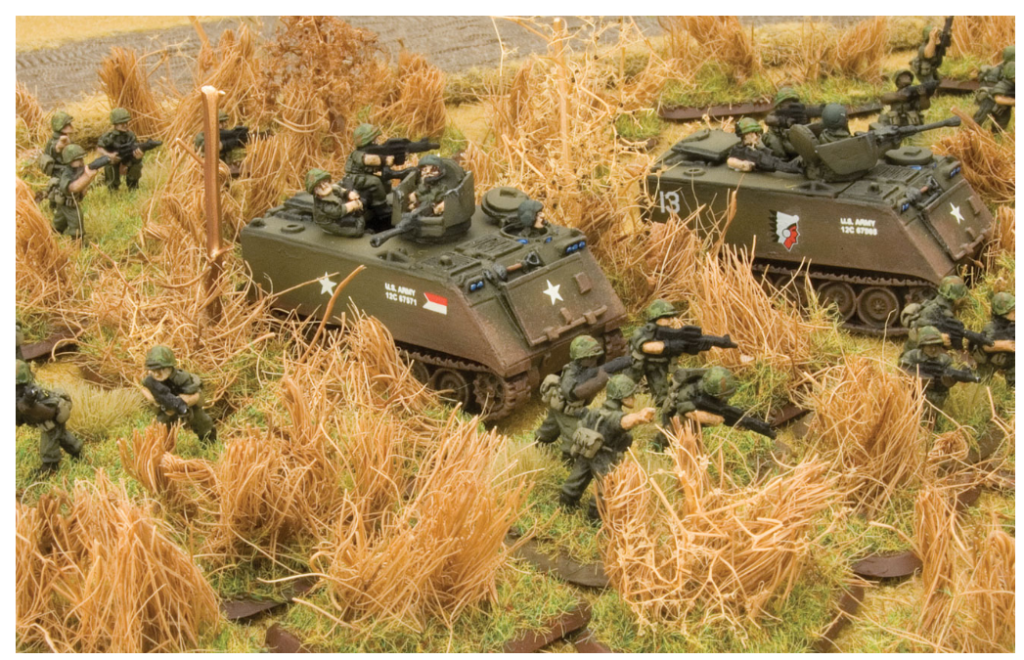
Firestorm: Hue aims right at one of Vietnam’s hardest urban battles.
It starts with the Tet Offensive and its shock value. However, the real focus is linked tabletop narrative. For players, that means history, campaign structure, and brutal city fighting. This is a summary of a community article found here.
The Tet Offensive Sets the Campaign’s Tone
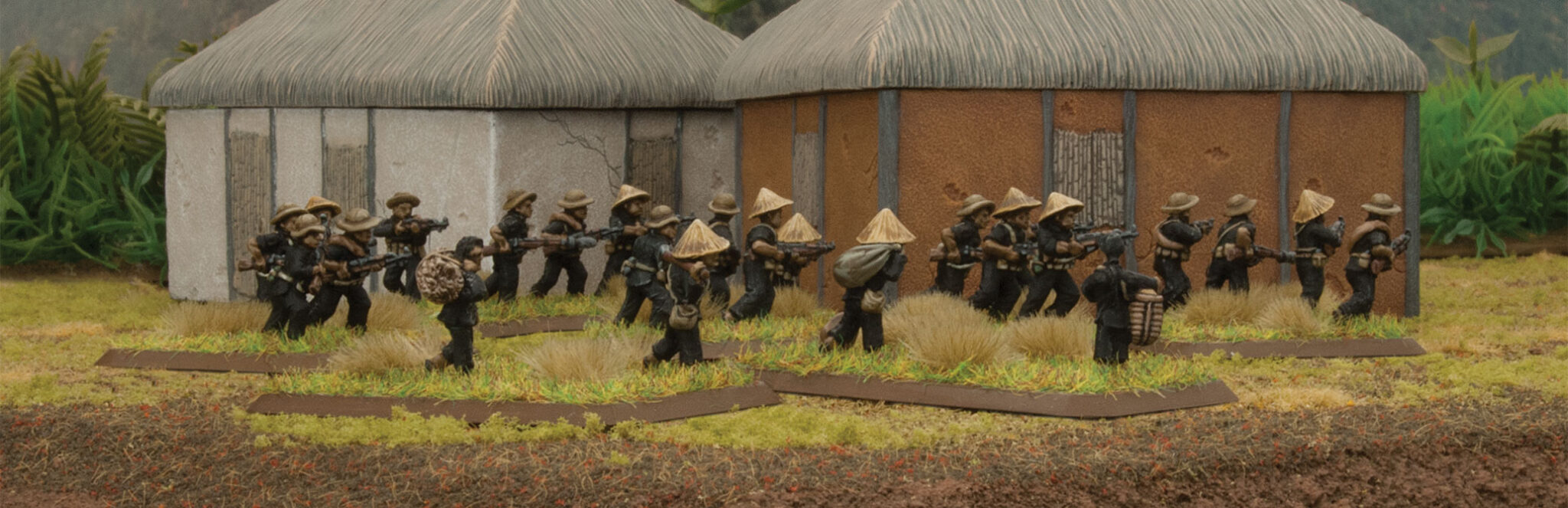
The setup begins with the Tet Offensive, launched on 30 January 1968 by North Vietnamese and Viet Cong forces. Using the holiday ceasefire as cover, communist forces struck cities, bases, and government sites across South Vietnam.
Although the attacks were ultimately repelled with heavy losses, they rattled American confidence badly. Also, they proved the war was nowhere near wrapped up. The Battle of Hue became the key example of that ugly reality. Beginning on 31 January, PAVN and Viet Cong forces seized much of Hue, including the historic Citadel. Then South Vietnamese and American troops fought through a grinding month of house-to-house combat.
By 2 March, communist forces had been driven out, but the city was wrecked. The campaign uses that backdrop to explain why Hue deserves the Firestorm treatment. Instead of just playing disconnected games, players fight linked battles that build a larger story. Firestorm games use fixed points values, but they also add Firestorm Troops.
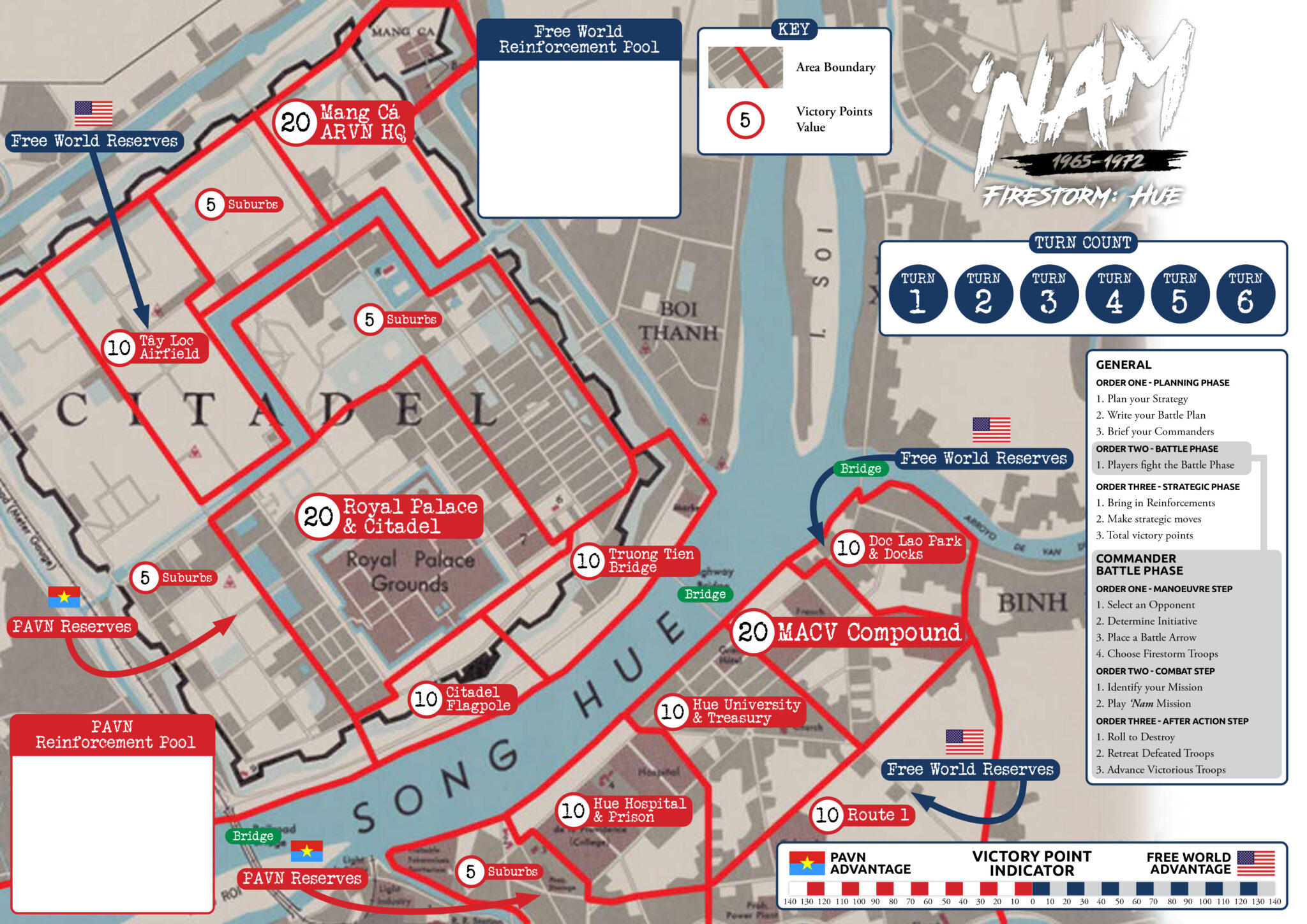
These represent historically important formations without becoming balance-breaking super units. That is the sweet spot for campaign gaming, because flavor should matter without flattening the table. The mini campaign is also self-contained, needing only the PDF, map, and marker sheets. Historically minded players should use PAVN, ARVN, US Army, and US Marines.
However, the campaign also encourages flexibility, allowing other forces from the ‘Nam rulebook. Better yet, riverine assault missions are encouraged, including crossings of the Perfume River or attacks through adjacent sectors.
Summary and Final Thoughts
Overall, Firestorm: Hue sounds like a tight, flavorful campaign framework. It highlights Tet’s strategic shock while keeping Hue’s street fighting at the center. Also, it wisely balances historical focus with gaming practicality. For more details, read the original Firestorm: Hue article.