
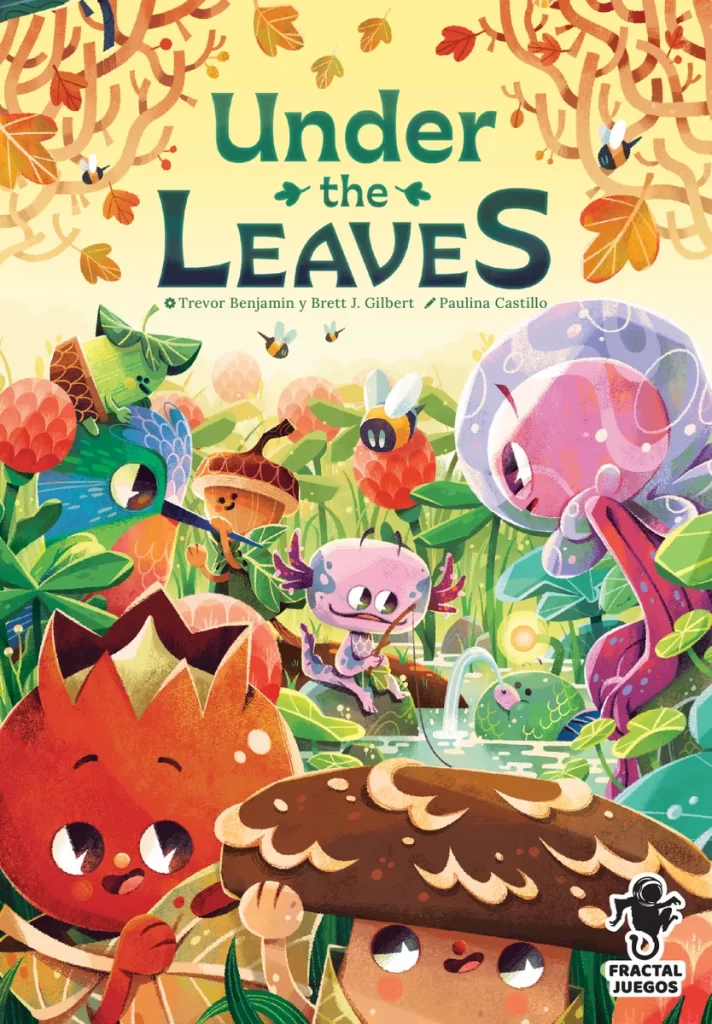
Under the Leaves is a gentle tile-laying game about turning a garden into a thriving habitat.
However, beneath its artwork sits a layered spatial puzzle. Players draft tiles, connect terrain, and attract bees, hummingbirds, and garden dwellers. Meanwhile, every placement can trigger scoring opportunities across the growing tableau. The focus is efficient pattern building rather than direct competition or storytelling.
Theme and Focus
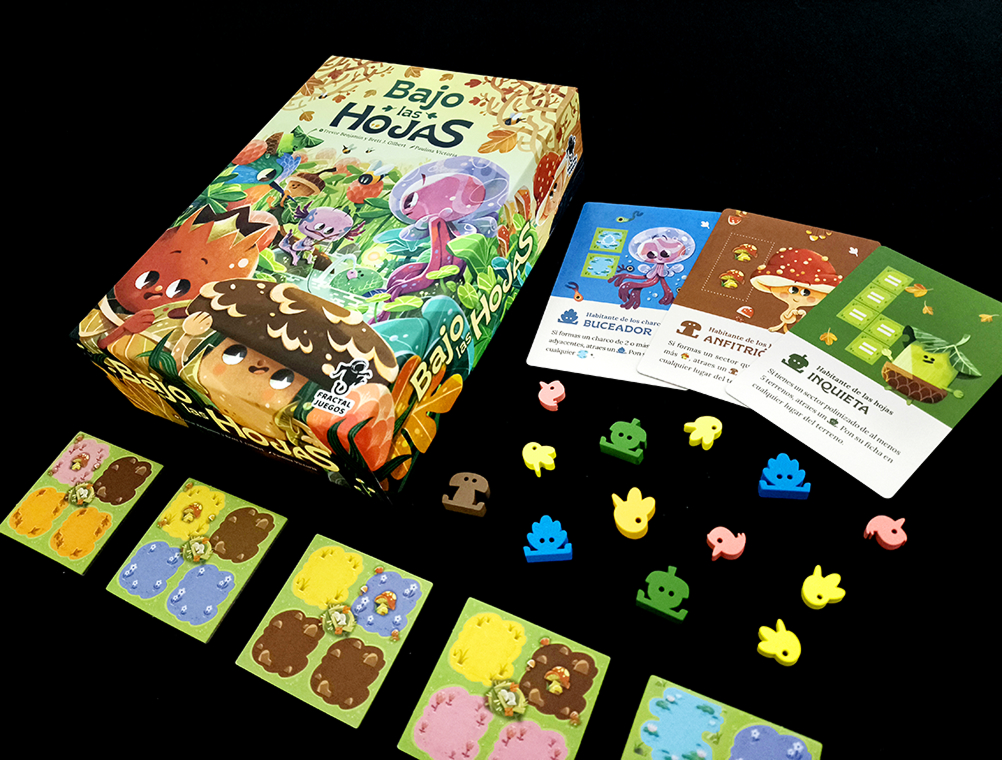
The garden theme fits the mechanisms naturally. Bees arrive when matching terrain forms connected areas of sufficient size. Meanwhile, hummingbirds appear when every terrain section on a tile becomes pollinated. Other creatures reward patterns involving leaves, mushrooms, and puddles. Therefore, one well-placed tile can produce a satisfying chain reaction.
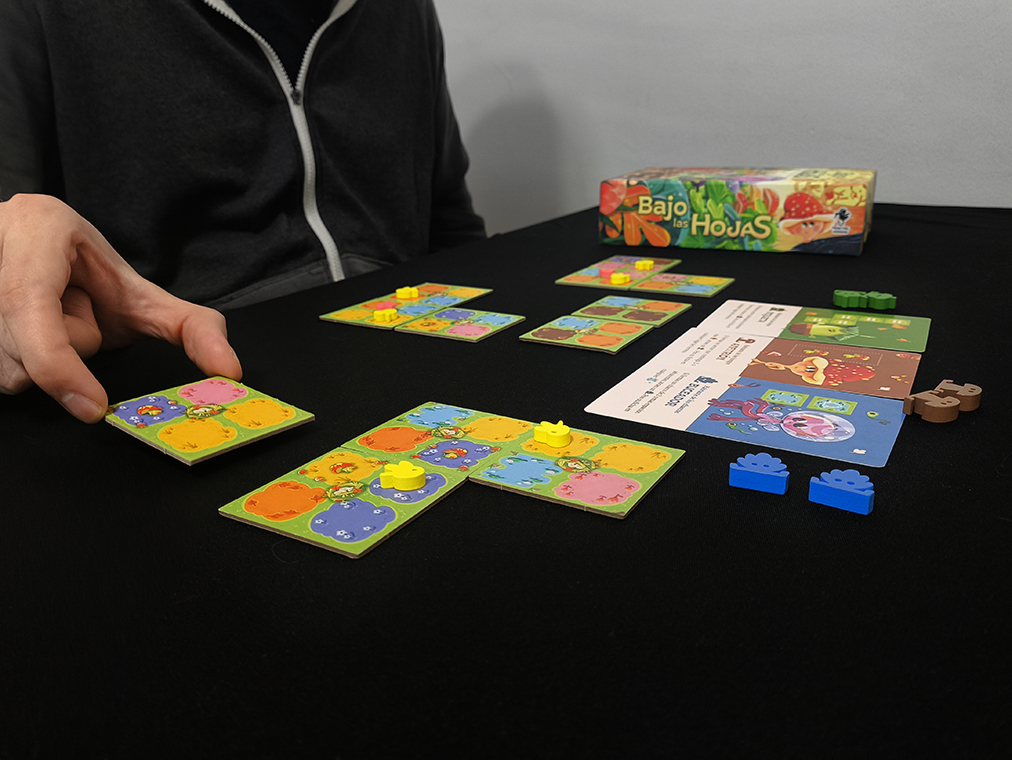
Each turn begins with choosing from a shared market of three tiles. However, players build separate gardens and rarely interfere directly. The market still creates tension when one tile suits another player. Additionally, majority bonuses reward collecting specific garden dwellers. That competition adds stakes, though it feels secondary to the personal puzzle.
The game lasts twelve rounds, so every garden develops quickly. Early choices feel simple, yet later turns require scanning several connected systems. Because of that, cautious players may slow down near the end. Still, the rules remain approachable for families and newer hobby gamers.
Pros
- Attractive artwork gives each garden a pleasant table presence.
- The tile market keeps turns simple and understandable.
- Multiple creature conditions create satisfying combinations.
- Variable dweller goals improve replay value.
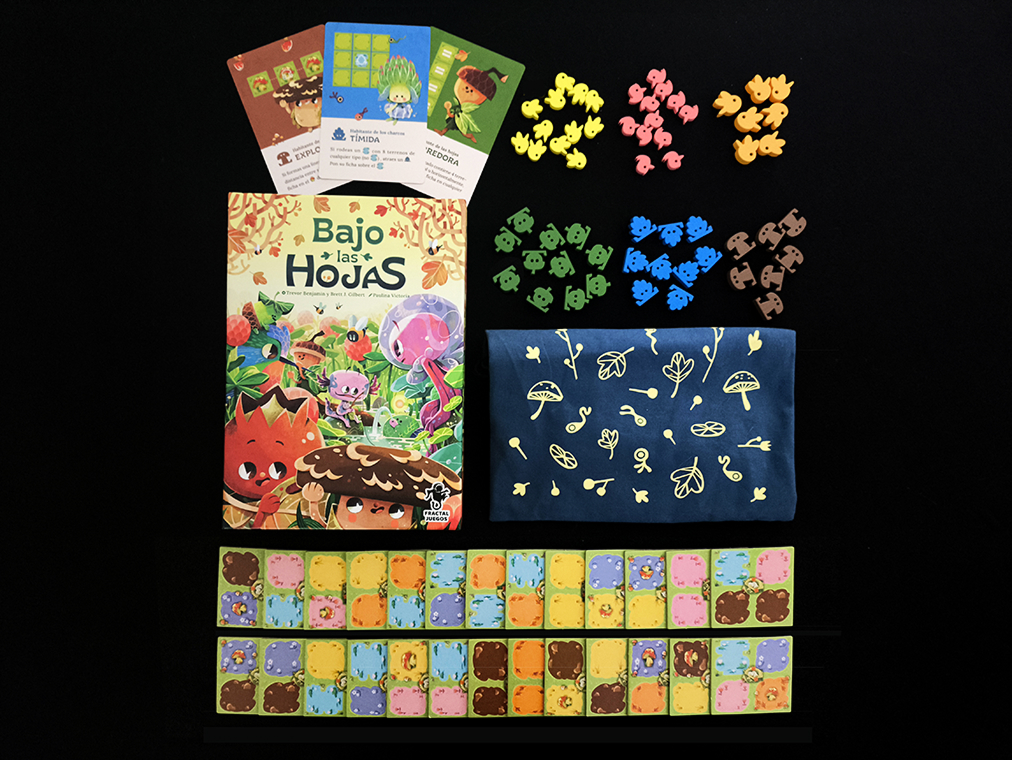
- Wooden creature pieces make progress visible and enjoyable.
Cons
- Player interaction remains light outside drafting and majority bonuses.
- The final rounds can encourage analysis paralysis.
- Some scoring conditions feel more intuitive than others.
- Repeated sessions may expose a familiar rhythm.
- Majority bonuses feel detached from the main puzzle.
Comparison to Similar Games

Compared with Cascadia, Under the Leaves emphasizes combinations from each placement. However, Cascadia offers cleaner planning and stronger wildlife scoring variety. Under the Leaves feels busier, yet its chain reactions are immediately rewarding.
Calico provides a tighter and more punishing spatial puzzle. By contrast, Under the Leaves gives players more room to adapt. However, Calico creates stronger tension through limited space and competing objectives.
Compared with Dorfromantik, this game is more competitive and less relaxing. Meanwhile, Dorfromantik offers cooperative progression and broader campaign variety. Under the Leaves instead delivers a compact personal puzzle within one session.
Verdict
Overall, Under the Leaves is an appealing family-weight tile game with more thought than its presentation suggests. However, it does not reinvent the crowded nature-puzzle genre. Its strengths come from approachable rules, attractive components, and satisfying scoring chains. Meanwhile, limited interaction may disappoint players seeking sharper competition. For families and puzzle fans, it offers a polished garden-building experience.