
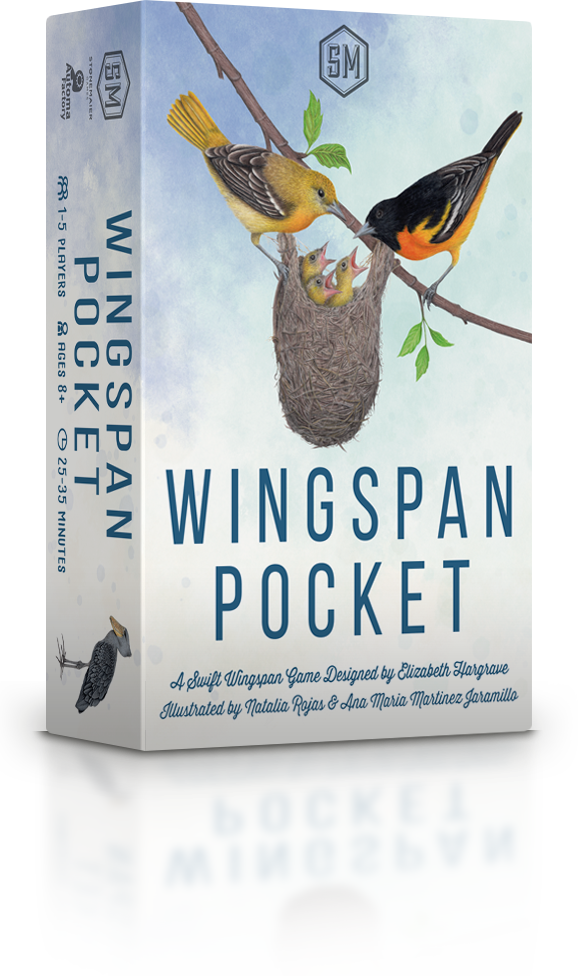
Wingspan Pocket condenses the familiar bird engine into a faster, card-driven package.
However, it is not simply the original game squeezed into a smaller box. Players still attract birds, gather food, lay eggs, and build scoring combinations. Instead, every player creates one growing row rather than managing three separate habitats. The result is quicker and more approachable, yet it retains some satisfying engine-building decisions.
Theme and Focus
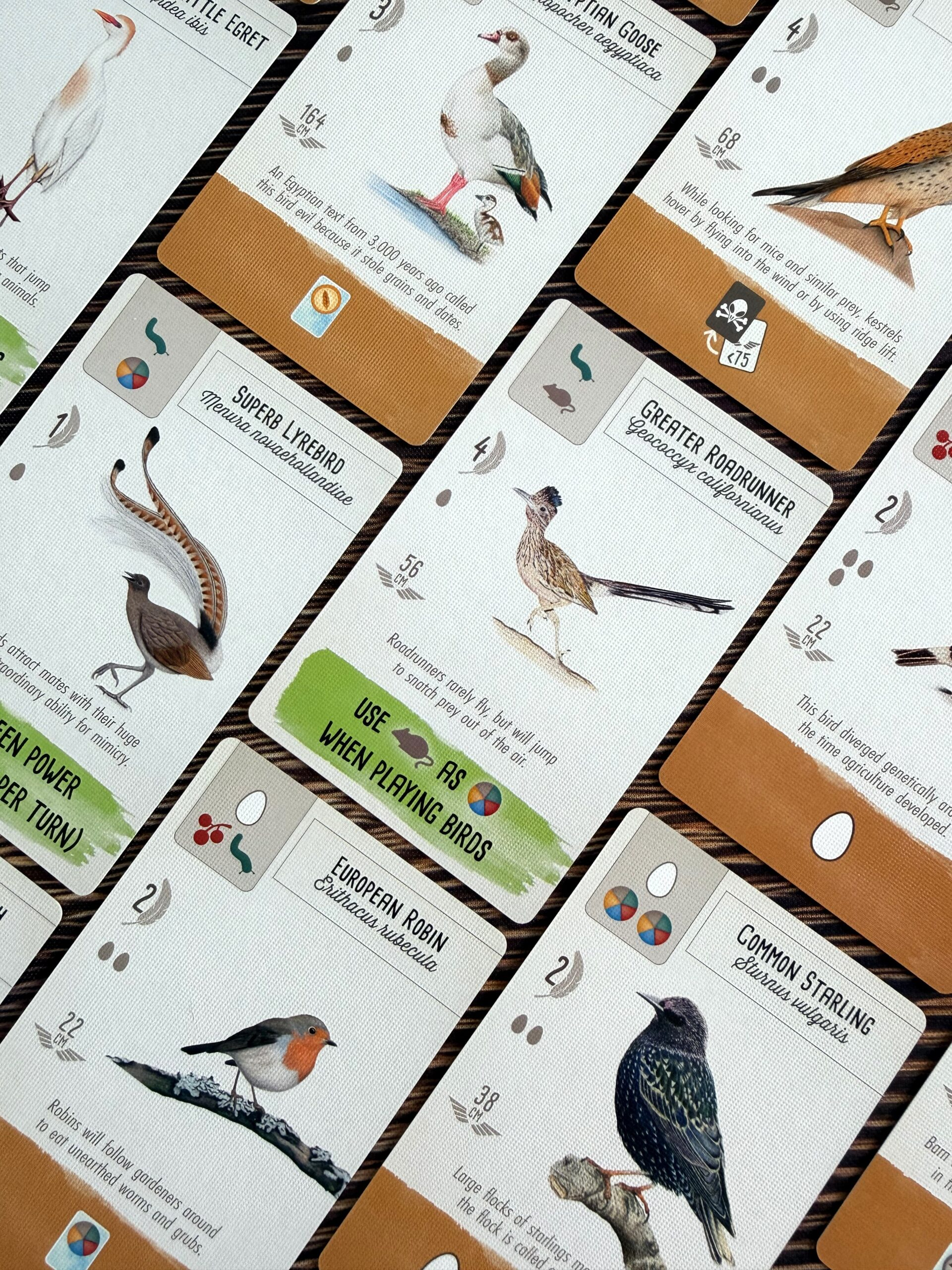
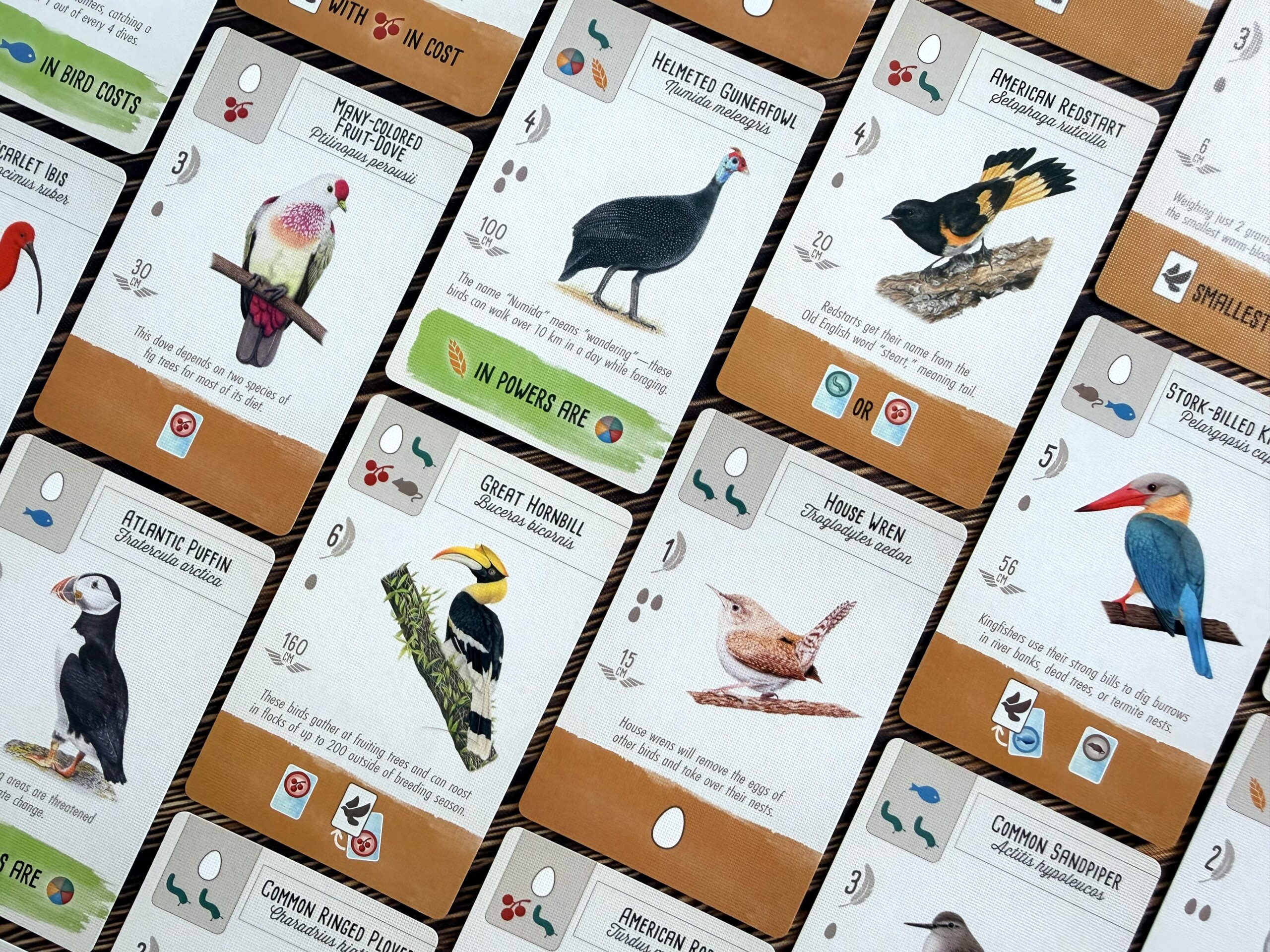
The theme remains birdwatching and conservation, presented through attractive illustrations and real species information. However, the setting feels lighter here because the streamlined design leaves less room for habitat development. Each card is double-sided, with food on one side and a bird on the other. Therefore, every card creates an immediate choice between spending resources and expanding your engine.
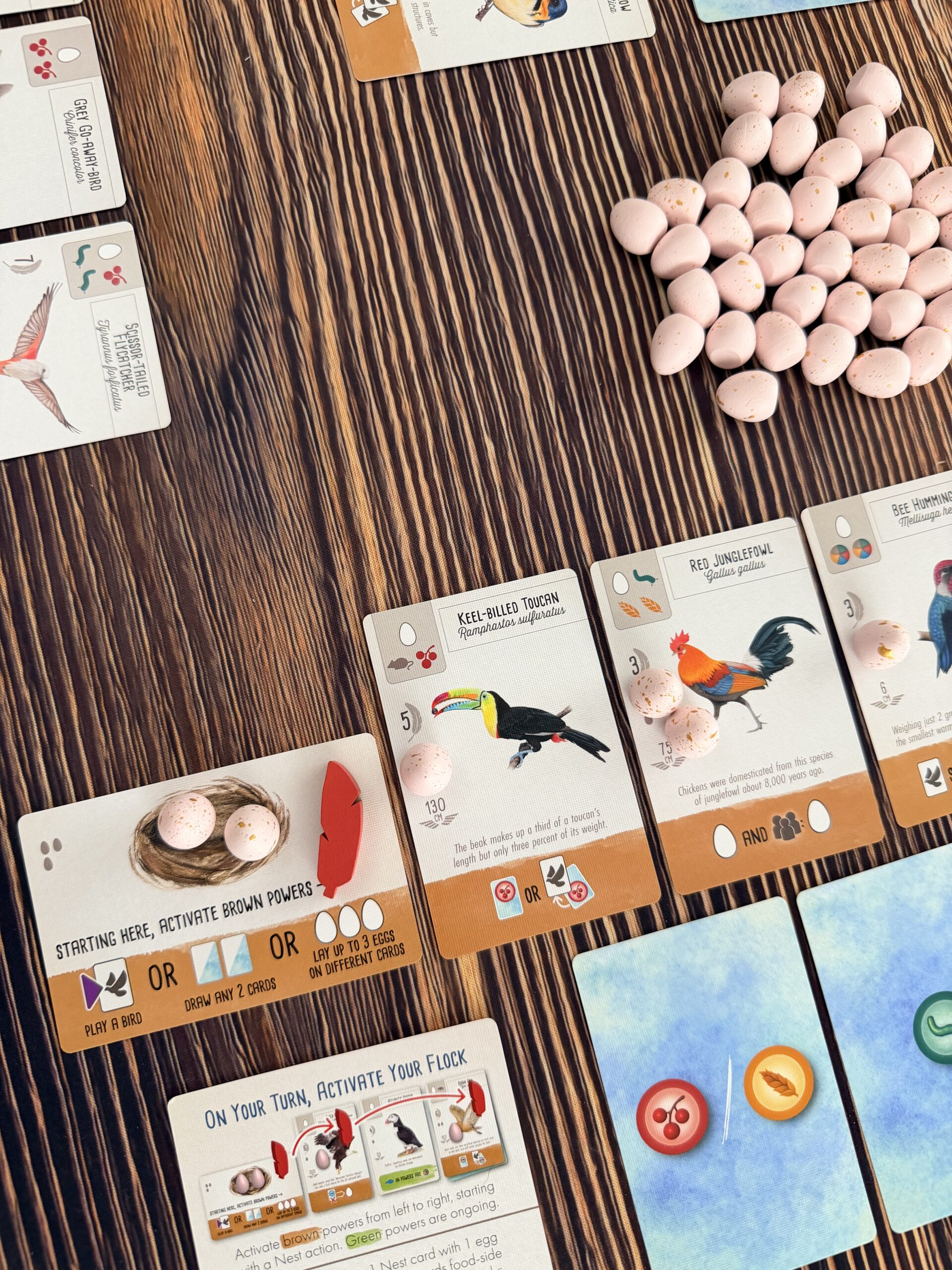
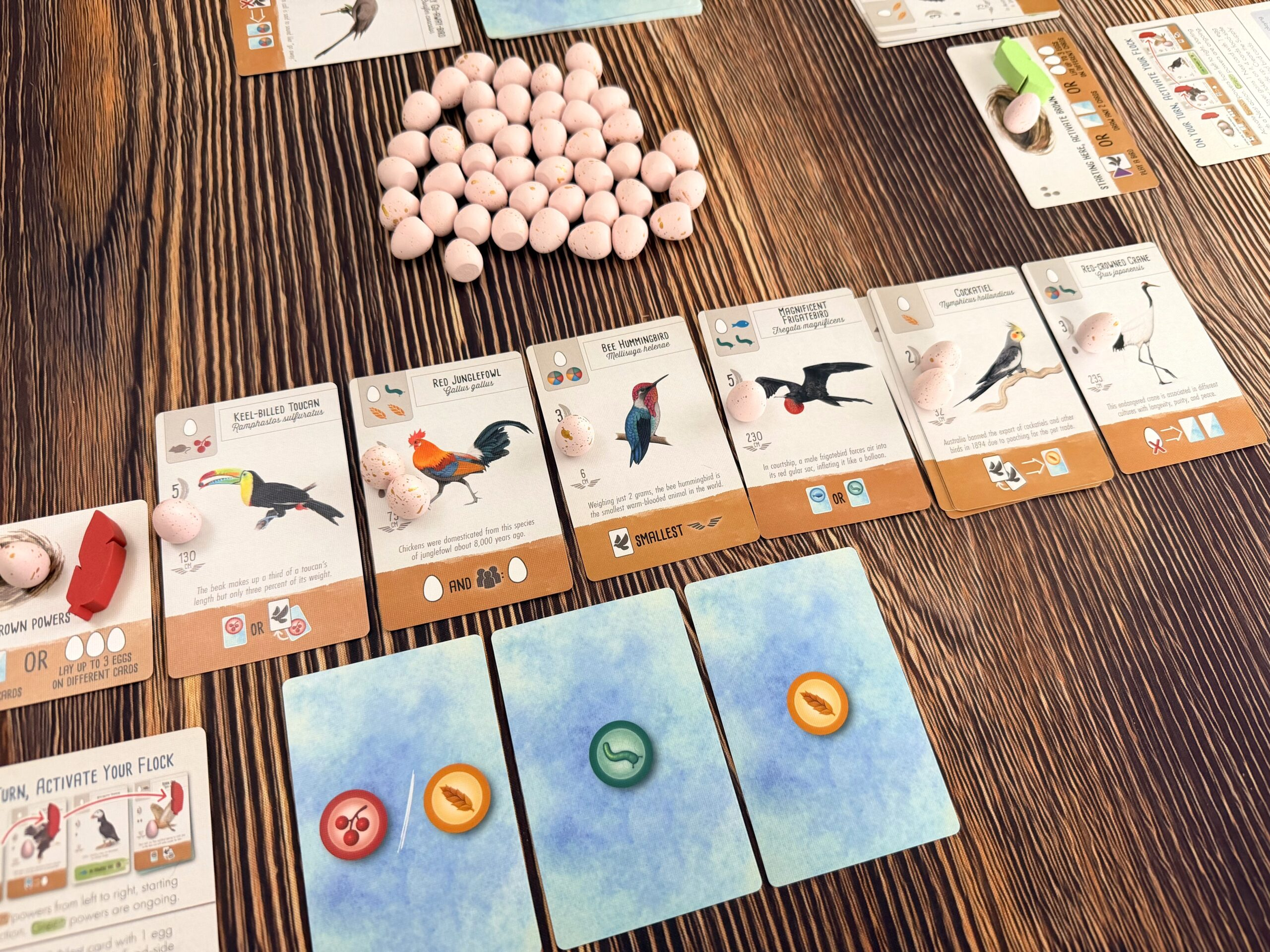
On a turn, you activate your row and gain benefits from birds already played. Meanwhile, nest types shape how those activations work and encourage different engine styles. Green powers provide ongoing abilities, which add useful planning without much rules overhead. Because of that, building the row feels more deliberate than the small box suggests.
The game succeeds most when players accept its narrower ambitions. It offers the rhythm of Wingspan without the original game’s larger economic puzzle. However, experienced players may miss the tension created by three habitats and several action tracks. The single row is cleaner, but it also limits how widely an engine can branch.
Pros
- Setup is remarkably quick and requires little table space.
- The double-sided cards create meaningful resource decisions.
- Bird powers remain varied enough to support different combinations.
- The shorter length makes rematches and family play more practical.
- Icon-driven powers reduce reading and keep turns moving.
- The artwork preserves the welcoming identity of the original game.
- Solo play and broad player support improve the package’s flexibility.
Cons
- The single-row system offers less strategic breadth than Wingspan.
- Some bird effects feel more functional than memorable.
- Card availability can strongly shape early opportunities.
- The compact format removes much of the original game’s tactile appeal.
- Experienced players may find the scoring puzzle comparatively shallow.
- Player interaction remains limited beyond competing for available cards.
- The bird theme feels pleasant, but less developed than before.
Comparison to Similar Games

Compared with Wingspan, Pocket is faster, cheaper, and much easier to transport. However, the original offers richer engine development and stronger long-term variety. Wingspan Pocket works better for quick sessions, while Wingspan remains the fuller evening game.
Finspan provides another streamlined entry within the same family. Meanwhile, Finspan offers a larger tableau and a more generous sense of growth. Pocket is easier to teach and faster to finish. By contrast, Finspan better suits players wanting a complete medium-light strategy game.
Compared with Forest Shuffle, Pocket is less competitive and less demanding. Forest Shuffle creates sharper card synergies, but it also requires more reading and planning. Wingspan Pocket instead offers a calmer, friendlier experience.
Verdict
Overall, Wingspan Pocket is a clever reduction rather than a replacement. It preserves the familiar theme, pleasant combinations, and relaxed pacing. However, it sacrifices strategic range to achieve portability and speed. That trade works well for families, travelers, and players wanting a short engine builder. Still, dedicated Wingspan groups may prefer the original game’s broader possibilities. For its intended role, Pocket is polished, accessible, and easy to recommend.