
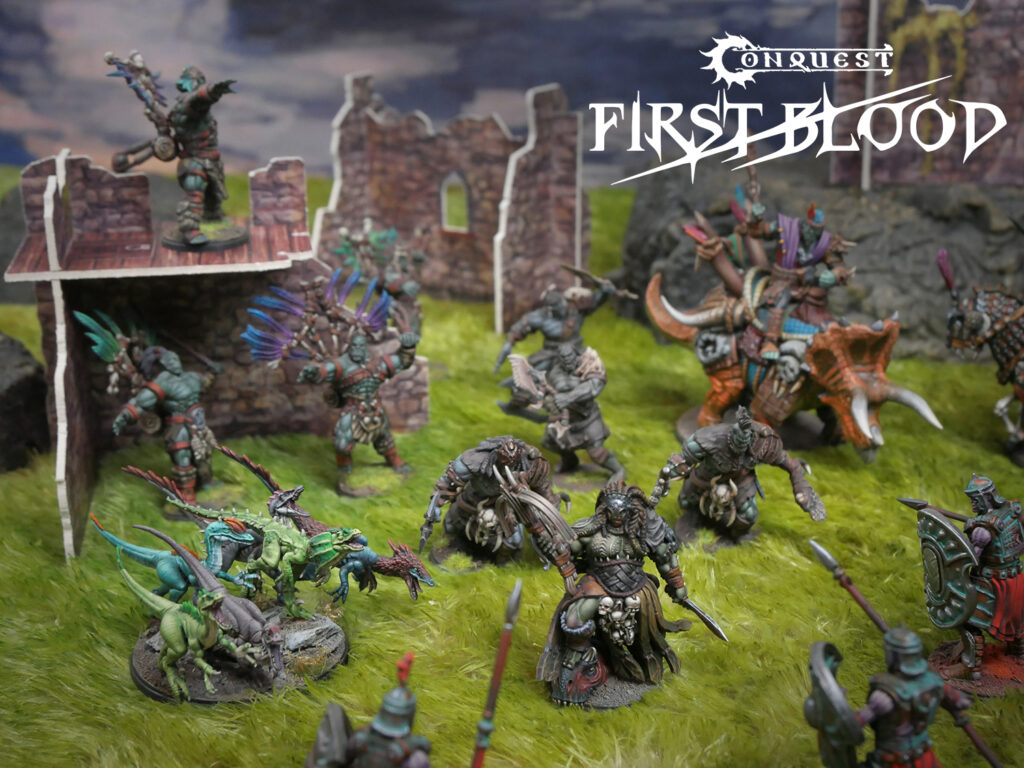
First Blood may use smaller forces, but the decisions still matter fast. A good warband needs tools, threats, and a plan before dice hit the table.
However, that does not mean every list needs to answer everything perfectly. Instead, this Training Grounds piece focuses on building a force with purpose. This is a summary of a blog post found here.
Build a Warband That Can Handle the Table
The article starts by pointing players toward the basic mustering rules, then shifts into practical advice. Jacob’s first suggestion is straightforward: bring shooting, expendable bodies, and something that hits hard. That is solid tabletop sense, since every army needs ways to pressure, delay, and finish fights. Also, he notes that First Blood games rarely stay on one clean front. Your models will split apart, reform, and scramble around terrain as the battle develops.
So, Characters and Standard Bearers become especially useful. Their Command Abilities and higher Resolve help scattered warriors act like real fighting groups again. That is a familiar lesson for any wargamer who has watched a neat battle line collapse by turn two. Meanwhile, warlords and heroes often work best beside specific warriors. Therefore, leaning into theme can also support smart gameplay. Joel then explains list building as a series of questions.
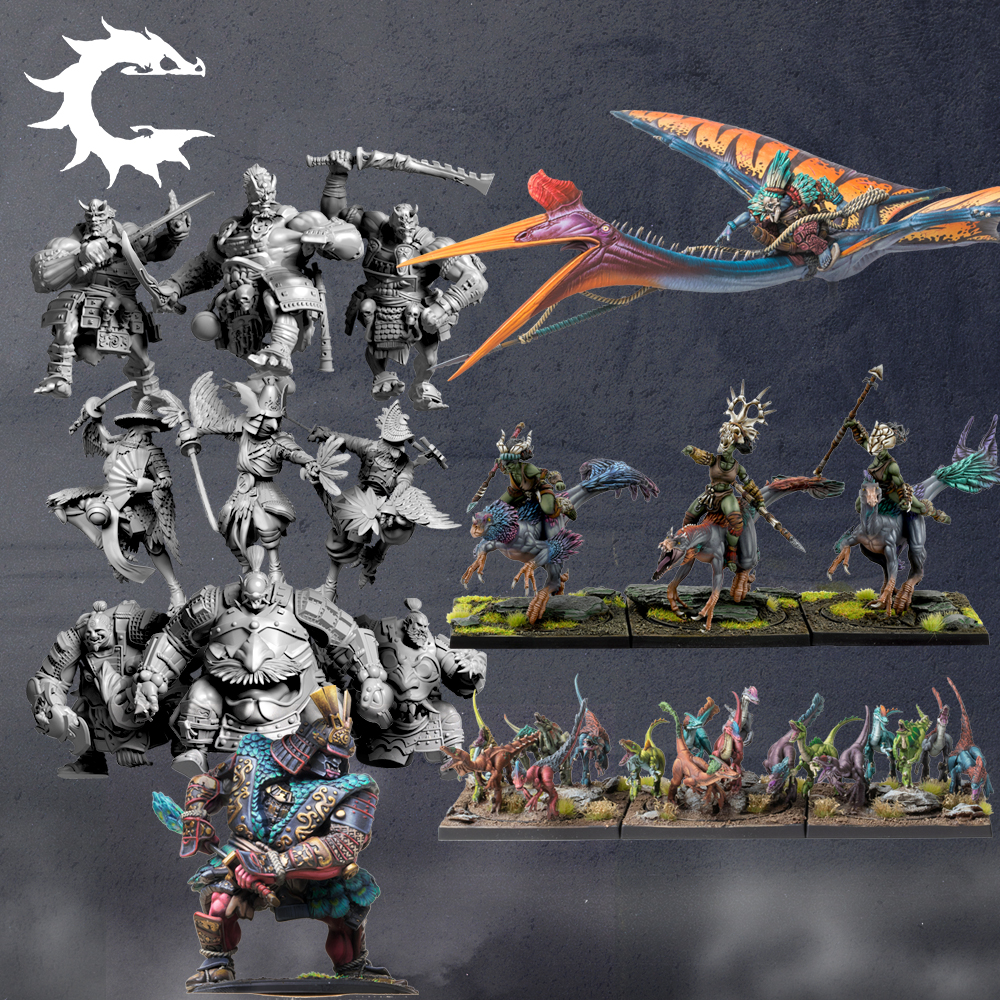
Can your force handle high Defense enemies? Can it chew through hordes? Can it stop a monster before it wrecks your plan? Those answers might come from Cleave, Armor Piercing, cheap bodies, or faction-specific tricks. However, the article does not pretend every list can cover every angle. Instead, it encourages players to ask their own questions back.
Balanced warbands can react across matchups, which makes them forgiving and flexible. Meanwhile, skew lists go all in on one nasty idea. That might mean Impact cavalry, a wall of bodies, or some other blunt-force nightmare. Still, those lists can suffer when the matchup cuts against them.
Summary and Final Thoughts
Overall, this is a useful starting point for First Blood players. It avoids chasing flashy combos before covering battlefield basics. Instead, it pushes players to think about roles, matchups, and table control. That is exactly the kind of advice newer players need before expanding a warband. Veterans will recognize the lesson too, since good lists usually ask hard questions. However, the best ones also survive when the enemy answers back.