
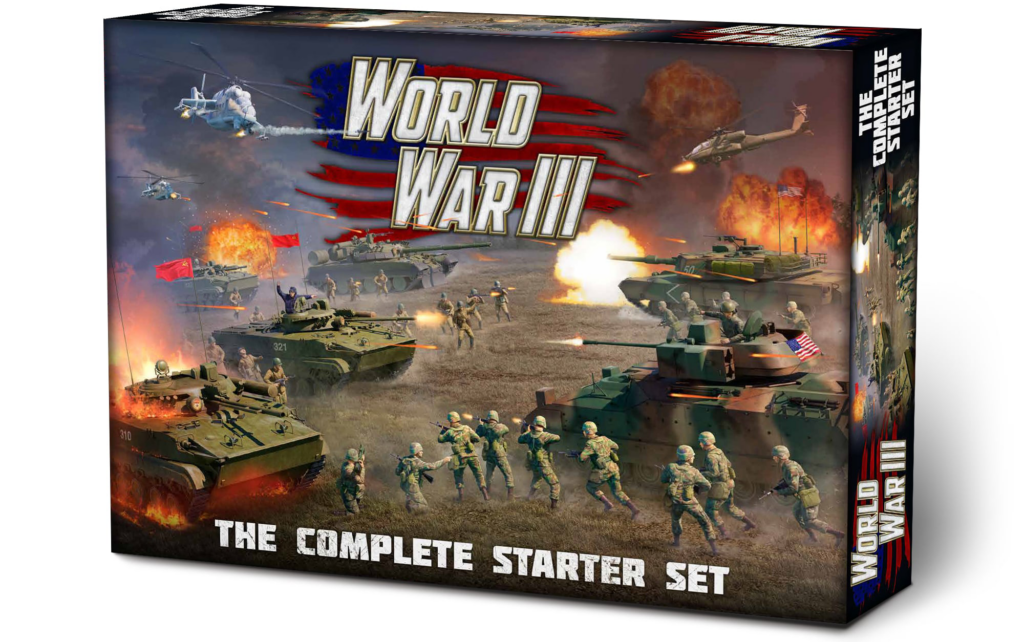
Fulda Gap is a great starter, but its American half begs to grow. This bootcamp piece shows several sensible paths from starter skirmish to full 100-point games.
However, it does not just throw shopping lists at new players. Instead, it explains how different boxes push Abrams, Bradleys, infantry, artillery, and helicopters into distinct playstyles. This is a summary of the Battlefront Community article found here.
Abrams, Bradleys, and Combined Arms Build Several Clear American Upgrade Paths
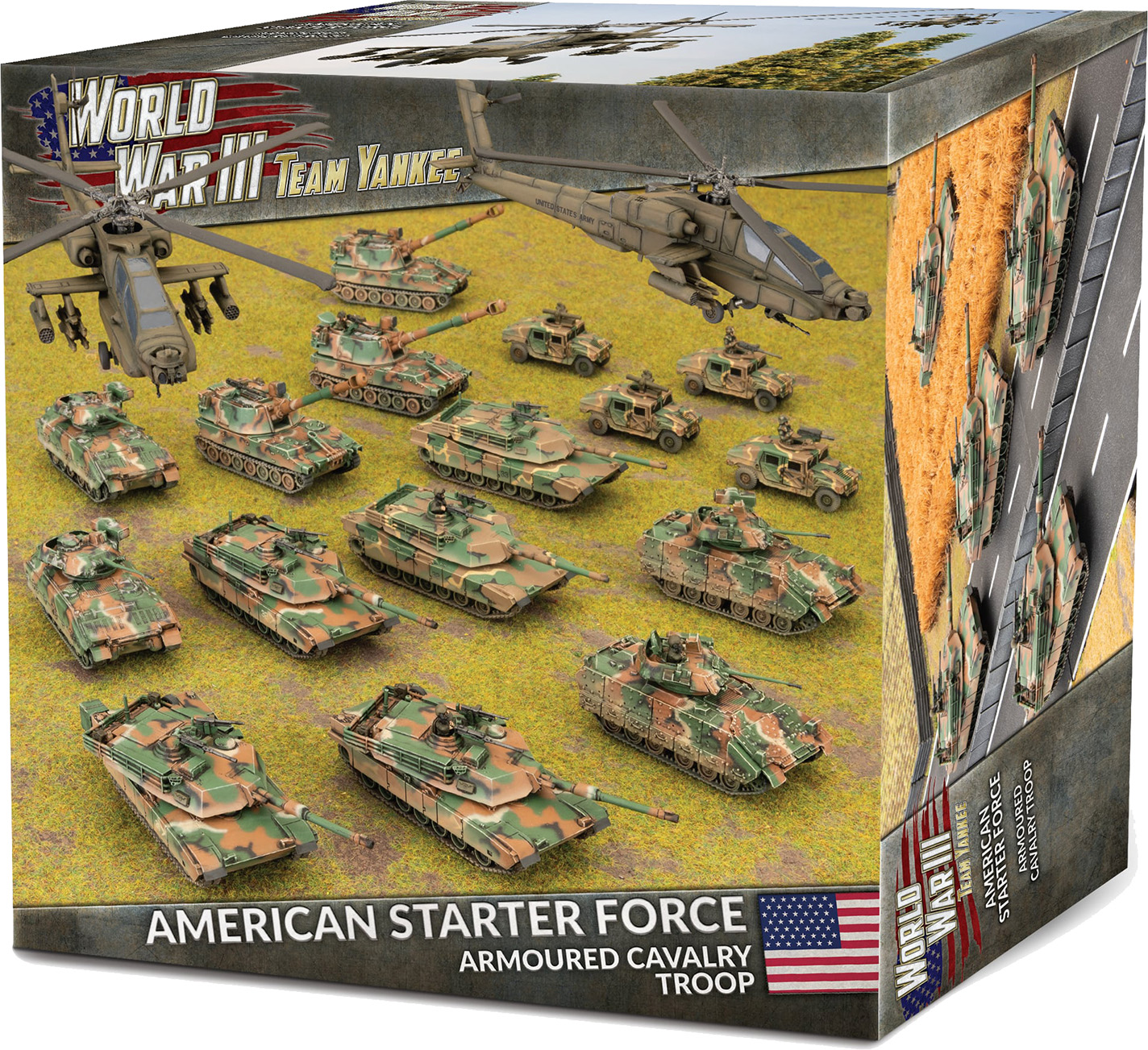
The first path adds the World War III: The Complete Starter Set, which includes three Abrams, one Infantry Platoon, and four Bradley vehicles. With Fulda Gap’s two Abrams, that creates the start of an M1A1 Abrams Armored Combat Team. The article sticks with book points rather than dynamic points, which is a smart teaching choice. It also notes that tournaments may use different totals, but 100 points remains the basic learning target. It also points players toward Forces of War, the official army builder, for testing lists before buying more plastic.
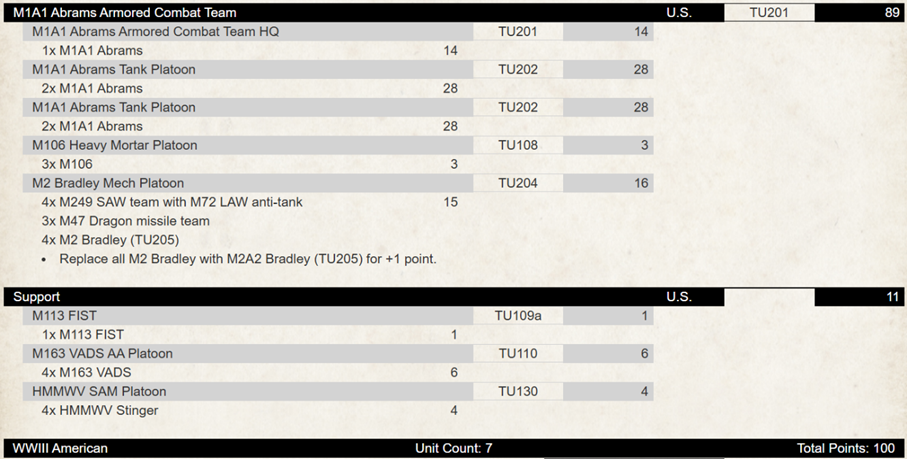
To finish the suggested 100-point Abrams force, players add M163 VADS, Humvees, and two boxes of M113 Transports. On the table, that produces five formation units, which makes the force harder to break. The infantry can hold or attack objectives, while mortars bring templates and smoke for screened advances.
Meanwhile, VADS and Stingers cover aircraft, and VADS can still shred infantry, gun teams, and light vehicles. The Bradleys support the infantry with cannons and missiles, while the M1A1s do the heavy lifting. Their Chobham armor, AT23 gun, stabilizer, and FA19 make them flexible but not invincible.
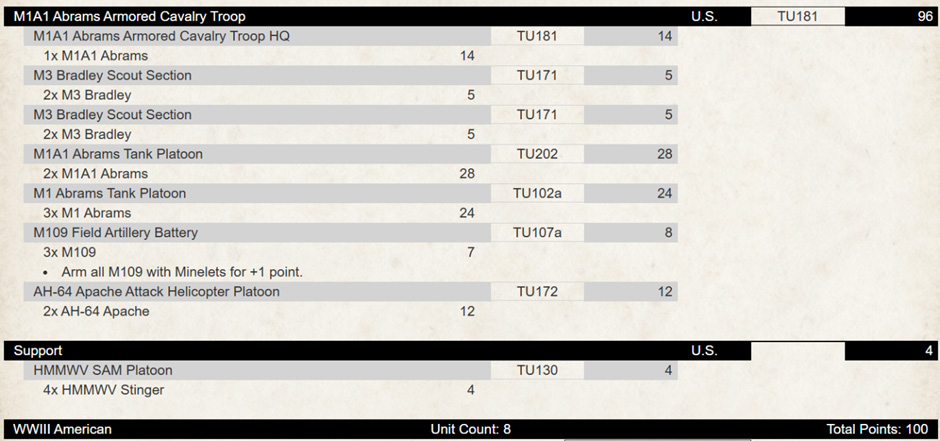
The second route uses the Armoured Cavalry Troop army deal. That box brings five Abrams, four Bradleys, three M109s, four Humvees, and two Apaches. Paired with Fulda Gap, it creates an M1A1 Abrams Armored Cavalry Troop without extra purchases. This list has seven formation units, which is excellent for learning mission play. The M3 Bradleys spearhead, fire AT23 missiles, and handle lighter targets with their guns. Meanwhile, Apaches test long-range AT25 missiles and Hunter Killer tricks near terrain. The third option uses the M2 Bradley Mech Combat Team Army Deal. That set includes two infantry platoons, nine Bradleys, two Abrams, and three M270 MLRS. It also adds two VADS or M901s, plus an M113 FIST.
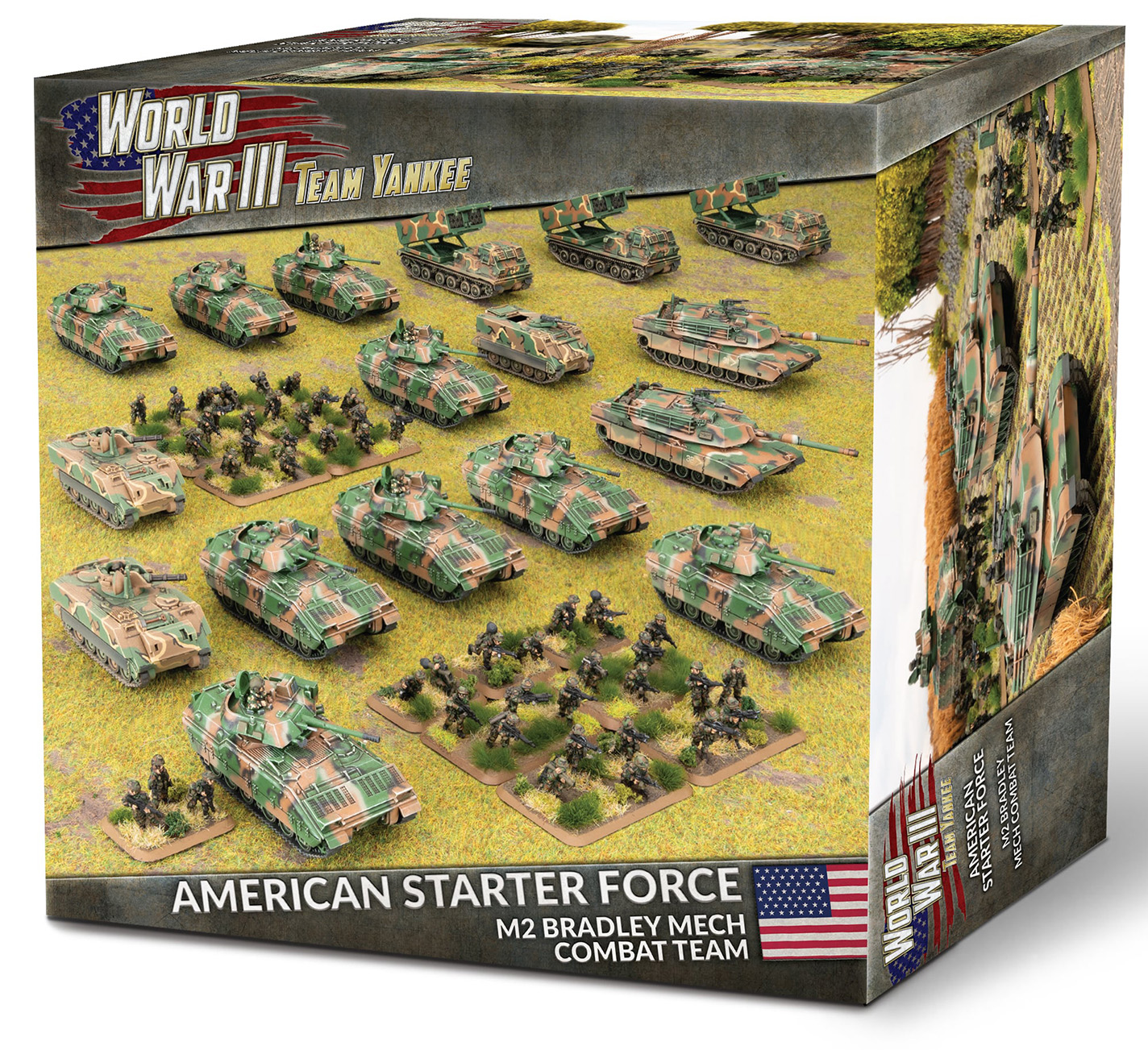
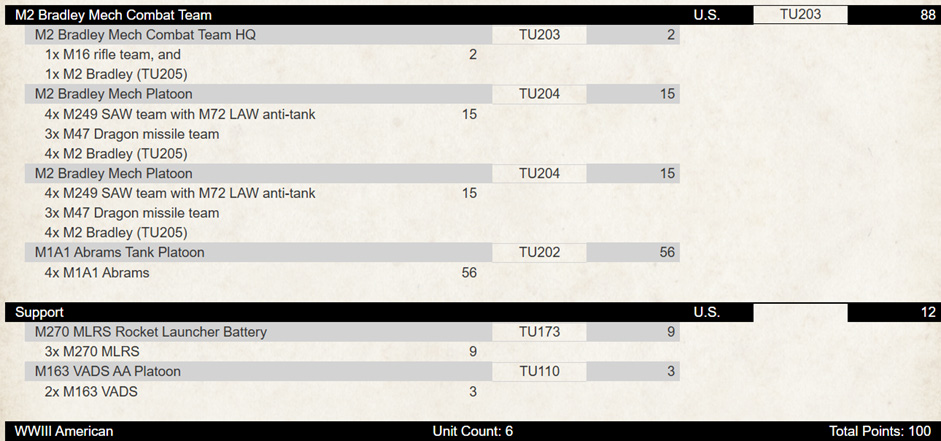
As an M2 Bradley Mech Combat Team, it gives four formation units and a more defensive feel. Infantry dig in around objectives, Bradleys add firepower, four Abrams smash problems, and MLRS provide Salvo support.
However, the same box can also become an M3 Bradley Armored Cavalry Troop with two Huey boxes added.
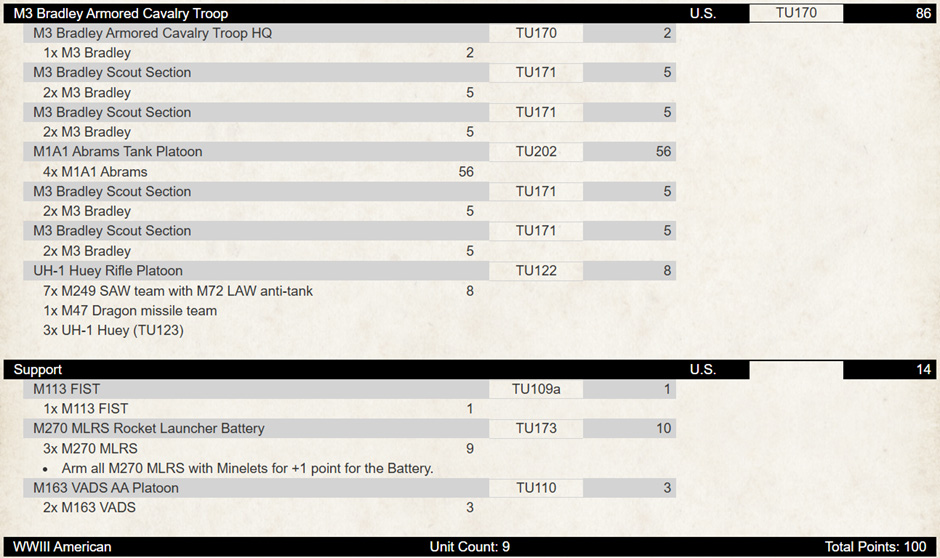
That version has seven formation units, many missile Bradleys, strong spearhead pressure, and faster assault setup. Because of that, the bootcamp nicely lets players sample armor, mech, cavalry, artillery, air, and infantry. For more details, read the original article, Bootcamp: Fulda Gap – American Force Expansion.
Summary and Final Thoughts
Overall, this is a very practical beginner article for Team Yankee players. The best part is that each route teaches a different lesson. Abrams Armored Combat Team gives a tight combined-arms core. Armored Cavalry adds mobility, Apaches, and formation depth. Meanwhile, Bradley Mech rewards objective play, artillery support, and infantry discipline. If you are growing beyond Fulda Gap, these options keep the pile manageable and useful without wasting hobby time.