

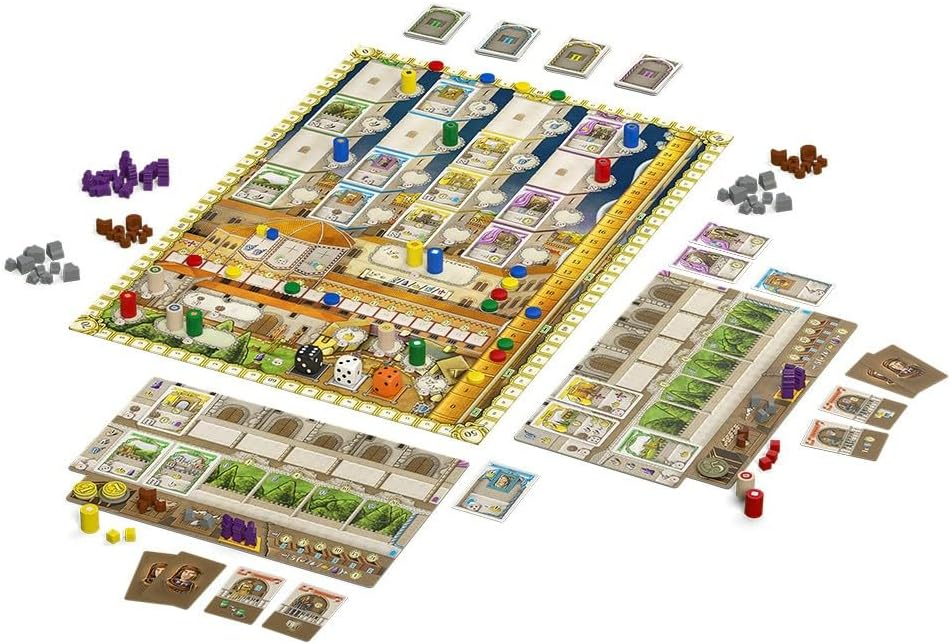
Lorenzo il Magnifico is a demanding Euro set in Renaissance Florence. You lead a noble family, place workers, gather resources, and buy development cards.
Meanwhile, shared dice set the strength of colored workers each round. That twist gives the game tension without turning it into a luck fest. As an experienced board gamer, I think its focus is efficiency, engine building, and brutal timing.
Theme and Focus
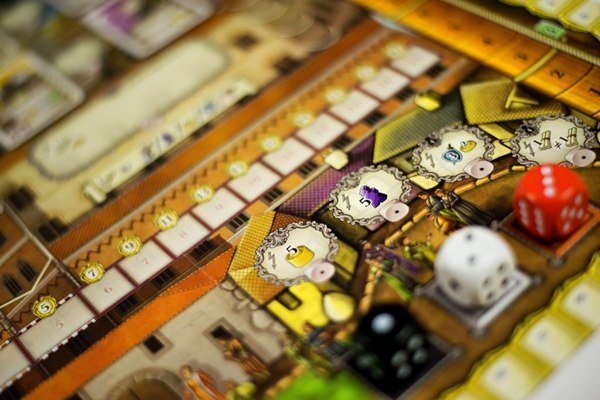
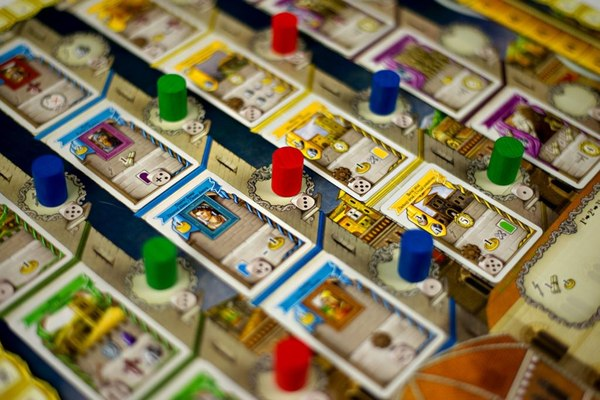
The theme is respectable, though it is not especially immersive. Instead, the game shines through structure and pressure. You climb towers for cards, trigger harvest and production actions, recruit leaders, and manage church demands. Meanwhile, excommunication penalties push every era into sharper decisions. Because of that, Lorenzo feels tighter than many classic worker placement games. It is really about converting limited actions into a clean scoring engine.
Pros
- The shared dice system is elegant, and it creates tension without much upkeep.
- Also, the action economy feels wonderfully tight, so every placement matters.
- The card mix supports several approaches, including production engines, territory play, and endgame scoring.
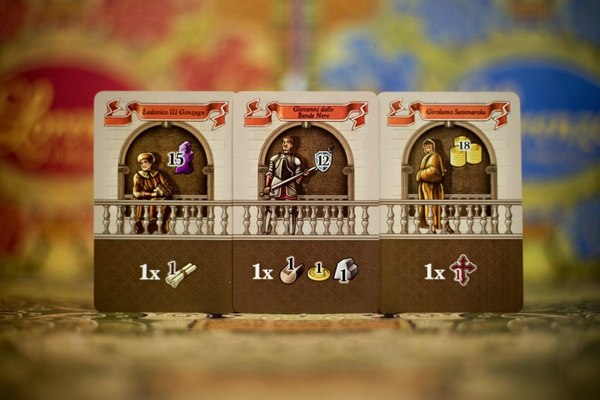
- Meanwhile, the leader cards add flexibility and help skilled players plan around constraints.
- It scales well as a thinky strategy game, especially for players who enjoy heavy interaction through competition.
Cons
- However, the theme can feel abstract once play begins.
- The game is also unforgiving, so early mistakes can linger.
- Meanwhile, the icon load and rule density may intimidate newer players.
- The church track pressures everyone similarly, which can feel restrictive.
- It is excellent strategically, yet it can feel dry beside more expressive Euros.
Comparison to Similar Games
Lorenzo sits near Marco Polo, Grand Austria Hotel, and Viticulture in the broader Euro space. However, it feels meaner and tighter than Viticulture. Meanwhile, it is less flamboyant than Grand Austria Hotel, but usually more disciplined. Compared with Marco Polo, it offers less wild asymmetry and more structured engine building. By contrast, Lorenzo rewards long-term sequencing more than tactical opportunism. So, if you like lean, punishing Euros, it compares very well. If you want warmer theme, other games may land better.
Verdict
Overall, Lorenzo il Magnifico is a superb strategy game with a narrow audience. It is not relaxed, and it is not especially lush. However, it is precise, interactive, and deeply satisfying when plans come together. I would recommend it to experienced Euro players before casual groups. Still, if you enjoy tight worker placement with real consequences, Lorenzo remains one of the stronger designs in its class.


Really solid review. The point about early mistakes lingering is so true with this one, it can feel almost punishing if you misread the first era. The comparison to Marco Polo is spot on too. Lorenzo is definitely the more disciplined of the two but that is exactly what makes it rewarding for the right kind of player.