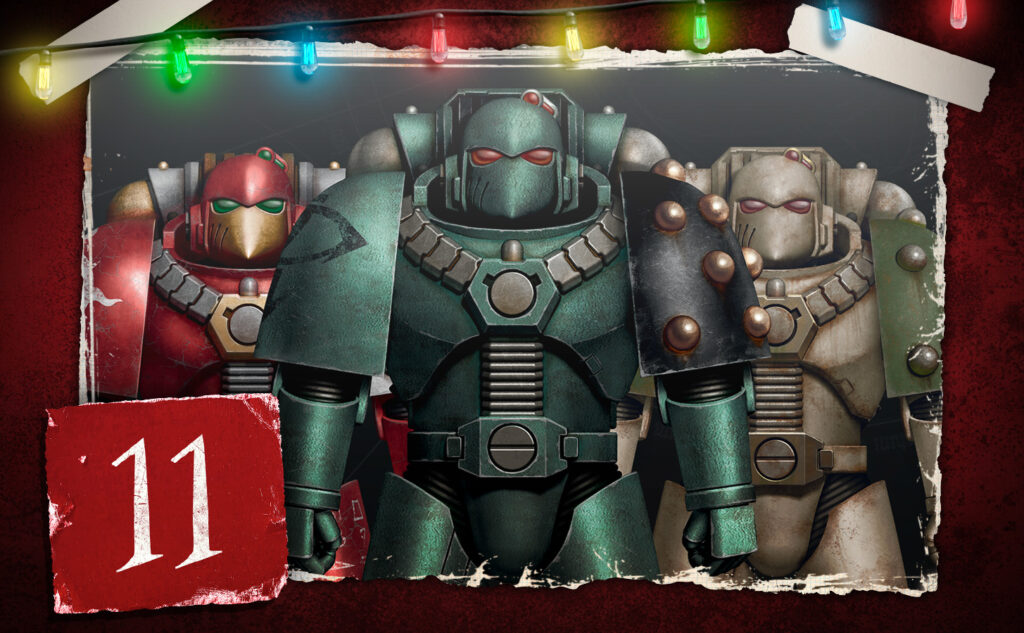
Sometimes the Grotmas Calendar gives you wholesome hobby treats. This time it hands you a paint brush and whispers heresy.
Previously we got loyalist recipes for nine Legions, and now the Traitor half of the galaxy gets its turn. This follow up guide dives into the colours, metals and flavour that define each of the nine Traitor Legions. As a result, it works both as inspiration and as a lore hit for anyone building a Heresy force. By the end, you will probably be planning at least one new Legion, even if you pretend you will stop at one.
From Loyalist Recipes To Full Treachery
The article opens by reminding us that the third Grotmas entry covered nine loyalist Legions in detail. Now Da Red Gobbo, in very on brand fashion, makes everyone wait before finally dropping the Traitor half. You tried to overthrow the Emperor, so you do not get your paint recipes first. This framing sets the tone nicely, since the whole piece treats the Traitors as both glamorous and doomed. It feels playful, yet it still respects the weight of the Heresy setting.
The Traitor Legions In Colour
The meat of the article walks through each Traitor Legion and explains their livery, with a strong lore bent that also informs painting choices. It does not break down step by step paint recipes in the text, because those live in the downloadable guide. Instead, it gives you the logic and character behind each scheme.
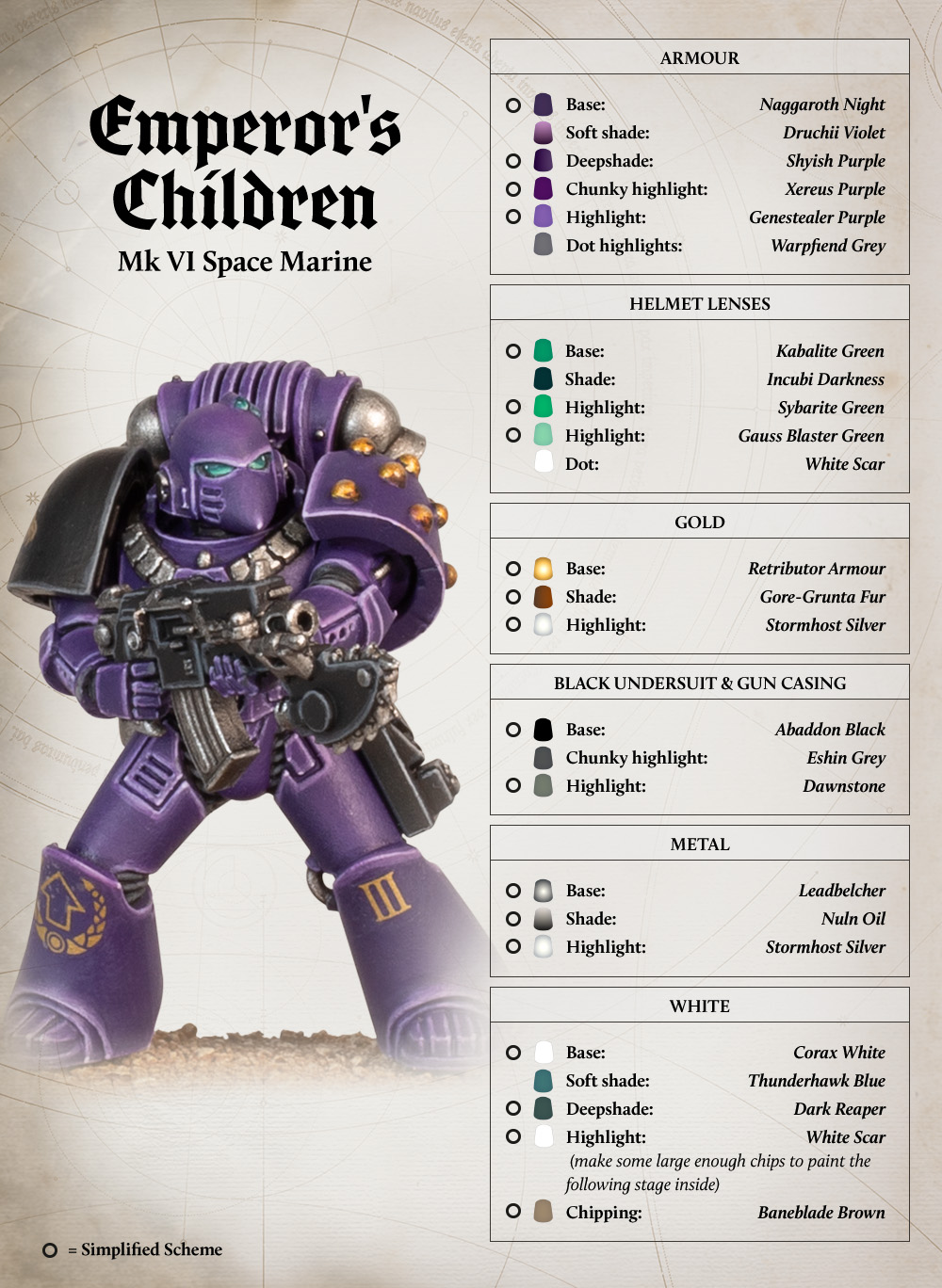
Emperor’s Children are described as wearing tyrion purple, explicitly tied to the rulers of ancient Terran Roma. Their white enamel panels are especially linked to Terran and later loyalist elements of the Legion, while platinum inlay signals elite warriors. Later in the war, black grows more common as rare bio pigments run out, which gives painters a lore excuse to darken the palette on late Heresy models.
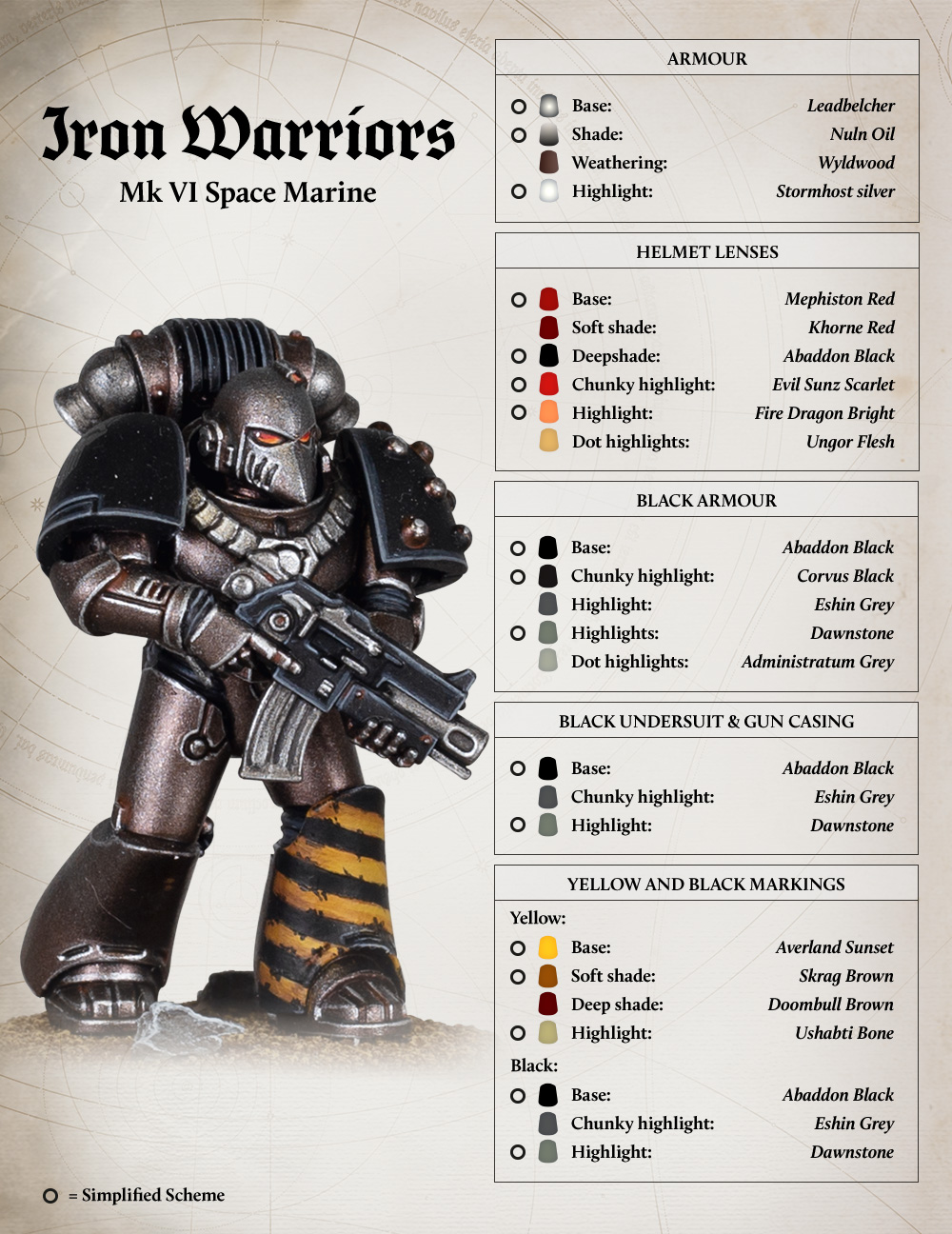
Iron Warriors lean into their personality with dull iron armour, black inset elements and dark bronze or gold banding. The article stresses that personalisation is rare, and that they care little for showiness. Armour is allowed to weather and tarnish, but never so far that it stops working. This approach nudges players toward grim, dirty schemes that still look functional rather than chaotic.
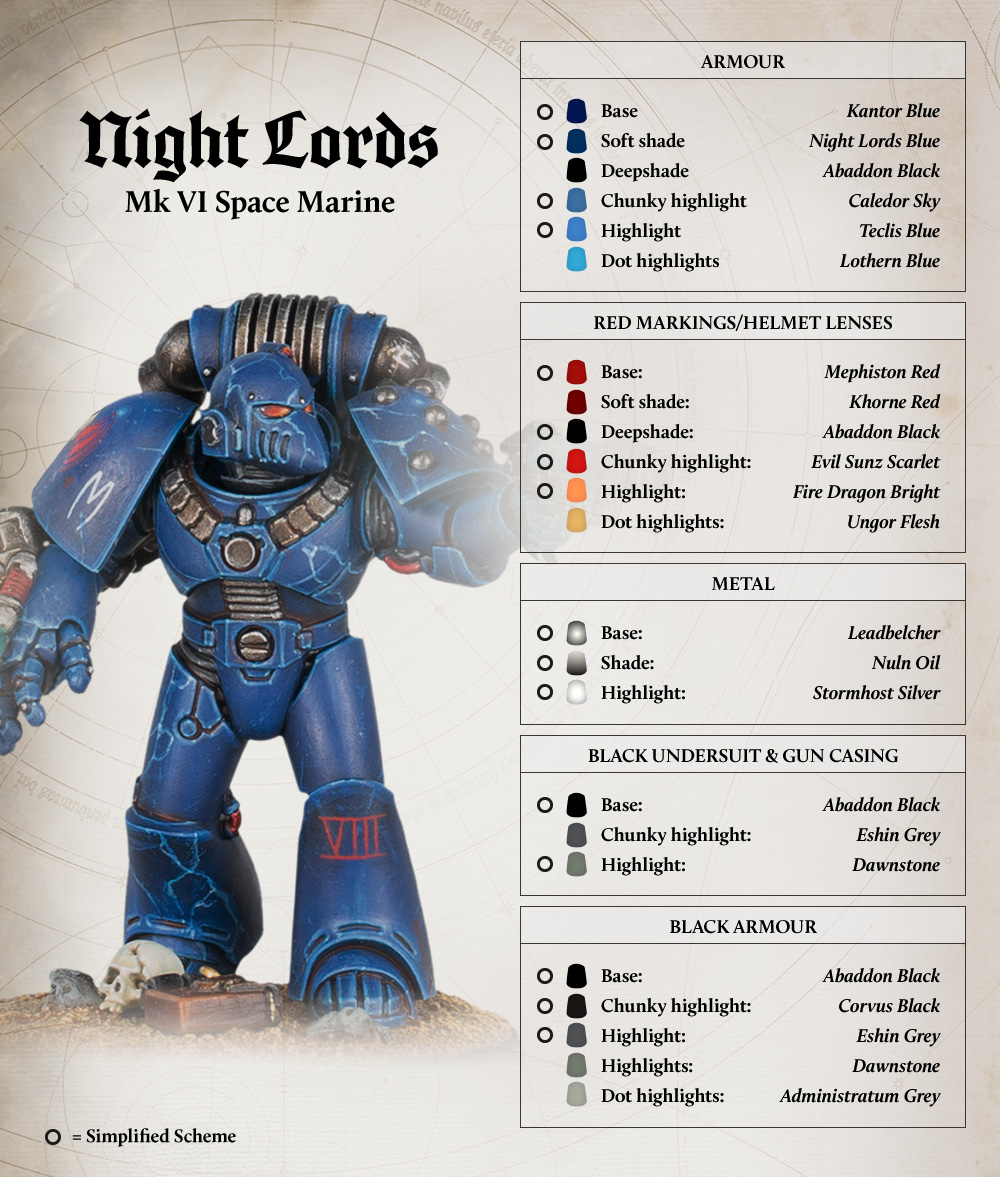
Night Lords get a very atmospheric description built around the dark blue of midnight. Their armour incorporates terror imagery and even exotic armour subsystems that project plasma filaments under a clear surface layer. That effect is meant to suggest storm lit darkness and scare primitive enemies. Secondary elements appear in black or red, while banding is gold or bronze, which gives you a strong mix of royal and sinister tones.
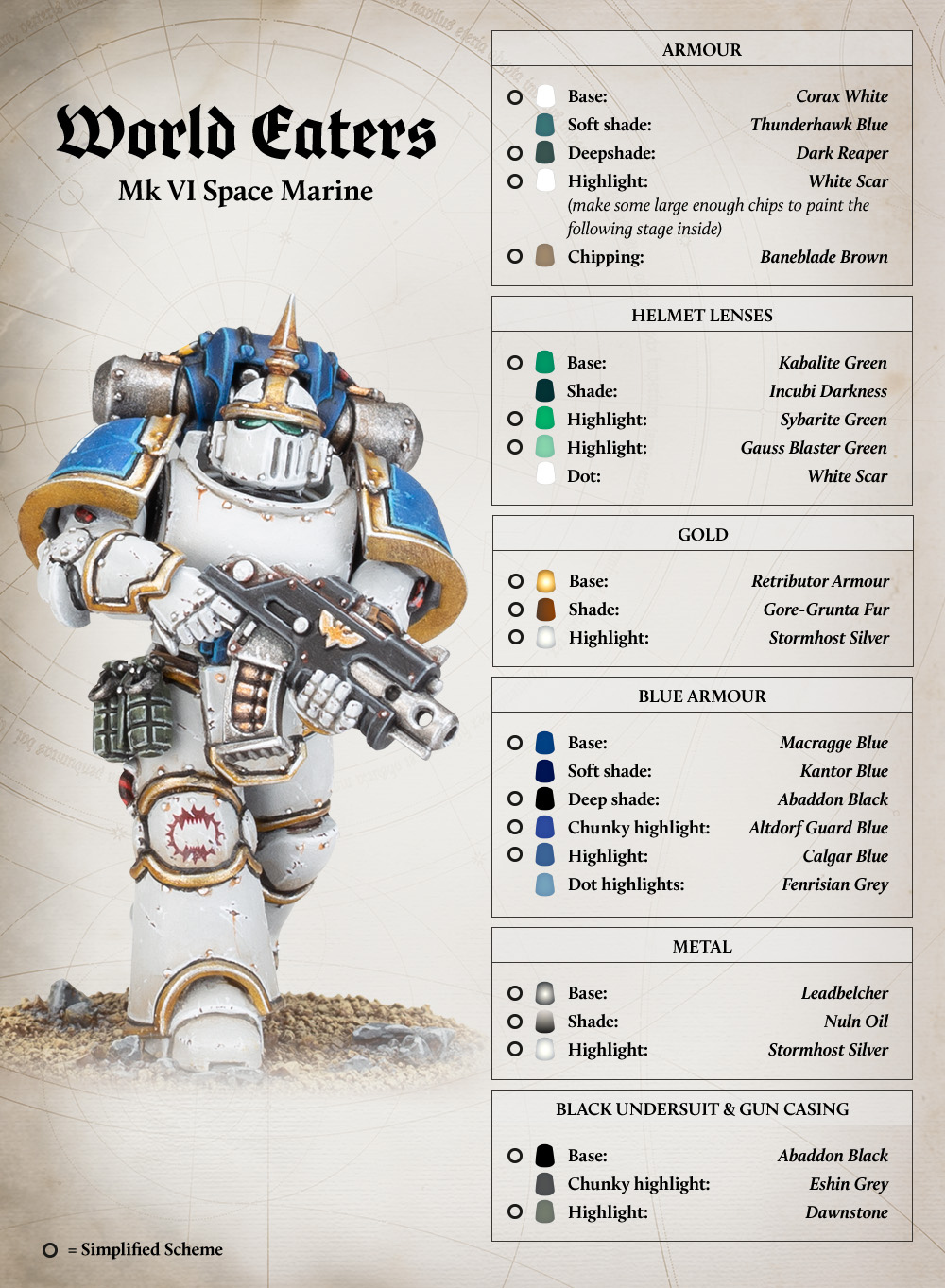
World Eaters start the Heresy in white with blue secondary elements. As the war grinds on and armour degrades, blood literally repaints them. The more a warrior kills, the more his blue is replaced by clotted red. This gives hobbyists a very clear progression tool, since veterans can be soaked in dried gore while newer recruits stay closer to the original blue and white.
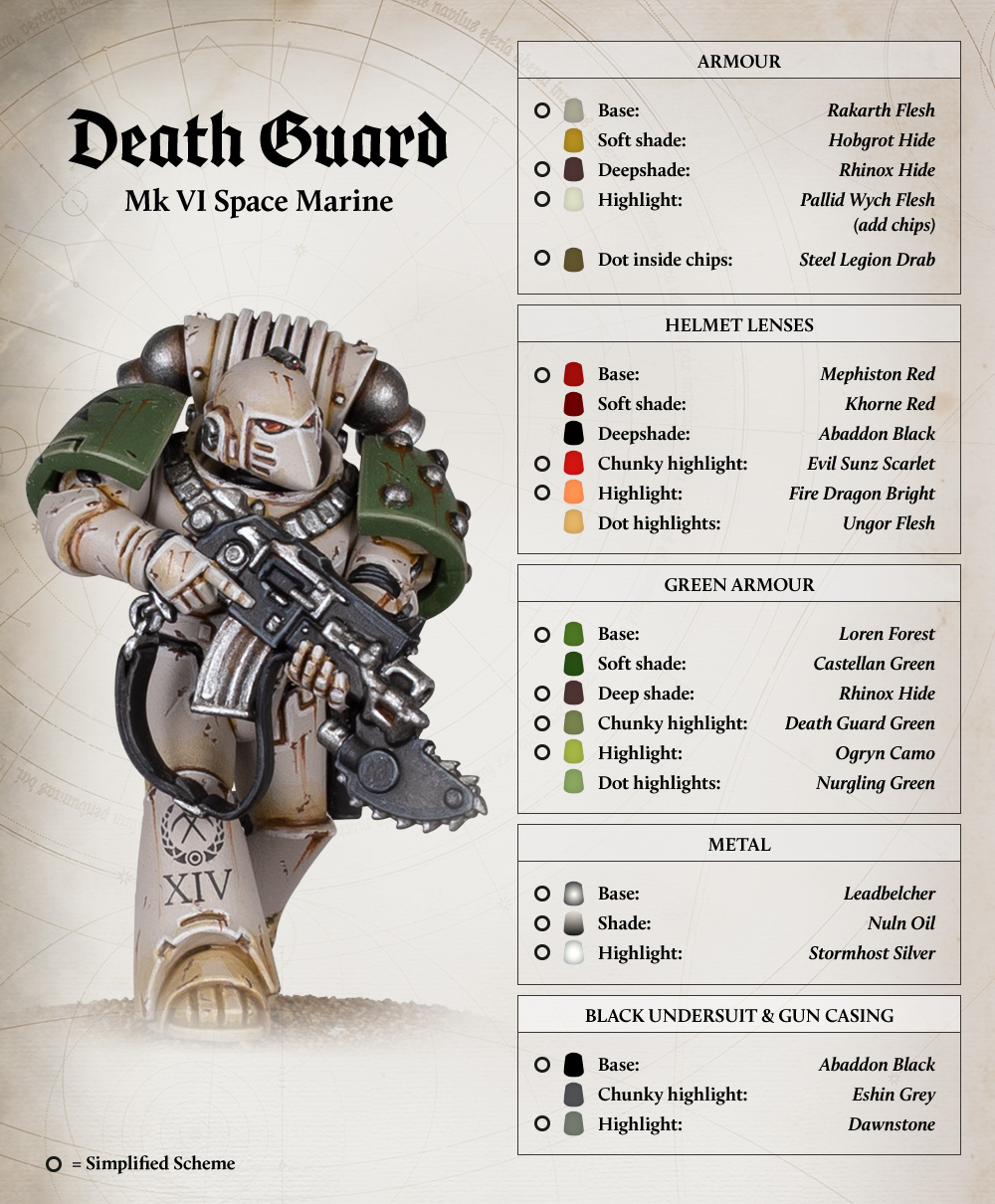
Death Guard use off white armour with green secondary areas and dull gold or bronze banding. The article highlights their Barbarus rooted tradition of leaving superficial wear and grime untouched until a campaign ends. Consequently, painters are encouraged to lean into stains, corrosion and battlefield filth while still keeping the underlying scheme visible.
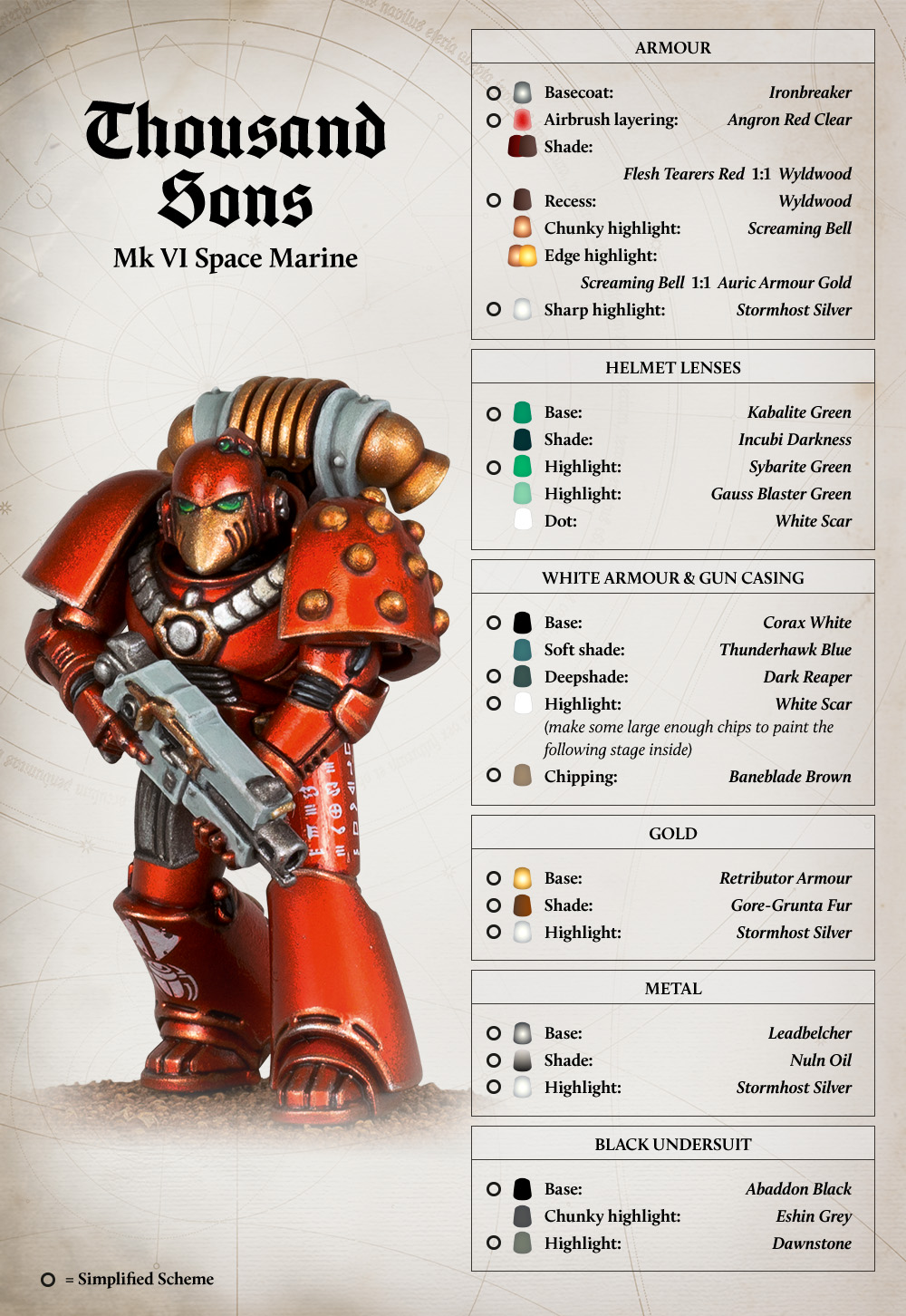
Thousand Sons wear a distinctive red, with black or white secondary areas and generous gold trim. The article emphasises that every warrior carries layers of symbols and markings tied to Prosperine cults. Most of these are completely opaque to outsiders. For painters, this is basically free licence to cover armour and cloth in arcane icons, runes and personalised script.
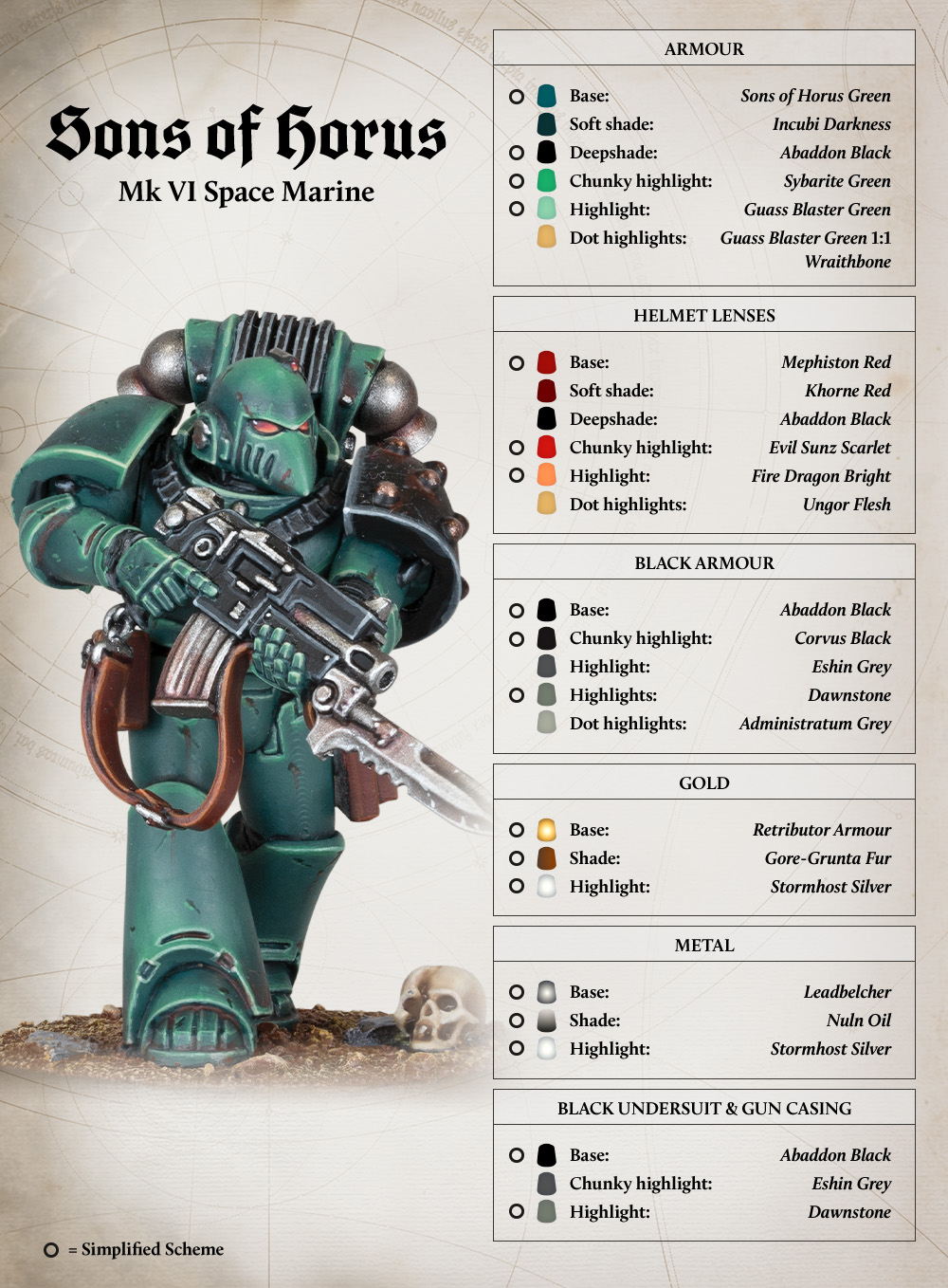
Sons of Horus get a short history lesson. They were once the Luna Wolves in stark white, but they adopt sea green when Horus becomes Warmaster. Their First Company elites wear black, red and gold, and that scheme eventually replaces the green entirely. This description makes it very easy to stage forces at different points in the Heresy timeline.
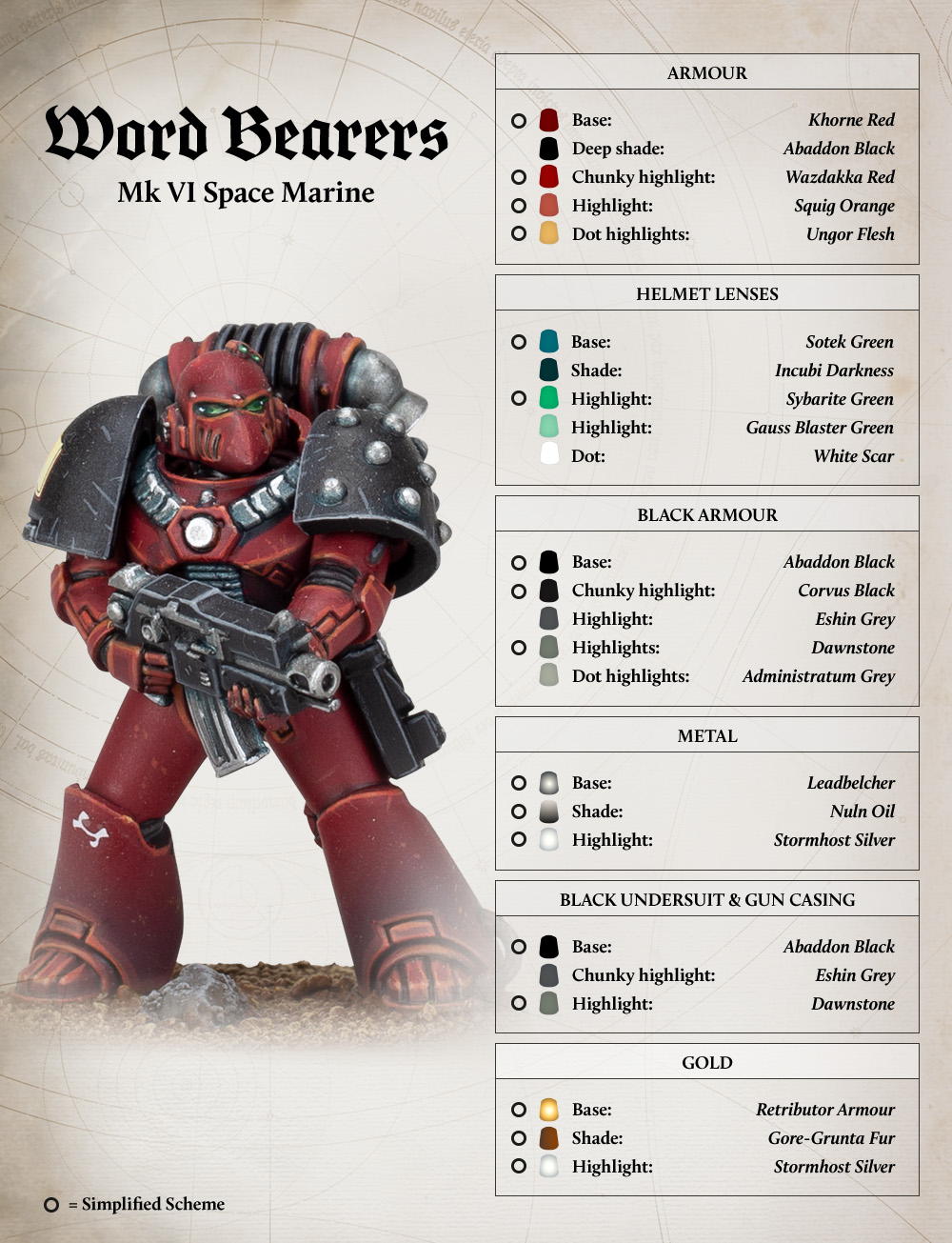
Word Bearers begin the war mostly in the grey of the old Imperial Heralds. The Serrated Sun Chapter, favoured by Lorgar, already wears deep red with black and gold, and they are first among traitors. As the Age of Darkness advances, that Serrated Sun look becomes the default for the Legion. Therefore, you can mix grey and red forces if you want to show the transition.
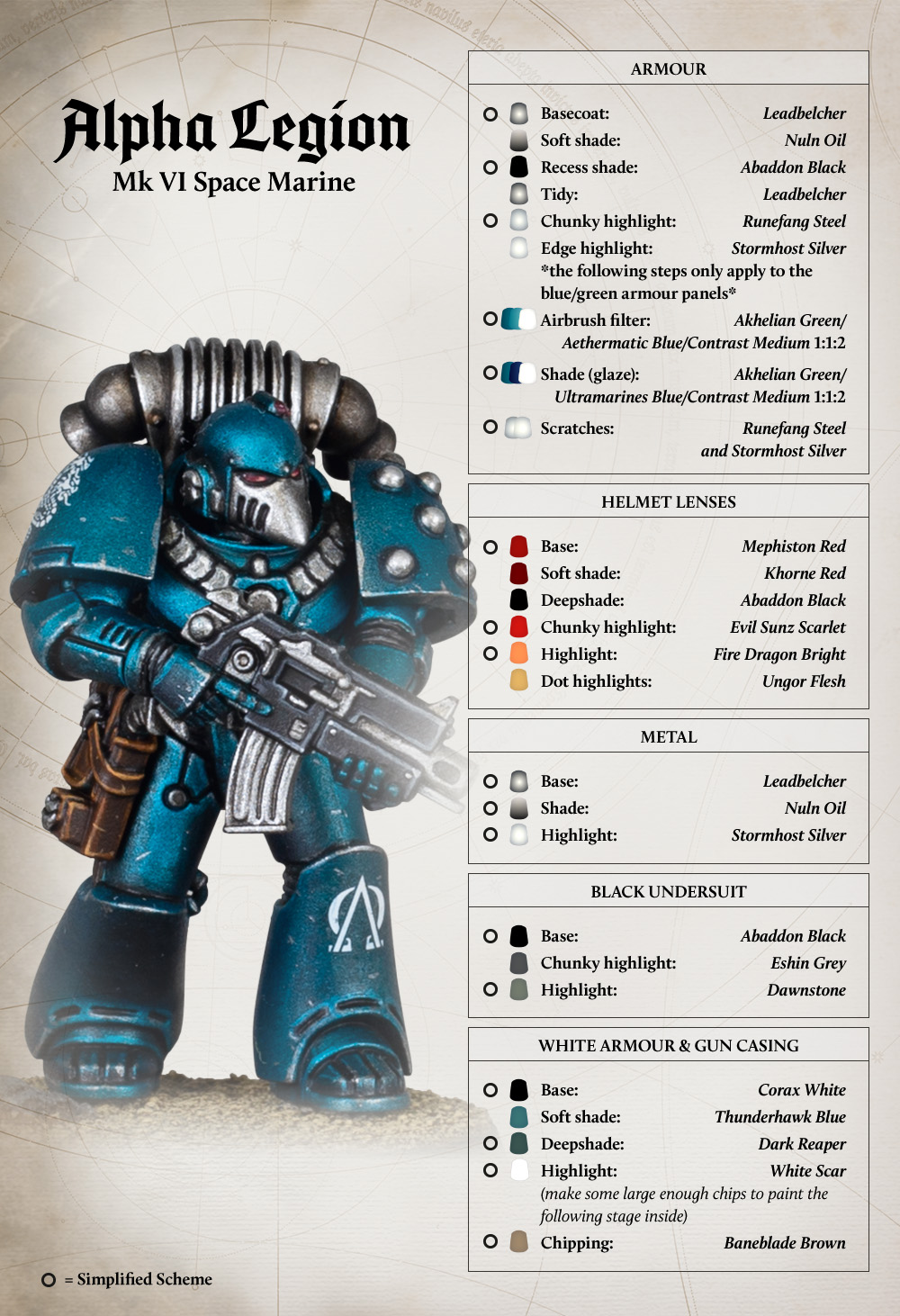
Alpha Legion close the list with suitably mysterious notes. They appear in records seemingly fully formed, with no clear origin, which suits their reputation. Their primary livery is an iridescent blue green metallic, paired with black secondary elements. Gold or silver banding is common, and iconography is often white. However, it is also common for them to go to war with no icons at all, creating armies of anonymous killers. This gives painters huge freedom to dial icons up or down depending on how covert they want the force to feel.
Using The Guide And Leveling Up Your Painting
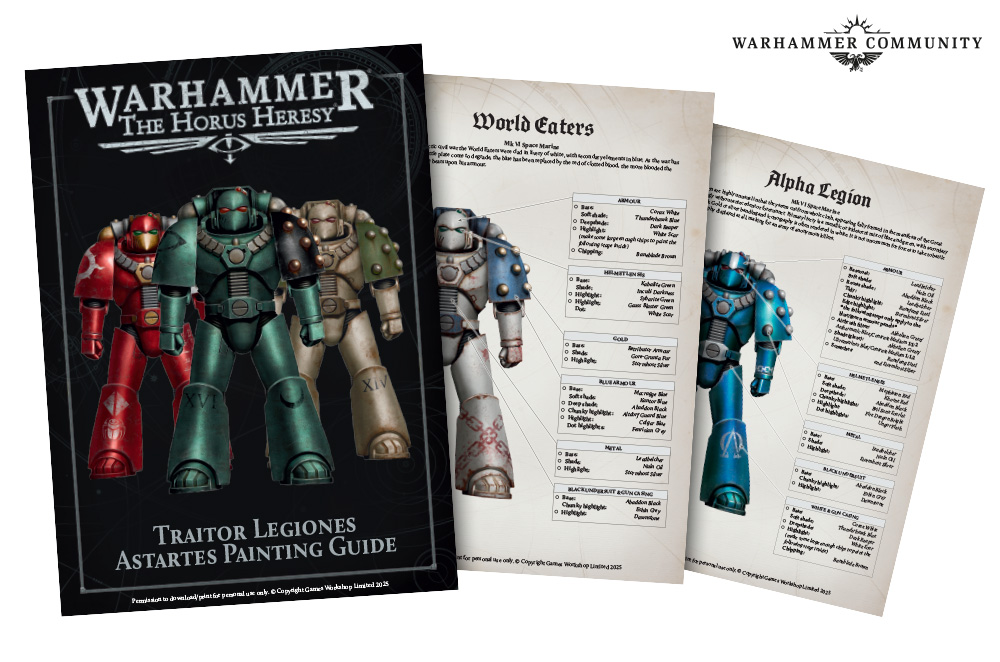
After the Legion run down, the article shifts into hobby support. It encourages you to paint your favourite Legion or even build a display collection of all eighteen. You can download the full painting guide from the Horus Heresy downloads page, which contains the actual step by step recipes hinted at here. Additionally, it points you toward other painting videos on the official Warhammer YouTube channel. If you want more advanced techniques, it suggests Citadel Colour Masterclass on Warhammer TV as a next step.
Closing Thoughts From The Age Of Darkness
Overall, this Grotmas entry is less about rules and more about vibe, colour and narrative identity. It treats each Traitor Legion as a very distinct visual and cultural package, which really helps when you are planning a new army. The short lore notes justify weathering, blood, iconography and colour shifts in ways that feel satisfying on the table. Moreover, the article ties everything back to a downloadable guide, so you are not left guessing about actual paint recipes.
In the end, it feels like an open invitation to fall to Chaos at your painting desk. You might start by picking one favourite Legion, but the variety here makes it very tempting to try several. So grab the guide, pick a pot of purple, green or sea green, and let the Age of Darkness spill across your hobby space.
And remember, Frontline Gaming sells gaming products at a discount, every day in their webcart!