With Grand Cathay marching west to join the battle for Warhammer: The Old World, the Warhammer Community team has shed new light on a nation that, for decades, lingered in the background of the setting.
In a detailed discussion with the designers, we’ve been given a sweeping look at Cathay’s lore — a summary of its ancient history, powerful rulers, and connection to the wider world. This is a direct breakdown of the official narrative shared on the Warhammer Community site.
Origins of a Mythic Empire
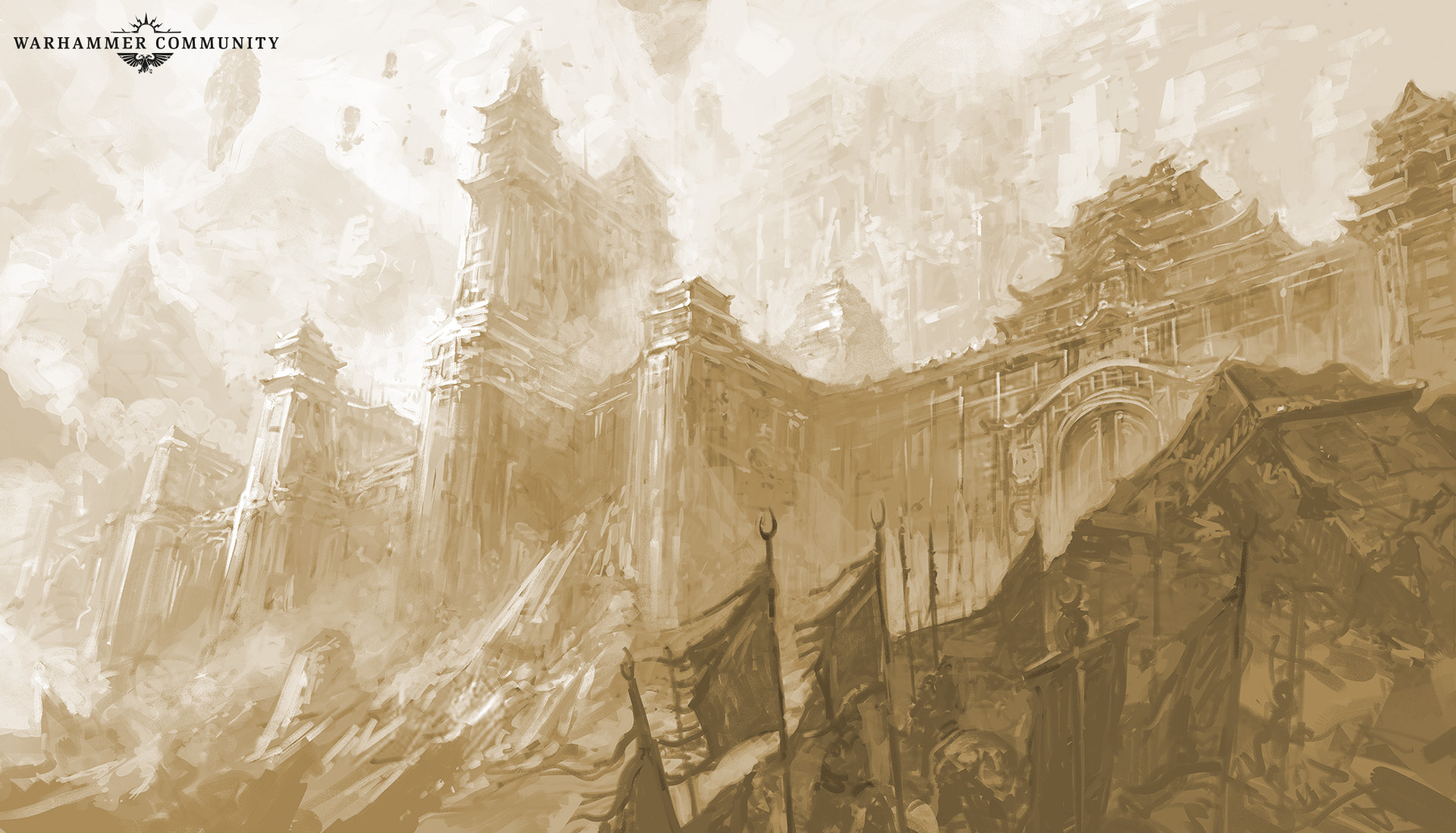
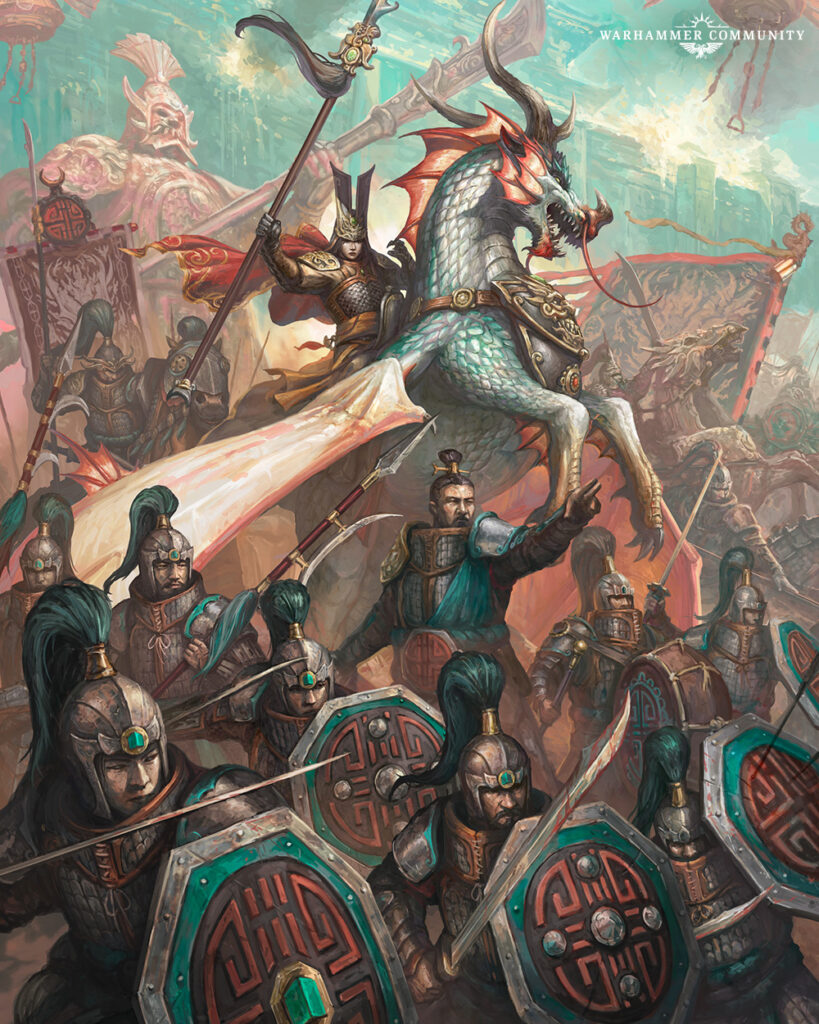
According to the design team, Grand Cathay is the mightiest human empire in the Warhammer world, defined by its harmony, magical depth, and immortal rulers. Its heart is the floating city of Wei-Jin, and its rulers are dragons: the Celestial Dragon Emperor and his consort, the Moon Dragon Quai Yin.
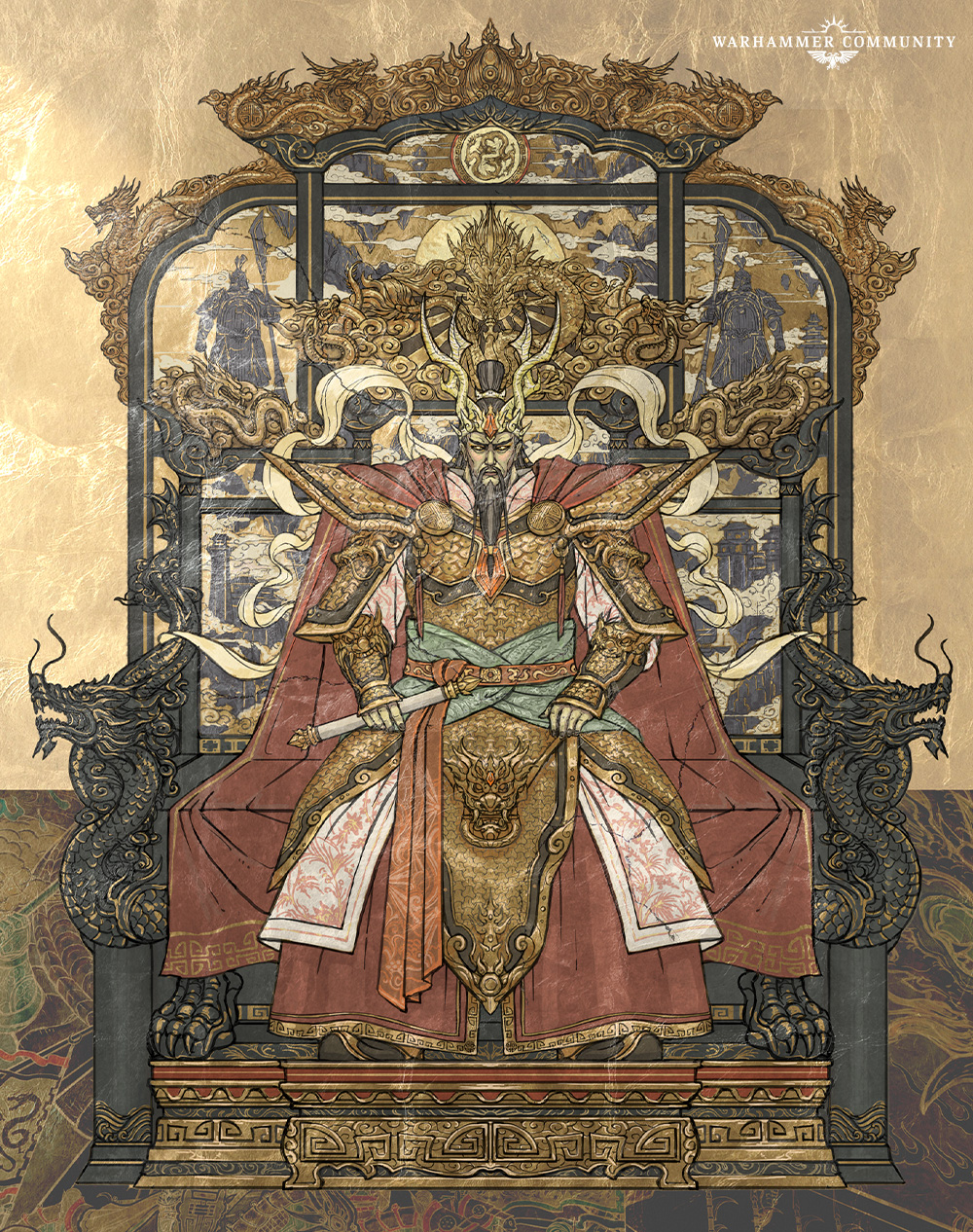
The Emperor, Xen Yang, is one of the world’s original dragons — a being who pre-dates even the arrival of the Old Ones. Unlike his kin, he didn’t resist their changes to the world. Instead, he studied their magic and survived their reshaping of the planet. When the world collapsed during the Age of Chaos, it was Xen Yang who led humanity in the east to survival.
Quai Yin is less defined. She is a shapeshifter from Manslieb (the moon), and her origins remain mysterious. However, it is from her that Xen Yang learns to assume human form. Together, they form the foundation of a dynasty of dragon-children, nine in total — five of whom are currently known and active in the world.
Known Dragon Children:
- Miao Ying, the Storm Dragon (commander of the current expedition west)
- Zhao Ming, the Iron Dragon
- Yuan Bo, the Jade Dragon
- Yin-Yin, the Sea Dragon
- Li Dao, the Fire Dragon
Two others are mentioned but either dead or missing: - Shiyama, the Spirit Dragon
- Shen-Zoo, lost in the Chaos Wastes
The final two remain unnamed — deliberately, much like Warhammer 40K’s missing Primarchs.
Cathay and the Old World
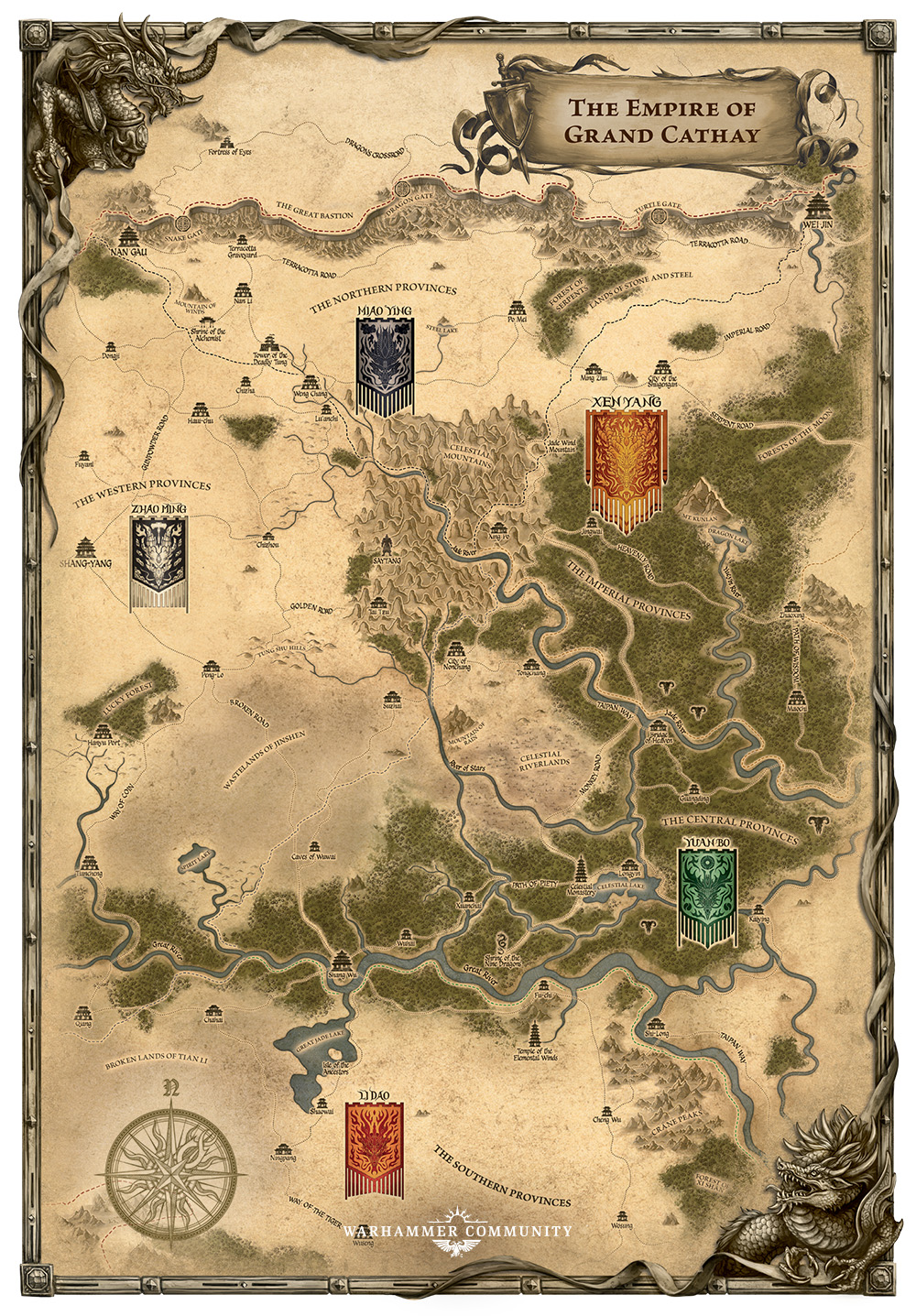
The connection between Grand Cathay and the Old World has changed dramatically over time. While trade and diplomacy once linked the two regions — particularly through Kislev and the Great Steppe — these ties faded after the Great War Against Chaos.
During this time, Cathayan outposts and trade routes fell as Chaos forces surged westward. While they helped defeat Asavar Kul, Cathay retreated afterward, believing the danger had passed. In truth, the world had changed. The steppes became home to Marauder tribes, and Cathay turned inward, largely vanishing from the stage of Old World history by the time of Karl Franz.
But in the current era of The Old World, things are different. Cathayan merchant fleets, dignitaries, and soldiers are now a familiar sight in major ports like Marienburg, and the arrival of a full expeditionary force under Miao Ying marks a significant return to western affairs — one that might look alarmingly close to an invasion.
Building a Mythology
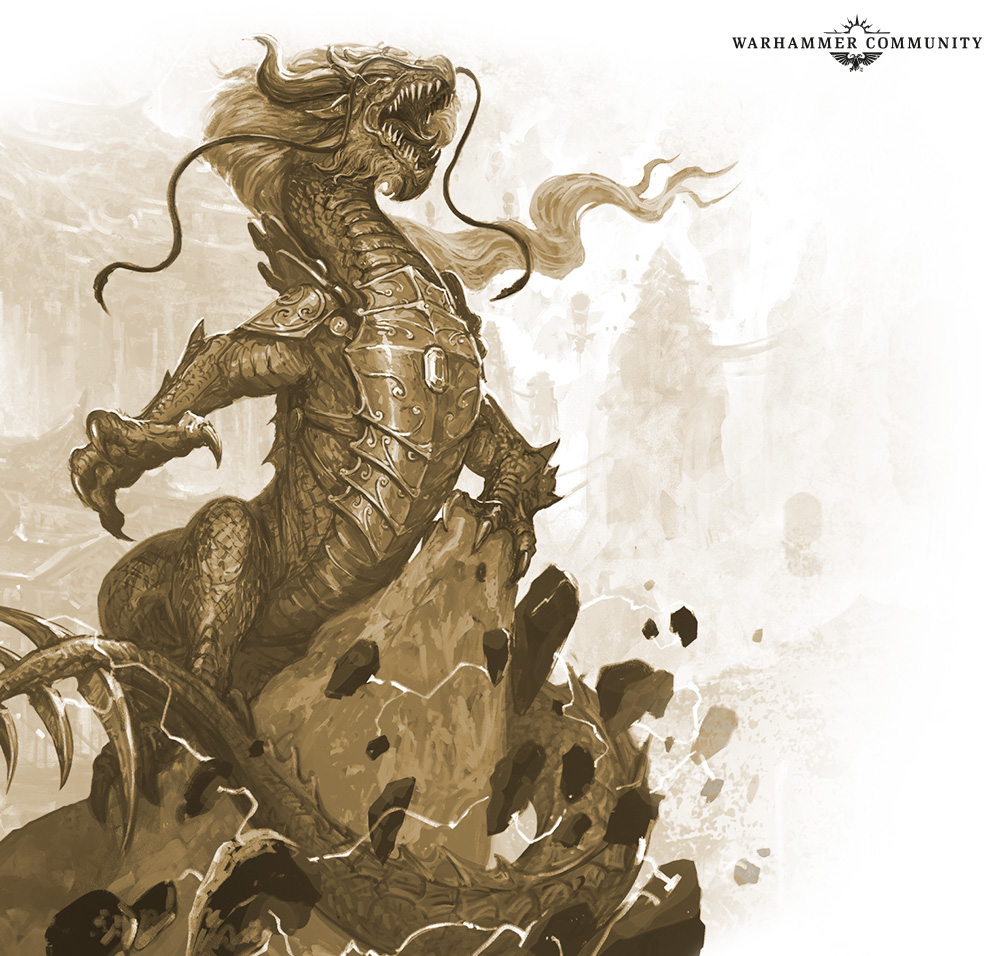
The design team made a point of weaving existing references into the new lore, rather than retconning them. Longstanding names like the Monkey King—first mentioned in The Vampire Genevieve novels—are reinterpreted but not removed. The Monkey King, for instance, was allowed to believe he ruled Cathay during a brief period in history, even appointing an adviser from Clan Eshin (if the sources are to be believed).
Other bits of deep lore, like the Jade-Blooded Vampires, Sky Titans, and the Hobgoblin Khanates, are acknowledged. However, they aren’t currently central to the Old World’s narrative and won’t appear in the game for now.
The idea was to enrich Cathay with depth and continuity, while avoiding outdated tropes. The designers avoided overused clichés such as Jiangshi-style vampires or exaggerated mysticism, focusing instead on creating a tone that fits Warhammer’s grimdark setting while respecting the cultural inspirations.
Cathay’s Place in the Warhammer Setting
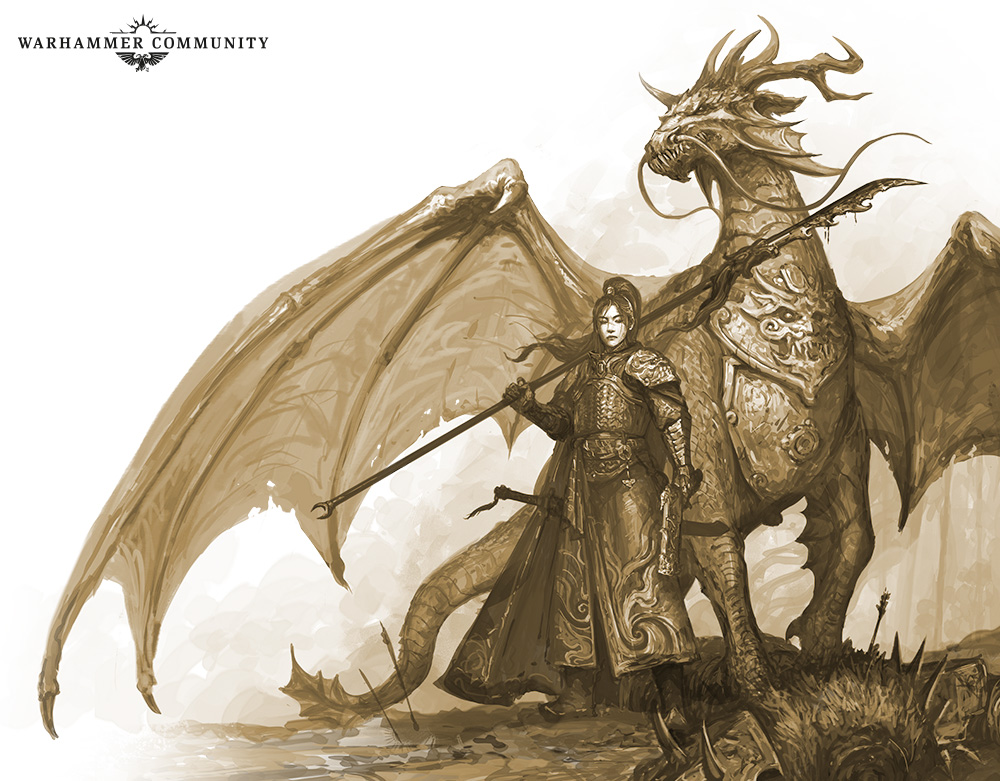
The team described Cathay as a fully developed civilisation on par with the Old World itself, potentially capable of being a complete setting in its own right. Although the focus remains on the Old World and the war against Chaos, Cathay’s scale and history provide ample opportunities for future expansion.
And while most of the Cathay we’ve seen so far was developed in collaboration with Creative Assembly for Total War: Warhammer III, much of that material now forms the backbone of its tabletop incarnation. In fact, this lore was originally developed in internal IP documents before the designers even knew The Old World would be returning as a full game.
Final Thoughts – Cathay Comes into Focus
This summary reflects the key lore revealed on the Warhammer Community site, laying out a clear picture of Grand Cathay’s ancient roots, magical leadership, and current role in the world. For long-time fans, it confirms that Cathay has always been part of the setting, even if it was only hinted at for years. For newer players, it’s an exciting gateway into a deeply unique faction — one that brings dragons, harmony, and arcane grandeur to the grim battlefields of the Old World.
Next week, Warhammer Community will explore how these themes translate into game rules, so stay tuned for the mechanical side of Grand Cathay’s glorious return.
And remember, Frontline Gaming sells gaming products at a discount, every day in their webcart!