
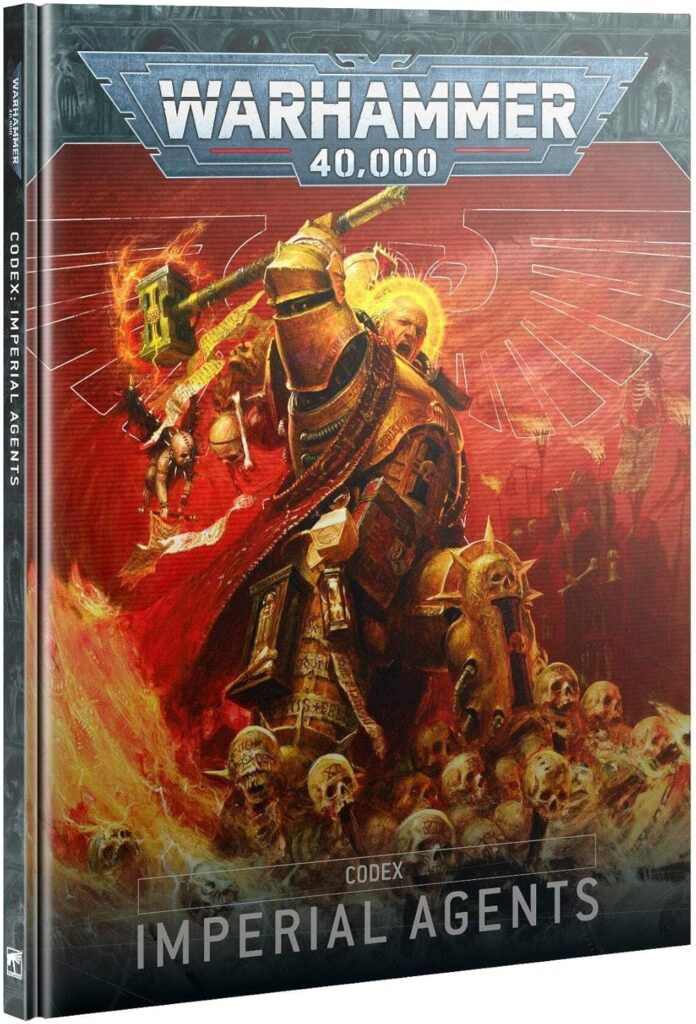
A few days after talking sector politics and hidden threats in your crusade, it’s time to talk about what actually pays the bills.
This is Part 2 of a three-part series, and it covers the Crusade Agendas and Requisitions for Imperial Agents. If Part 1 is your operation map, Part 2 is your mission scripting and your budget spreadsheet. These rules decide how fast your roster grows, but more importantly they decide how fast your Shadow Operation advances.
I’ve played Crusades where people treat agendas like an afterthought, and those players always end up behind on campaign momentum. Agents are the opposite; they’re built to turn agendas into an engine. The coolest part is that you’re not just farming experience, you’re farming Influence, Intrigue, and even Investigation tempo. You can also use requisitions to sand down the randomness that usually makes Crusade swingy. In short, this is the section where Agents stop being “a pile of specialists” and start being a plan.
Crusade Agendas: the currencies that feed your operation
Imperial Agents agendas are unusually direct about what they reward, and that’s good design. Each one pushes a style of play and kicks out specific campaign resources.
Aggressive Negotiation makes the game about a mid-board objective your opponent nominates. If you can keep control of it, units near it gain experience as the game progresses. If you control it at the end, you gain D3 Influence points, and you can also hand a Character a weapon modification or a Crusade relic. This agenda is my go-to when I’m running Imperialis Fleet, because you can use tools like Clandestine Operation (granting Infiltrators) to get bodies onto the right spot early, and then you can stay relevant with movement tech like Emperor’s Will.
Strategic Excruciation rewards melee kills with experience, and it turns Character kills into Intrigue, with a bigger payoff if you drop the enemy Warlord. This one loves anything that helps you engineer decisive fights, and it pairs nicely with Ordo Hereticus tools because that detachment can push lethality and pressure in the exact places you need it.
Execution Order is the cleanest “campaign assassin” agenda in the book. If the enemy Warlord dies, one of your Characters gains a big chunk of experience and you gain an Investigation point. That last part matters a lot, because Investigation points are what uncover Threats faster. The obvious synergy is stacking this with Ordo Hereticus tools like the Execution Order stratagem that grants Precision into a chosen enemy Character. The other synergy is simply being Veiled Blade and playing the assassination game with layers of protection like Orbital Oversight.
Clandestine Infiltration rewards ending your turns wholly in the enemy deployment zone, and it pays out Intrigue at the end if you’ve got units close to the enemy board edge. This agenda is the reason I tell most Agents players to try at least one infiltration-heavy detachment early in a campaign. Imperialis Fleet can hand out Infiltrators or Deep Strike to multiple units via enhancements like Clandestine Operation and Combat Landers, and the FAQ confirms attached Characters benefit too. That turns “getting there” from a challenge into a choice.
Long Vigil is your Deathwatch agenda, and it pays Influence based on how thoroughly you control the board state. If you table the opponent, your Deathwatch units gain more experience and you gain more Influence. If the opponent still has models, but none are in your deployment zone, you still gain a smaller reward. This agenda stacks beautifully with Ordo Xenos play patterns, because the Deathwatch toolkit in that detachment is designed around controlling targets and repositioning pressure.
Crusade Requisitions: how you turn a good plan into a cruel plan

Agents requisitions are less about “fixing injuries” and more about forcing your campaign economy to behave.
- Inquisitorial Mandate lets you take an additional Agents agenda if you have an Inquisitor, and if units gained experience from it you get a Requisition point back. That means it often pays for itself if you build around it, and it’s a huge reason Inquisitors feel like the operational linchpin.
- Forge Killteam is a Deathwatch accelerator. After a win, if you’ve got a Watch Master, you can mark an extra Deathwatch unit for greatness. That sounds small until you realize it speeds up your battle trait pipeline all season.
- Privateering is the Rogue Trader’s campaign trick. Once per Shadow Operation, you can either gain Influence or Intrigue, or you can trade stored points to gain extra Requisition points. This is how Voidfarers turn “we did shady things” into “we have resources.”
- Crafted for Battle is the “skip the early grind” button. When adding a retinue unit, if you’ve got a sufficiently seasoned Character, that new unit jumps straight to Blooded with extra experience and a battle honour right away. That keeps your roster feeling elite, which matters because Agents often run fewer units and can’t afford dead weight.
- Investigation Chamber is my favorite, because it’s campaign control. Once per Shadow Operation, before rolling on Plot Twist, you just pick the result instead. If you’ve ever lost a whole operation because a random twist pushed time over the edge, you immediately understand why this is worth the point.
Agendas and requisitions are where Imperial Agents become a real Crusade faction instead of an interesting detachment menu. The agendas are tuned to produce the exact currencies Shadow Operations ask for, so your battles actually feel connected to your sector story. I also love that you can choose whether you want to be an Influence-heavy “show of force” operation or an Intrigue-heavy “knife in the dark” operation.
My most reliable pattern is starting with Aggressive Negotiation to build Influence early, then pivoting into Clandestine Infiltration once I’ve got movement tools online. If you want a fun mini-game, try building an agenda plan that produces exactly enough Intrigue to Thwart one Threat per game after you uncover it. If you want to be annoying, stack Inquisitorial Mandate with agendas that already reward what your list does, and watch your campaign economy snowball while everyone else is still buying scar removal.
Requisitions like Investigation Chamber also make Agents feel like they’re cheating fate, which is very on-brand. And if your group likes narrative drama, Privateering is the perfect excuse for “we took the job because it paid,” even when it’s morally questionable. Next up, we’re talking about the upgrades that make opponents groan before deployment: battle traits and Crusade relics.