
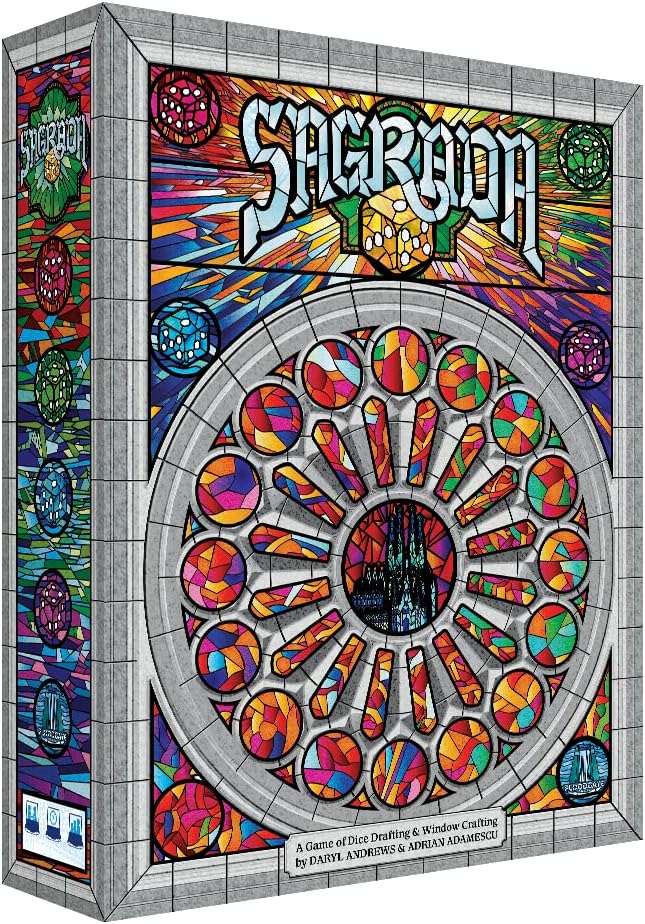
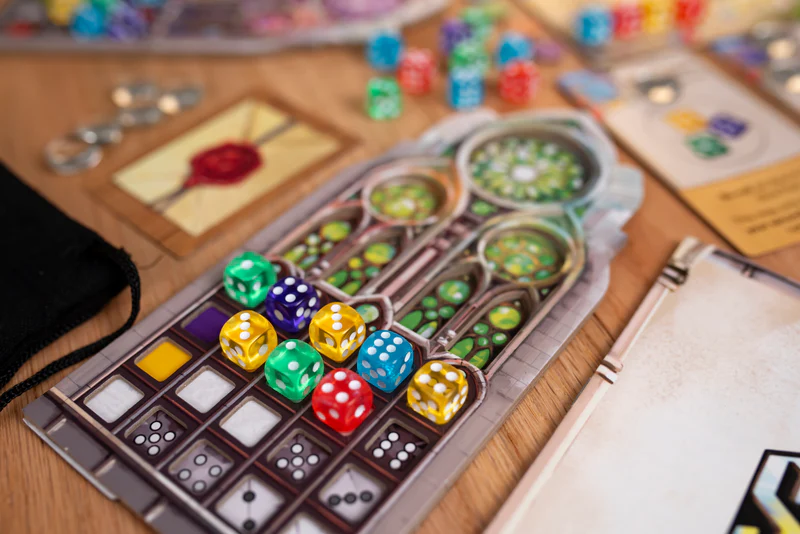
Sagrada is a dice-drafting puzzle game where you build a stained-glass window by placing colorful dice into a personal grid.
The theme is immediately appealing, and, more importantly, it gives the game a strong visual identity on the table. However, this is not a heavily thematic experience in the usual sense. Instead, the real focus is on spatial planning, drafting efficiency, and working around tight placement restrictions. Because adjacent dice cannot share the same color or number, every pick matters more than it first appears. Moreover, public and private scoring goals constantly pull you in different directions. As a result, the game feels less like a relaxed art project and more like a clean, tense optimization puzzle.
Pros
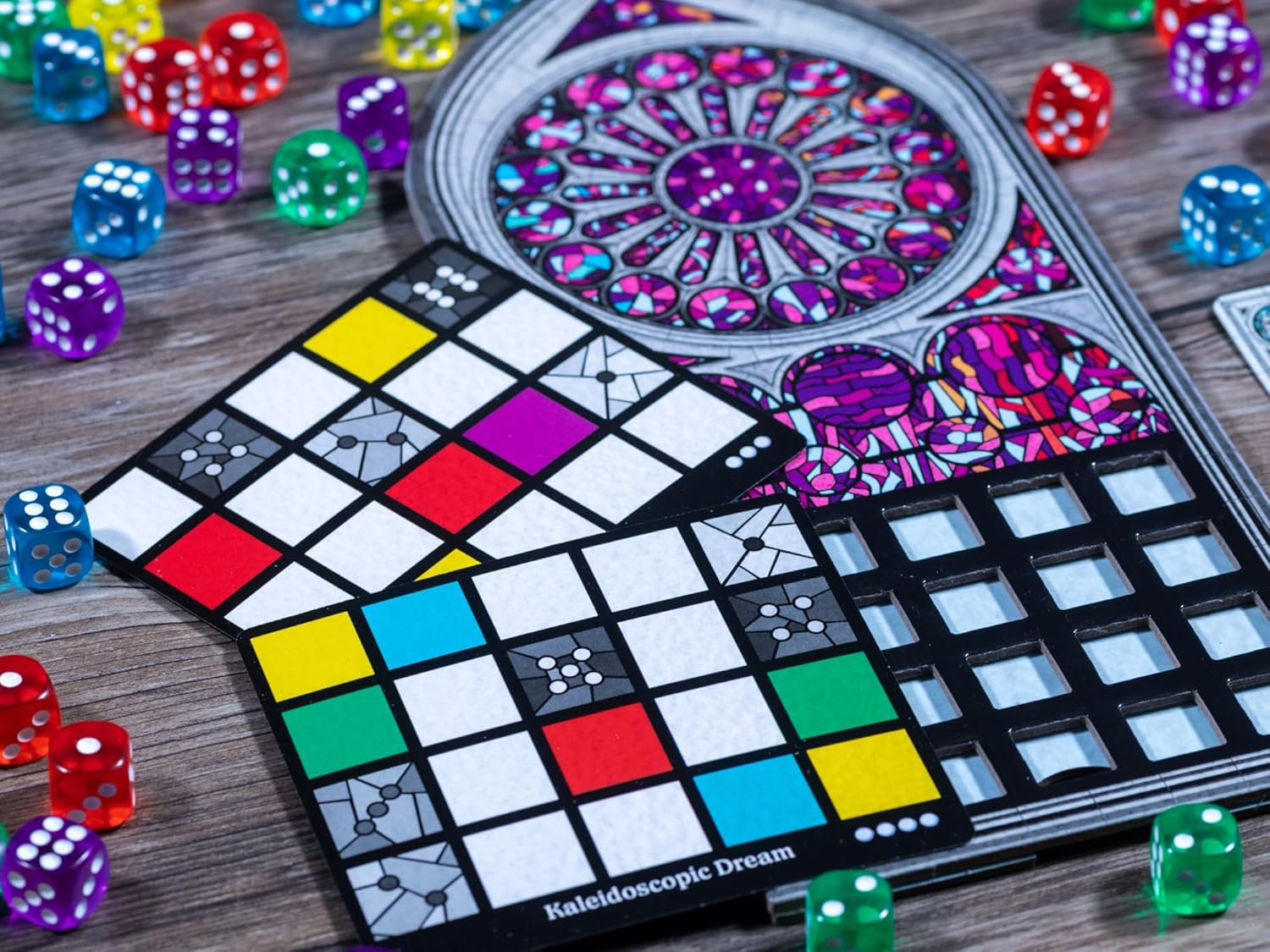
- The core dice-drafting system is easy to teach, yet it still creates meaningful decisions every round.
- Moreover, the colorful translucent dice make the game look fantastic and help it stand out immediately.
- Because turns move quickly, the game usually keeps a smooth pace even with a full table.
- Variable window patterns and scoring goals give the game solid replay value.
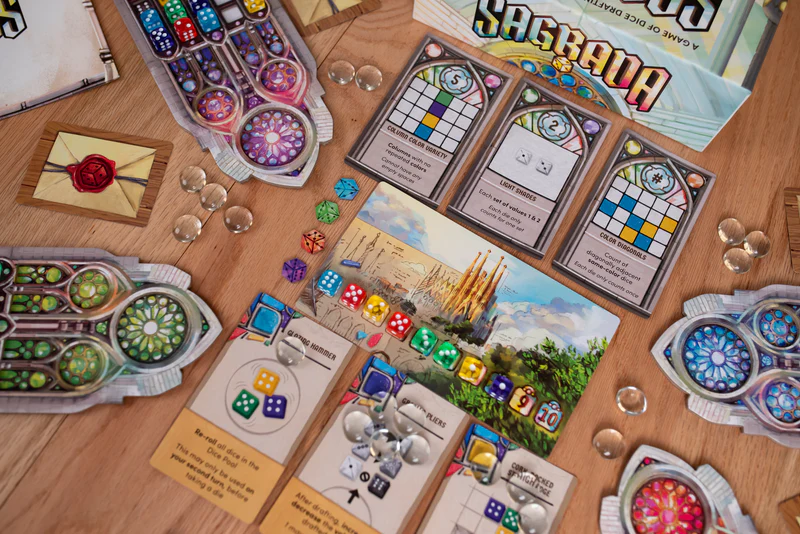
- Tool cards add just enough flexibility, so players can bend the rules without breaking the system.
- Consequently, Sagrada works very well as a gateway strategy game for newer players.
Cons
- However, dice randomness can absolutely derail a careful plan at the wrong moment.
- Player interaction is fairly light, since most of the tension comes from competing over dice in the draft.
- Although the presentation is strong, the theme stays mostly at the visual level.
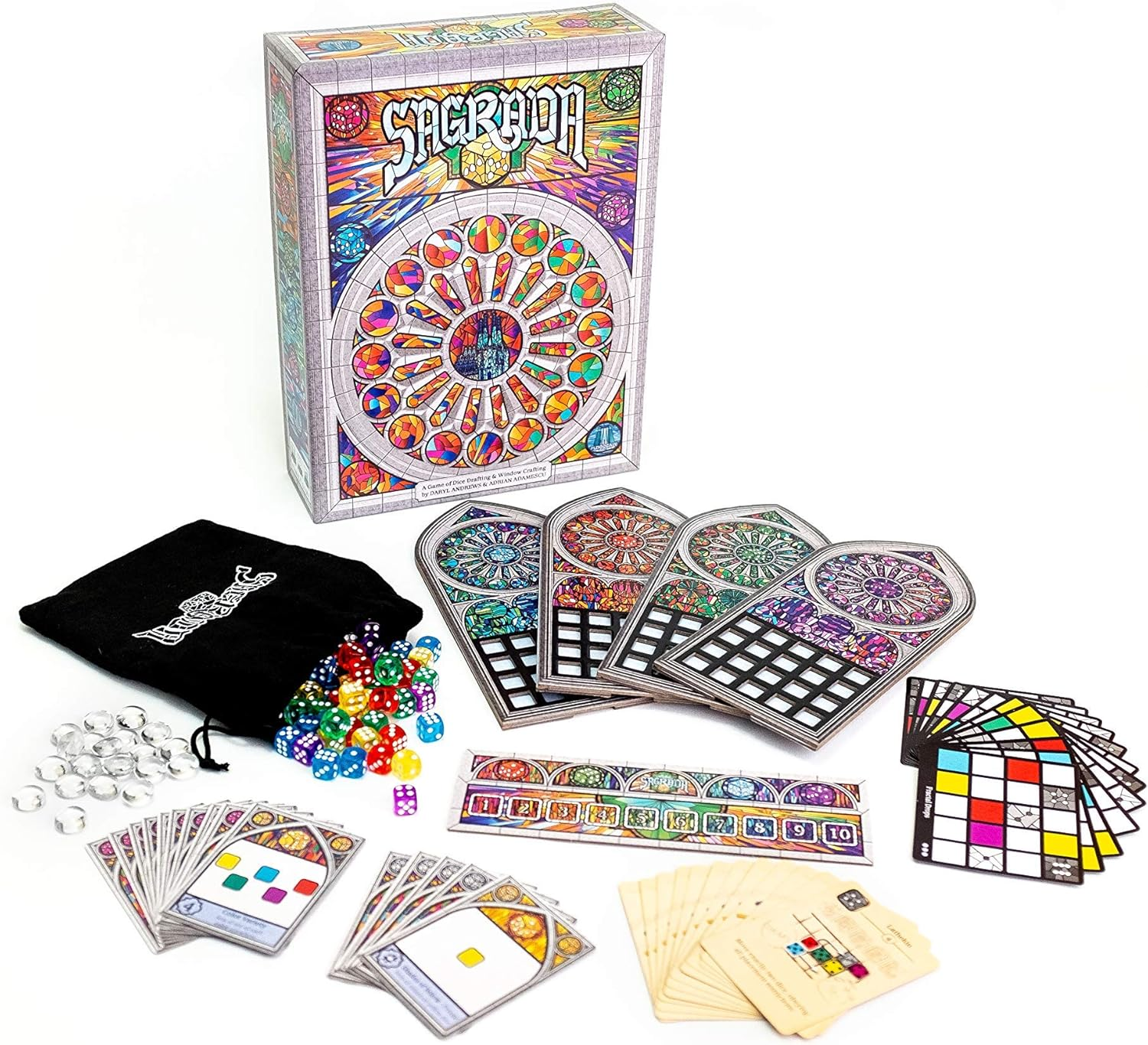
- Scoring can feel a little fiddly for first-time players, especially when multiple objectives overlap.
- Moreover, experienced players may eventually see familiar puzzle patterns emerge from game to game.
- Color-based gameplay can also create accessibility issues for some groups.
Comparison to Similar Games
If you have played Azul, Sagrada sits in a similar space, though the feel is a bit different. Both games are abstract, attractive, and centered on efficient drafting, but Sagrada leans more into personal puzzle solving and a little more randomness. By contrast, Azul feels sharper and a bit more confrontational because denial is so central. Meanwhile, Cascadia offers a similar calm puzzle experience, yet it gives players more flexibility and less immediate restriction. Because of its dice system, Sagrada often feels more tactical than strategic. Still, it hits a nice middle ground between lighter abstract games and more involved Euro-style puzzles.
Final Thoughts
Sagrada works because it is approachable without feeling shallow. It gives players a satisfying puzzle, and, just as importantly, it does so in a package that is easy to teach and pleasant to revisit. However, it will not satisfy players looking for deep interaction or a strongly immersive theme. Even so, if you enjoy drafting games and spatial puzzles, Sagrada remains an easy recommendation. It is polished, attractive, and consistently fun, even when the dice refuse to cooperate