
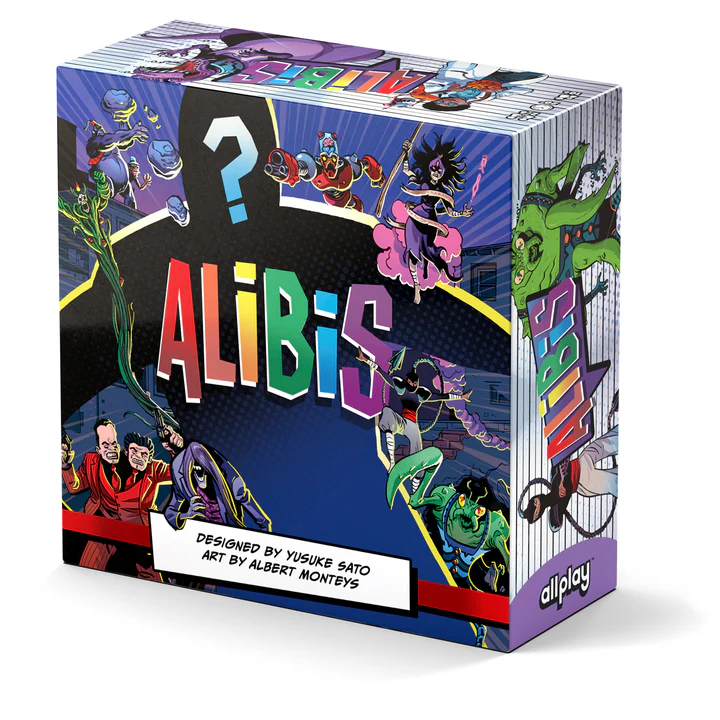
Alibis is a deduction party game where players tell stories to build alibis and uncover the truth.
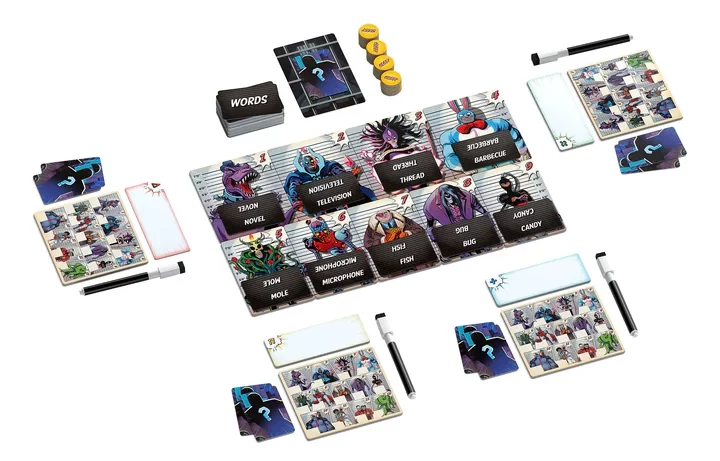
Each player creates a character with unique traits, and then everyone takes turns presenting fabricated or truthful details to match mysterious events. Because the goal is to avoid detection while identifying lies, social deduction and narrative flexibility matter greatly. Moreover, the game encourages players to watch others’ behavior carefully, since subtle inconsistencies often reveal hidden motives.
Although the theme revolves around narrative and bluffing, the mechanics are simple enough to teach quickly. Consequently, the game feels like a hybrid of storytelling and deduction, rather than purely mechanical strategy.
Pros
- Encourages creative storytelling and quick thinking under pressure
- Simple rules allow fast setup and immediate play
- Social deduction elements spark lively discussion among players
- Flexible character traits provide varied interactions each session
- Works well with larger groups, increasing chaos and suspicion
- Light narrative framework lets players improvise freely

Cons
- Social deduction may feel less structured than classic logic sleuth games
- Players who dislike lying or improv may feel uncomfortable
- Limited replayability if players reuse the same groups frequently
- Outcomes can depend heavily on group dynamics and personality
- Less strategic depth compared to heavier deduction titles
- Some rounds may stall when players struggle to craft coherent stories
Comparison to Similar Games

Compared to classic deduction games like Clue, Alibis focuses more on storytelling than logical elimination of suspects. Whereas The Resistance and Werewolf emphasize hidden roles with vote consequences, Alibis emphasizes narrative cohesion and deception. In contrast to Spyfall, which provides question‑and‑answer bluffing, Alibis lets players craft elaborate alibis, making roleplay more central. Unlike puzzle deduction titles such as Sherlock Holmes Consulting Detective, the game does not require solving complex clues but rather persuading others through narrative. Consequently, Alibis occupies a space closer to social deduction party games than competitive logic puzzles.
Final Thoughts
Alibis stands out as a party deduction game that prioritizes storytelling and social interaction. Because much depends on player creativity and engagement, session quality varies with group energy. Although it lacks the structured logic of heavyweight deduction games, it compensates with dynamic interpersonal play.
If you enjoy light social deception and narrative improvisation, this title will likely entertain your group. However, if you prefer tightly defined rules and strategic depth, Alibis may feel too open‑ended. Overall, it remains a fun, lively addition to social game nights that emphasizes character and conversation.
And remember, Frontline Gaming sells gaming products at a discount, every day in their webcart!