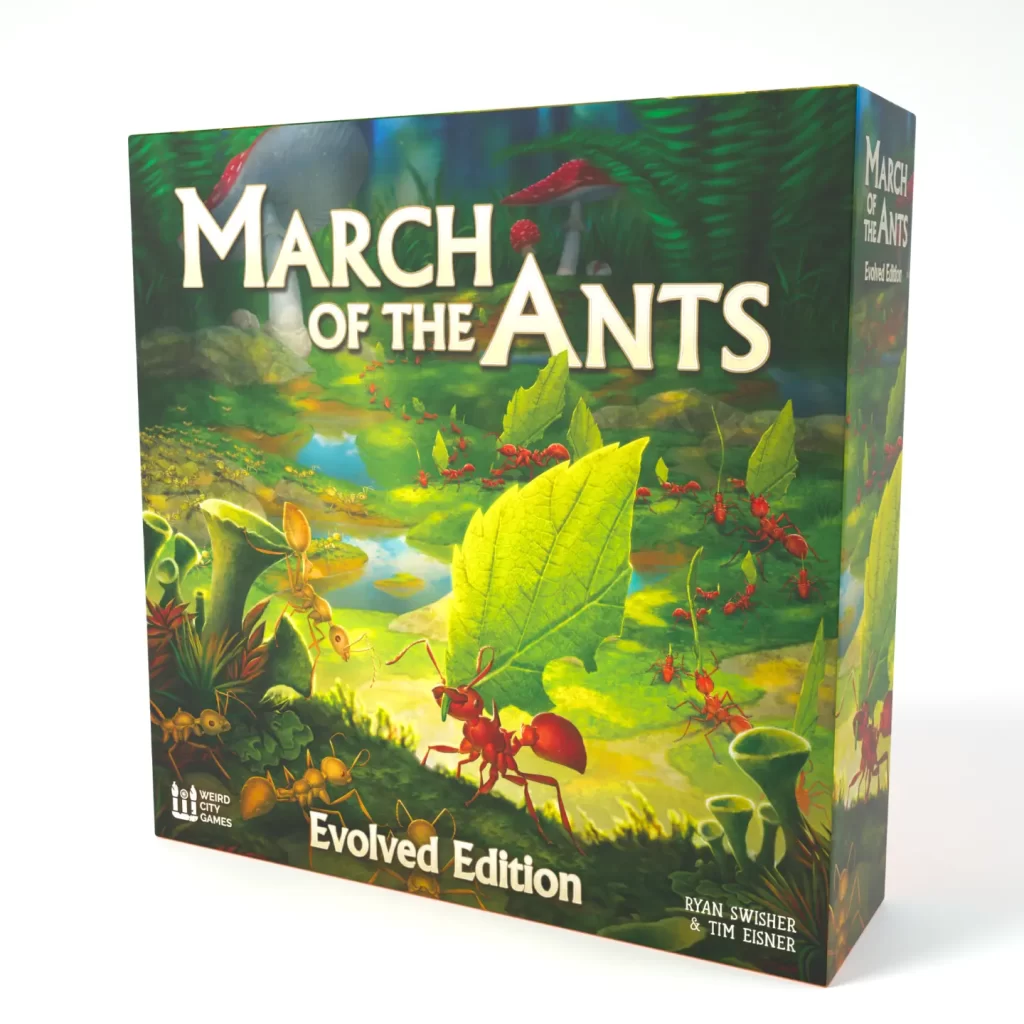
March of the Ants places players in command of rival ant colonies competing to gather food, expand territory, and increase their workforce.
Because the game blends worker placement with area control, you allocate ants to varied tasks like foraging, scouting, battling rival colonies, and expanding tunnels. Moreover, the modular board and multiple action types ensure each playthrough changes strategic priorities. Although the thematic veneer of ant hierarchy and colony growth is whimsical, the mechanics reward focused planning and resource management. Consequently, this game appeals to players who enjoy tactical positioning and evolving long‑term strategy. While interactions occur indirectly through resource competition and battles, confrontation can become meaningful mid‑game.
Pros
- Deep strategic choices emerge from balancing expansion, food, and combat options
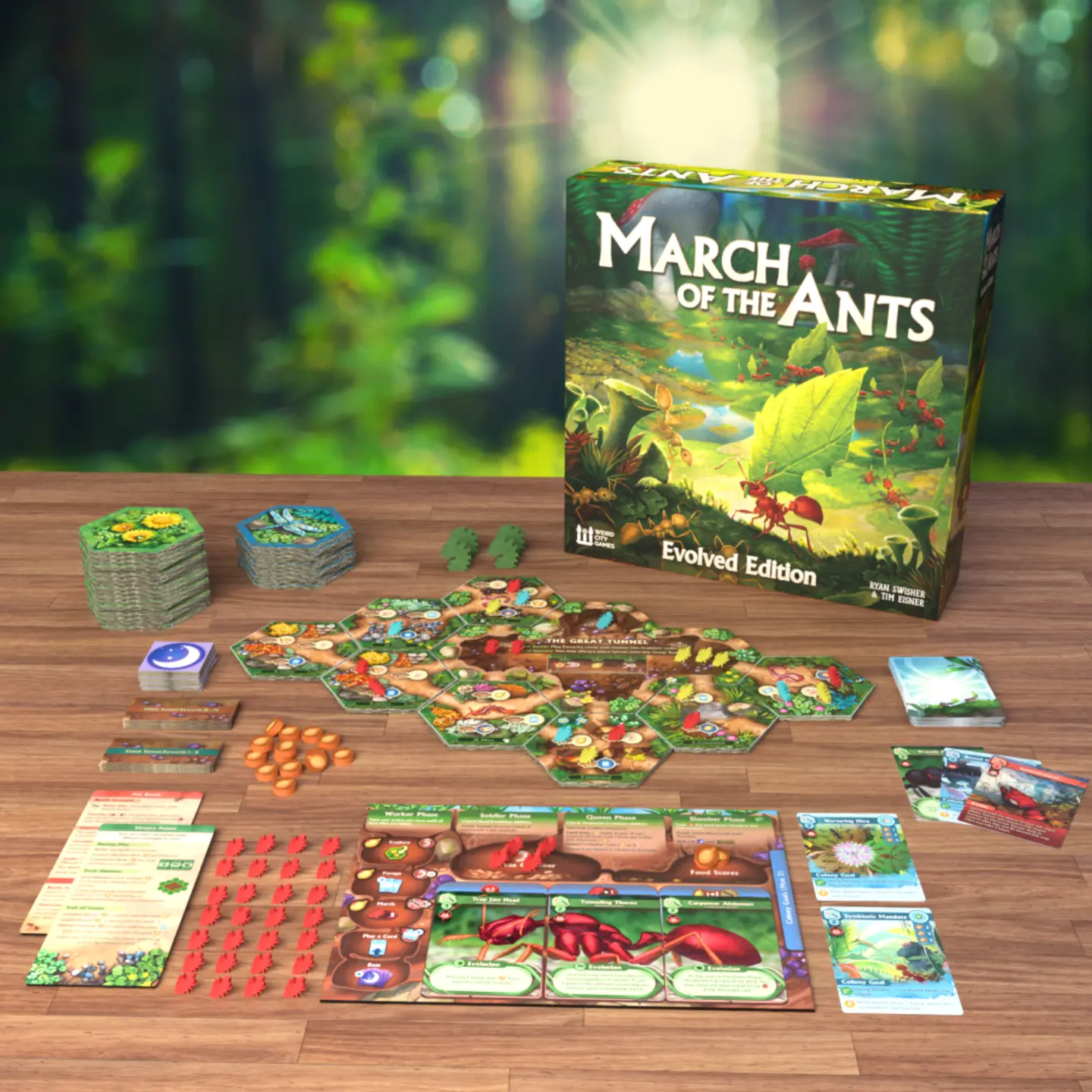
- Modular setup provides varied scenarios, increasing replayability over many sessions
- Worker placement mechanics integrate well into the ant colony theme
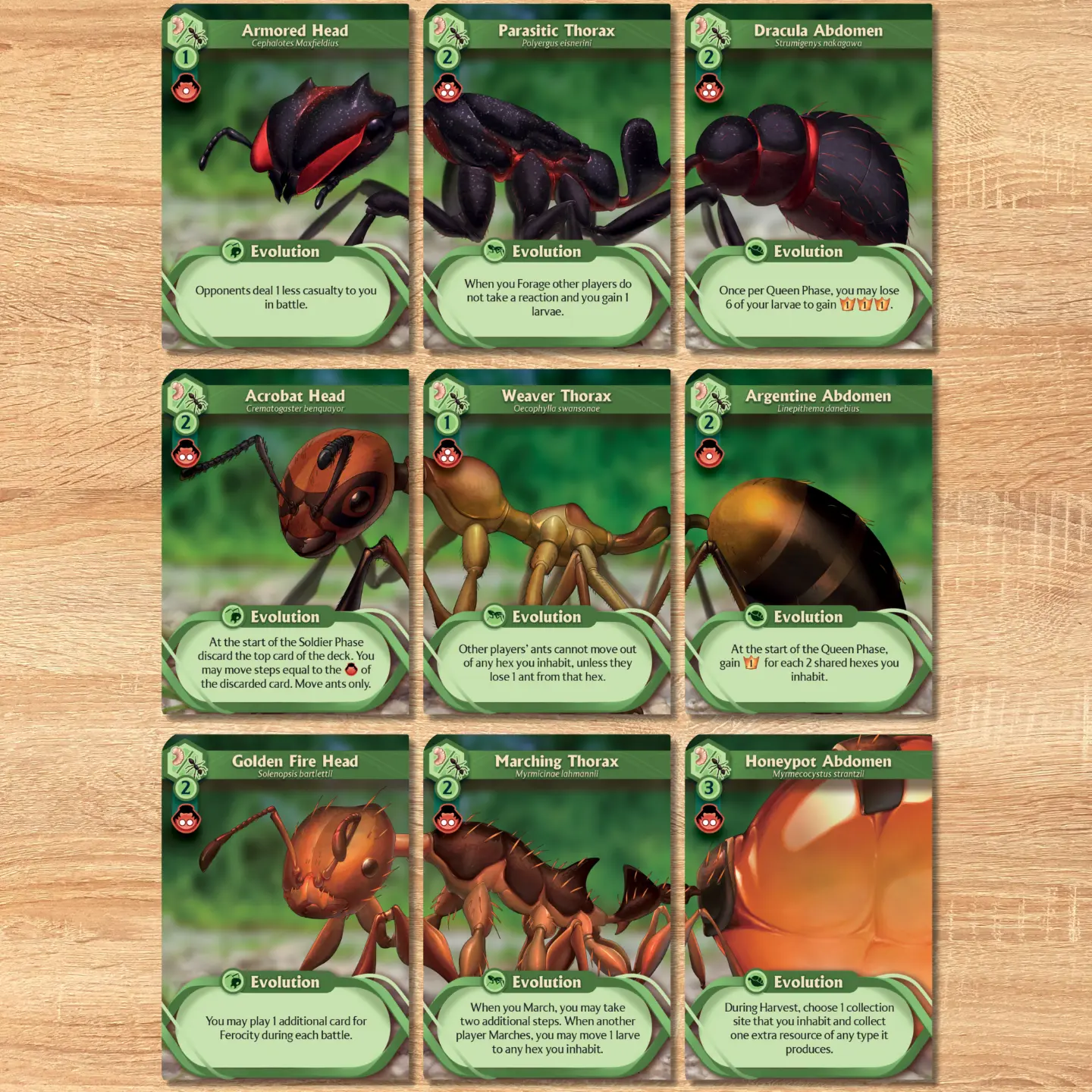
- Asymmetric abilities for colonies add meaningful variety between games
- Multiple paths to victory support flexible strategies and creative play
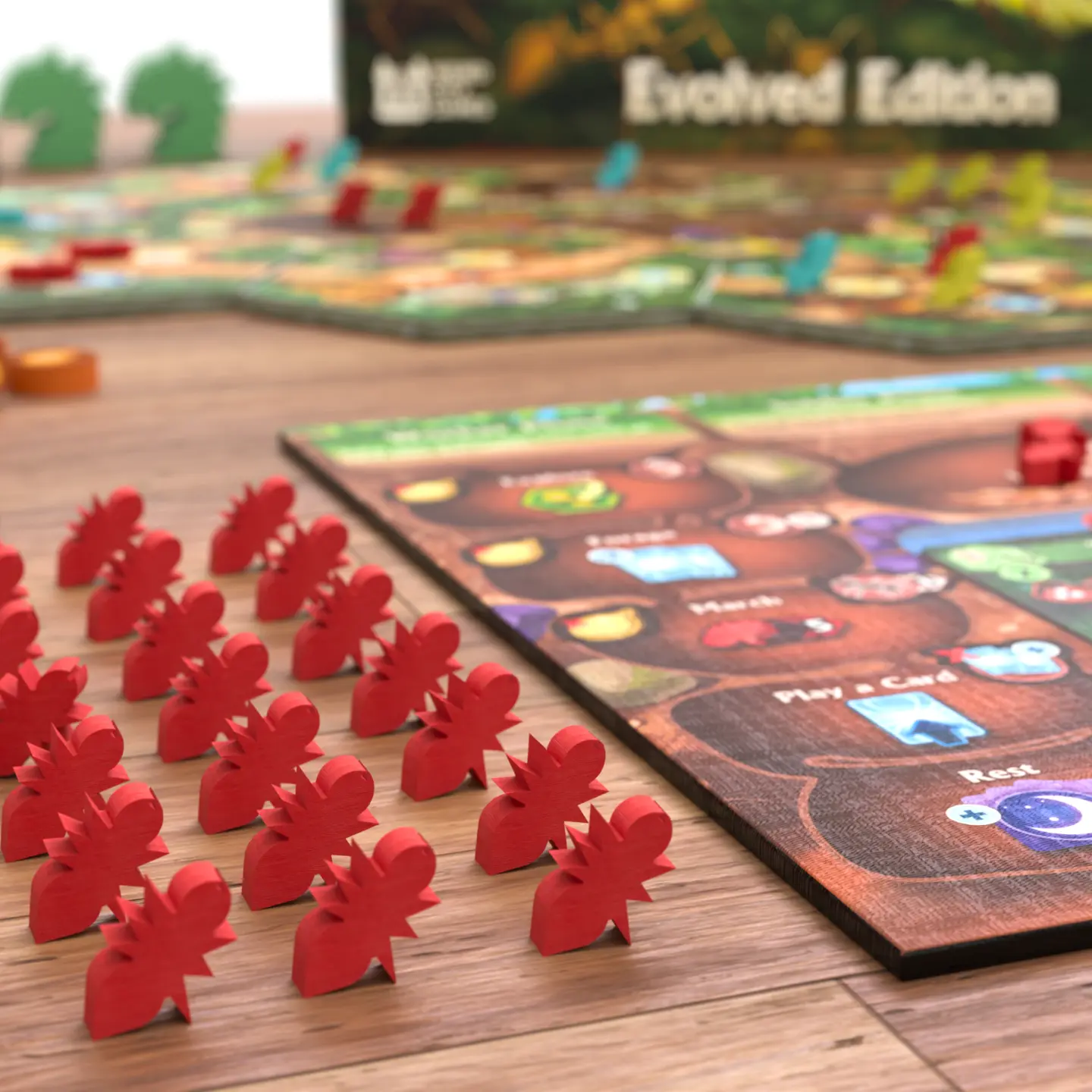
- Components and artwork are distinctive and support game immersion
- Solo mode provides satisfying challenge for lone players
Cons
- The learning curve is steep, especially for players new to hybrid euro‑style games
- Turn planning can be slowed by analysis paralysis among thoughtful players
- Early game feels slow until resource engines begin to generate output
- Player interaction is sometimes indirect and can feel distant early on
- Rule complexity may overwhelm casual groups without repeated plays
- Battles can feel swingy when resolved with dice and modifiers
Comparison to Similar Games
Compared to classic worker placement games like Agricola, March of the Ants adds stronger territorial and conflict elements beyond pure resource gathering. While Lords of Waterdeep keeps interaction light, March of the Ants introduces more direct competition via battles and contested spaces. In contrast with area control heavyweights like Small World, this game balances combat with colony building rather than focusing solely on conquest. Furthermore, ant theme distinguishes it from standard medieval or fantasy workers, similar to how Everdell uses thematic integration to elevate mechanics.
Final Thoughts
March of the Ants stands out as a hybrid game that rewards thoughtful planning and adaptive strategy. Although its complexity and initial slow pace might deter casual players, it ultimately delivers satisfying depth for experienced gamers. Since multiple strategic avenues exist, players can explore different approaches each time they return. However, you should expect a learning investment before its systems mesh smoothly. Overall, this is a compelling choice for groups who enjoy tactical worker placement with strategic tension and dynamic choices.
And remember, Frontline Gaming sells gaming products at a discount, every day in their webcart!