Games Workshop has made its stance clear, and it is refreshingly old school. While many companies rush to automate creativity, GW is deliberately keeping AI out of its design studios.
However, this decision lands alongside one of the strongest financial performances in the company’s history, which makes the context even more interesting. Based on the latest half-year report, this is not a company afraid of technology, but rather one choosing where technology belongs .
No AI in the Studio, and That Is the Point
Kevin Rountree’s comments on AI are blunt by corporate standards. Games Workshop does not allow AI-generated content in its design process, nor in competitions, and remains deeply cautious overall. While a few senior managers are allowed to explore the technology, there is no appetite for AI concept art, AI rules writing, or machine-generated factions. Instead, the studio continues to invest heavily in human creators, hiring more sculptors, writers, and artists across multiple disciplines. For longtime hobbyists, this feels like a deliberate defense of the handcrafted identity that makes Warhammer feel personal rather than procedural.
Strong Numbers Back the Creative Philosophy
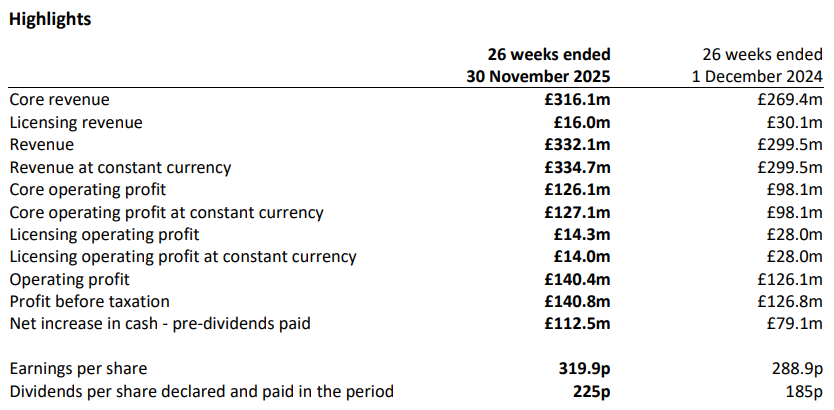
What makes this position compelling is the timing. The same report shows Games Workshop delivering record results across most key measures. Core revenue rose to £316.1 million for the half year, with operating profit climbing to £140.4 million. Moreover, gross margins improved despite new tariffs, thanks to manufacturing efficiencies, modest price increases, and better stock control. In other words, the company is not rejecting AI because it is struggling. Instead, it is doing so while operating from a position of strength, which suggests confidence rather than caution.
Investing in Factories, Stores, and Warhammer Worlds
Alongside the creative stance, the report highlights serious investment in physical infrastructure. Factory 4 in Nottingham remains on track for completion in 2026, and injection moulding capacity continues to expand. Even more exciting for fans, Games Workshop has formally approved a new Warhammer World-style flagship venue in North America, targeted for opening in 2027. This reinforces the idea that GW still believes deeply in physical spaces, community hubs, and real-world hobby engagement, rather than purely digital expansion.
IP Protection, Human Craft, and a Clear Direction
The annual report also frames AI within a broader concern about intellectual property protection. Games Workshop views its IP as one of its most valuable assets and sees mismanagement as a major risk. With AI already being used elsewhere to replicate designs, GW’s legal and compliance focus has intensified. However, the takeaway is clear. This is a company doubling down on human creativity, tight IP control, and sustainable growth rather than chasing automation trends.
Summary
Games Workshop’s refusal to embrace AI in its creative pipeline is not a nostalgic reaction, but a strategic choice backed by strong financial performance, expanding manufacturing capacity, and global growth. While the wider industry experiments with automation, GW is investing in people, factories, and community spaces, confident that hand-crafted worlds still matter. If anything, this report reads like a statement of intent. Warhammer will remain human-made, deeply curated, and fiercely protected, and right now, that philosophy is paying off.
And remember, Frontline Gaming sells gaming products at a discount, every day in their webcart!