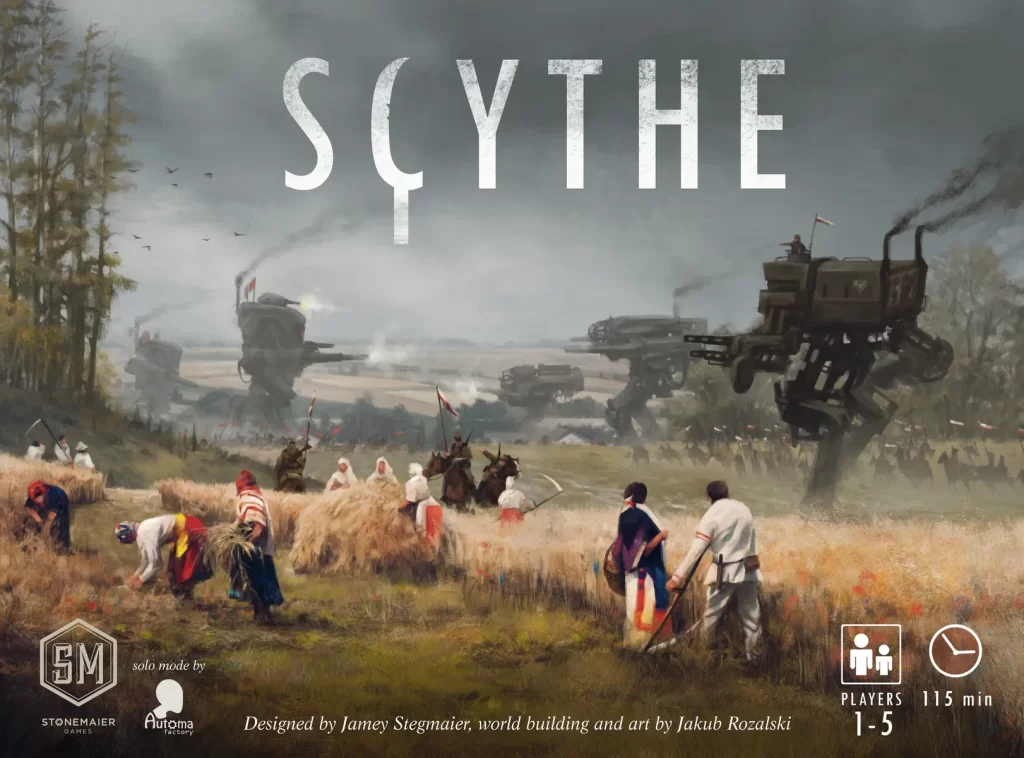
Scythe takes place in an alternate‑history 1920s Eastern Europe where war‑scarred lands meet diesel‑punk mechs and agricultural ambition.
Players lead factions that produce resources, upgrade infrastructure, and expand across territory. The focus is less on constant warfare than on building a powerful economy and efficient engine while balancing popularity, production, and strategic positioning. As a result, Scythe feels like a Euro‑style engine‑builder wrapped in area control and asymmetric faction mechanics.
Pros
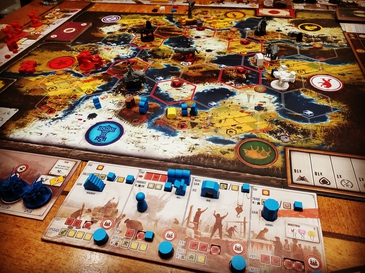
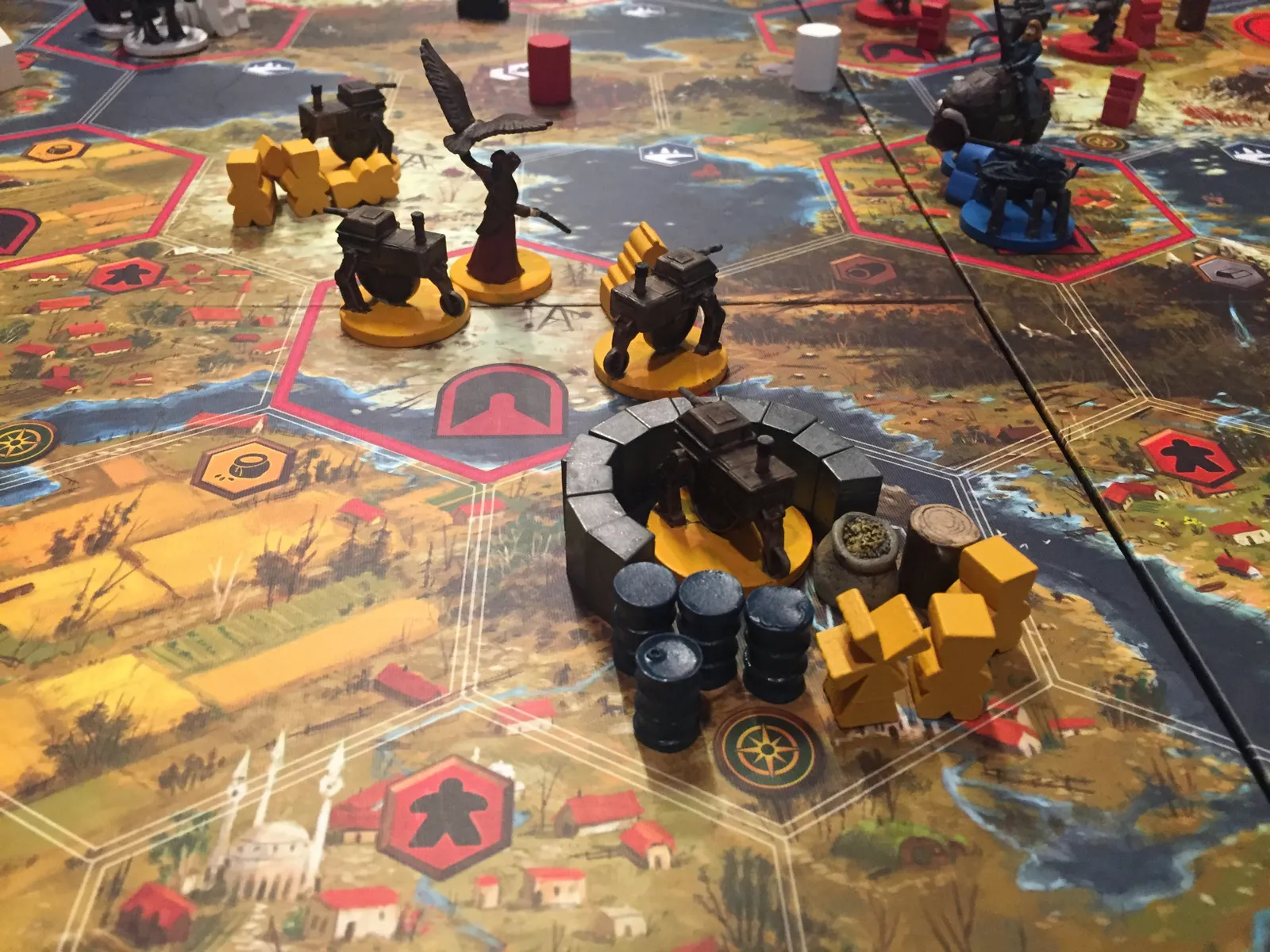
- Beautiful components and artwork create strong table presence and immersion
- Engine‑building mechanics reward planning and combo development over time
- Faction asymmetry provides variety and replayability through different strategies and power curves
- Action choice system combines top‑row and bottom‑row moves, forcing players to trade off immediate benefit against long‑term gain
- Game pacing stays relatively smooth even with many moving parts; turns go quickly once players learn the flow
Cons
- Learning curve is steep; many interconnected systems can overwhelm new players
- Combat and area control are optional—players expecting a “war game” may feel disappointed
- Luck in initial resource placement and encounter cards can influence outcomes despite strong strategy
- Game can feel thematically disjointed: mechs and conflict flavors sometimes clash with Euro‑style economic mechanics
- Setup and table space requirements are substantial, which may be inconvenient for casual play groups
Comparison to Similar Games
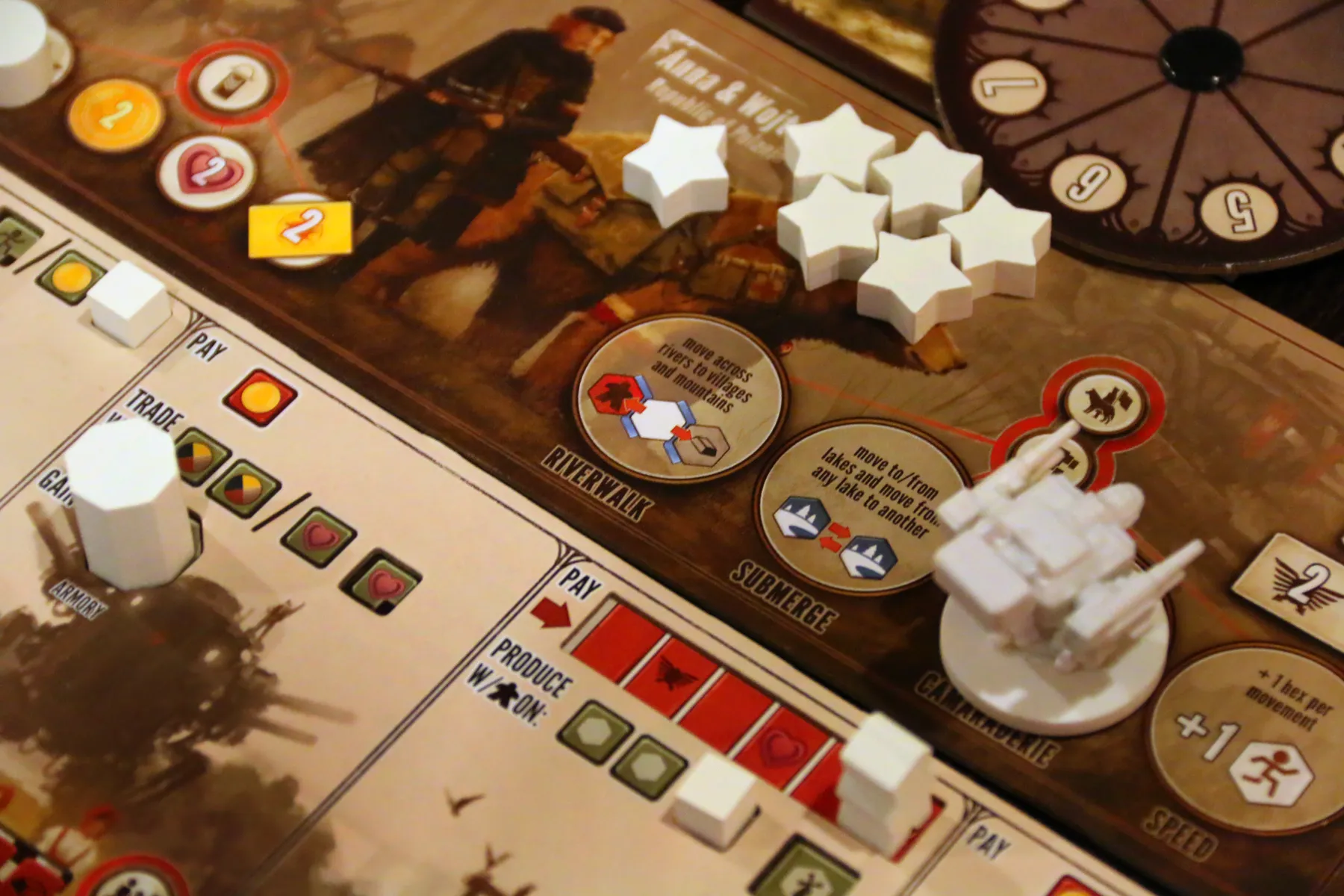
Compared to pure Euro engine‑builders like Viticulture or Wingspan, Scythe adds area control and asymmetric factions, giving greater strategic depth and player interaction. Because of its action‑choice system and bottom‑row upgrades, it also invites optimization similar to Terraforming Mars. However, unlike heavy war games, Scythe downplays combat—its strength lies in resource management and positioning rather than continuous fighting. In that sense it sits somewhere between a Eurogame and a 4X‑style conquest game, mixing economic progression with territorial expansion.
Final Thoughts
Scythe is a sophisticated hybrid: part engine‑builder, part area‑control, part asymmetric faction game. It rewards thoughtful play, long‑term planning, and strategic flexibility. Although its complexity and occasional randomness may frustrate some, players who appreciate deep mechanics, varied strategies, and replayability will find it highly rewarding. If you want a game that blends economic growth, expansion, and subtle tension without forcing constant warfare, Scythe remains a standout in modern strategy board gaming.
And remember, Frontline Gaming sells gaming products at a discount, every day in their webcart!