Warhammer Quest: Darkwater is almost here, and this time we get a proper peek behind the curtain.
The design team has rebuilt the system instead of just tweaking the old Silver Tower style engine. The goal is a game that is faster to set up, easier to teach, and still brutal enough for veterans. You can feel that this is meant to hit the table often, not just once a year. Additionally, it is clearly designed to avoid the usual co-op dungeon crawler frustrations.
A New Take On Warhammer Quest: Darkwater
The designer walking us through this is John from the Warhammer Design Studio. He worked on Blackstone Fortress and Cursed City, and he has played every Warhammer Quest to death. So he wanted Darkwater to be streamlined and accessible without becoming shallow. Earlier games mostly iterated on the same activation dice framework, but Darkwater changes that core structure. As a result, the game feels like a fresh take rather than just a reskin.
Pre orders open this Saturday, and this version aims squarely at both new and returning players. The team wanted the rules to be quick to grasp while still offering difficult encounters and meaningful choices. Additionally, they wanted the campaign to be something you can actually finish in a realistic time frame. That philosophy drives almost every change he talks about.
Map Book Dungeons And Dynamic Table Pacing
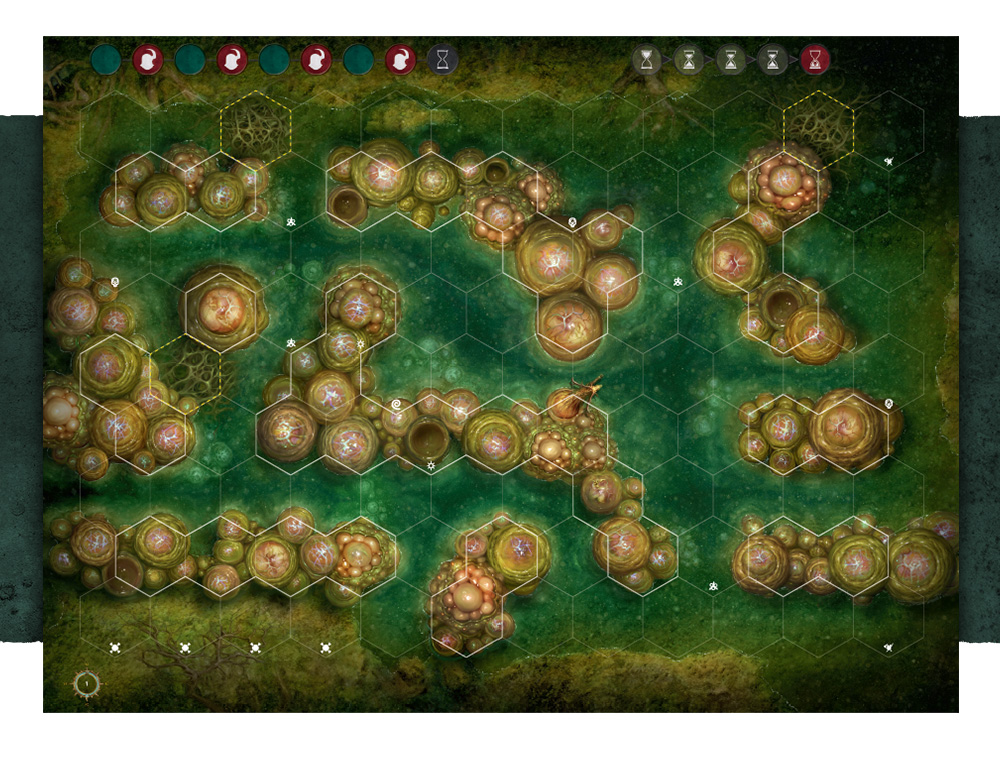
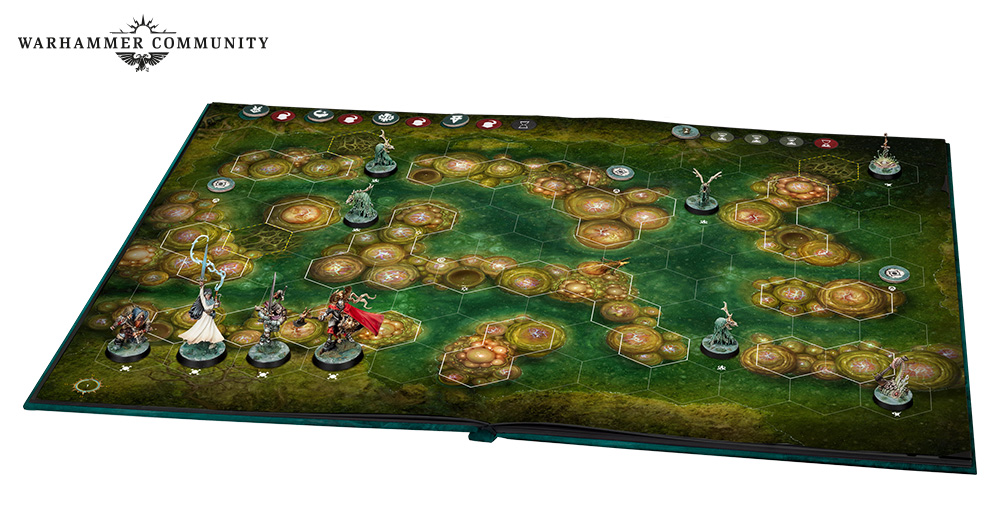
The most obvious change is the switch from tiles to a big hardback lay flat map book. Instead of building dungeons from pieces, you open to a page that shows a complete battlefield. This massively speeds up setup, since you mostly just turn a page and place models. Additionally, the book allows them to create tightly themed maps that would be awkward with generic tiles.
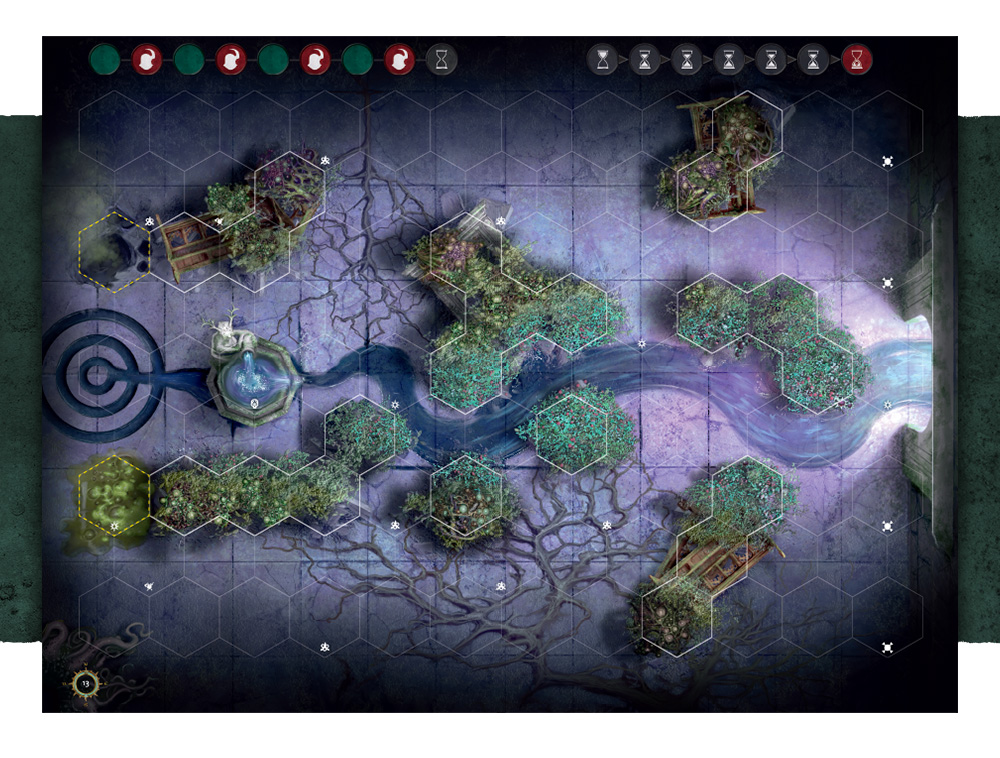
Because each map is its own bespoke layout, the team can showcase very specific areas of the Jade Abbey. You get Pox Wretch shanty towns, foul Mire Kelpie spawning chambers, corrupted ley line chambers, and rivulets of Aqua Ghyranis. Each map is unique, so encounters that reuse a board still feel different thanks to varied enemies and objectives. Consequently, the environment becomes a core part of each session’s identity rather than background dressing.
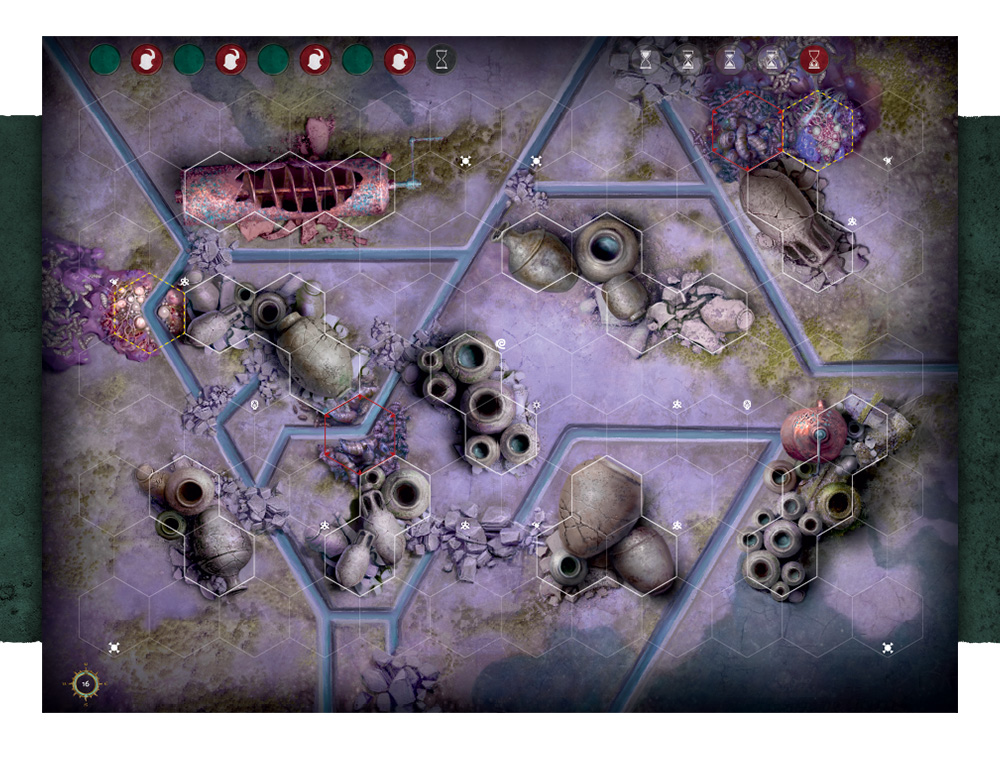
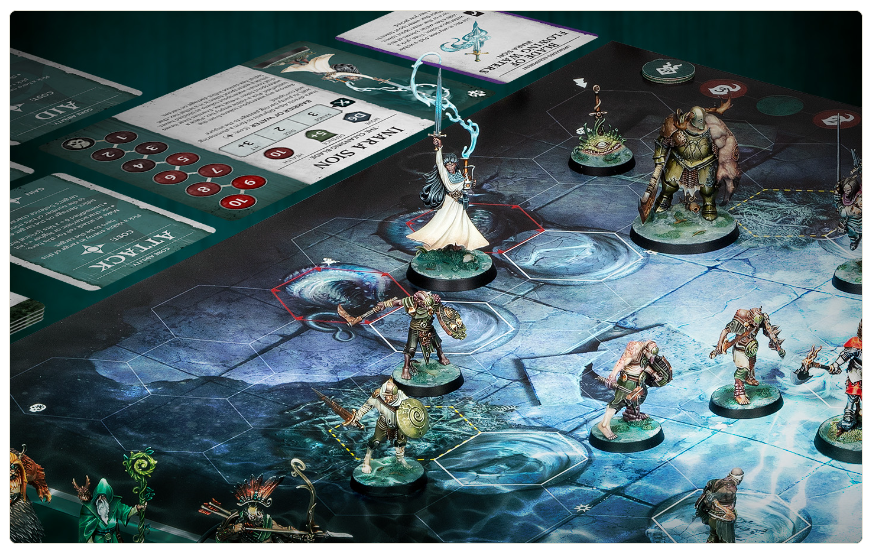
The book also helps with real world table problems. Space is limited for most of us, so Darkwater is built to sit comfortably on a smaller table. The map lies flat, you can roll dice on it, and your cards are not dangling off the edge. Additionally, packing away is quick, so you can clear the table for food without a meltdown. When everyone is fed, you can drop the book back down and be playing again in minutes.
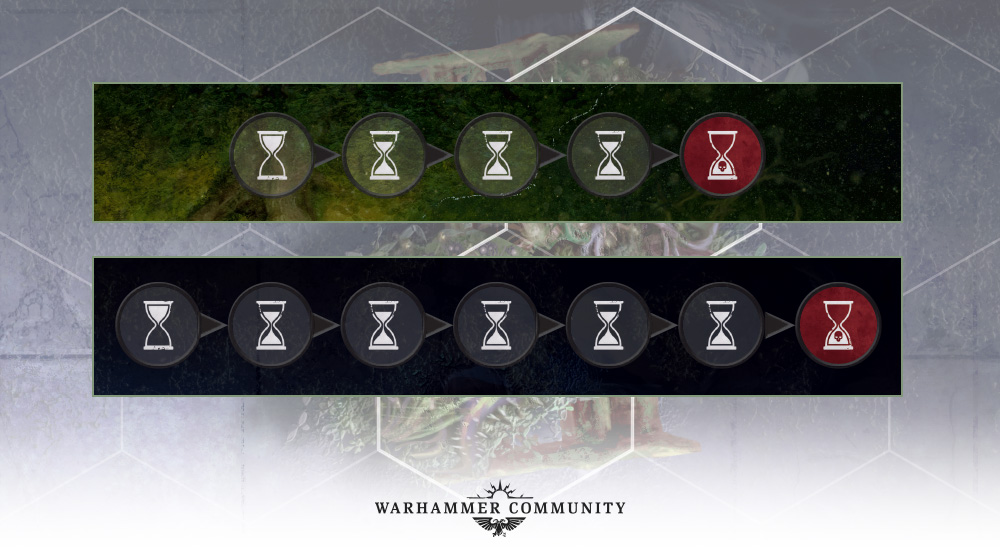
The maps themselves carry more than art and hexes. Initiative tracks, battle rounds, and even coded enemy triggers are printed directly onto the layouts. Some encounters have shorter or longer round limits, which creates natural difficulty spikes. If you are not paying attention to the timer, you can easily lose a battle you thought was safe. Additionally, this structure lets the designers tune encounters far more precisely than before.
Core Abilities, Movement Gambles, And Streamlined Play
One of the biggest mechanical shifts is the removal of activation dice as your action and health pool. Instead, heroes now work off core abilities printed on their character cards. These core abilities are both what you do and the resource you spend. Most turns are about moving and hitting things very hard, but the order and choice still matter. Additionally, having everything on the card means new players can jump in quickly without diving into the rulebook.
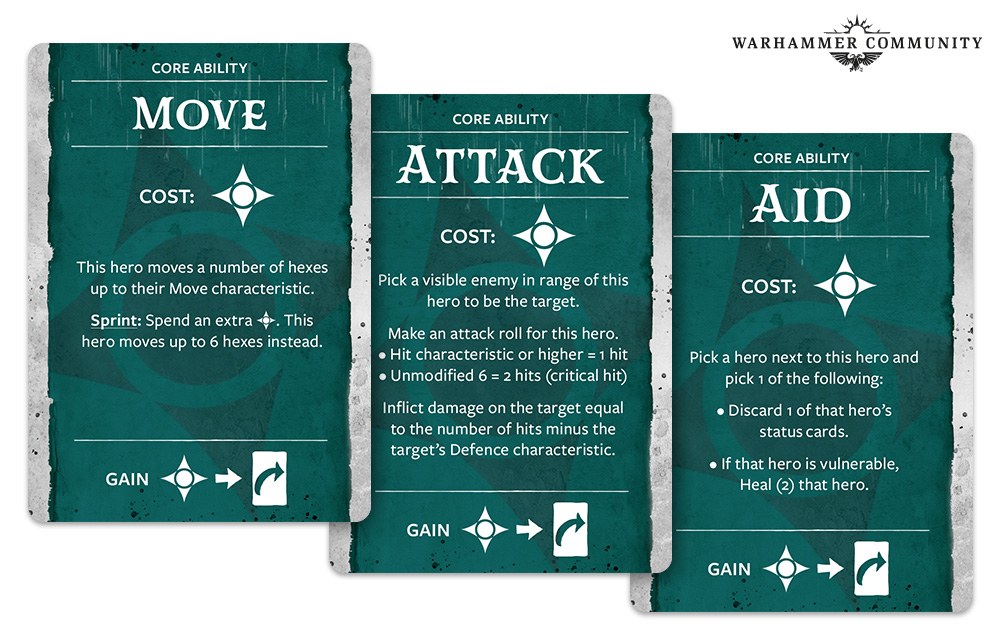
By cutting the link between damage and activation dice, the team removed a nasty death spiral. In older versions, a wounded hero often felt weaker and less able to help. That sometimes led to soft lock situations where you were alive but basically helpless. In Darkwater, as long as you are not at death’s door, you still operate at full tempo. Consequently, bad luck on defence no longer ruins the entire group’s run quite as easily.
Within that framework, the game leans into dynamic decisions every turn. Movement is a great example. Many heroes can choose between cheaper random movement or a more costly Sprint. Random movement is like slogging through the sludge and hoping for a big roll. Additionally, it is usually more efficient on average and creates exciting swingy turns.
Sprint, by contrast, gives a fixed distance that is slightly below average random movement. You move six hexes instead of the typical seven from two dice. However, you know exactly where you will end up, which matters when objectives are tight. Sprinting also costs more in terms of action economy, so you may do fewer other things that turn. Consequently, you are always weighing safety, speed, and how much you can afford to sacrifice.
The designers also remind you that fighting is not always the only objective. Sometimes you need to end on a specific hex or perform an action to finish the encounter. In those moments, Sprint becomes the clutch option that pushes you across the line. Additionally, this keeps each turn feeling like a small puzzle instead of a scripted routine.
Acts, Encounters, Skirmishes, And Replay Value
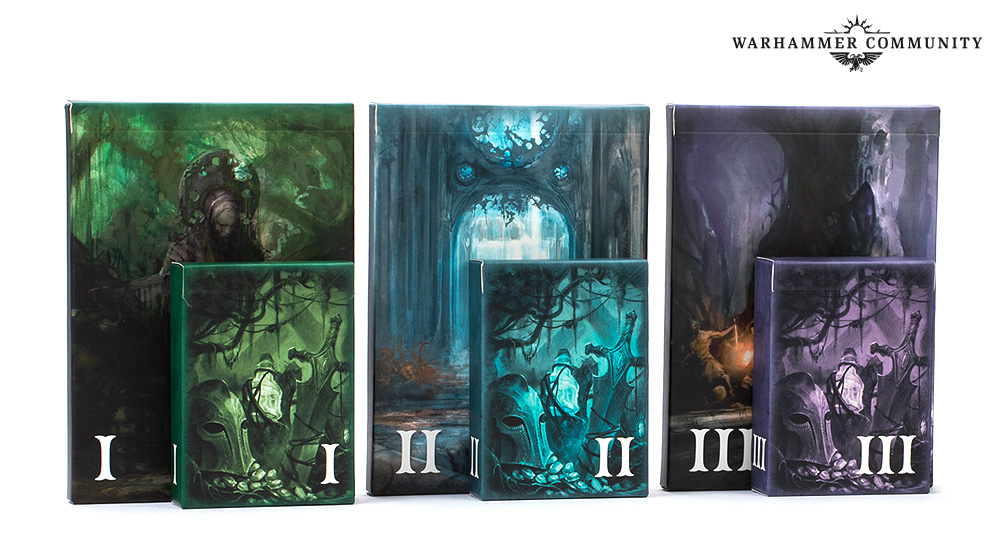
Another big goal was campaign length. Previous Warhammer Quest runs sometimes stretched over months of real time. The team wanted players to see a full story in a few evenings or a single big weekend. Additionally, they wanted a structure that still rewarded replay for the hardcore dungeon runners.
To do that, they split Gelgus Pust’s downfall into three acts. Each act is a self contained narrative with its own events, encounters, and boss fights. Encounters are the dangerous combat heavy moments where you clash with Nurgle’s hordes. Events are the in between beats like dice games, bets, trapped chests, and shrines. Additionally, events are faster and safer, but stingier with rewards.
As the night gets late, you can deliberately choose events to speed toward the act’s finale. However, you will probably reach the boss with fewer tools and less gear. Safe havens offer another layer of strategy. These are rare rest points where you can heal, swap loot, and breathe. Additionally, using them means giving up some rewards and scavenger rights, so you always pay a price.
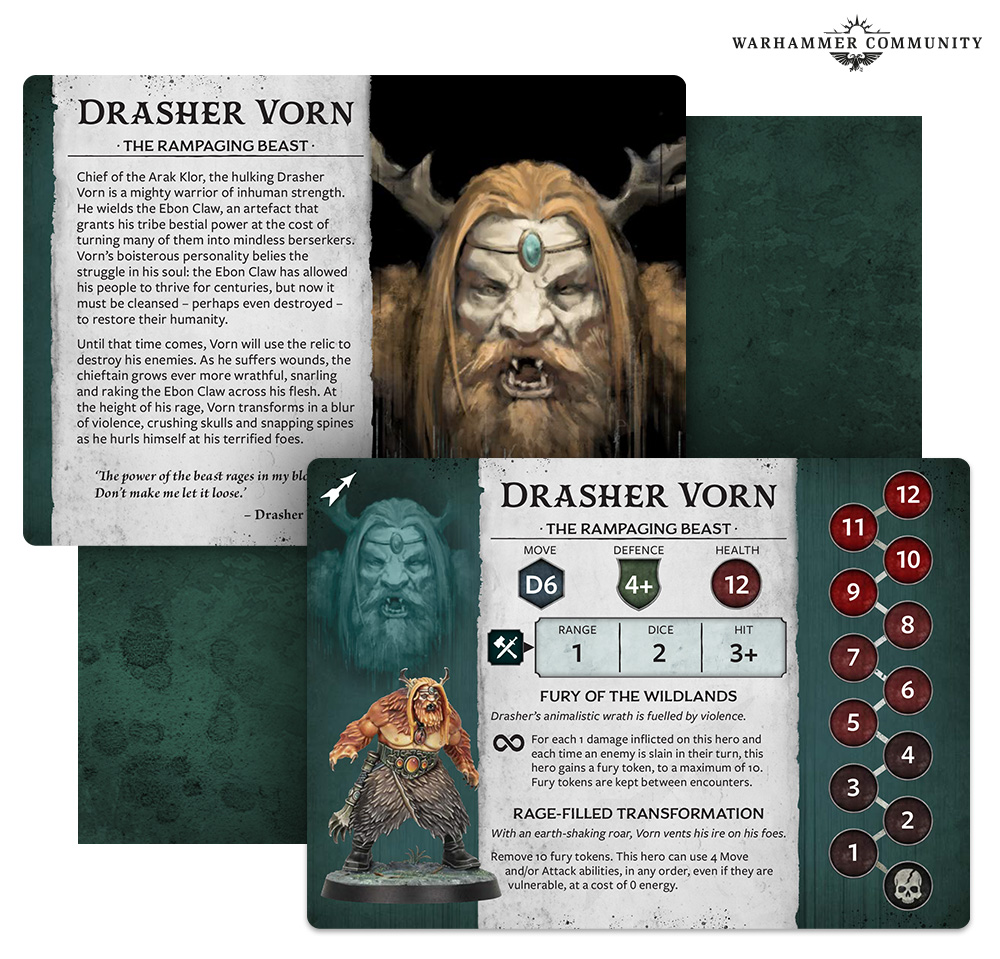
Replay is baked into the structure. You unlock rewards and even new heroes for future runs as you play. There are set items and alternative rules for heroes, plus at least one secret encounter hidden away. Additionally, each act and boss has a pool of cards that you only partially see per run. This means new abilities, events, and enemy mixes keep appearing on subsequent playthroughs.
The game also handles failure in a forgiving way. In a campaign, a defeat does not end everything. You discard some rewards, gain some healing, and try again with slightly better odds. In skirmish mode, you simply replay the scenario and chase a higher score. Additionally, that skirmish option is a perfect gateway for friends who just want a quick taste.
A skirmish game uses a single encounter drawn from any act. Players get a random set of rewards to gear up before diving in. There is even a scoring system so you can compare runs and try different setups. Additionally, if someone enjoys that single game, it is easy to roll straight into a full campaign.
Rewards, Set Items, And Closing Thoughts
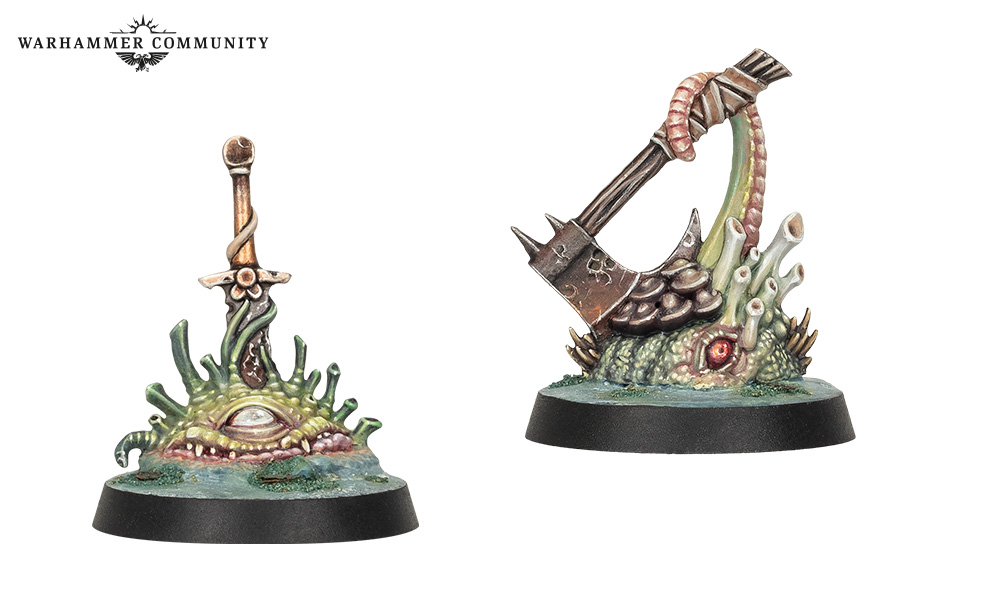
Loot is still the beating heart of Warhammer Quest. In Darkwater, everything you gain from enemies and events is grouped under “rewards”. You take rewards after every encounter and sometimes after events. Additionally, high risk encounters usually offer more choice in what you can claim. Each hero is usually limited to one reward at a time, and there is a cap of four. This keeps the complexity manageable, especially for new players learning one card at a time.
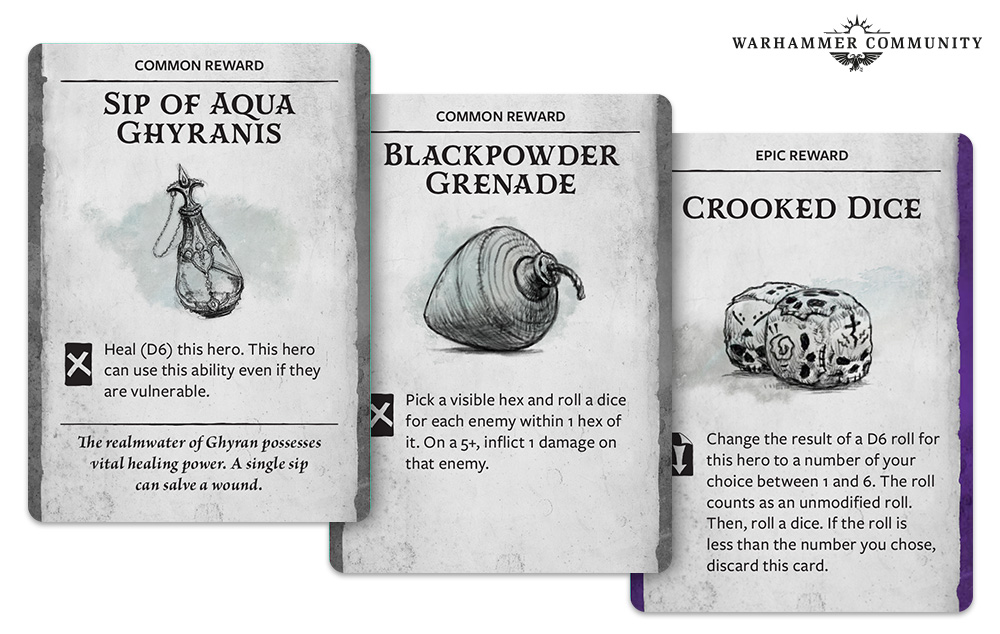
There are hundreds of unique rewards in the pool. They have rarity levels so you can quickly gauge their power. Some are common but useful staples like a Sip of Aqua Ghyranis or a Blackpowder Grenade. Others are flashy, like the Crooked Dice, which can finish enemies or clutch a vital save. Additionally, you will uncover synergies and combos as you mix and match items.
Set items add another layer. Certain heroes can equip three related rewards that form a set. When you complete the set on that hero, you unlock a powerful extra effect. Additionally, this encourages you to chase specific item combinations across different runs. Combine that with the varied hero roster and changing card draws, and no two campaigns look alike.
The designer hints at many more systems that sit under the hood. There is enemy action queue design that defines how threats unfold. Special actions give enemies memorable moments, like when a Mire Kelpie Retches at you. Bosses have power up action queues that escalate fights. Additionally, there are alternative hero designs, clever map reuse with different encounters, enemy action dice, and tuned difficulty curves. Those details are left for players to discover at the table.
In the end, Darkwater feels like a love letter to Warhammer Quest with modern sensibilities. Setup is faster, turns are snappier, and campaigns are compact but dense with choices. Additionally, there is enough depth to keep veteran groups chasing new combos and routes for a long time. If you enjoy co operative dungeon crawls with proper loot, this looks like it will live on your shelf, not in your storage box. Pre orders open on Saturday, so the Jade Abbey is almost ready for your next doomed expedition.
And remember, Frontline Gaming sells gaming products at a discount, every day in their webcart!