
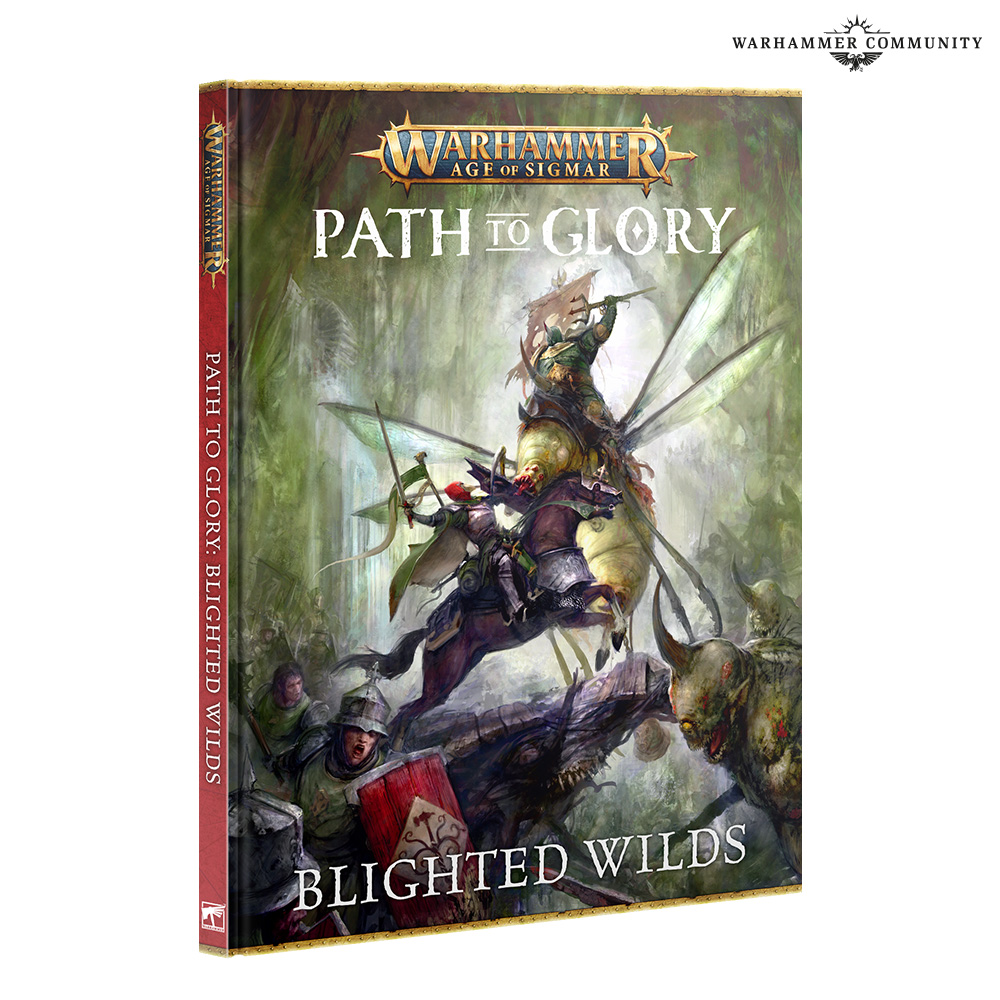
If you enjoy the hobby side of Warhammer as much as rolling dice, this supplement is going to tempt you.
Path to Glory: Blighted Wilds does not just add new battleplans and campaign rules. It also hands you the tools to build and rulesify your own custom terrain. You are not just placing a generic woods any more, because you are dropping your faction’s personal monument onto the table. Suddenly your campaign army feels less like a list and more like a story.
What Is A Landmark Of Ghyran And Why It Is Cool
Blighted Wilds introduces the Landmark of Ghyran, a bespoke terrain piece tied to your army. It can be a mystical monument, floating metalith, or brutal bastion. Crucially, it supports nearby units with special abilities that you choose. So your terrain is no longer just scenery, because it becomes a mechanical character in your campaign.
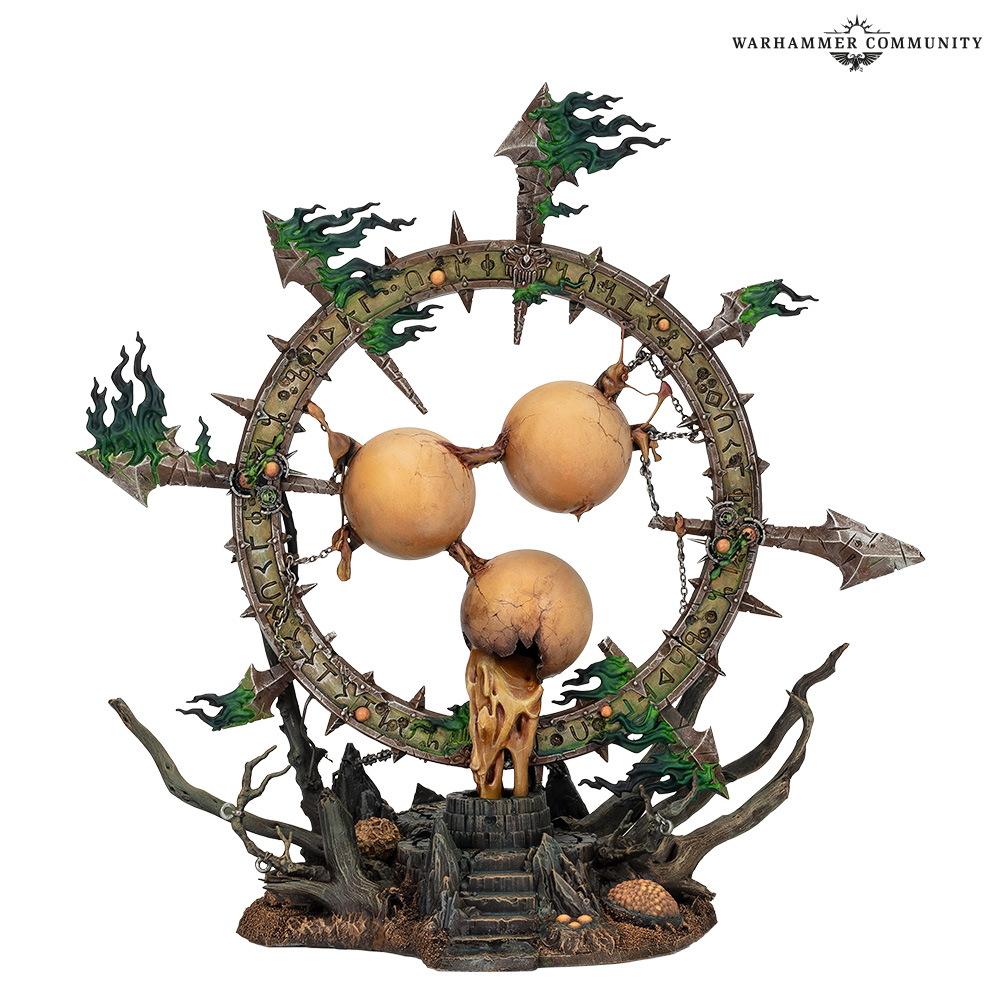
The designers frame this as a different kind of hobby project. You are encouraged to kitbash something wild rather than paint another regular unit. For example, they showcase a sinister Nurgle shrine built from a Nexus Chaotica, a Feculent Gnarlmaw, and random bits. It looks like something dragged straight out of Nurgle’s garden, which fits the Ghyran theme perfectly.
How The Rules Work Using Destiny Points
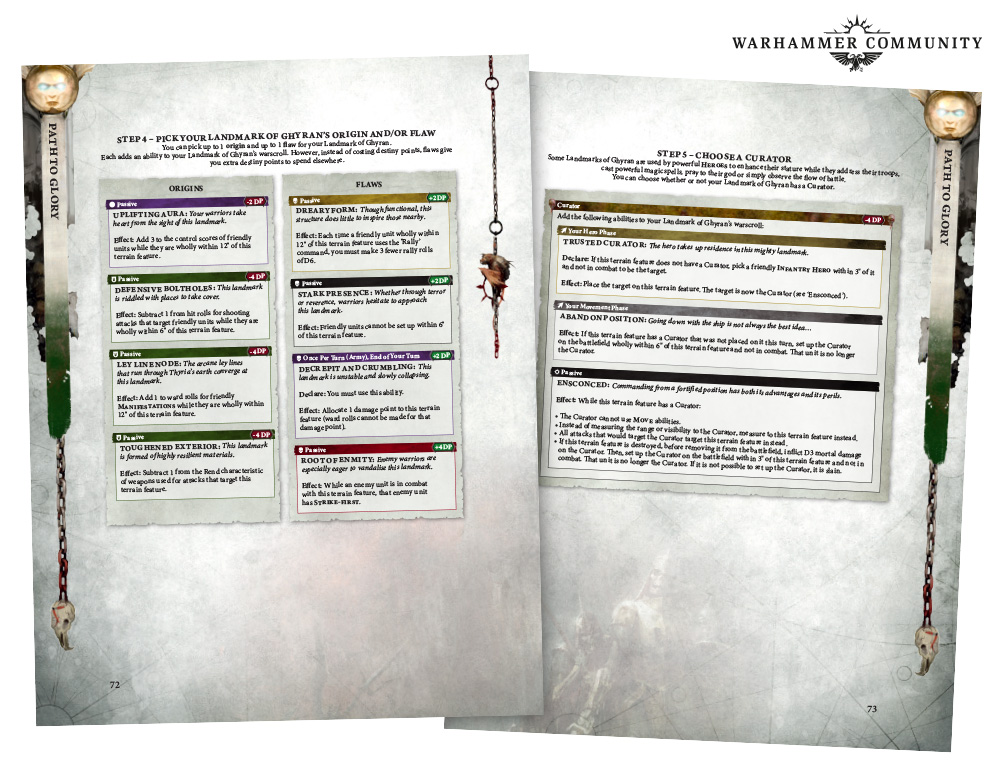
The rules for Landmarks are handled with a system like Anvil of Apotheosis. You start by picking a destiny point limit, which sets the size and points cost of your terrain. Then you spend those points on abilities and traits that shape how the piece functions on the battlefield. Consequently, you end up with terrain that feels bespoke but still balanced.
The Nurgle shrine example is classed as a Spectacular Edifice. It can spend up to twenty destiny points and costs seventy points on the table. You could go even larger with a Breathtaking Monolith if you want a true centerpiece. They make it an Artisan Crafted Altar, which boosts its health from eight to twelve for four destiny points. Additionally, the Toughened Exterior origin reduces enemy Rend by one against it, which makes it wonderfully stubborn. You can also gain extra points by giving it a flaw, like Decrepit and Crumbling, so it slowly damages itself during the game.
Curators, Escape Tunnels, And Nurgle Portals
You can decide whether the Landmark is simply a dangerous object or a characterful stage. One option is to assign a Curator, an Infantry Hero that stands on the terrain and bonds with it. That hero gains unique abilities, like improved casting or chanting, or access to a sneaky escape tunnel. So your wizard on a shrine can vanish and reappear elsewhere, which feels very cinematic.
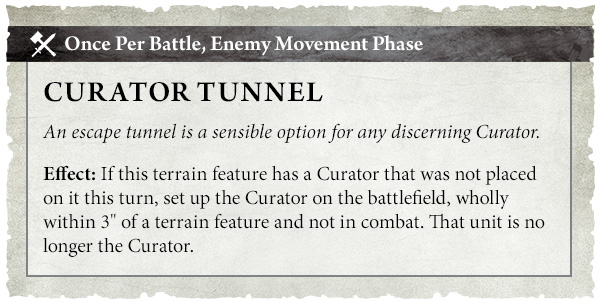
The Curator Tunnel rule lets you do exactly that. Once per battle, in the enemy movement phase, you can redeploy the Curator. If they started the turn elsewhere, you can pop them out within three inches of another terrain piece. They must not be in combat, and they stop being the Curator after the move. It reads like a secret back door carved through reality, which suits many factions.
Instead of using a Curator, the Nurgle shrine is imagined as a portal vomiting foul energies. They give it a ranged attack for three destiny points, adding Magical Bolts to its warscroll. The profile has twelve inch range, three attacks, hit on four plus, wound on three plus, Rend one, and damage D3. Additionally, the attack has Crit and Companion keywords, which helps it feel magical and nasty.
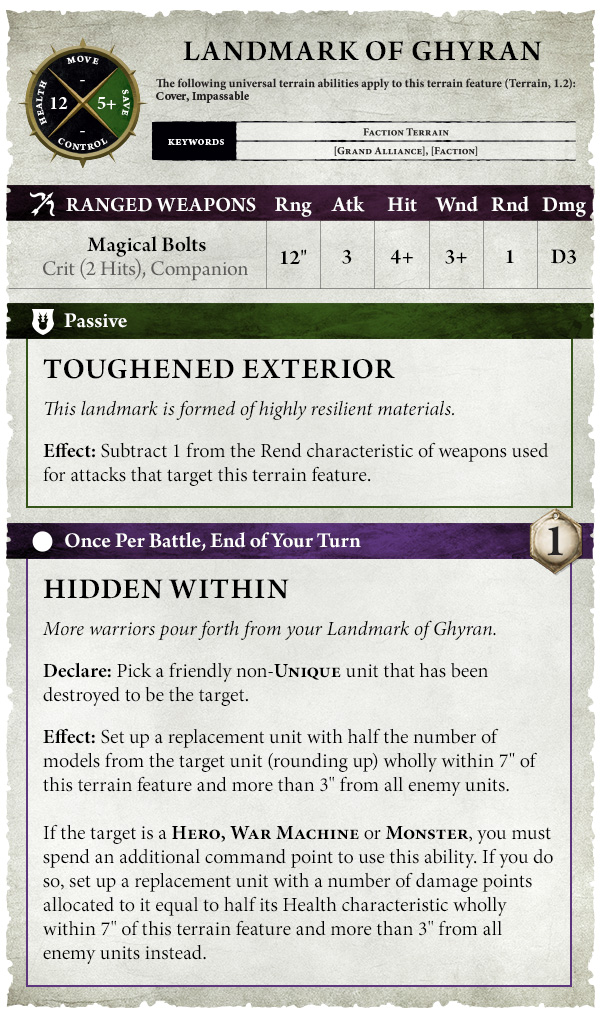
The remaining destiny points purchase Hidden Within, a once per battle reinforcement trick. At the end of your turn, you pick a friendly destroyed unit as the target. You then set up a replacement unit with half the models within seven inches of the Landmark, outside three of enemies. If the destroyed unit was a Hero, War Machine, or Monster, you spend a command point and bring it back half damaged instead. It feels like warriors crawling from a portal or clawing out of the roots of Ghyran itself.
Creative Ideas And Custom Regiments Of Renown
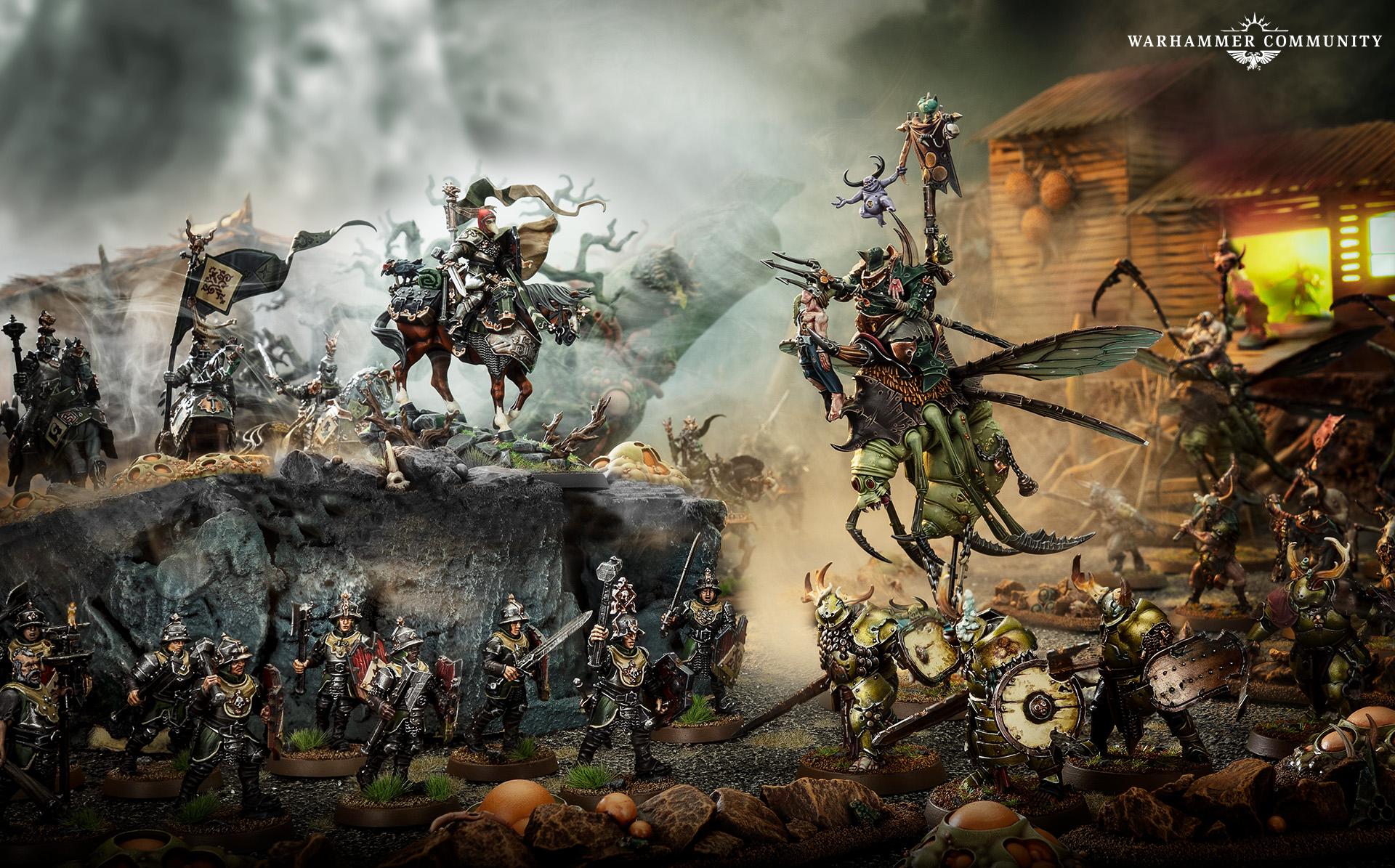
The writers stress that this Nurgle altar is only one example. They encourage you to push theme as hard as you like. You could build a floating conch that powers up Idoneth Deepkin wizards as it drifts over the ethersea. You might throw together a scratch built watchtower for Castelite Cities of Sigmar, dragged into place before a siege. The Gloomspite Gitz would absolutely hide a tunnel entrance in a giant rock effigy and use it to bounce heroes around.
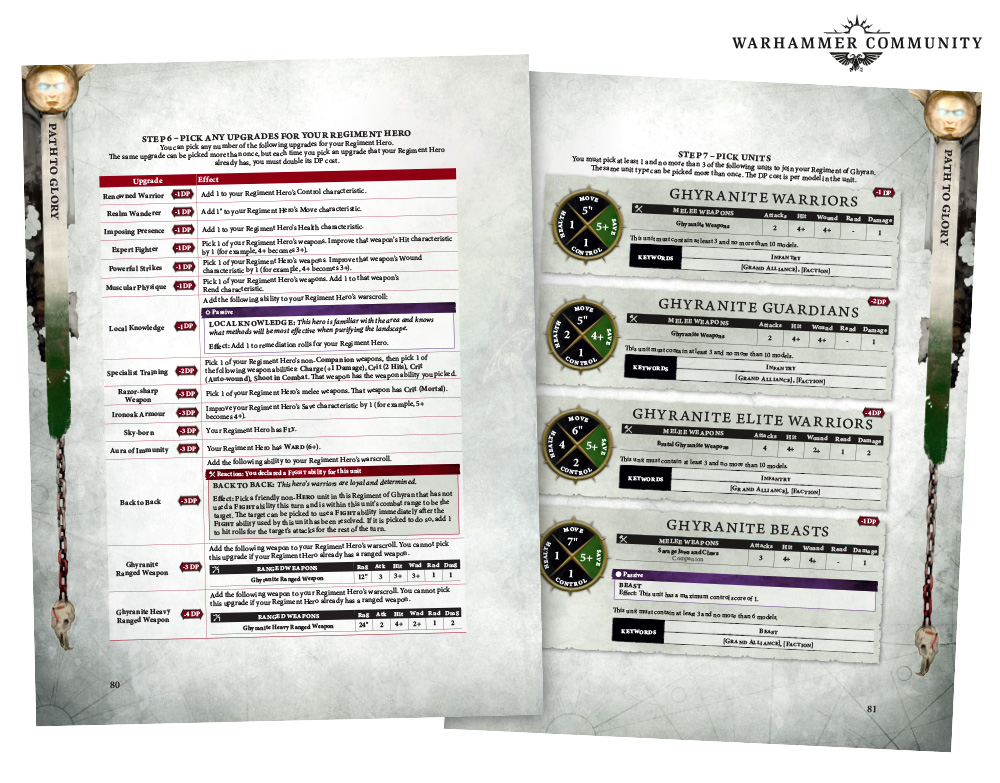
Blighted Wilds does not stop with terrain, because it also supports custom Regiments of Renown. You get generalized profiles for infantry, cavalry, and support units, plus simplified custom heroes to lead them. This lets you assemble weird little companies that still sit inside the rules framework. As a result, you can field units that feel like named veteran bands without breaking the game.
There is apparently a lot of depth here, so much that a single preview cannot cover it all. To see the full spread of options for Regiments of Ghyran, you will need the book itself. Path to Glory: Blighted Wilds goes up for pre order this Saturday, so the wait is short.
Final Thoughts – A Toy Box For Narrative Players
Blighted Wilds looks like a gift for anyone who loves narrative campaigns and hobby projects. You are not only moving models on standard terrain, because you are building landmarks that feel truly yours. Your army gets a physical home on the board, with rules that match the story in your head. Additionally, the custom regiments system invites you to imagine new warrior bands that belong in your faction’s corner of Ghyran.
Overall, it feels like the supplement turns your Path to Glory campaign into a proper sandbox. You get more than missions and upgrades, because you gain tools to reshape the battlefield itself. I suspect we will see some wild centrepieces and quirky regiments once people get their hands on this book.
And remember, Frontline Gaming sells gaming products at a discount, every day in their webcart!