
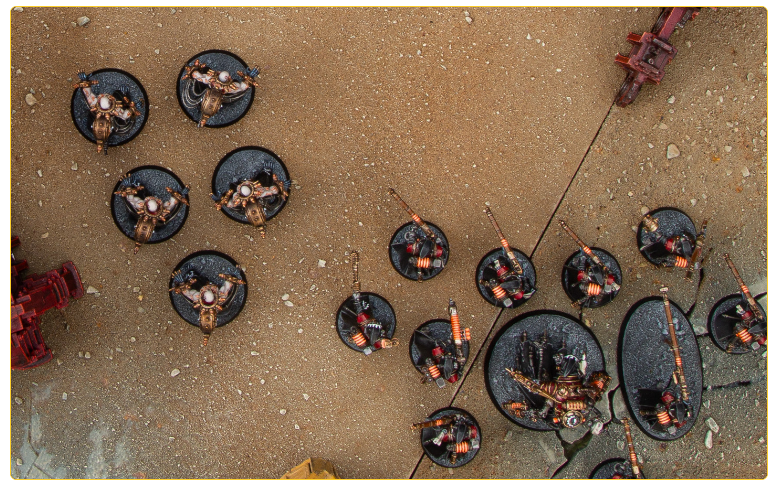
When you play Warhammer 40,000 for a while, you eventually realise the game starts way before the first dice roll.
List building and list fixing are a huge part of actually winning games instead of just admiring your paint jobs from the loser’s bracket. This article follows that exact journey, as tournament veteran Stephen Box helps White Dwarf writer Dan take his slightly sad Adeptus Mechanicus army and turn it into something much sharper.
The first part of their project was all about analysis, scoring each unit on Primaries, Secondaries, and raw damage. Now they push past the theory and start changing how the list actually plays on the table. Crucially, they do it mostly by using rules better, not by binning half the collection and buying three new Onagers.
So if you have ever looked at your own games and thought “why am I not scoring anything”, this breakdown will feel very familiar. It is about missed rules, misread rules, better detachments, and just enough new toys to plug the obvious gaps.
From Analysis To Action – Fixing The Weak Spots
Previously, Stephen had Dan rate every unit out of five in three areas: completing Primary Missions, completing Secondary Missions, and damage output. Unsurprisingly, Dan’s AdMech did fine on Primaries, but they really struggled on Secondaries and got sad very quickly when facing heavy infantry such as Space Marines.
Therefore the second stage is not “buy more guns”, but “are you using what you already own properly”. Stephen frames it with a simple checklist: have you missed rules, misread rules, failed to lean on your faction rules, picked the wrong Detachment, or ignored unit synergy. Because of that, the early fixes are all about understanding the tool kit instead of swapping the tools.
Hidden Power In The Existing Rules
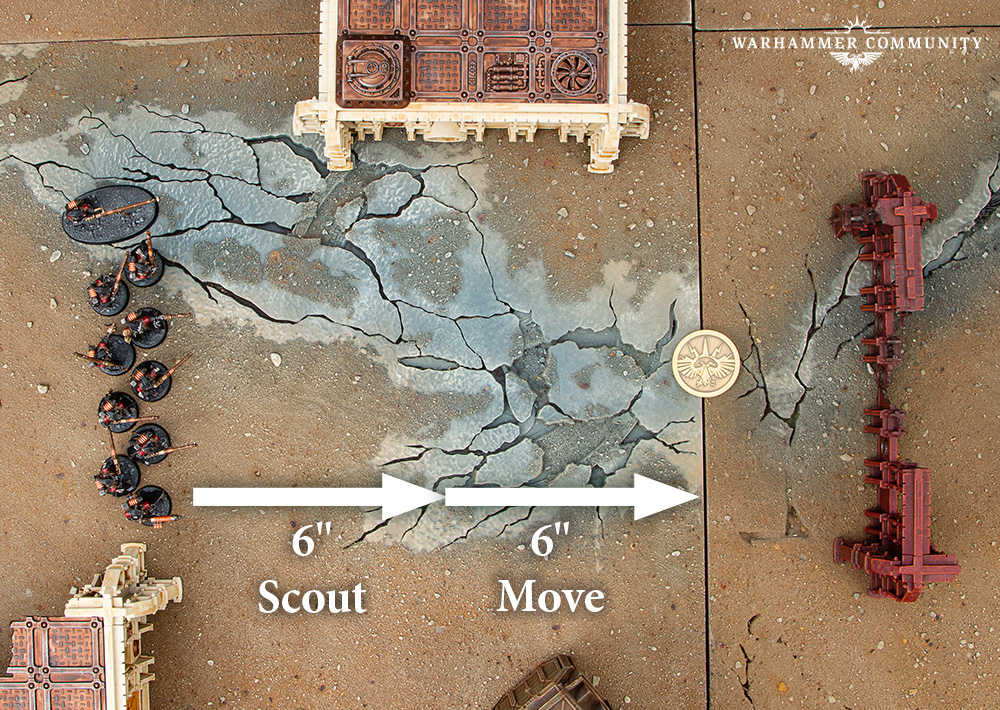
First up, they realise Dan has straight up missed some key rules. Skitarii Rangers have Scouts 6″, which he had completely ignored because he was treating them as backfield gun platforms. Suddenly, Stephen points out that with Scouts, normal move, and an Advance, they can threaten an 18″ push turn one.
So now, instead of baby sitting home objectives, those Rangers can be on the centre line on turn one, sitting in cover and knocking out Tactical Missions like Area Denial, Secure No Man’s Land, Cleanse, Recover Assets, Extend Battle Lines or even Engage On All Fronts if they stretch. Consequently, a unit that felt bland becomes one of his main tools for scoring Secondaries.
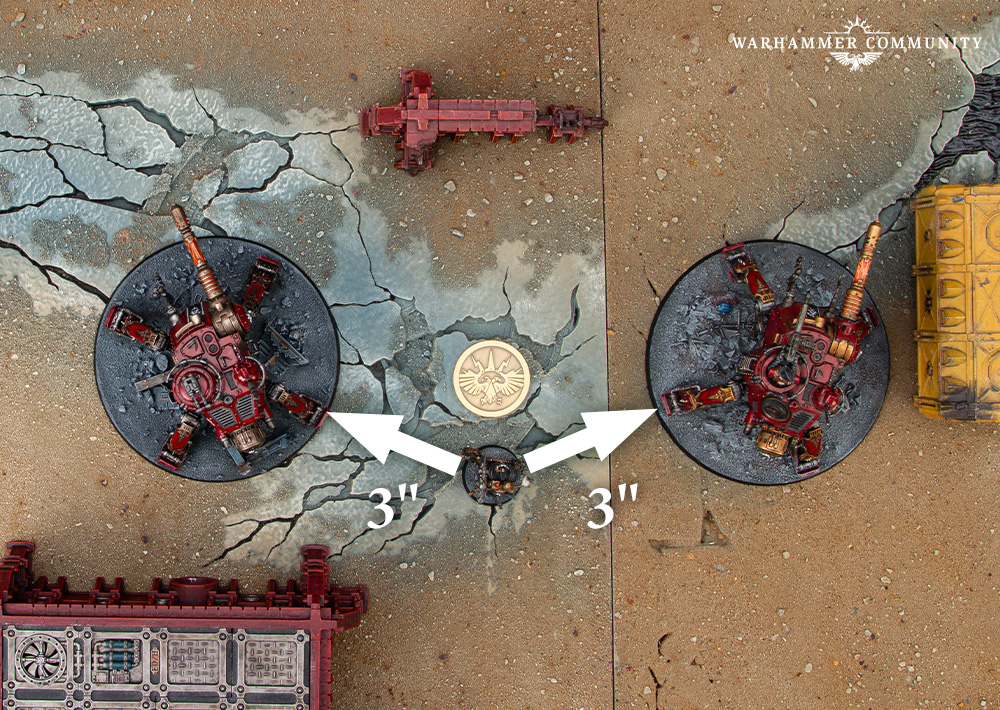
Then they look at the humble Tech Priest Enginseer. Dan knew the data sheet, but he had missed the Lone Operative rule that kicks in when the Enginseer is within 3″ of a vehicle. Previously he had parked the character with Vanguard to keep him safe, which meant the tanks did not get repaired and the Vanguard were pinned in the backfield. Now he shifts the Enginseer up with the pair of Onager Dunecrawlers instead.
This change suddenly turns the backfield into a “battle tank bastion”. The Enginseer is hard to target, the Onagers get repairs, and between them they hold a home objective with a combined OC of seven. Additionally, with smart positioning they can screen deep strikers and fast trading units, which quietly fixes another weakness in the list without changing a single model.
They also catch a classic misread in the Core Rules. Dan had confused Stealth with Lone Operative, believing his Tech Priest Dominus and friends could not be shot outside 12″. Stephen gently points out that Stealth is just a flat minus one to hit at any range. Because of that, once Dan understands it properly he realises it is still very strong, just in a different way, and that detail will matter a lot when he picks a new Detachment.
Using Faction Rules And Detachments The Right Way
The next big fix is about Doctrina Imperatives. Dan had been leaning heavily on Protector Imperative for the Heavy keyword, which turned his army into a static gunline that did not push up for objectives. Stephen walks him through the idea that only the Onagers really need to stand still for maximum value.
Therefore Dan starts considering Conqueror Imperative instead. With this choice, his infantry can Advance into the midboard to score Tactical Missions while still taking long range pot shots with extra AP. Rangers jump to an effective range of 48″, Vanguard reach 30″, and while the volume of fire will not table anyone, it can force Battle shock tests and chip the enemy. As a result, the army stops trading movement for firepower quite so brutally.
Detachment choice is the other big lever. Dan had basically stuck with Rad Zone Corps because it looked similar to his old Index rules. Once he revisits the Codex, he realises that his collection is heavily skewed toward Skitarii. Consequently, Stephen nudges him toward the Skitarii Hunter Cohort instead.
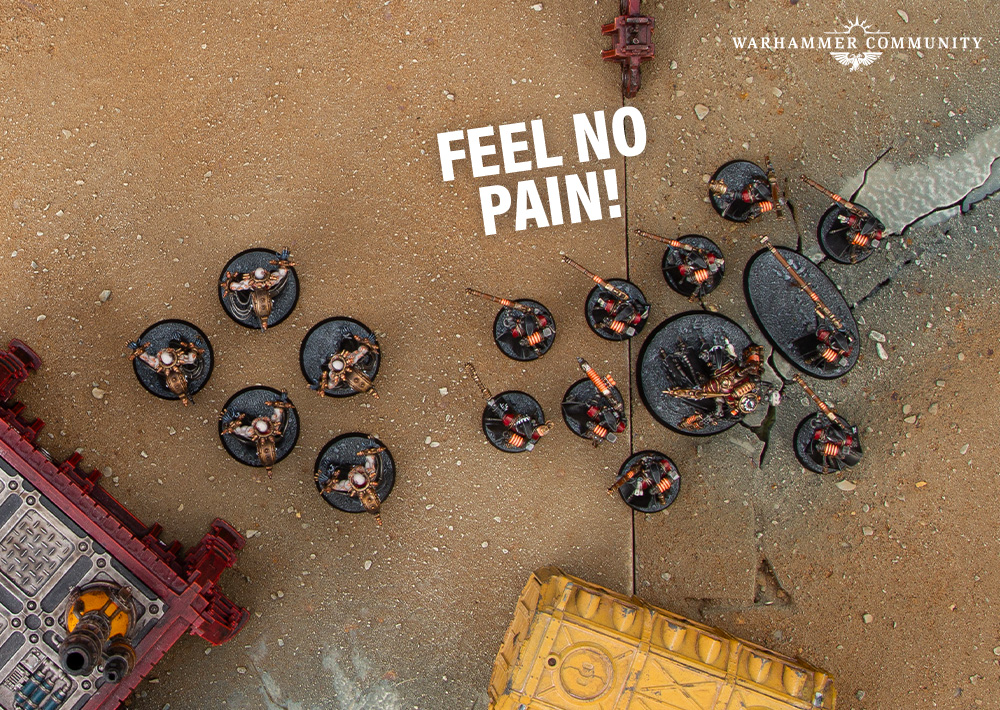
With that Detachment, a large chunk of his list gains Stealth, which stacks nicely with his Battleline units and his general plan to push midboard. Furthermore, he unlocks strong Stratagems such as Bionic Endurance for Feel No Pain 5+, and tricks that supercharge his Sicarian Ruststalkers. Combined with Optimised Gait and Expedited Purge Protocol, those Ruststalkers can Advance and charge to threaten absurd distances, up to around 30″. Suddenly they look far more like a surgical melee missile than a random tech ninja unit skulking in the middle.
Stephen also corrects one more subtle inefficiency. Dan had been using his Tech Priest Dominus to buff Corpuscarii Electro Priests to Feel No Pain 4+, even though they already had a 5+. The improvement is nice, but it only affects a five model unit. By moving the Dominus into a ten strong Ranger squad instead, he gives them a brand new 5+ Feel No Pain they did not have before, doubles the number of bodies benefitting, and puts his warlord inside a unit that can use Stealth. Consequently, the buff and the character both gain much better protection.
Adding New Units To Patch Real Gaps
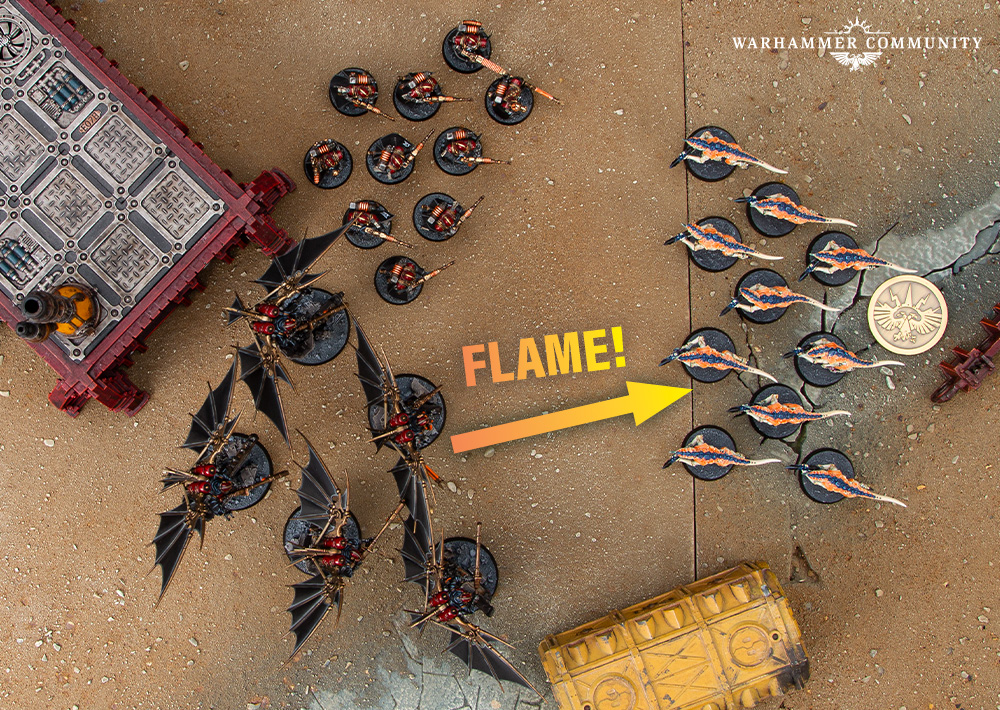
Only after squeezing more value out of the existing list do they talk about new units. Here the issues are pretty clear. Dan has trouble reaching objectives in the enemy deployment zone and lacks mid strength, mid AP shooting into heavy infantry.
Pteraxii are the first answer. Because they can Deep Strike, they are perfect for hitting those far objectives that felt impossible before. Dan looks at both Skystalkers and Sterylizors. Skystalkers can drop in, shoot, and then move again, which makes them excellent at stealing or contesting objectives. Sterylizors, on the other hand, love fighting around objectives because they re roll Wounds against targets near them.
Additionally, in the Hunter Cohort Detachment they get access to all the relevant Skitarii Stratagems. Shroud Protocols can protect them from shooting beyond 18″, while interactions with Battleline units and tricks like Isolate and Destroy or Binharic Offence let Sterylizors stack bonuses to Wound and AP. When you then layer Conqueror Imperative for more AP and Stealth plus Bionic Endurance for durability, they become a very efficient strike tool instead of just a cool kit.
Dan also looks at adding a Skitarii Marshal to further support his infantry and open up tricks like Clandestine Infiltrator for better Secondary play. Finally, he solves his mid strength anti infantry issue by eyeing up Kataphron Destroyers with plasma culverins. Those guns give him the AP and damage profile he was missing into heavy armour and elite infantry.
Because of those additions, something has to go. Dan accepts that Electro Priests and one Onager might need to be cut to make room. However, at this point the changes are clearly targeted. He is not just chasing the latest internet hotness, he is deliberately filling holes revealed in his earlier analysis.
Closing Thoughts – Small Fixes, Huge Payoffs
By the end of the piece, you can really see the arc. Dan starts with a fairly casual Adeptus Mechanicus list that is decent at sitting on Primaries, but bad at Secondaries and weak into heavy infantry. Through Stephen’s process they squeeze more juice out of almost every rule, pick a Detachment that actually matches the collection, and then carefully add a few new units to address specific shortcomings.
Therefore the big takeaway is simple. Before you panic buy more models, learn your rules inside out, reconsider your faction abilities, and check whether your Detachment and Stratagems match how you want to play. Once you do all that, then you can start swapping units with a clear goal in mind.
In the end, Stephen signs off this series of White Dwarf tactics articles by encouraging players to think critically but stay calm and confident at the table. If you like this kind of structured approach, his Vanguard Tactics work basically lives in that space. For the rest of us, Dan’s journey is a great reminder that sometimes the best upgrade for your army is not a new data sheet, it is just reading the ones you already have and using them like they were meant to be used.
And remember, Frontline Gaming sells gaming products at a discount, every day in their webcart!