
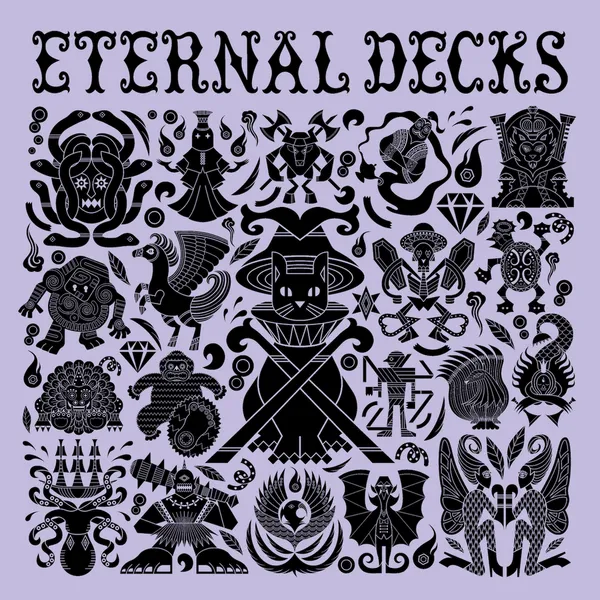
Eternal Decks invites players to work cooperatively through evolving “stages,” each requiring completion before a player runs out of moves.
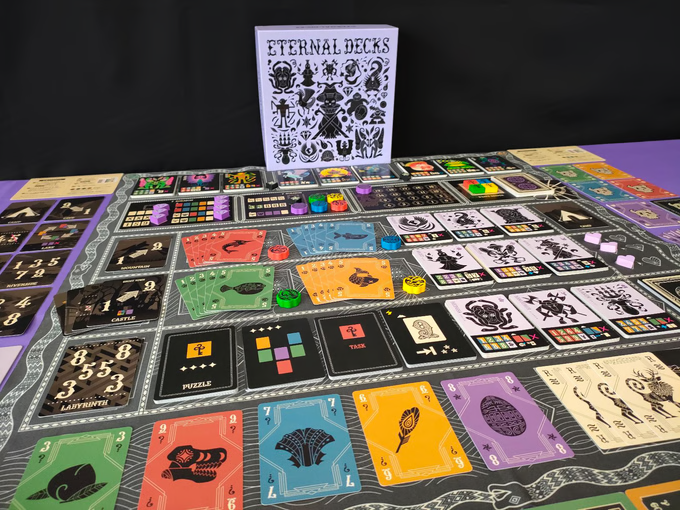
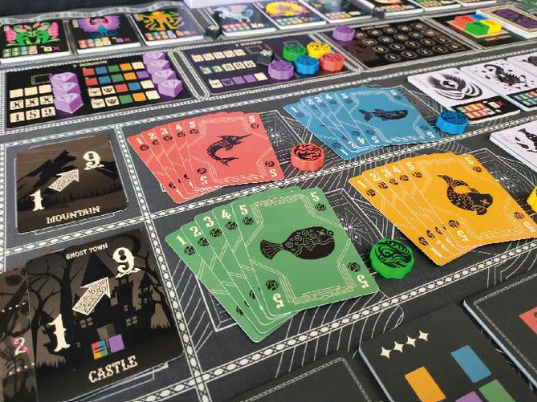
Since you begin with a small five‑card deck and acquire new cards throughout, the game emphasizes deck‑building and sequencing. Moreover, players must place cards into three rows under strict color and numbering constraints, which demands spatial logic and coordination. Because the game uses suit and number placement rather than direct confrontation, the focus lies more on puzzle systems than competition. Furthermore, the theme of “Eternals” and jewels adds atmosphere, although mechanically the game plays as a cooperative deck‑management puzzle.
Pros
- The deck‑building evolves steadily, and so each card acquisition feels meaningful.
- The cooperative format allows everyone to contribute without eliminating players.
- Placement rules in three rows introduce unique spatial constraints and strategic tension.
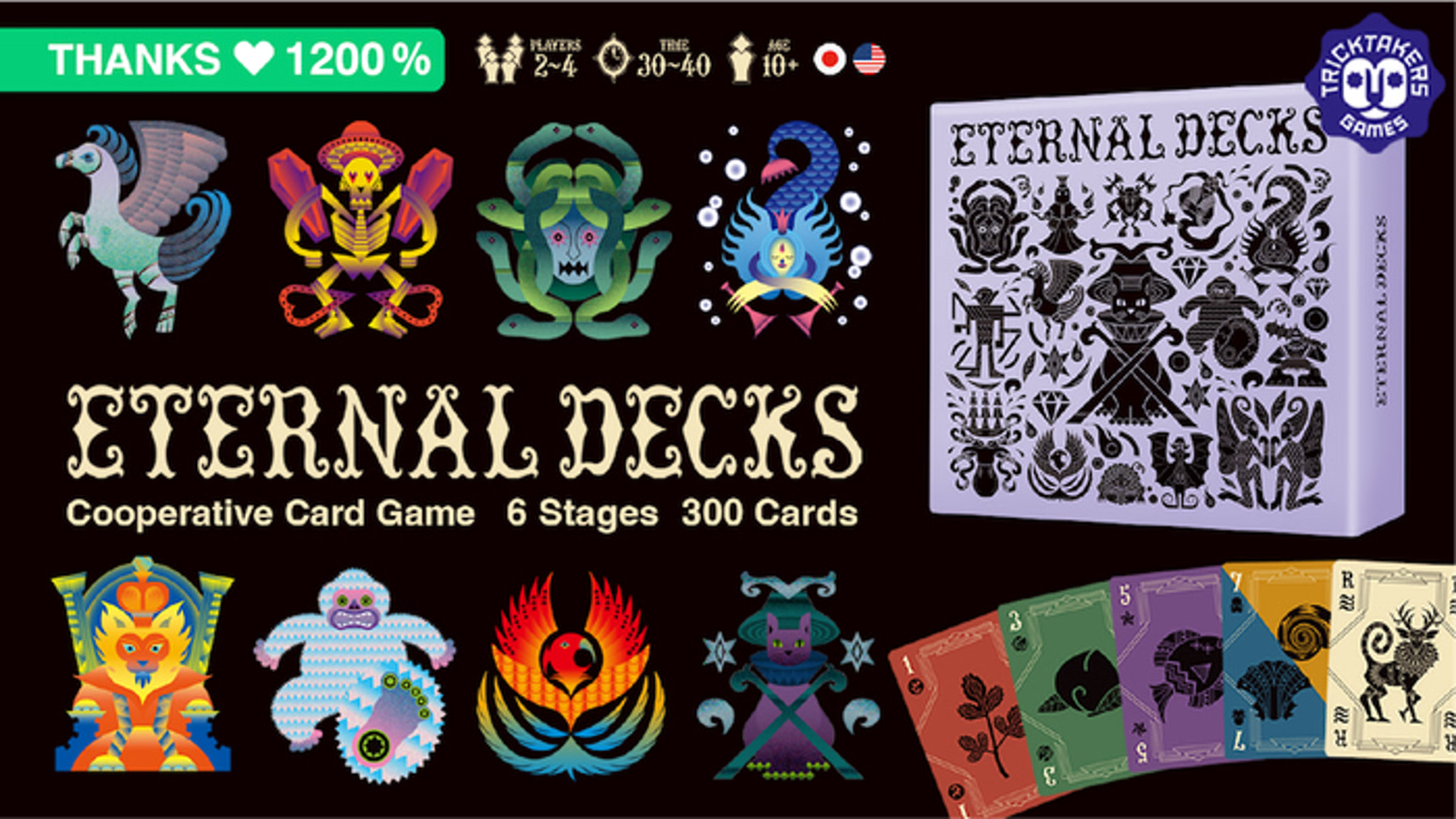
- Clear iconography and elegant art enhance immersion and readability for veterans and newcomers.
- Modular “stage” scenarios add variety and replayability across sessions.
- Solo mode is solid and replicates cooperative challenge in single‑player format.
Cons
- Random draws of cards can occasionally block strategic sequencing and reduce control.
- The thematic layer remains light and may not satisfy players seeking deep narrative immersion.
- For some, the logic framework of placement rules becomes repetitive after many plays.
- The complexity of rule interactions demands focus, which may slow casual play groups.
- Because the game prioritizes puzzle over conflict, it may feel less interactive for dynamic groups.
- Component quality, while good, may not match deluxe productions for the price.
Comparison to Similar Games
Compared to cooperative deck‑builders like The Quest for El Dorado, Eternal Decks places less emphasis on movement and more on placement and sequencing. In contrast to trick‑taking hybrids, it removes direct competition and focuses on shared objectives. Unlike heavier co‑operative games such as Gloomhaven, this title remains compact and puzzle‑oriented while still offering depth. Because it marries deck‑building with spatial card placement, it occupies a unique niche between lightweight coop puzzles and mid‑weight strategy games.
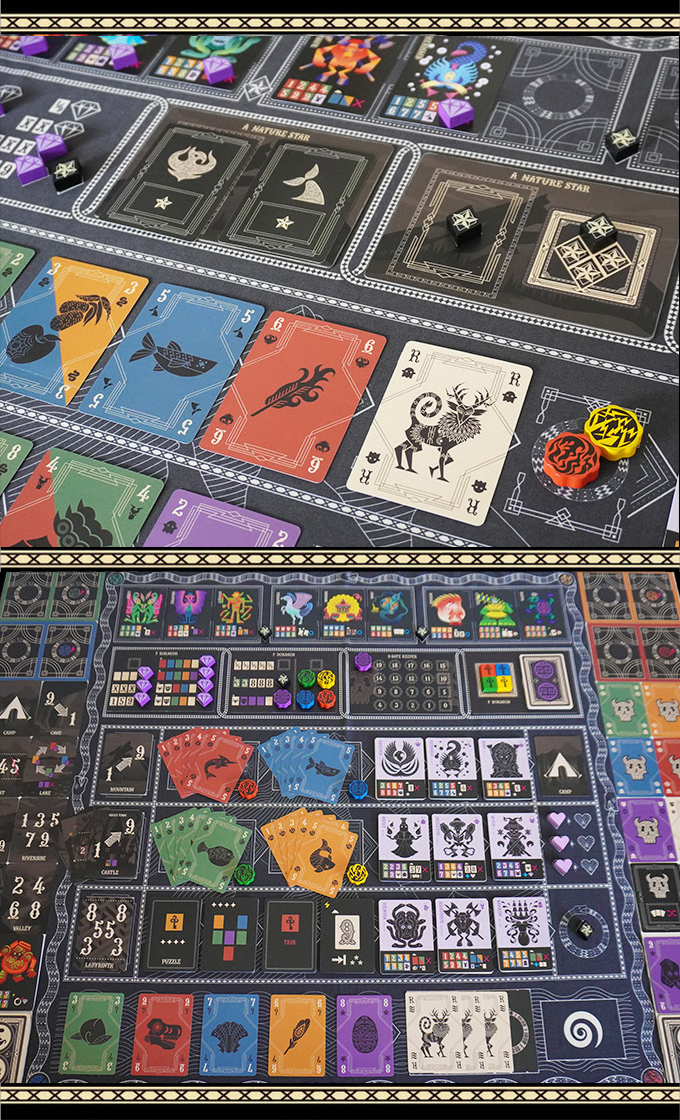
Final Thoughts
Eternal Decks delivers a sophisticated cooperative experience that rewards planning, coordination, and spatial logic. While it doesn’t offer heavy narrative or confrontational interaction, it shines for players who appreciate structured challenge and deck evolution. If you enjoy cooperative logic puzzles infused with deck‑building, this game will likely engage you. However, if you crave aggressive player interaction or deep thematic storytelling, you may find it less satisfying. Overall, Eternal Decks is a distinctive and thoughtfully designed game worthy of attention.
And remember, Frontline Gaming sells gaming products at a discount, every day in their webcart!