The first article covered heroes, but the follow up turns to steel. Today the spotlight lands on walkers and how they reshape every battlefield.
These machines are not just tanks with legs. Instead, they are doctrine made metal, changing movement, firepower, and tempo. As you read, you will see how each nation leans into unique mech traits for a distinct playstyle.
What Counts as a Mech and Why It Matters
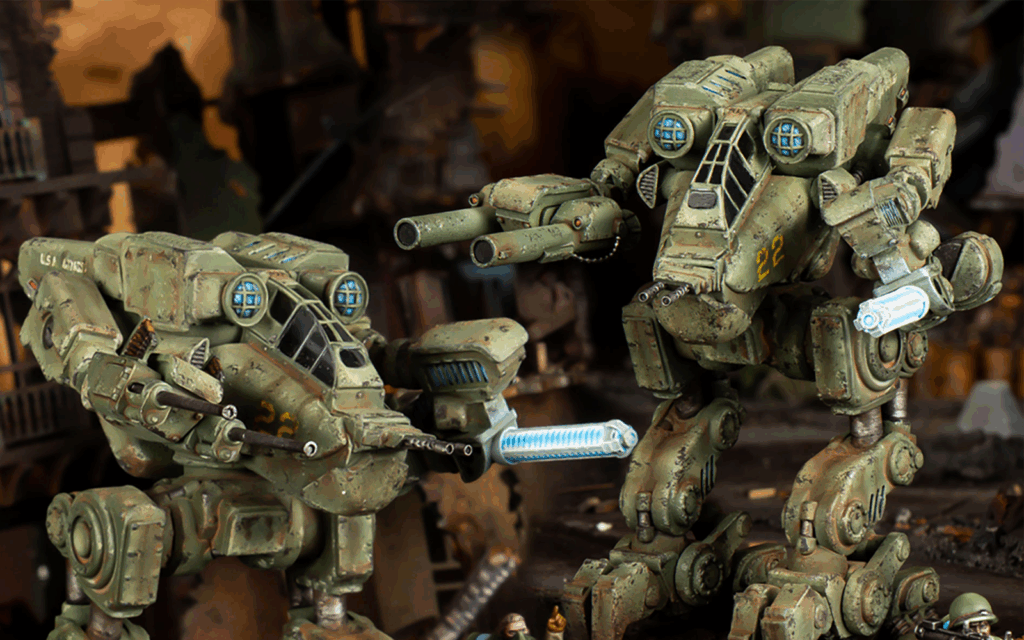
In Konflikt ’47, a mech is a Vehicle defined by how it walks. Each unit lists a Size and leg count that set Damage Value and whether it uses Two-Legged or Multi-Legged rules. Most have crews, though some run Single-Crewed for lighter builds. Crucially, arm mounts change the gun game completely. Arm-Mounted weapons cover the front and their side arc, gain Flak, and MMGs or HMGs do not halve shots. Turrets still give full coverage, while hull mounts trade arc for stability. Close combat is lethal as well. Each arm adds one attack with strong penetration, and each leg pair adds another lighter hit, capped at four dice. Therefore infantry that charge a walker risk getting mulched before swinging.
Movement Sets the Tempo
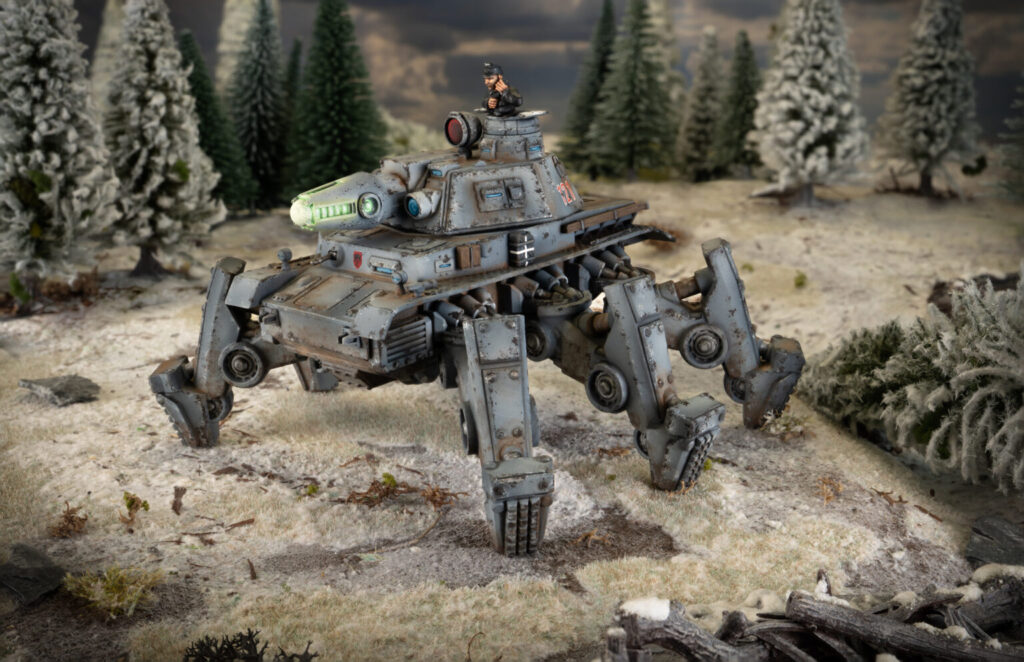
Two-Legged walkers pivot twice on a Run, so they weave lanes and keep armor forward. Consequently, they reward aggressive thrusts and mid-move target swaps. Multi-Legged walkers reverse at full speed, which preserves tempo while falling back. Therefore heavy gun platforms can disengage without losing pressure. Some mechs Jump during Advance or Run, vaulting terrain with a single opening pivot. Precision matters since they commit to a line, but they reach angles no tank can. Additionally, Jump lets you threaten soft rears, steal lanes, and pressure objectives if you plan the landing.
Guns, Arms, and Crushing Things Up Close
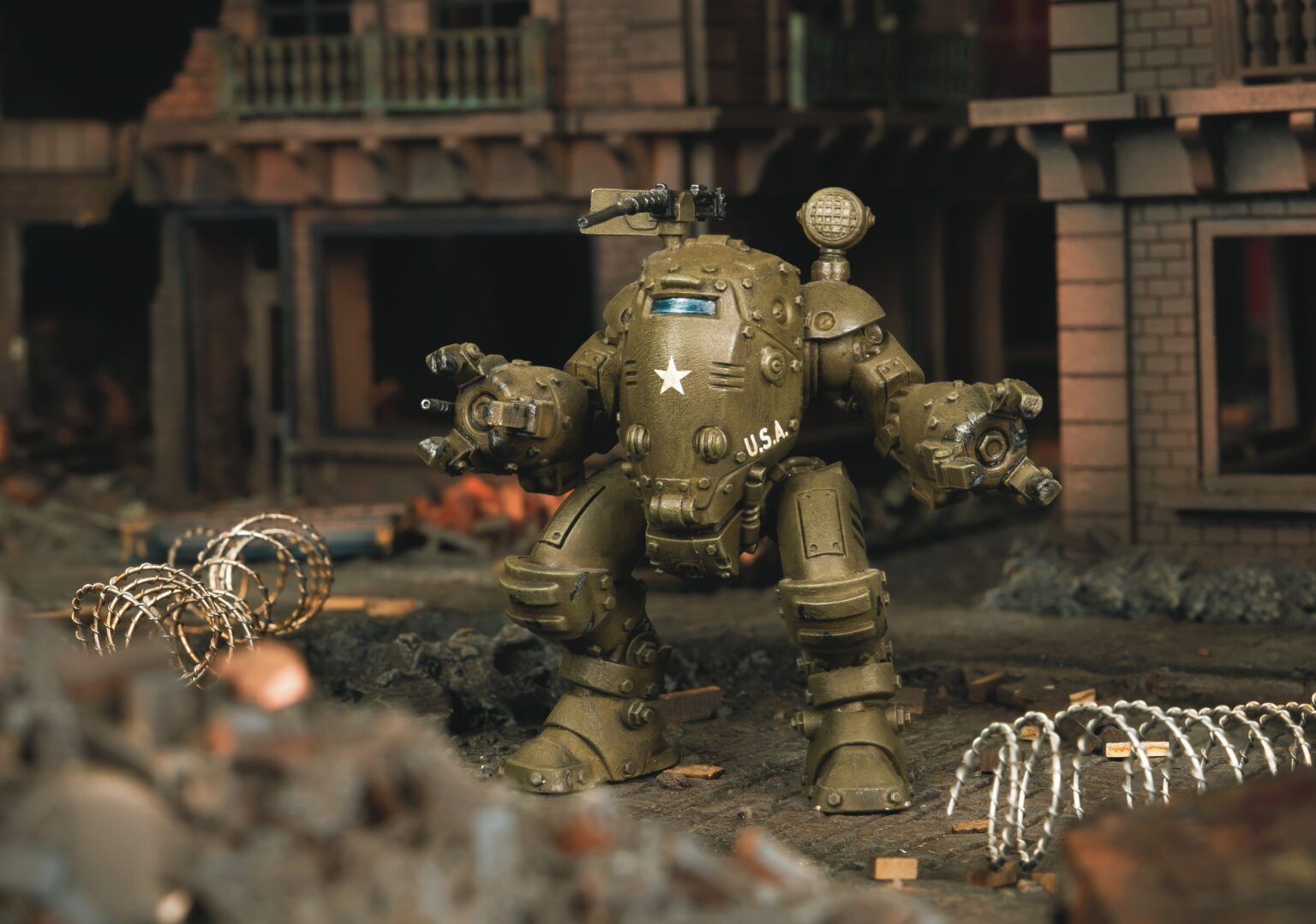
Arm mounts create wide threat cones and elevate anti-air with Flak. Moreover, arm-mounted MMGs and HMGs keep full rates of fire, which shreds infantry screens. Turrets bring effortless target swaps when your hull cannot turn. Meanwhile, hull guns suit big calibers that want a braced arc. In melee, walkers hit first when charged and also hit when passing through enemies. Furthermore, light frames still flatten squads, while multi-limb heavies grind through chokepoints. The result is area denial that feels unfair if you blunder into it.
Traits and Upgrades That Change Roles
Several rules sharpen these chassis. Recce on light walkers enables full speed reverse and Escape reactions. Consequently, baiting fire and slipping out of sight becomes a real tactic. Reinforced Front Armour bumps front Durability, which turns mediums into anvils. Slow appears on the biggest frames, limiting distance while boosting presence. Additionally, national tech stacks on top. The mix decides if a mech scouts, anchors, or bullies midfield.
National Styles: How Each Faction Walks the Walk
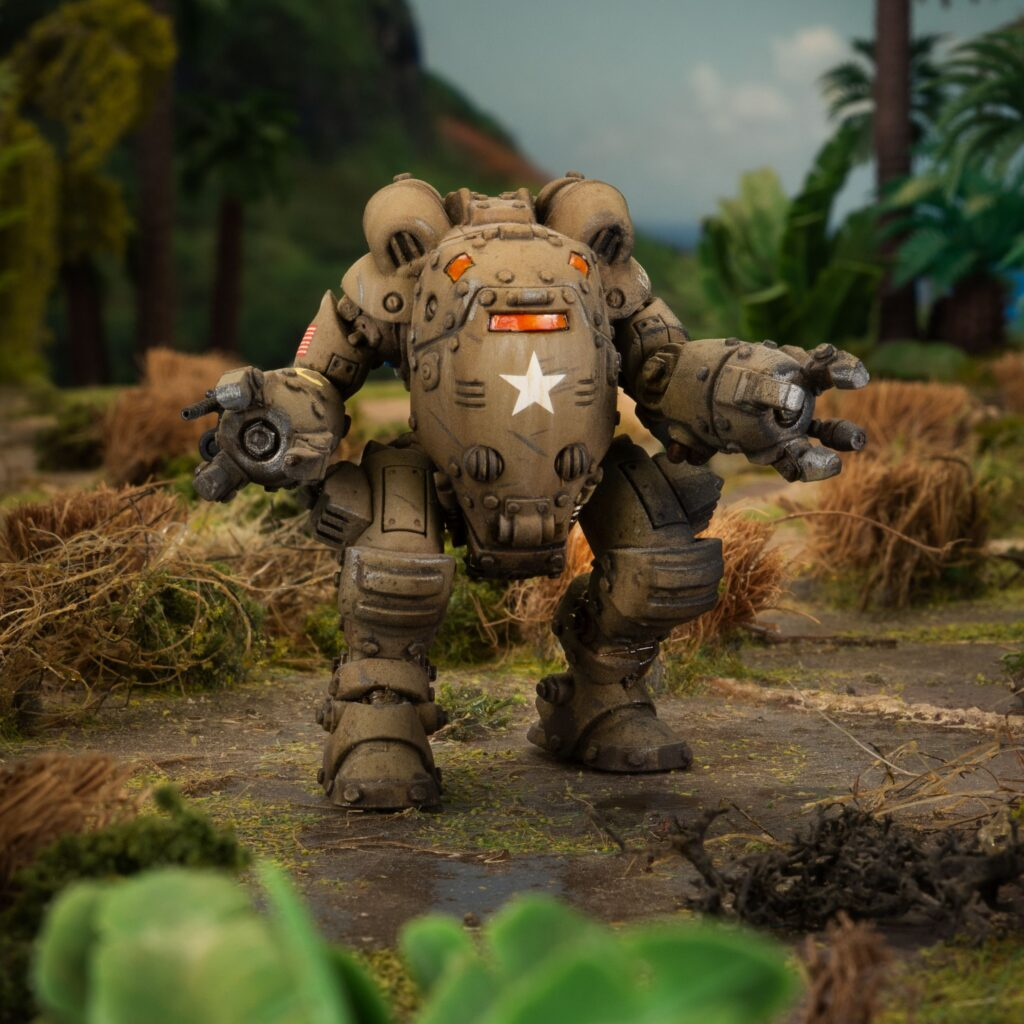
The United States fields the widest bench, all Two-Legged for superb agility. Jump walkers pair with Death From Above to offset reserve penalties. Heavier Kodiaks rain fire with arm-mounted autocannons and twin HMGs. Therefore the roster flexes between flanking plays and mobile firebases. Axis designs lean on precision and durability.
Spinne and Vogelspinne use Recce tricks, while Schwerefeld Mastery seeds Surging Rift dice early. Heavies like Wotan bring near-impossible front arcs with Reinforced Front Armour. Consequently, once set, they are nightmares to uproot. The Soviet Bloc favors endurance and blunt force. Kazak brings a light anti-tank gun and Recce, while heavier frames stack reinforced fronts. Moreover, leg options cover both agility and stability, which supports attrition lines. The British Commonwealth blends American mobility with British systems. Computational rules ignore the to-hit penalty when Advancing, so moving fire stays accurate. The Merlin’s Guinevere AI and Automated Recovery keep it reliable. Therefore steady motion never costs precision. Japan emphasizes speed, cover, and precise strikes. Inago can take Recce at medium weight, which is rare flexibility. Shadow Work improves cover saves on Ambush, enabling patient traps. Finally, the Type 7 Sasori combines arm and leg pairs to cap melee dice and excel in close quarters.
Summary
Walkers are not just big toys, they are the spine of modern armies in Konflikt ’47. Movement rules decide who sets tempo, while arm mounts and melee rules decide who owns space. Layer in Recce, Reinforced fronts, and national tech, and you get wildly different identities. Ultimately, these machines let you express doctrine at the table, from surgical leaps to grinding pushes. Next time the series dives into Monsters, where science stops listening and the battlefield gets very weird.
And remember, Frontline Gaming sells gaming products at a discount, every day in their webcart!