If you’ve been following Konflikt ’47, you already know the war just got a lot heavier.
Even before the Rifts opened, every major power experimented with body armour, trying to save infantry from gunfire and shrapnel. The Soviets had the SN-42 steel breastplate, clunky but effective, while the Americans developed the bomber crews’ flak jacket. Both were better than nothing, but weight and awkwardness meant soldiers often ditched them for mobility. The world needed something radically different, a suit tough enough to stop bullets yet light enough to keep soldiers moving. Rift-tech finally made that dream a reality.
The Rise of the Axis Powered Armour
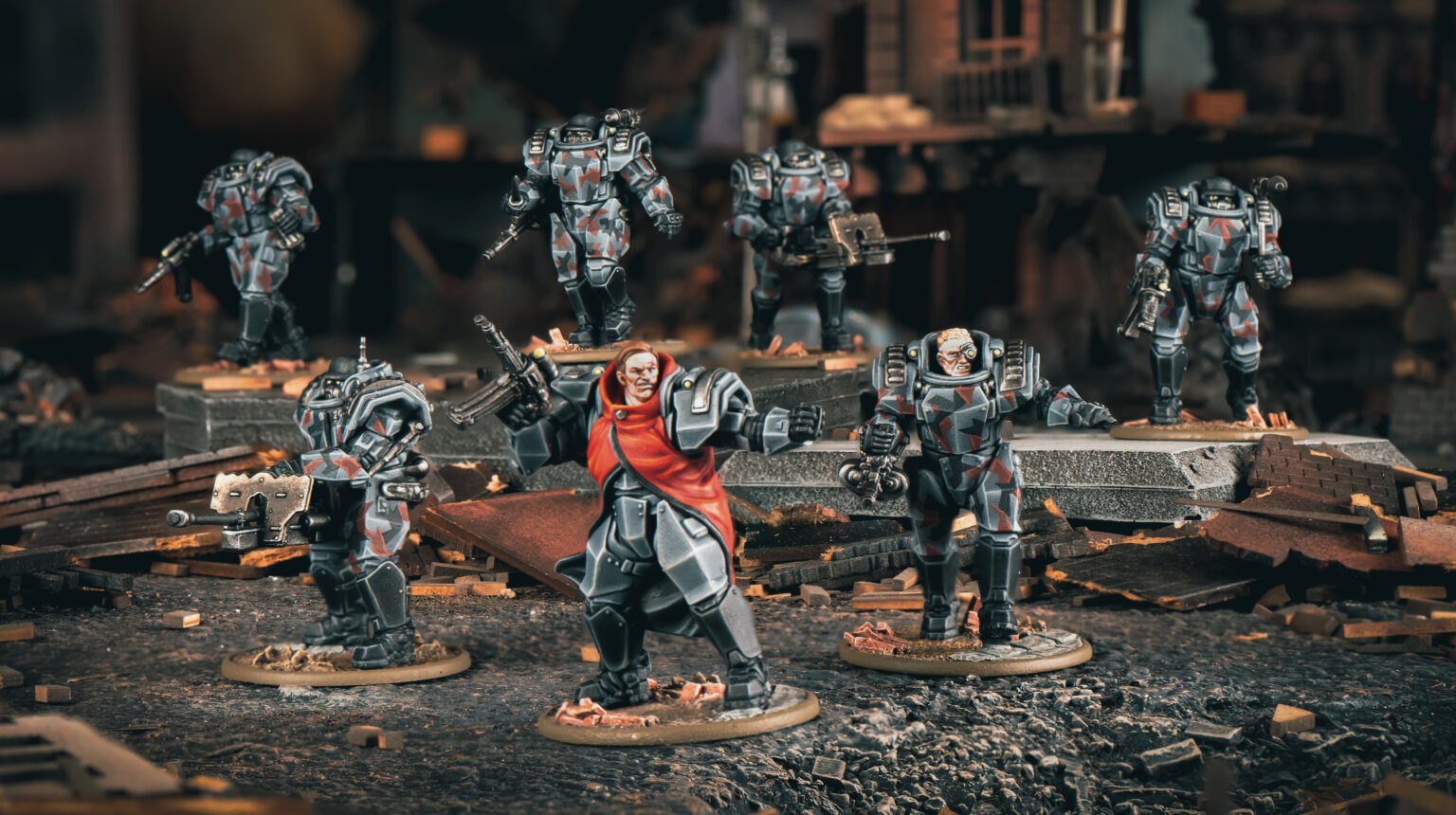
The Axis were quick to see the potential of Rift-tech, and early experiments were… well, awkward. Imagine steel plates bolted to a clunky exoskeleton, powered by tiny aircraft engines and hydraulics. They were slow, heavy, and nearly impossible to wear for long. Yet they proved the concept: a man in armour, almost completely enclosed, could exist. The first real breakthrough came with a smaller, more powerful powerplant, giving the wearer speed and mobility previously impossible. The Panzerharnisch 44 went into early field trials in mid-1944. Allied forces first encountered these hulking suits after D-Day, and the sight of armored troopers grinding forward through machine-gun fire shook morale.
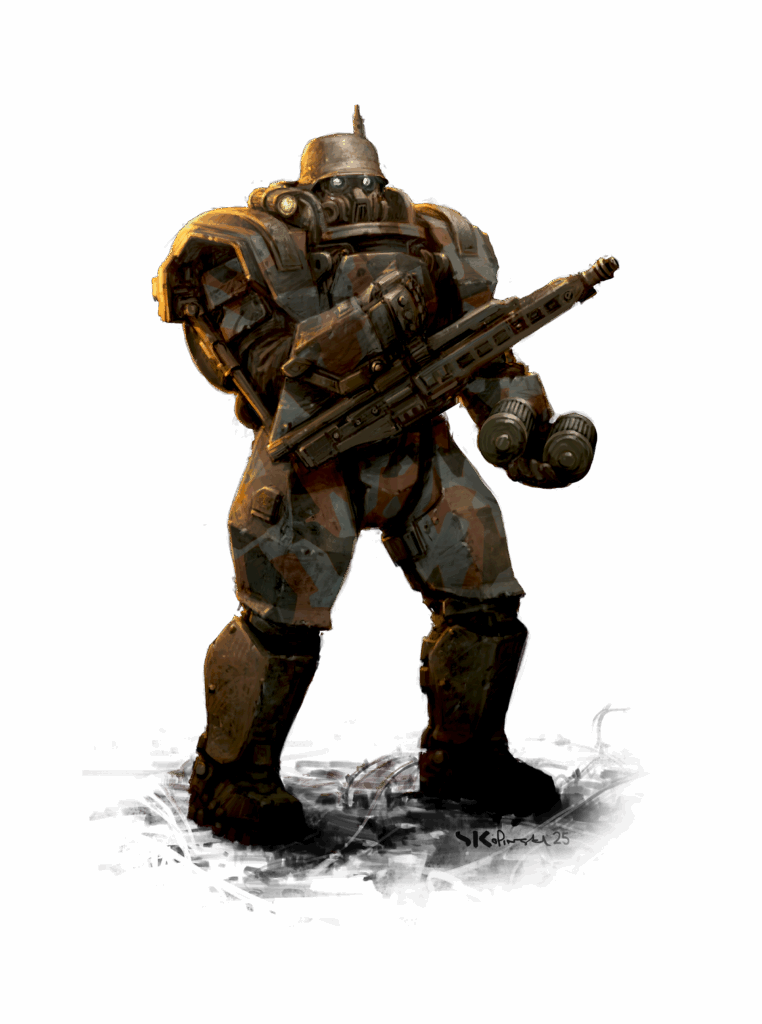
From there, the project split into two paths. One aimed for smaller, lighter suits for mass deployment, resulting in the Panzerharnisch 46, forming the backbone of Schwertruppen divisions. The other pursued massive “breakthrough” armour, known as Projekt Stahl. Rift-tech allowed lighter, stronger plates and more compact servos and hydraulics. The result was a towering, near-eight-foot suit carrying devastating weapons. By late 1945, it was almost ready for the battlefield.
Politics and Deployment
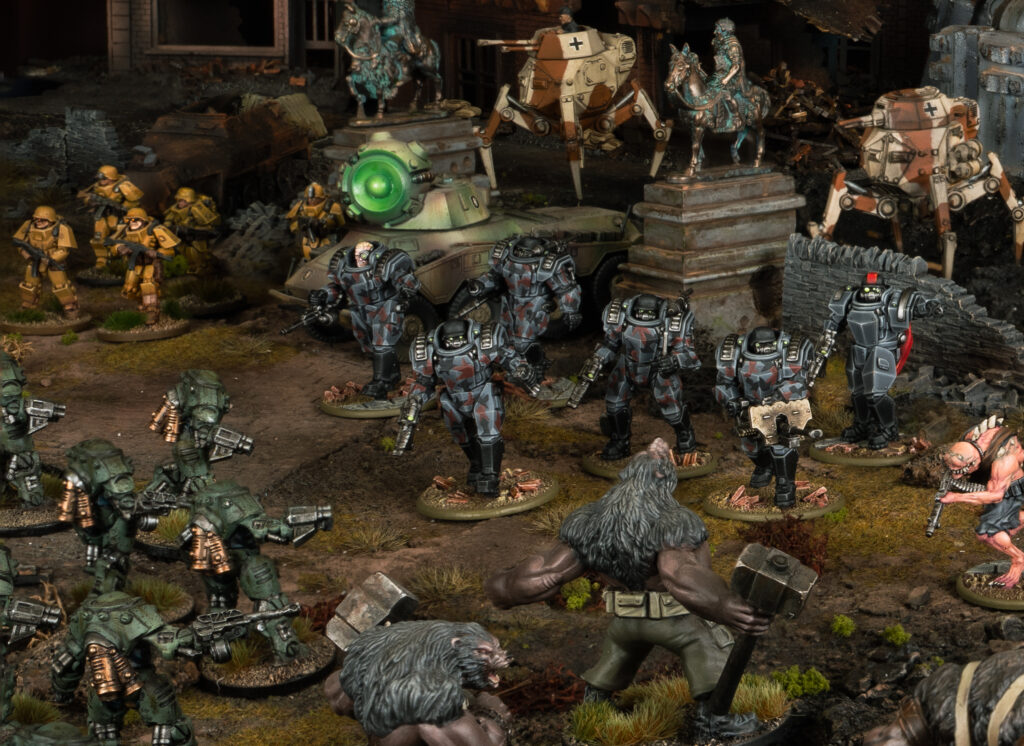
As often happens in war, politics slowed things down. Projekt Stahl was originally meant for Panzergrenadier divisions, but artillery commanders claimed the breakthrough suits were essentially mobile assault guns. Funding and supplies were delayed for months while branches fought over control. Final approval came in mid-1946, and the first Stahltruppen were training by September. By then, other powers had deployed powered armour too, but nothing matched the sheer scale of the Axis suits.
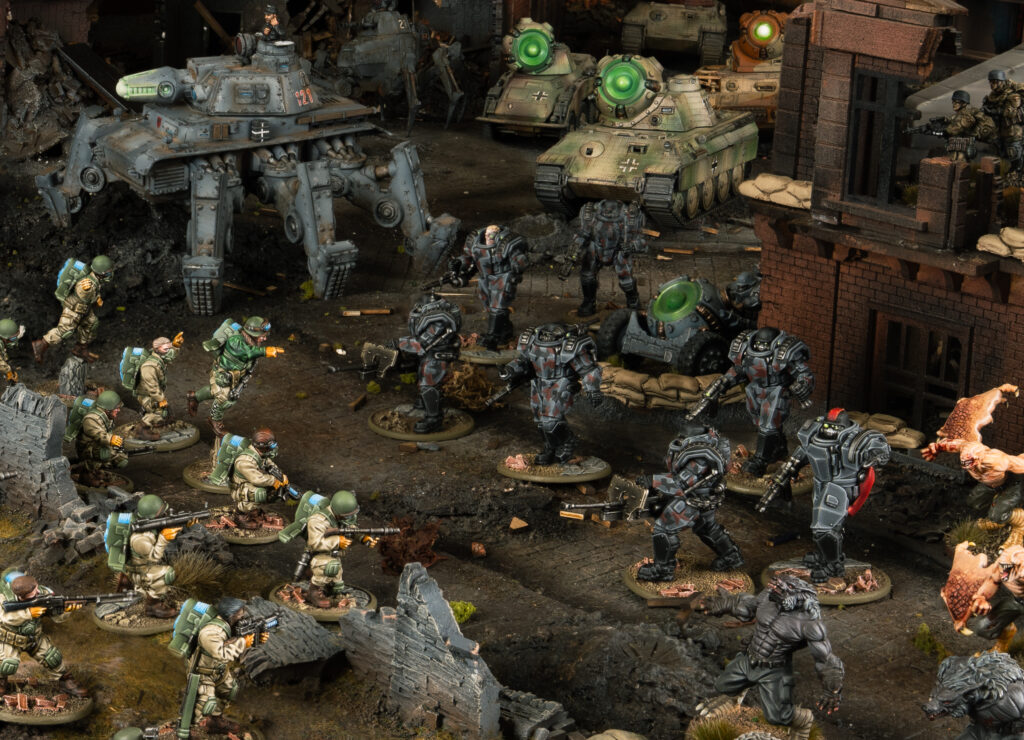
The first combat deployment came in Poland in December 1946. Soviet forces expecting an easy victory were utterly stunned. Stahltruppen emerged from a forest, crushing infantry and tanks alike. Soviet commanders called it a super-weapon, and Axis propaganda ran wild. Production of the suits became a top priority, and the elite troops quickly earned a reputation for terrifying efficiency and battlefield dominance. Though few in number, their arrival often meant the battle was about to intensify dramatically.
Stahltruppen on the Tabletop
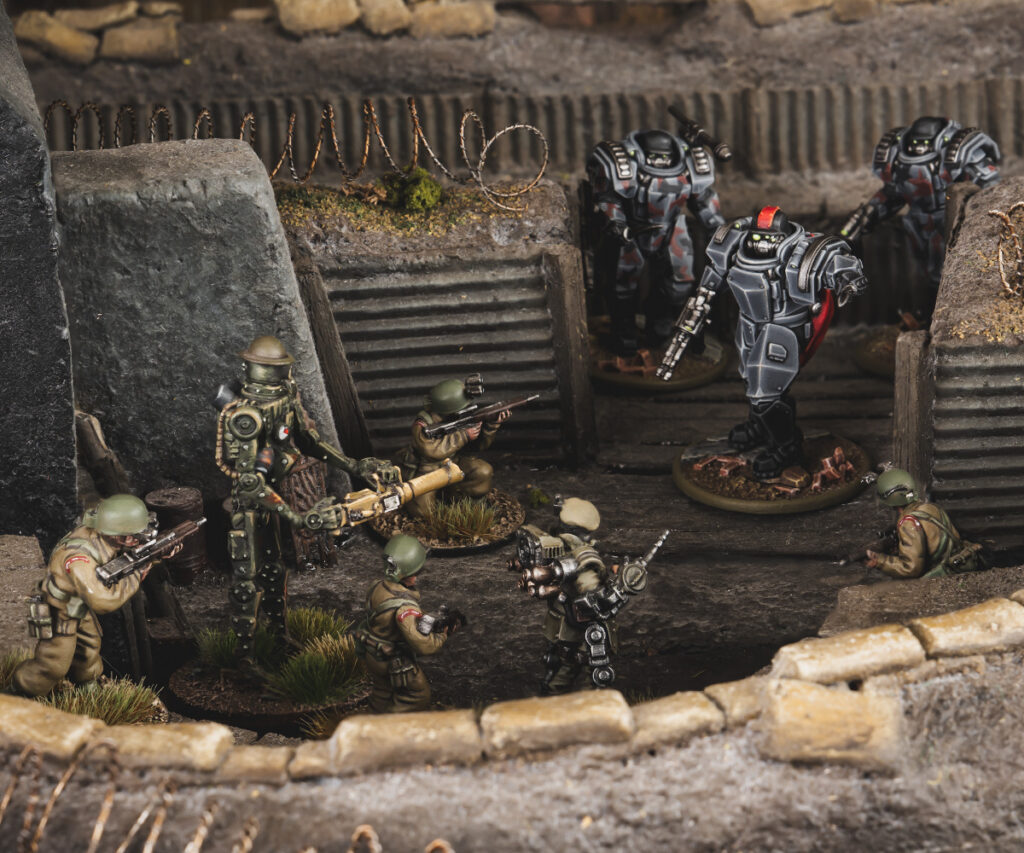
On the Konflikt ’47 tabletop, Stahltruppen are the heaviest infantry in the game. They have a massive Damage Value of 7+, the Augmented rule making them impervious to small arms, and their Vormarsch! Active Rift Ability ensures relentless advance. They can wield everything from StG 44Z double-barrelled rifles and MG 44 light machine guns to Panzerbüchse 45 anti-tank rifles. Shoulder-mounted Panzerfausts and grenade launchers make them deadly against armour, while the suits’ brute strength complements wicked tri-edged fighting daggers.
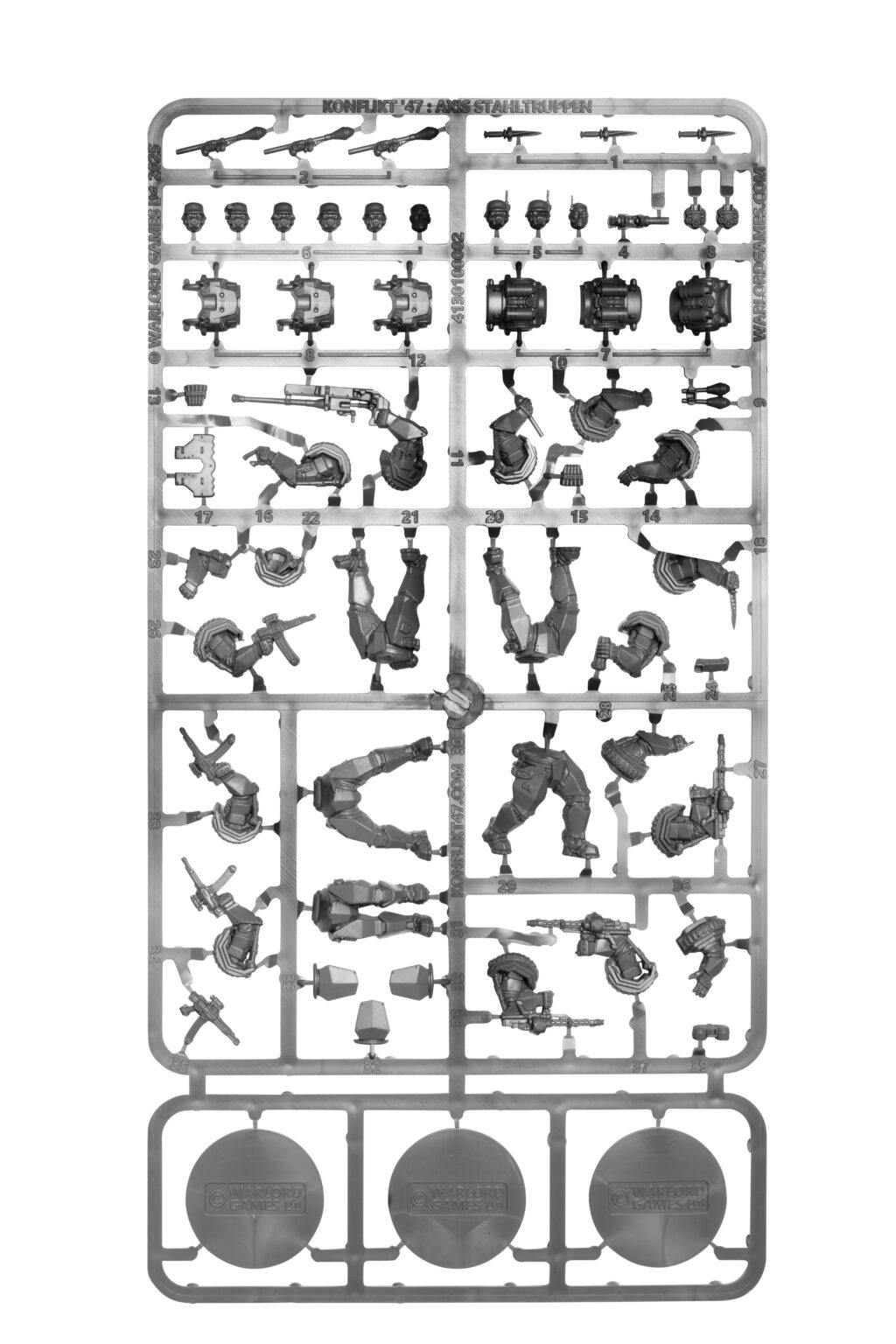
The new plastic sprue captures their bulk perfectly. Each frame has three massive, highly detailed models with multiple leg options, weapon arms, and heads for full customisation. Their broad armour plates give painters a playground of techniques, whether you want weathered metal, full camouflage, or theatre-specific schemes. On the table, they are unmistakable centrepieces, dominating the battlefield both visually and mechanically.
Strategy and Conclusion
These suits are powerhouses, but they come at a high points cost and are few in number. Axis commanders must position them carefully, supporting them against heavy weapons that could penetrate even thick armour. When used correctly, Stahltruppen can mow down unarmoured infantry, bully lighter units, and turn the tide of battle. They are elite, arrogant, and utterly devastating. For anyone running an Axis force in Konflikt ’47, adding Stahltruppen is a statement: the war just got personal, and the battlefield will never feel the same.
And remember, Frontline Gaming sells gaming products at a discount, every day in their webcart!