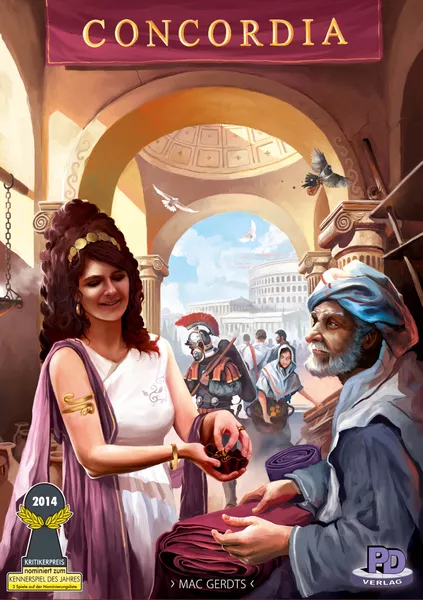
Concordia is a beloved strategy game set in the Roman Empire, where players take on the roles of influential Roman families.
The goal? To expand your empire through trade, resource management, and strategic positioning. If you’re a fan of complex strategy games with a balance of long-term planning and tactical decision-making, Concordia is worth a seat at your table. This review takes a deep dive into how the game plays, its strengths, weaknesses, and how it compares to other heavy-hitters in the strategy genre.
How Concordia Plays:
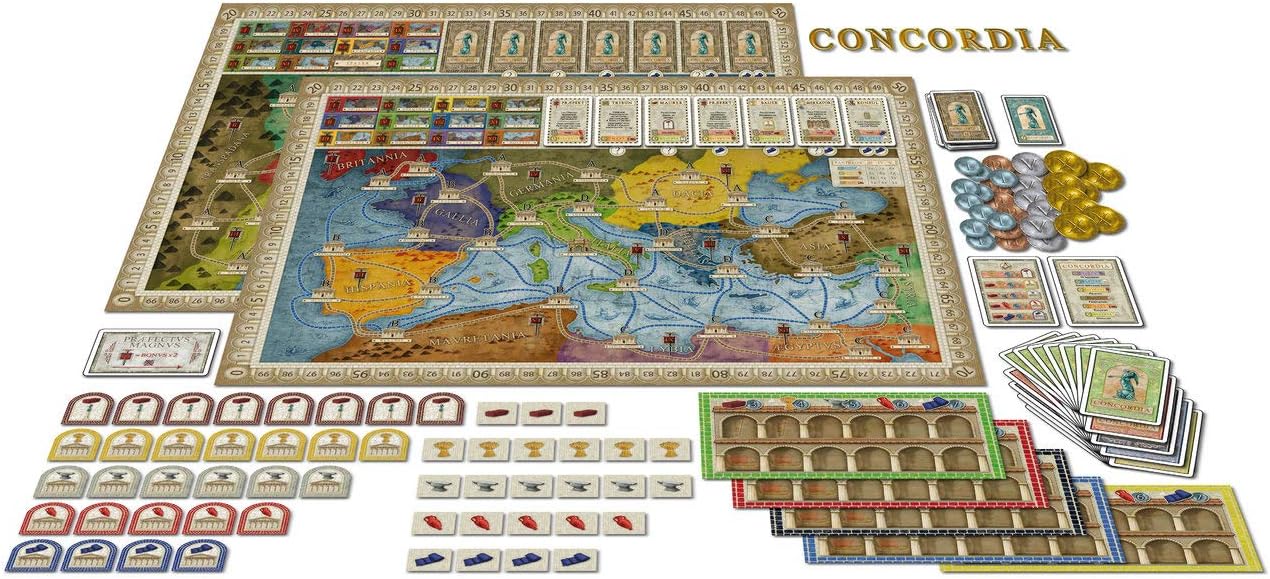
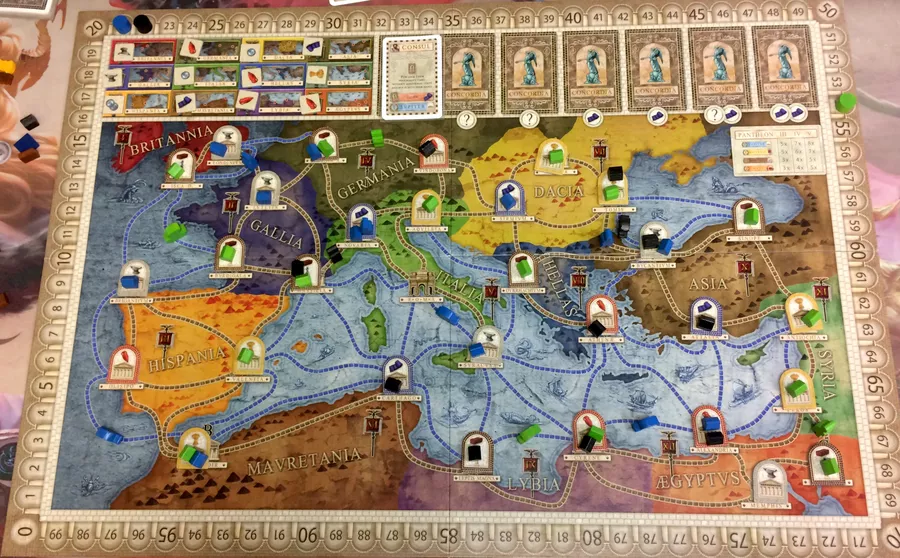
Concordia is a game of economic management and territorial expansion, designed for 2-5 players. The game takes place across a map of the Roman Empire, where players build cities, trade goods, and earn “favor” with various Roman gods. The mechanics are simple but deeply layered, allowing for multiple strategies to emerge. Here’s a breakdown of the gameplay:
- Action Cards: Players start with a hand of cards, each representing an action like moving, trading, or building. The twist? You can’t just play any card whenever you want. You need to plan your card usage carefully because once you play a card, you can only retrieve them when you perform a specific action. This creates an excellent decision-making puzzle, as you must balance the current needs of your empire with long-term goals.
- Building Cities & Trading: The main way to expand is by placing your influence in various provinces and building cities. You’ll trade goods (like brick, grain, or wine) to build these cities, which give you more points and resources in future rounds. Efficiently trading and managing your resources is key.
- Divine Favor: You can gain favor with various Roman gods (through cards and actions), which translates to valuable victory points. Some gods reward you for trading, others for building, or even for holding the most cities. A mix of god influence is vital for a solid victory.
- Victory Points: The game’s climax happens when the players have exhausted all their resources or built all their cities. The game ends when someone performs a Tribute action, revealing the player with the most victory points. Points come from cities, resources, and god influence.
The balance of strategic thinking and a bit of luck makes Concordia a game that’s rewarding for both casual and hardcore strategy players.
Pros:
- Deep Strategy with Simple Rules: The core mechanics are easy to understand, but the interplay between different actions, cards, and resource management is incredibly deep. Every decision feels meaningful.
- No Player Elimination: Unlike some strategy games where players can be knocked out early, everyone has a chance until the very end. This keeps everyone engaged, even if their early moves weren’t the best.
- Replayability: There are many strategies to explore, whether it’s focusing on gods, aggressive expansion, or controlling trade routes. Each game plays out differently, making it feel fresh even after multiple sessions.
- Elegant Design: The game doesn’t overwhelm you with unnecessary components. The cards, map, and tokens are simple but effective, allowing for quick setup and smooth gameplay.
- Great For 2-5 Players: It scales well from two-player duels to large, more complex games with five. The dynamics change but remain fun at all player counts.
Cons:
- Player Interaction is Limited: Although there is indirect player interaction through competition for cities and trade routes, there’s little direct confrontation or blocking of opponents. This is fine for those who prefer a more cerebral experience, but it might not satisfy players looking for conflict-heavy gameplay.
- Can Feel Like a Puzzle: While the game is highly strategic, it can sometimes feel like you’re just solving a puzzle with limited randomness or excitement. Some might find this aspect repetitive.
- The Endgame Can Be Anti-Climactic: The game doesn’t have a clear, dynamic “finale” like some other strategy games, and the final moves can sometimes feel drawn-out. It’s not as thrilling as other games that have more intense closing rounds.
- Learning Curve for New Players: While the rules are simple, there’s a slight learning curve to understanding all the potential strategies and how to utilize the cards effectively. New players might feel overwhelmed at first.
Comparisons to Similar Games:
1. Concordia vs. Ticket to Ride (Resource Management):
Ticket to Ride is a classic route-building game with much more straightforward mechanics. While Ticket to Ride is accessible to almost anyone, Concordia requires deeper planning, card management, and resource juggling. Concordia’s greater complexity and multi-layered strategies make it more suited to experienced gamers, whereas Ticket to Ride offers a more casual, quicker play experience.
2. Concordia vs. 7 Wonders (Card Drafting and Strategic Depth):
Both games focus heavily on cards and resource management. While 7 Wonders offers more direct interaction via card drafting and a quicker game length, Concordia’s hand management and resource allocation are far more intricate. 7 Wonders often leans more into speed and player interaction, whereas Concordia is a slow-burner where careful planning over multiple rounds is key to victory.
3. Concordia vs. Power Grid (Economic Strategy):
Power Grid shares Concordia’s economic focus, requiring players to manage resources effectively. However, Concordia is generally more approachable due to its smoother ruleset and lack of auction mechanics, which some find complex in Power Grid. The direct competition in Power Grid for power plants and resources can be more cutthroat, whereas Concordia’s indirect player interaction creates a slightly more peaceful, albeit still highly strategic, environment.
Final Verdict:
Concordia is a hidden gem in the strategy game world. It combines elegance with depth, providing a rich experience without overcomplicating things. While it may not be for players seeking direct conflict or quick-paced action, it’s a fantastic choice for those who love slow, methodical gameplay and complex strategy. If you’re into games that reward deep thinking and careful planning, Concordia is a must-have. Just don’t expect your table to come alive with player interaction — this game is about the quiet battle of the mind, not the clash of armies.
And remember, Frontline Gaming sells gaming products at a discount, every day in their webcart!