
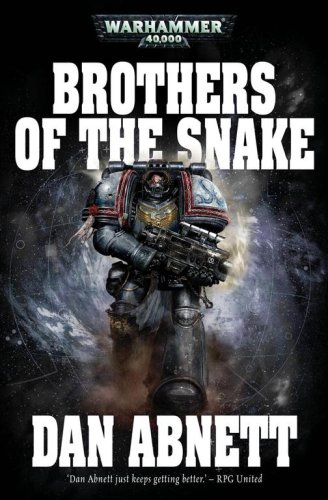
This anthology is one of the best examples of the older style of Space Marine novels.
First released in 2007, Brothers of the Snake belongs to what many long-time Black Library readers consider the “bridge years”—after the early Rogue Trader pulp but before today’s sweeping Primaris sagas and ten-book arcs.
At that time authors were more willing to treat a Space Marine novel like a collection of war stories instead of a single, end-of-the-sector crusade. Dan Abnett embraces that freedom with an episodic structure that still feels crisp and self-contained sixteen years later. Reading it now is a reminder of an era when big lore reveals were less important than showcasing how one Chapter actually wages day-to-day
Plot
Abnett builds the novel from seven linked missions rather than one grand campaign, giving a panoramic look at how the Iron Snakes police the backwater Reef Stars. We meet Damocles Squad when lone battle-brother Priad purges Dark Eldar raiders in Baal Solock’s highlands, earning a place among the chapter’s elite. The newly formed squad then retakes an oil refinery on Rosetta from heretic Astartes, where the death of Sergeant Raphon forces Priad into command.
A ritual return to Ithaka reveals the chapter’s oceanic rites and the Seer-Council’s cryptic judgments. Acting as honor guard on Iorgu, Damocles foils a warp-spawn eruption during a royal coronation. Climactically, they spearhead the defense of Ganahedarak against a system-wide ork Waaagh!, turning earlier clues about xenos manipulation into a sector-saving counter-stroke. Each vignette stands alone yet echoes forward, so by the last page you realize Abnett has quietly threaded cause-and-effect stakes beneath the anthology format.
Characterization
Abnett keeps the roster compact yet vivid: Priad grows from dutiful line-marine to thoughtful sergeant, learning that rigid doctrine bends under real combat. Around him, Damocles Squad offers clear, complementary notes—Pindor and fiery Calignes as the spear-tip brawlers, Illyus the cautious voice, and stoic Apothecary Memnes who binds flesh and morale alike.
Newcomers Dyognes and Aekon inject rookie zeal after brutal Ithakan trials, while the disgraced but insightful Khiron exposes corruption buried even in the fortress monastery. Recurring mortals such as clerk-turned-legislator Antoni and secretive Inquisitor Mabuse frame the Astartes’ godlike deeds from a human vantage, spotlighting both the awe and unease they inspire. Together, these perspectives underline the novel’s core tension: brotherhood forged in spear-point ritual must still adapt to messy, mortal realities.
Narrative Feel
Because Brothers of the Snake predates today’s sprawling series, the stakes stay local and the prose stays lean. Abnett’s sentences hit like bolt rounds—concise, sensory, never florid. Battles tend to be brutal and short, then give way to tide-song prayers, armour rituals, and spear-pointed oaths that reinforce the chapter’s maritime culture. The oscillation of violence and quiet reflection mirrors ocean swells: strike, withdraw, contemplate. Compared with more recent Space Marine fiction—say Wraight’s Sword of the High Lords—Abnett’s book feels almost intimate, closer to a myth cycle than a campaign log. Yet it retains the grim finality that defines 40K.
Verdict
Coming from a more experimental era of Black Library, Brothers of the Snake swaps galaxy-ending relic hunts for boots-on-the-ground vignettes that reveal how a Chapter really fights, doubts, and prays. Modern readers accustomed to trilogy sprawl may find the jump-cut structure abrupt, but it also means zero filler and a laser focus on squad camaraderie. For veterans it is a nostalgic reminder of when a single, 300-page paperback could world-build with precision; for newer fans it is an accessible window into Astartes psychology without lore overload. Compact, salt-sprayed, and still among the clearest portraits of Space Marine brotherhood on the shelf.
And remember, Frontline Gaming sells gaming products at a discount, every day in their webcart!