
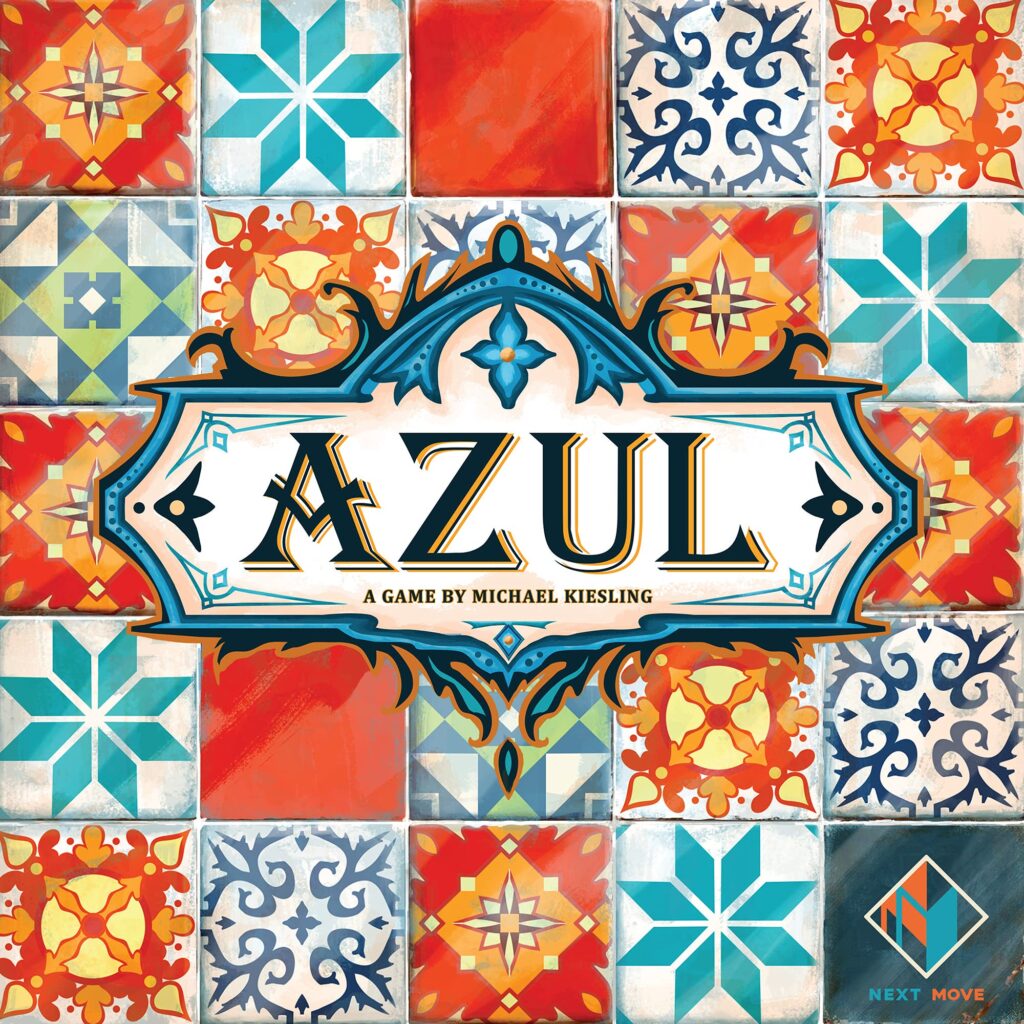
Azul is a visually striking tile-drafting and pattern-building game themed around decorating the walls of the Royal Palace of Evora in Portugal.
While the theme is largely aesthetic, the game shines through its tight, puzzle-like mechanics rather than narrative immersion.
Players take turns selecting sets of colored tiles from shared factories and placing them into rows on their personal player boards. Once a row is filled, a tile from that row is transferred to the main mosaic grid, scoring points based on placement. The core focus is spatial optimization—arranging tiles to complete rows, columns, and color sets while minimizing penalties from unusable tiles.
It’s an abstract game with a beautiful production layer, prioritizing clever timing and planning over long-term engine-building or tableau development. Unlike themed games like 7 Wonders, where you build an evolving civilization through card synergy and long-term strategy, Azul is more tactical and self-contained. Every decision is about the current state of the board and how to efficiently manage your options over a handful of rounds.
Pros

Elegant Mechanics, Easy to Learn
The rules are clean and teachable in under ten minutes. Despite this simplicity, Azul delivers rich decision-making and rewarding strategy.
Quick and Satisfying Turns
Drafting and placement are fast-paced, yet meaningful. The flow is smooth, with little downtime even at four players.
Gorgeous Production Value
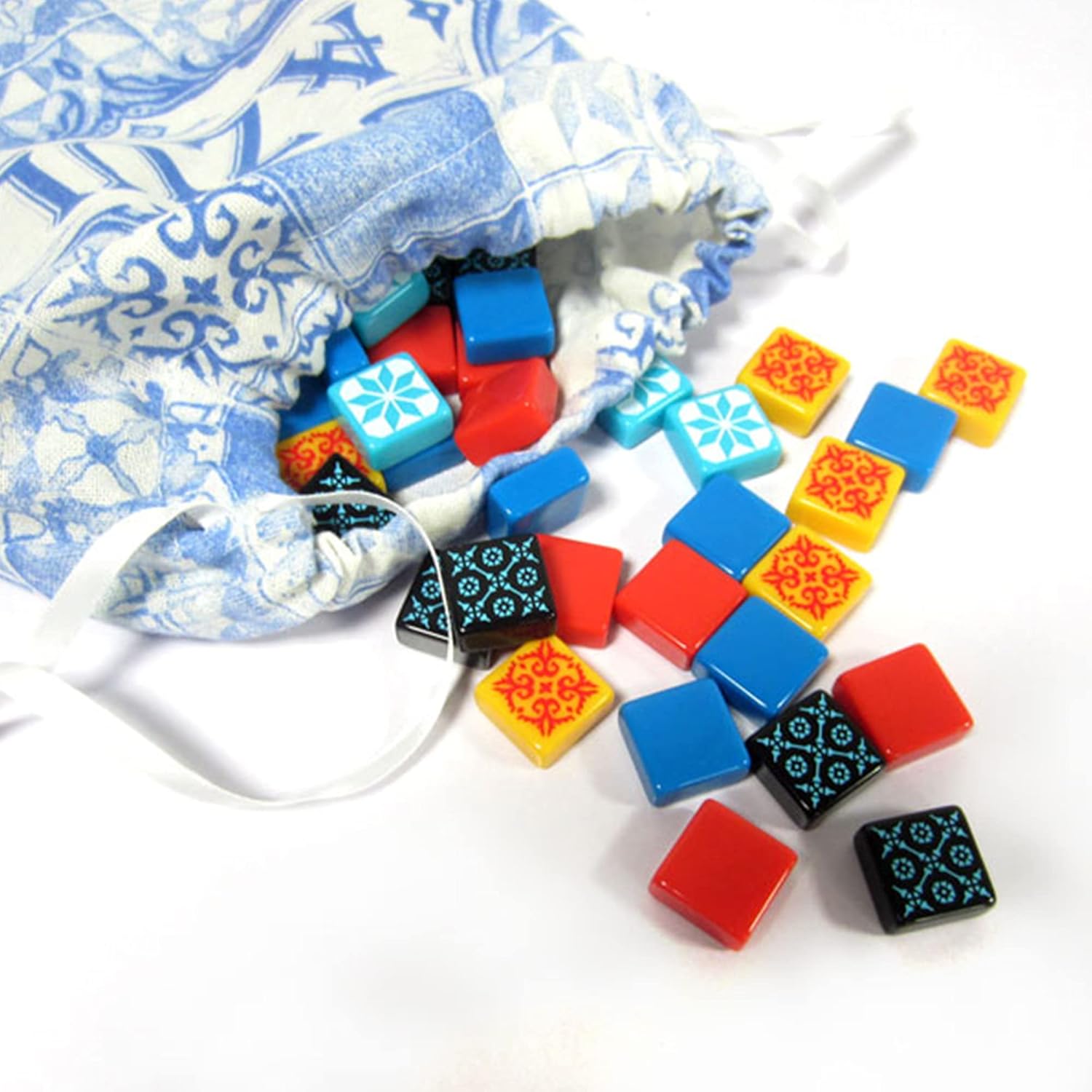
The thick, bakelite-style tiles are not only visually stunning but satisfyingly tactile. It feels great to play, and the aesthetic appeal helps it land well with new players.
Good Strategic Depth
Each game presents a fresh spatial challenge. Optimal tile selection, denial tactics, and timing when to complete rows can all make or break a score.
Tight Player Interaction
Though there’s no direct confrontation, players constantly watch each other’s boards to deny key tiles or force bad picks. The interaction is subtle but strategic.
Cons
Theme is Thin
While beautiful, the theme feels pasted on. You won’t feel like a royal artisan—this is an abstract puzzle at heart.
Can Be Punishing
A poor tile draft can result in heavy negative points, especially in later rounds. New players can be caught off guard by how harsh misplays can be.
Limited Long-Term Variety
Once you grasp the strategies and patterns, some games can feel repetitive, especially without mixing in expansions or alternate boards.
AP-Prone at Higher Levels
Players prone to overanalyzing can drag out turns, especially when multiple drafts offer complex scoring potential or denial plays.
Comparison to Similar Games

Compared to 7 Wonders, Azul is significantly more tactical and puzzle-oriented. There’s no long-term engine or hand management—just immediate choices with board-state consequences. It’s closer to Sagrada or Calico, games where spatial optimization and pattern matching take center stage.
Azul also stands out from many abstract games by offering a very low barrier to entry without sacrificing strategic bite. It doesn’t overwhelm with options but still creates tension and competitiveness every round.
Final Thoughts
Azul earns its reputation as a modern classic. It’s easy to teach, visually stunning, and deeply satisfying to play. While it may lack thematic depth or narrative hooks, it more than compensates with clever mechanics and elegant design. For players who enjoy abstract strategy games with tactical depth, it’s a must-try—especially in mixed-experience groups where accessibility matters.
Recommended for: Fans of spatial puzzles, abstract games, and elegant Euro-style gameplay
Not ideal for: Players seeking immersive themes, deep asymmetry, or complex engine-building
Rating: 8.5/10 – A beautifully produced, brilliantly designed tactical puzzle game that’s approachable yet competitive and endlessly replayable.
And remember, Frontline Gaming sells gaming products at a discount, every day in their webcart!