When it comes to launching a brand-new Warhammer faction, it’s not just about cool models or flashy rules.
There’s a deep layer of concept design involved – stuff that most players only catch glimpses of. With Grand Cathay, the Old World team had the rare opportunity to start from a blank slate. That meant building everything from lore to armor design, and even down to the shape of symbols and shoulder pads.
As a long-time Warhammer fan, I’ve pored over a lot of army books and design notes. But this one? It’s different. Grand Cathay isn’t just a faction – it’s a cultural and visual overhaul that demanded more than a few sketches and background blurbs. Let’s dive into the full breakdown from the devs themselves, as they unpack what makes Grand Cathay tick.
A New Visual Language, Not Just New Models
Most factions in Warhammer already have their identity baked in. Dwarfs have runes. High Elves have elegant curves and shield bosses. But Grand Cathay had none of that – just a name and vague references in old lore.
Holly, one of the lead designers, spent nearly two years locked into the project, primarily focusing on iconography. That level of dedication shows. She and the team dug deep into Chinese folklore, pulling out motifs tied to longevity, harmony, and celestial balance. Then, they Warhammer-ized it.
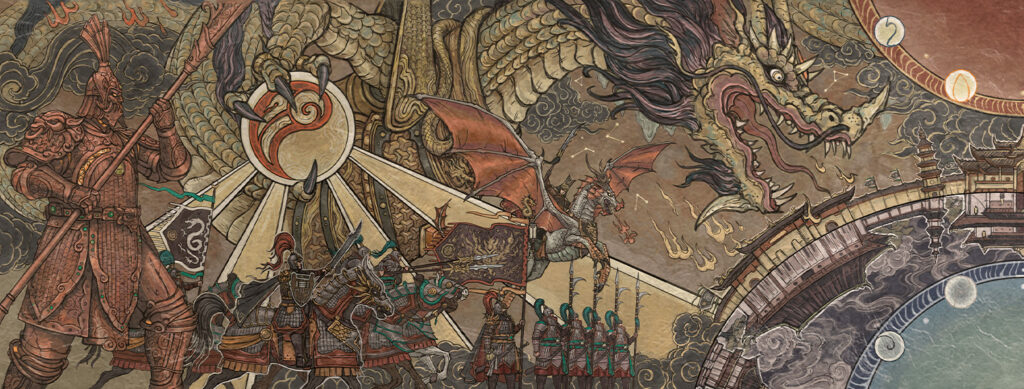
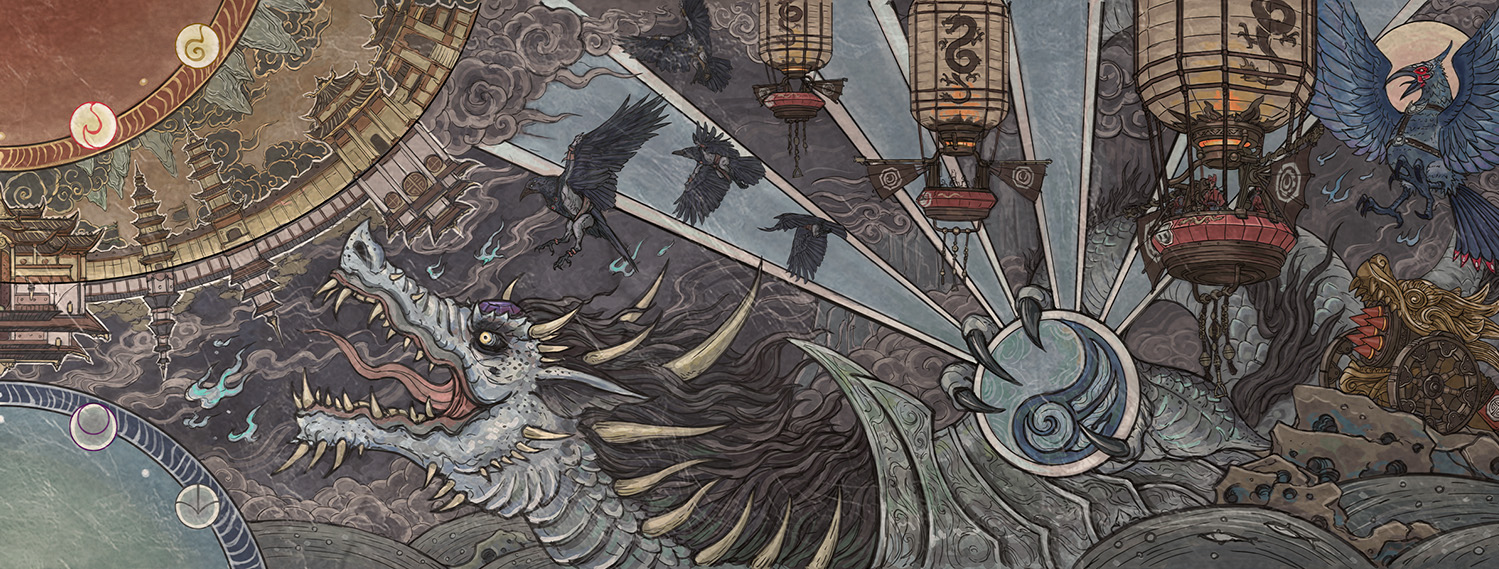
So, for example, the classic yinyang symbol? It shows up, but not as you know it. In Cathay, it’s made of twin-tailed comets – instantly tying it into the broader Warhammer cosmology. It still represents Harmony, a huge cultural and battlefield mechanic in Cathay, but it now feels like something built for this universe.
Additionally, they studied historical design sources in Chinese – not just English summaries. That helped them stay rooted in authenticity while avoiding tired Western clichés.
Octagons, Elemental Magic, and a Whole New Compass
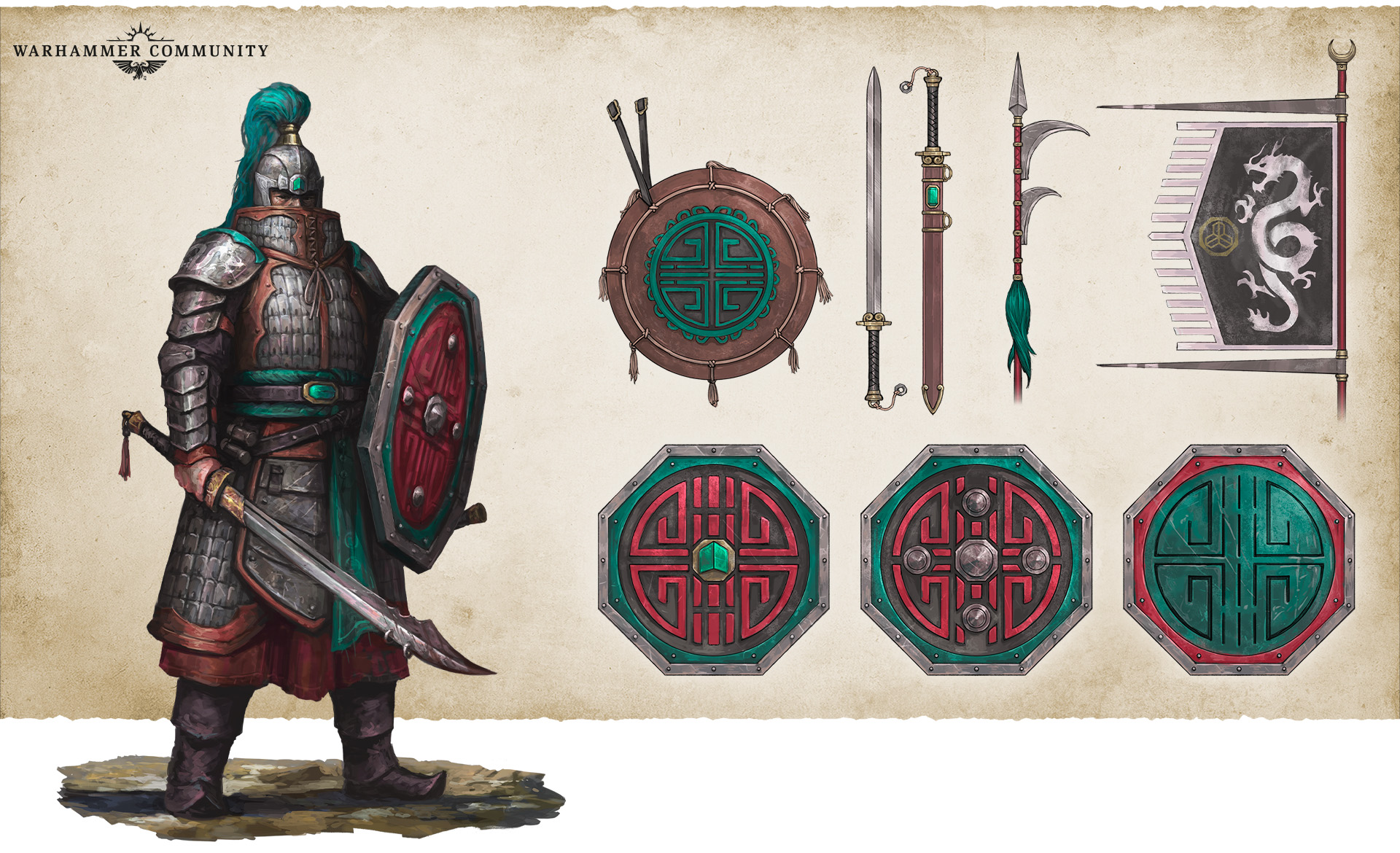
Cathay loves its eights. Octagons appear everywhere – from unit markings to magical symbols. The number eight is lucky in Chinese tradition, so this theme runs deep. Their use of the bagua from the I Ching also helped inspire something new: the Wu Xing Compass.
This magical device isn’t just visual flair. It helps explain how Cathayans see the Winds of Magic. Rather than mirror the Empire or Elves, Cathay names and interprets these Winds through the lens of their culture. They even associate each wind with one of the mighty Dragons. And while the names are different, players familiar with the Old World will still recognize the core elements.
According to Owen and JTY, this was no small feat. Getting the magic right was critical. The setting’s magic system has roots back in Warhammer’s third edition, and it forms a backbone of the game’s identity.
Magic and Myth in the Everyday World
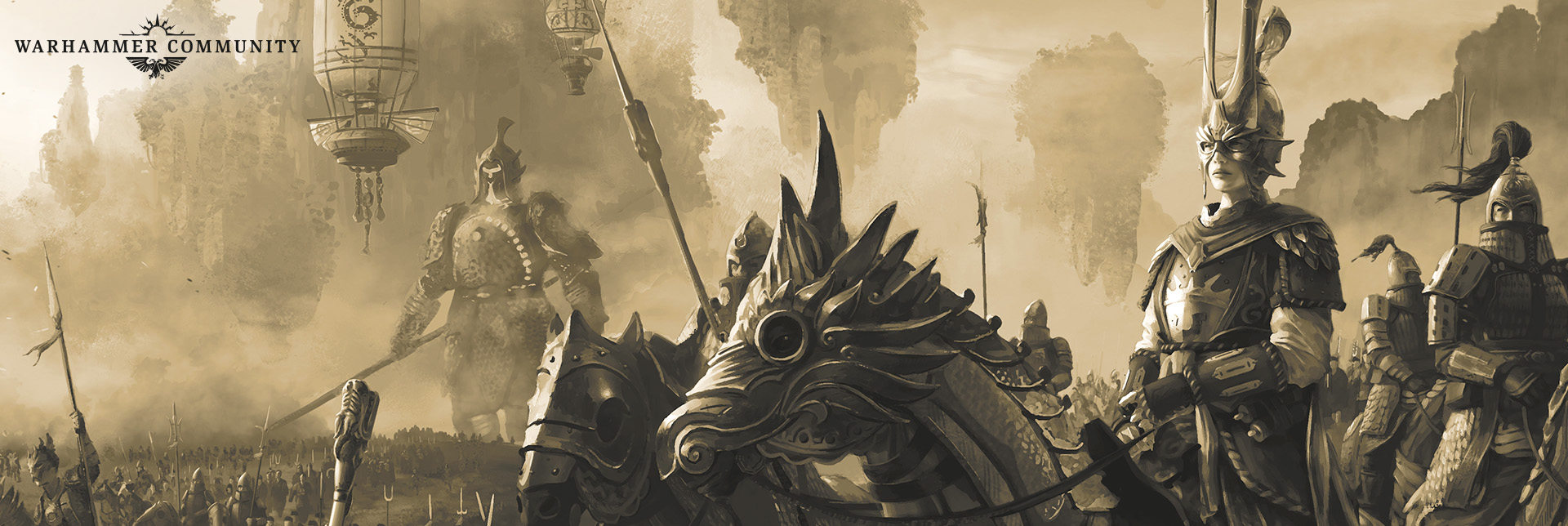
Cathay doesn’t draw a hard line between science and magic. Their world literally floats because of magical upheaval. The Emperor and Empress are sorcerers so powerful they make Slann look like apprentices. People in Cathay live with magic all around them – and they design their gear accordingly.
That brings us to their armor.
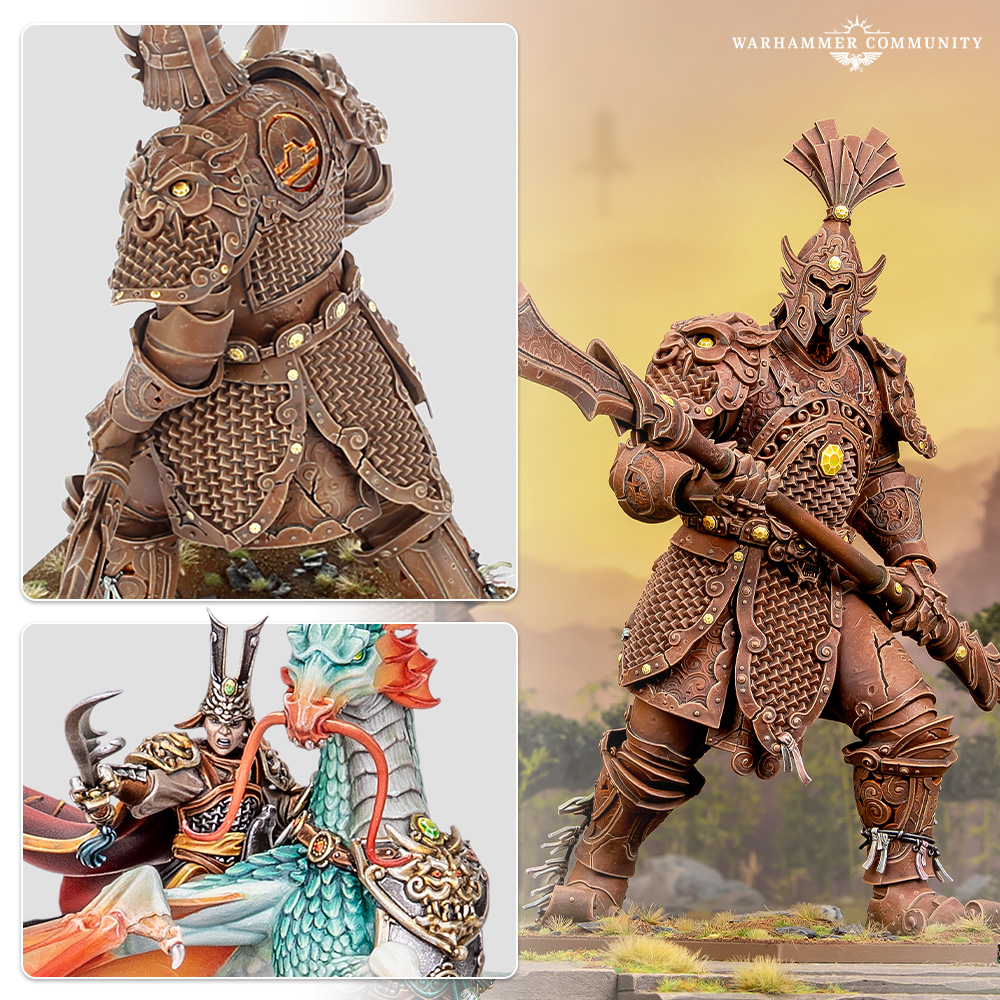
The team created something new: mountain armor. This wasn’t just a design flourish – it was pulled from legendary Chinese folklore. No one really knows if it existed. It appears in stories and statues, but no functional versions have survived. Apparently, it would’ve been a disaster to wear, but that just makes it the perfect fantasy armor. The Warhammer team leaned into the myth, rather than shy away.
Better yet, the idea came from two parts of the design team independently. Holly hit it during iconography research. Luke came at it through miniature design. That kind of convergence only happens when the whole project clicks.
Icons That Mean Something
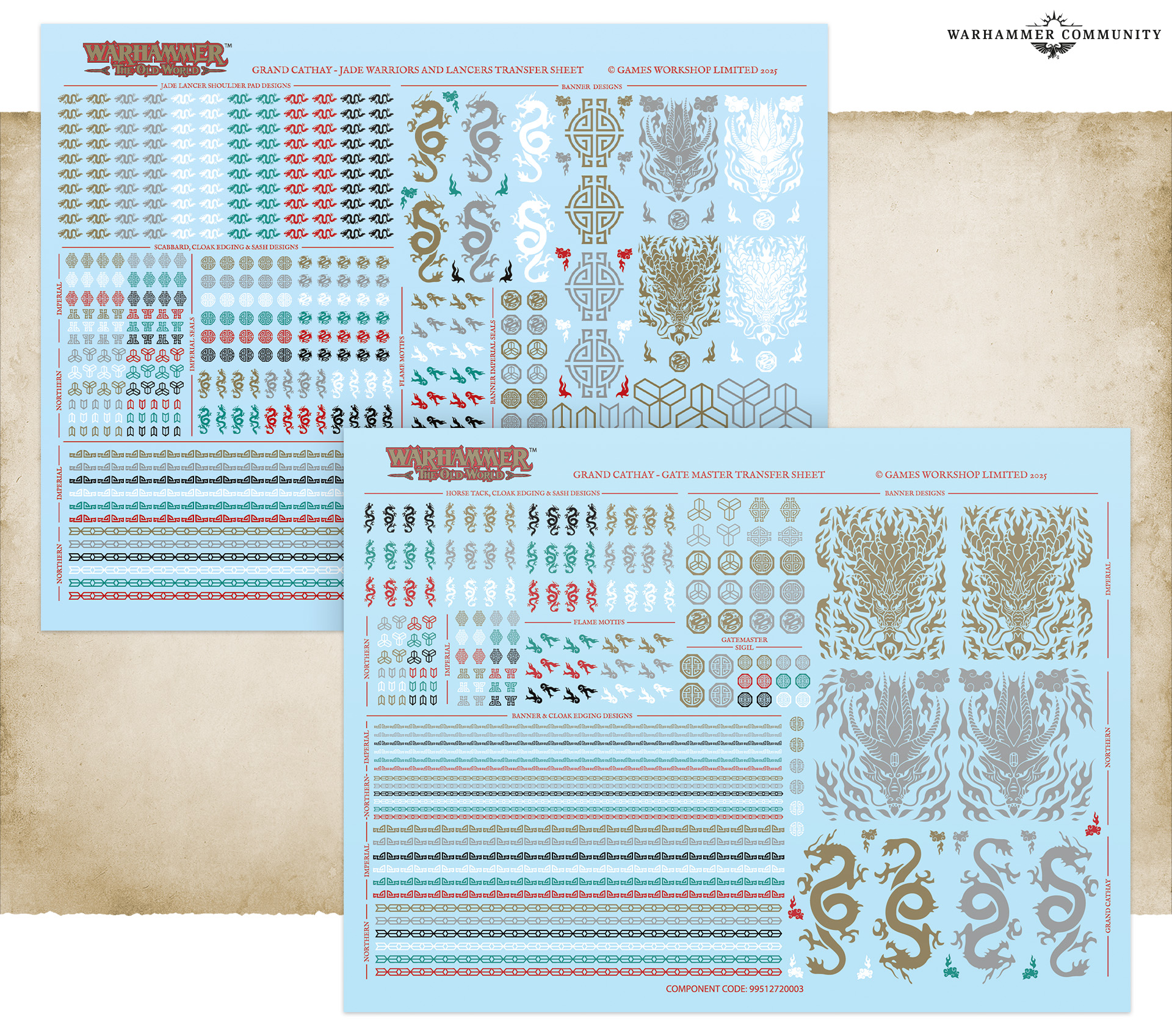
From city banners to unit decals, every Cathayan icon means something. The designers avoided fake-looking Western knockoffs and focused on creating symbols that reflect real thought and cultural meaning.
So, for example, the Sky Lanterns have markings that tell you their role, origin city, and even which Dragon they serve. These aren’t just decals – they’re part of the story. Whether it’s the House of Cog and Crane (gunners) or the House of Smoke and Powder (bombers), each symbol gives insight into the army’s structure.
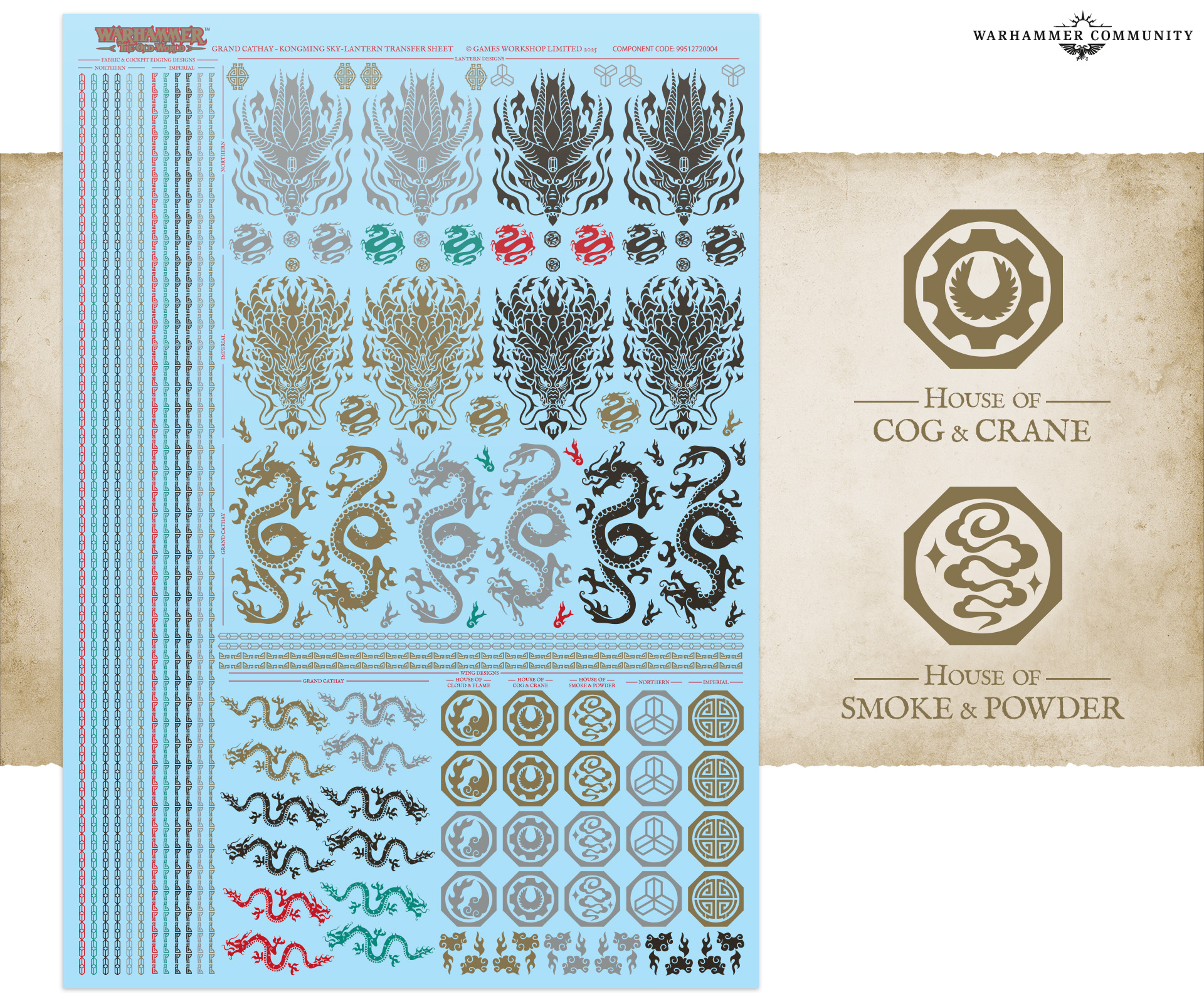
There are four main transfer sheets: one each for Jade Warriors, Gate Masters, and Sky Lanterns, plus a deluxe sheet packed with metallic detailing. That last one is absolutely dripping in detail. Holly even called it “real fancy,” and after seeing the early previews, I’d agree.
Dragons With Style – and Substance
The dragons in Cathay aren’t copies of traditional Chinese beasts, but they’re definitely inspired by them. Miao Ying and her siblings are serpentine and sinuous, but also grounded in Warhammer’s fantasy lineage.
They ditched bird feet and pug-like faces in favor of crocodilian snouts and horned brows. Every gem, color, and shape on the Dragons has symbolic meaning. Western ideas of color don’t always apply. For example, black means water, not death. White can mean death, but also purity. That kind of nuance runs through every part of their design.
Final Thoughts: Why This Matters
Grand Cathay isn’t just a “Warhammer China.” That would have been easy – and lazy. Instead, the Old World team built something layered and meaningful. It respects the source inspiration without just copying it. And it still fits seamlessly into the broader Warhammer setting.
For those of us who love diving into lore, art books, or just painting meaningful minis, this is a goldmine. Every icon has depth. Every design choice tells a story. This is exactly the kind of care you want to see when a new faction hits the tabletop.
So if you’re planning to build a Cathayan army, or just want to explore how a fictional empire gets made from the ground up, the design notes and upcoming books are absolutely worth grabbing. Stay tuned – we’re just scratching the surface here.
And remember, Frontline Gaming sells gaming products at a discount, every day in their webcart!