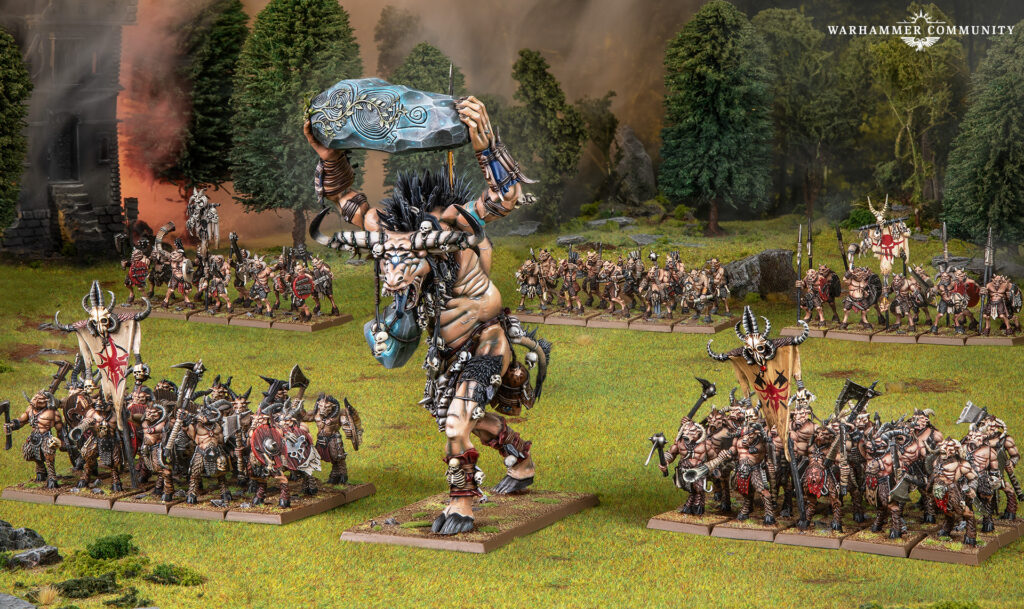
After a detour into the deepest, darkest parts of the Drakwald, the Old World Almanack returns with a focus on one of Warhammer’s oldest and most enduring threats — the Beastmen Brayherds.
Lead Games Designer JTY and special guest, Warhammer historian Gadge, sat down to explore why these primal children of Chaos have remained at the heart of Warhammer lore since the very beginning.
The Beastmen’s Place in Warhammer History
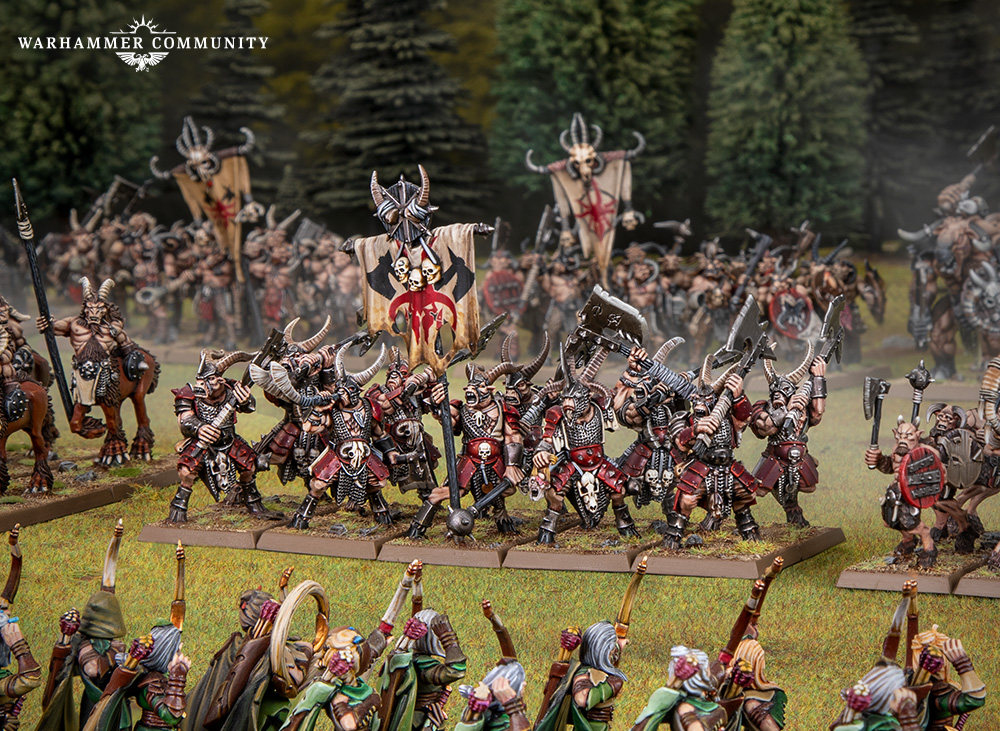
JTY explains that the Beastmen have always been key antagonists, born from the cataclysm that unleashed Chaos across the world. They’re not distant or mythical — they’re the snarling terrors lurking just beyond the tree line, an ever-present threat to humans, elves, and dwarfs. While outlandish Chaos creatures like Tzaangors or Slaangors roam the Mortal Realms, the Old World’s Beastmen remain goat-headed, feral, and steeped in dark folklore.
Gadge adds that even back in the 1980s, Beastmen were the boogeymen of Warhammer Fantasy Roleplay, the monsters hiding in the woods, burning villages and raiding settlements. Unlike the Skaven, who vanished from the surface world centuries earlier and became little more than myth, Beastmen are a tangible menace — a constant force of destruction.
Arcane Journal: Chaos in the Forest
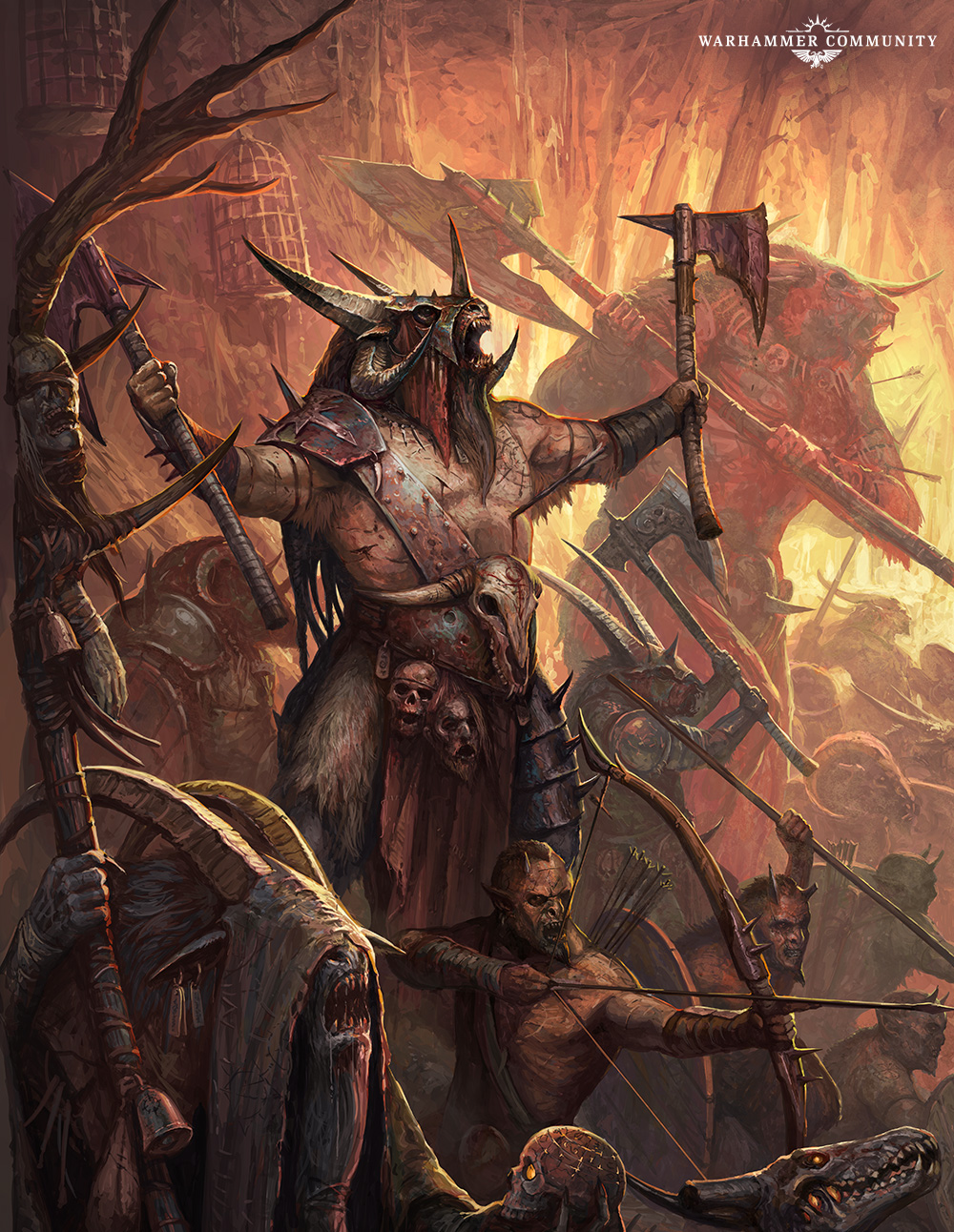
The upcoming Arcane Journal dives deep into Beastmen lore, focusing on the ongoing threat of Morghur the Shadowgave, the eternal chaos spirit reborn time and again. In this era, the freshly reborn Morghur is a horrific, mewling babe, and the new character Kralmaw leads the search for him within the deep woods.
JTY emphasizes that the Brayherds aren’t just background noise — they’re a key part of the world’s living, breathing ecosystem of conflict. The Empire constantly tries to cull their numbers and hold them back, but they always return, pure rage incarnate. Gadge notes the parallels between Beastmen and the Wood Elves — both are tied to nature, but while the Elves represent balance and order (even if they’re capricious), the Beastmen embody nature gone mad, a violent, destructive inversion of the natural world.
A Legacy of Chaos
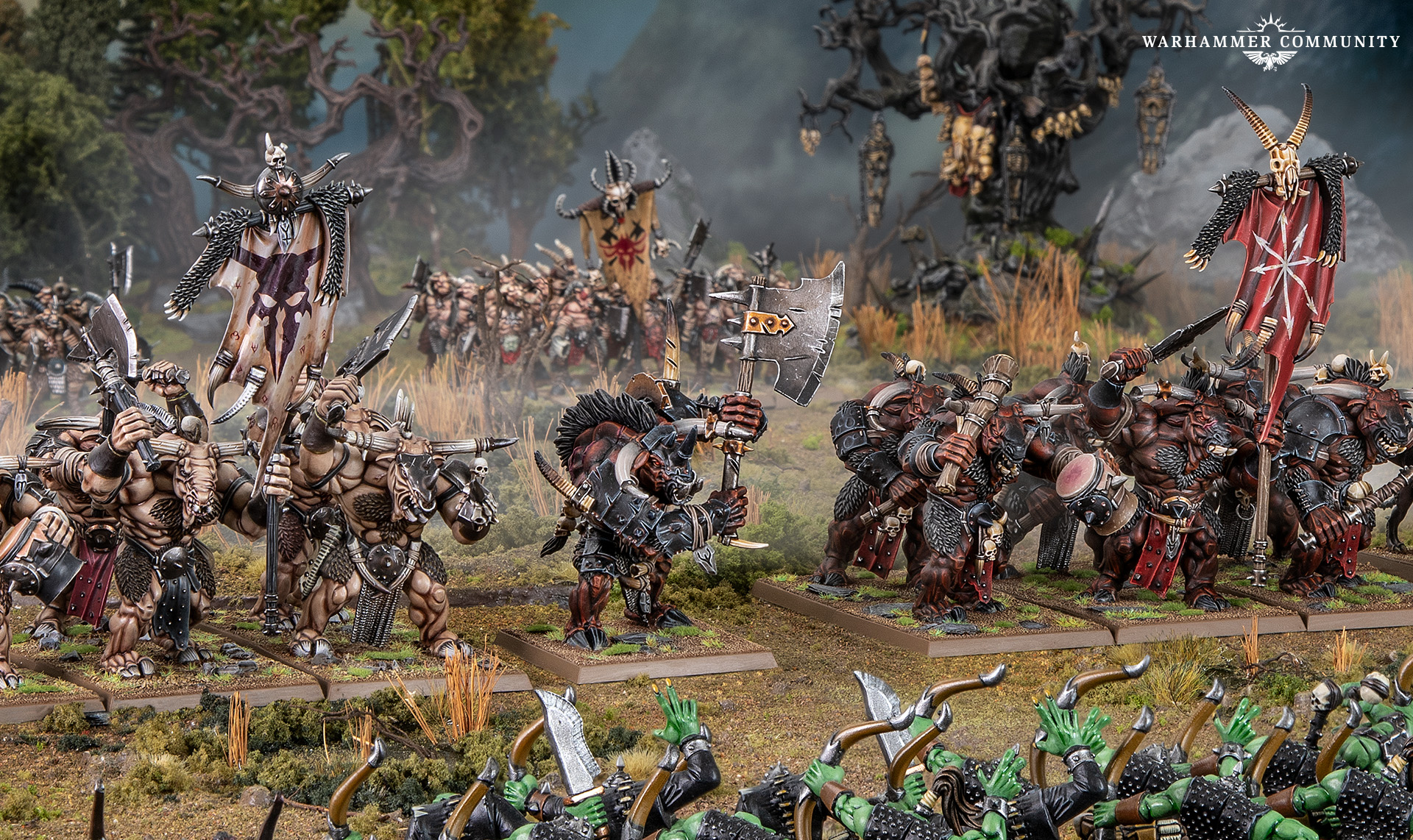
The conversation touches on the long legacy of Beastmen in Warhammer’s visual and design history. Gadge recalls that early Beastmen included fish-heads, centaurs, even camel- and tiger-men, but today they’ve solidified into the primal, goatlike warriors we know.
JTY highlights how the updated Arcane Journal will explore not only their hunting grounds, appearance, and champions but also their cultural elements, like Darktongue — the ancient runic language of Chaos, first introduced in the Realm of Chaos books in the late ’80s. That language has been refreshed, with new sigils and symbols incorporated into transfer sheets for painters and hobbyists, linking the Beastmen’s visual identity to their storied past.
What’s Next
This first dive into the new Arcane Journal sets the stage for further details coming later this week, where the team will go into Kralmaw, Ghorros Warhoof, the new Armies of Infamy rules, and the expanded mechanics introduced for Beastmen in the Old World.
If you’re eager for more lore, more rules, or just some painting inspiration, keep an eye on the next Almanack post — the beasts are just getting started.
And remember, Frontline Gaming sells gaming products at a discount, every day in their webcart!