
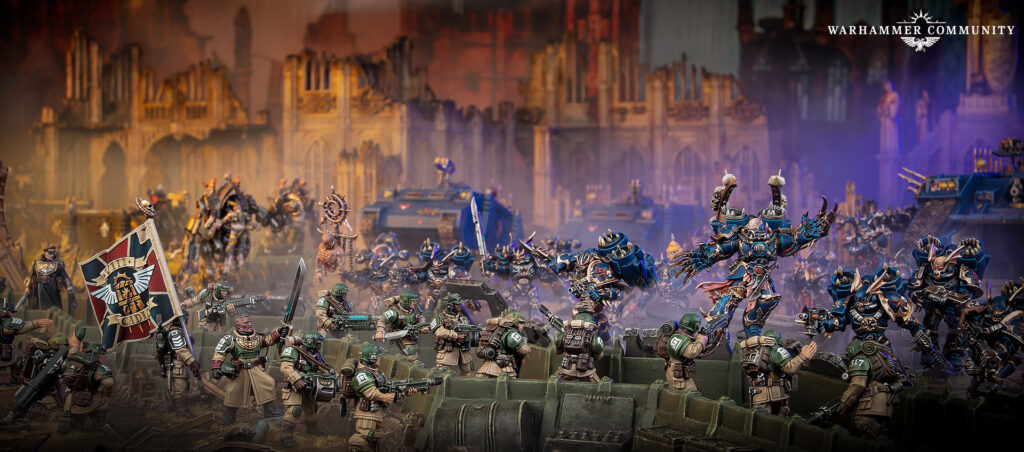
Back at the AdeptiCon Preview, we got a tantalizing glimpse of the next big evolution in competitive Warhammer 40,000 – the Chapter Approved 2025-26 Mission Deck.
With pre-orders just around the corner, it’s time to unpack what makes this latest deck such a game-changer for Matched Play, whether you’re a tournament regular or a kitchen table commander with a taste for the dramatic.
Three Ways to Play, One Deck to Rule Them All
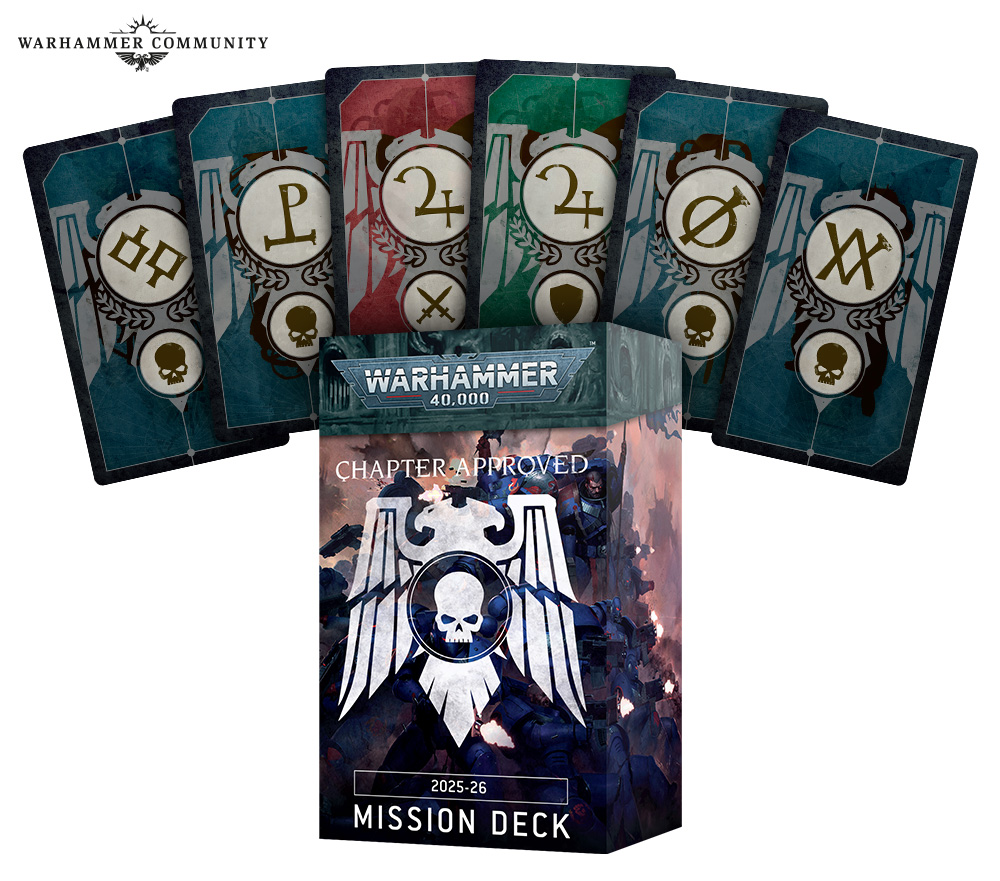
This deck isn’t just a refresh – it’s a total toolkit for three distinct matched play formats: Incursion, Strike Force, and the all-new Asymmetric War. Each format brings something unique to the table:
- Incursion Games (1,000 points) now have their own tailored deployment maps and a few balancing restrictions (the rule of three becomes the rule of two, for starters). These smaller-scale battles feel more strategic and less swingy, giving newer or time-constrained players a tighter, more accessible experience.
- Strike Force (2,000 points) remains the gold standard for competitive play, with balanced deployment zones and familiar objective layouts – perfect for prepping for the Warhammer Open or your next local RTT.
- Asymmetric War, however, is where things really get spicy.
Asymmetric War – Cinematic Showdowns
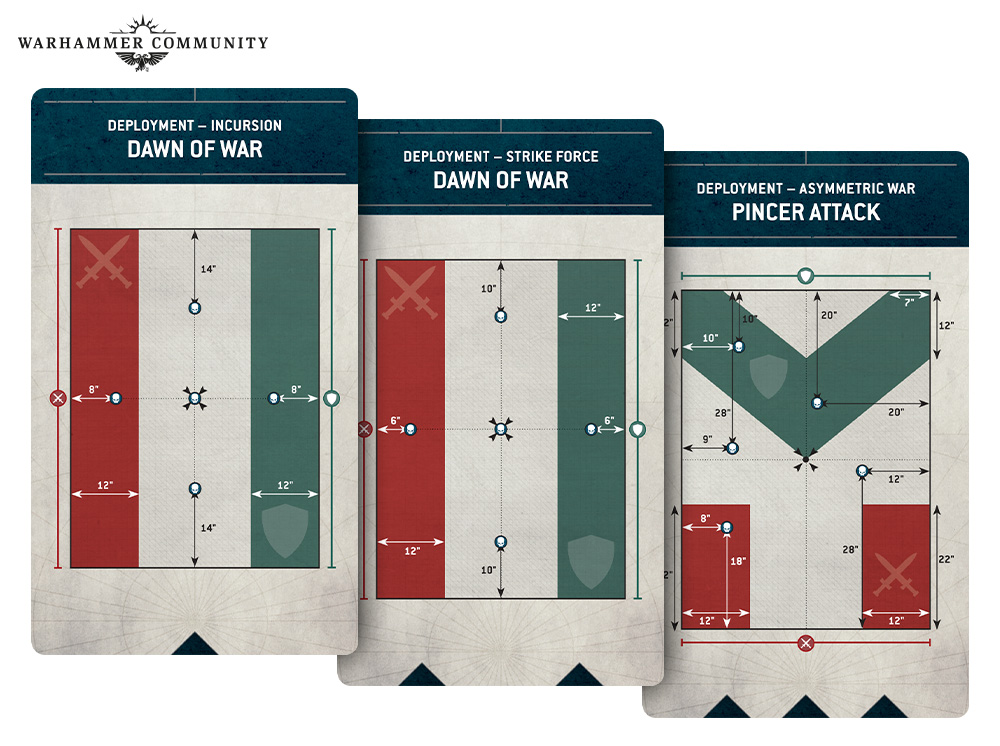
These missions are built around narrative imbalance – not in a bad way, but in a way that tells a story. Attackers and Defenders have different deployment zones, often reflecting last-ditch strongholds, encircling strikes, or desperate breakouts. Imagine defending a crumbling fortress against waves of attackers, or launching a brazen assault against an entrenched enemy. The mission rules go all-in on that narrative: the Defender starts with 50 VP just for holding the line, while the Attacker tries to claw those points away by sheer force of will.
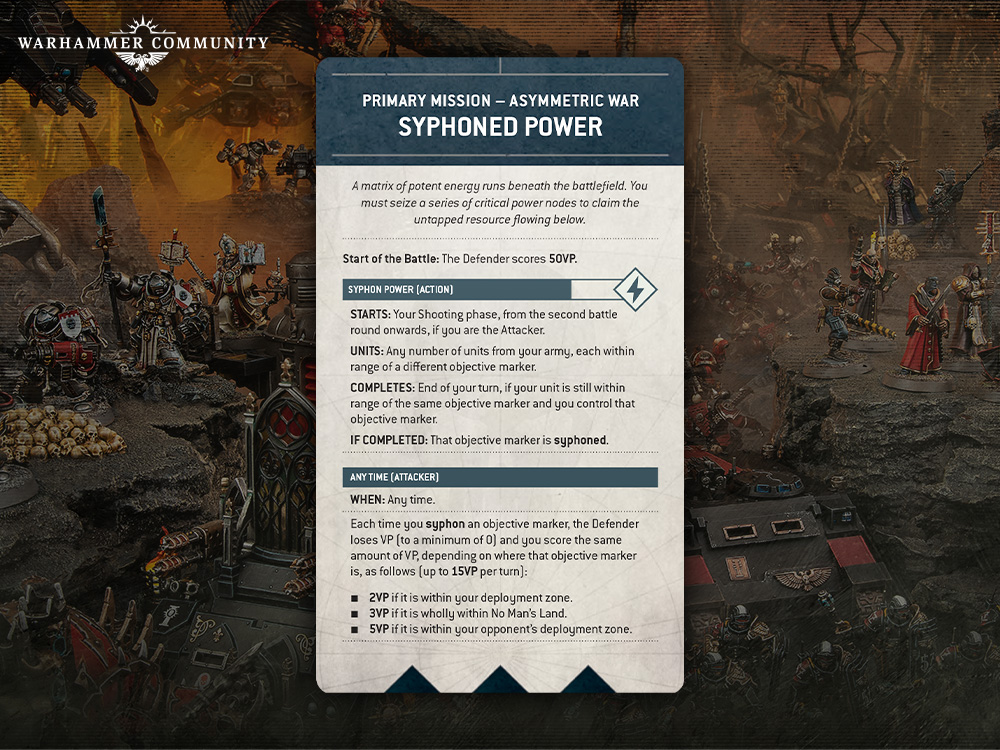
Attackers deploy first and go first, but Defenders can counter with better placement and mission advantages. It’s not “fair” in the traditional sense—but that’s the point. These are gritty, asymmetrical scenarios that reward bold plays, battlefield control, and story-driven builds. They also pair brilliantly with terrain-heavy setups. So yes, it’s time to finally build that sacrificial altar or fortress board you’ve been dreaming about.
Challenger Cards – The Comeback Mechanic
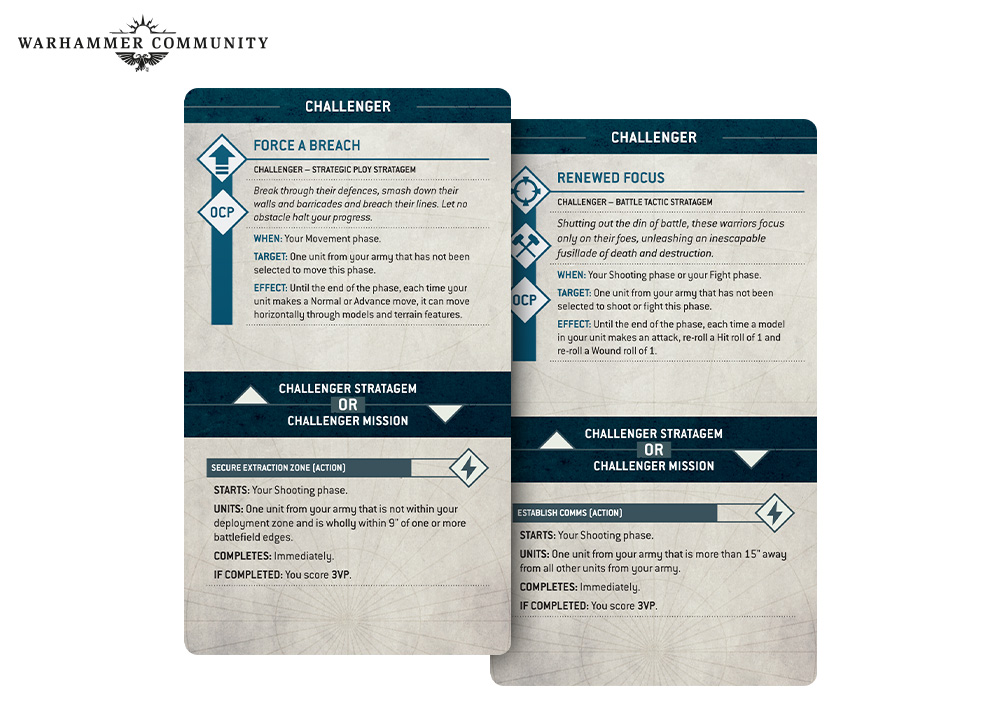
Replacing the Secret Missions from Pariah Nexus, the new Challenger system adds a flexible catch-up mechanic to keep games nail-bitingly close. If you’re trailing by 6 or more VP at the start of a battle round, you can draw one Challenger card. Each card gives you a choice: use a powerful Stratagem or attempt a mini-mission. Not both—choose wisely.
It’s a light-touch mechanic with big impact, helping to offset a brutal early turn without feeling like a “get out of jail free” card. It also adds an extra layer of tactical decision-making: push for objectives early, or hold back and wait for that comeback card?
Crusade Players, Rejoice
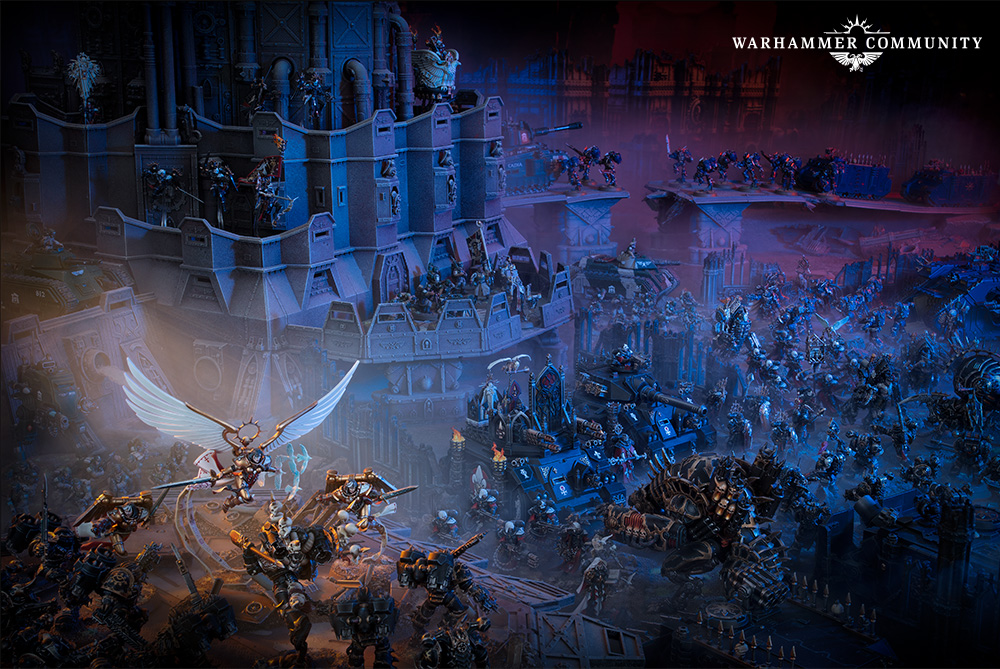
If you’re more into storytelling than scorekeeping, this deck still has plenty to offer. Asymmetric War meshes beautifully with narrative campaigns and Crusade rules from books like Nachmund Gauntlet. Use Tactical Reserves, Surgical Deep Strikes, and more to simulate sprawling siege warfare and pinpoint strikes in your custom campaign arcs.
The structure of these missions makes it easier than ever to set the tone—grimdark heroics, Pyrrhic victories, and all.
When Can You Get It?
The Chapter Approved 2025-26 Mission Deck is up for pre-order this Saturday, along with a slick new set of 40mm objective markers that match the season’s visual style. Whether you’re fine-tuning your competitive lists or just looking to shake up casual games with a new format, this deck is a must-have for any matched play regular.
Ready your dice, prep your terrain, and set your sights on the new season of 40K. The battlefield is changing—again.
And remember, Frontline Gaming sells gaming products at a discount, every day in their webcart!